Posts Tagged ‘medical’

The jury seems to be out on whether those cholesterol-lowering drugs known as statins are a good idea for everyone with high cholesterol. We address this in our book MEDICAL INDUSTRIAL COMPLEX: The $ickness Industry, Big Pharma and Suppressed Cures — in a chapter titled “Medical tests you may not need and procedures that may kill you.” (See our blog of February 6 also).

An excerpt from Medical Industrial Complex  follows:

Returning to those “unnecessary repeat cholesterol tests” we touched on at the start of this chapter, Choosing Wisely’s  summation of cholesterol testing, and the statins used in those tests, is interesting. It reports that statins are drugs that lower your cholesterol, but if you are age 75 or older and you haven’t had symptoms of heart disease, “statins may be a bad idea”.

The writer points out that many older adults have high cholesterol and their doctors usually prescribe statins to prevent heart disease even though, for older people, “there is no clear evidence” that high cholesterol leads to heart disease or death.

“In fact, some studies show the opposite—that older people with the lowest cholesterol levels actually have the highest risk of death…Statins can cause muscle problems, such as aches, pains, or weakness (and) may increase the risk of diabetes, cataracts, and damage to the liver, kidneys, and nerves”.

This is reinforced by the Reuters  report also referred to earlier. It quotes Dr. Michael Johansen, of the Ohio State University in Columbus, who says doctors may order more tests to meet or even exceed performance measures “and because they get paid for running a cholesterol panel”.

The report refers to a US study, led by Dr. Salim Virani, of the Michael E. DeBakey Veterans Affairs Medical Center, in Houston, which tracked over 35,000 people with heart disease, and found all had their LDL (‘bad’) cholesterol under control even though they hadn’t recently started taking any new cholesterol drugs.

“Over the 11 months after patients’ most recent cholesterol test, one in three underwent a repeat test. Very few of those patients – about six percent – had any changes made to their treatment regimen as a result of the second test…People with additional health problems, such as diabetes or high blood pressure, were most likely to get their cholesterol panel repeated…The average cost of a cholesterol test is about $16…That works out to almost $204,000 in early tests in their study population – not including the cost of both patients’ and doctors’ time”.

We haven’t devoted much space in this chapter to the unseemly subject of money. (Unseemly in this case because certain factions in the Medical Industrial Complex are clearly creaming it financially while many of its customers/patients are struggling to pay for, or meet, the cost of their healthcare).

However, the Reuters  report referred to above reminds us that someone is paying for every doctor’s appointment, test and screening. Throw in the cost of unnecessary tests and repeat tests (around $16 in the case of a cholesterol test) and you begin to understand the amount of money we are talking about. It’s huge!

Thankfully, as we’ve shown, the medical profession acknowledges there’s a problem, but it will be interesting to see what the powers-that-be do about it. As per usual, we suspect it will be left to us (Joe/Jo Citizen) to keep them honest.

T.B.C.


Medical Industrial Complex  is Book #3 in The Underground Knowledge Series  and is available exclusively via Amazon: http://www.amazon.com/MEDICAL-INDUSTRIAL-COMPLEX-Suppressed-Underground-ebook/dp/B00Y8Y3TUM/
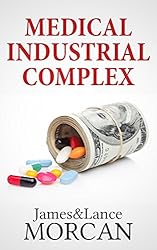
 

MEDICAL INDUSTRIAL COMPLEX: The $ickness Industry, Big Pharma and Suppressed Cures (The Underground Knowledge Series Book 3)


********************************** 


In our book MEDICAL INDUSTRIAL COMPLEX: The $ickness Industry, Big Pharma and Suppressed Cures, we remind readers that hospitals can be dangerous places.

We draw attention to this disturbing state of affairs in a chapter titled “Medical tests you may not need and procedures that may kill you.” (See our blog of December 28). And we refer to an article the Huffington Post  ran on April 3, 2013. Quoting the Institute of Medicine, it reports, “100,000 people die every year due to medical error — more deaths than from car accidents, diabetes, and pneumonia. Far more patients are victims of medical error”.

The report also quotes “a stunning” 2011 Health Affairs article in which researchers apparently discovered that medical errors occurred in one-third of all hospitalized patients. “A separate study of Medicare patients found that one in seven people in the hospital experience at least one unintended harm”.

Further excerpts follow from Medical Industrial Complex:

The Huffington Post  report identifies the following as “the 10 common medical errors that can occur in the hospital”: Misdiagnosis, unnecessary treatment, unnecessary tests and deadly procedures, medication mistakes, ‘never events’ (events that should never happen), uncoordinated care, infections (from hospital to patient), not-so-accidental ‘accidents,’ missed warning signs and premature discharge (from hospital).

According to the report, misdiagnosis is the most common type of medical error in a hospital; $700 billion is spent every year on unnecessary tests and treatments; medication mistakes affect 1.5 million Americans annually; ‘never events’ (such as scissors being left in patients’ bodies) happen all too often; hospital-acquired infections, according to the Centers for Disease Control, affect 1.7 million people annually and cause nearly 100,000 deaths every year; and malfunctioning medical devices cause tens of thousands of “accidents” in hospitals every year.

__________________________________________ 

“Whenever a doctor cannot do good, he must be kept from doing harm.” -Hippocrates

__________________________________________

Choosing Wisely, that worthy medical initiative referred to earlier, reports that “three out of four US physicians say the frequency with which doctors order unnecessary medical tests and procedures is a serious problem for America’s health care system—but just as many say that the average physician orders unnecessary medical tests and procedures at least once a week”.

If that admission (by US physicians) has been accurately reported – as appears to be the case given Choosing Wisely’s impressive credentials and reputation for accuracy – then that raises alarm bells. We suspect the estimates are very conservative and the actual incidence of doctors going overboard on medical tests is even higher. Possibly much higher.

T.B.C.


Medical Industrial Complex  is Bk #3 in The Underground Knowledge Series  and is available exclusively via Amazon: http://www.amazon.com/MEDICAL-INDUSTRIAL-COMPLEX-Suppressed-Underground-ebook/dp/B00Y8Y3TUM/

MEDICAL INDUSTRIAL COMPLEX: The $ickness Industry, Big Pharma and Suppressed Cures (The Underground Knowledge Series Book 3)

********************************** 


Sadly, the path the drug companies have followed, and continue to follow, is a long, rocky one littered with mistakes – mistakes that have been fatal for some; mistakes Big Pharma’s critics have labeled criminal; mistakes some claim are all too often more deliberate than accidental and therefore can hardly be referred to as mistakes. We examine some of the more high profile blunders, lapses, oversights – call them what you will – in our book MEDICAL INDUSTRIAL COMPLEX: The $ickness Industry, Big Pharma and Suppressed Cures.

An excerpt (abridged) from Medical Industrial Complex  follows:

Certainly the history of court cases involving Big Pharma is equally long and rocky with fines against the industry’s major players totaling many, many billions of dollars.

Our research has turned up numerous case studies that highlight just how “mistake-prone” this industry is and how often drug companies have ended up on the wrong side of the law. We include just a few of these in this chapter.

The first headline worth repeating was this one on the front page of the Daily Mail’s edition of July 2, 2012: ‘GlaxoSmithKline to pay $3billion fine after pleading guilty to healthcare fraud – the biggest in U.S. History.’

The report reads in part: “GlaxoSmithKline paid U.S. medics to prescribe potentially dangerous medicines to adults and children. It handed out cash as well as everything from Madonna concert tickets to pheasant-hunting trips. Authorities branded GSK as ‘cheaters who thought they could make an easy profit at the expense of public safety, taxpayers, and millions of Americans.’

“The enormous settlement – believed to be the largest ever for a drugs firm – covers offences relating to some of GSK’s best-selling drugs between 1997 and 2004.

“It bribed doctors to prescribe Paxil to children even though the authorities had not approved its use for under-18s. The controversial depression drug has been linked to a higher risk of suicide both in the US and here, where it is known as Seroxat.

“The main charges also relate to Wellbutrin, another drug for treating depression, and Avandia, a diabetes treatment…”

The Daily Mail report advises readers that GSK, which is based in West London, is Britain’s fifth biggest public company with a market valuation of $113 billion and a roster of household names that includes Lucozade, Aquafresh, Ribena and Horlicks. “It accounts for almost 5 per cent of the benchmark FTSE 100 index and is a favourite investment for pension fund managers”.

According to the report, GSK agreed to pay a fine of around $1 billion to the US authorities and a further payment of around $2 billion in civil settlements to state and federal authorities.

“The company’s marketeers promoted Wellbutrin as a weight loss treatment when it was approved only for treating depression…

“Carmen Ortiz, the US attorney for Massachusetts, said: ‘GSK’s sales force bribed physicians to prescribe GSK products using every imaginable form of high priced entertainment, from Hawaiian vacations to paying doctors millions of dollars to go on speaking tours, to a European pheasant hunt, to tickets to Madonna concerts’. ”

We think that last statement attributed to Carmen Ortiz is interesting as it mirrors our theory that at least some of the blame can be attributed to doctors in our critique of the Medical Industrial Complex.

Many other news stories and independent assessments of medical corruption also match this belief…

Our filed list of case studies goes on…and on…and on. It’s a depressingly long list. There’s the $1.5bn Xxxxxx (2012) case concerning the illegal promotion of the antipsychotic drug Xxxxxxxx. (Names redacted for legal reasons). There’s also the $1.42bn Xxx Xxx (2009) case for wrongly promoting the antipsychotic drug Xxxxxxx; there’s the $950m Xxxxx (2011) case over illegally promoting painkiller Xxxxx.

Some quick research online will reveal the redacted names (above) of the drugs and drug companies involved.

Need we go on? Okay, we don’t want to depress you any further…

However, it would be remiss of us not to refer you to FoodMatters.tv, an excellent wellness site we stumbled across. Under the heading ‘15 Most Dangerous Drugs Big Pharma Don’t Want You to Know About,’ it lists exactly that – the 15 most dangerous etc. etc.

FoodMatters’ correspondent says, “Drugs are so plagued with safety problems, it is a wonder they’re on the market at all” and “it’s a testament to Big Pharma’s greed and our poor regulatory processes that they are”.

The correspondent labels the following drugs “dangerous”: Lipitor and Crestor, Yaz and Yasmin, Lyrica, Topomax and Lamictal, Humira, Prolia and TNF Blockers, Chantix, Ambien, Tamoxifen, Boniva, Prempro and Premarin.

FoodMatters provides an explanation for its opposition to each of the above-named drugs.

For example, in the case of Lipitor, the correspondent asks, “Why is Lipitor the bestselling drug in the world? Because every adult with high LDL (low-density lipoprotein) or fear of high LDL is on it. (And also 2.8 million children, says Consumer Reports.) No one is going to say statins don’t prevent heart attack in high-risk patients (though diet and exercise have worked in high-risk groups too). But doctors will say statins are so over-prescribed that more patients get their side effects – weakness, dizziness, pain and arthritis – than heart attack prevention. Worse, they think it’s old age”.

And in the case of Crestor, the correspondent says, “Crestor is so highly linked to rhabdomyolysis it is doubly criticised: Public Citizen calls it a Do Not Use and the FDA’s David Graham named it one of the five most dangerous drugs before Congress”.

So, next time your doctor writes out a prescription, or your local pharmacist hands a prescription to you, or you pop a pill the TV ads insist is “safe” keep all the above in mind. Certainly there are some miracle drugs and even, dare we admit it, some cures out there in Big Pharma Country, but equally there’s some highly dubious and downright dangerous drugs – and we’re not just talking about the illegal or illicit variety!

Product Details

Medical Industrial Complex is available via Amazon: http://www.amazon.com/MEDICAL-INDUSTRIAL-COMPLEX-Suppressed-Underground-ebook/dp/B00Y8Y3TUM/

***********************************************

We are openly critical of the big pharmaceutical companies in our new release book MEDICAL INDUSTRIAL COMPLEX: The $ickness Industry, Big Pharma and Suppressed Cures. Our criticism is tempered by the fact that – as we acknowledge more than once in our book – products developed, manufactured and marketed by Big Pharma save lives. (Some would argue they cost lives, too, but that’s another story).

MEDICAL INDUSTRIAL COMPLEX: The $ickness Industry, Big Pharma and Suppressed Cures (The Underground Knowledge Series Book 3)

However, we keep coming back to the questions that crop up whenever the pharmaceutical companies and their modus operandi are analyzed. Questions like: Why is so little money ploughed back into research? Why the continuing emphasis on treatments ahead of cures? And, regarding revenues and profits, how much is too much?

BBC News addresses this very issue in a report aired on November 6, 2014 under the title ‘Pharmaceutical industry gets high on fat profits.’ The report asks people to imagine an industry that generates higher profit margins than any other and is no stranger to multi-billion dollar fines for malpractice.

“Throw in widespread accusations of collusion and over-charging, and banking no doubt springs to mind. In fact, the industry described above is responsible for the development of medicines to save lives and alleviate suffering, not the generation of profit for its own sake”.

The BBC News report reminds us that pharmaceutical companies have, by far, developed  most medicines known to Man, but have profited big-time in the process – “and not always by legitimate means”.

It continues, “Last year, US giant Pfizer, the world’s largest drug company by pharmaceutical revenue, made an eye-watering 42% profit margin… five pharmaceutical companies made a profit margin of 20% or more…With some drugs costing upwards of $100,000 for a full course, and with the cost of manufacturing just a tiny fraction of this, it’s not hard to see why…

“Drug companies justify the high prices they charge by arguing that their research and development (R&D) costs are huge. On average, only three in 10 drugs launched are profitable, with one of those going on to be a blockbuster with $1bn-plus revenues a year…

“But … drug companies spend far more on marketing drugs – in some cases twice as much – than on developing them. And besides, profit margins take into account R&D costs”.

The report concludes that the industry also argues that the wider value of the drug needs to be considered. However, it (BBC News) rightly points out that just because you can charge a high price for something does not necessarily mean you should. Especially when you factor in the lives at stake in the healthcare field.

The problem with that is – as we see it – the pharmaceutical companies and the shareholders they answer to would quickly dismiss such a rationale. They’re solely focused on the bottom line: profit.

Profit is not necessarily a dirty word when it comes to healthcare. We happen to believe capitalism, if managed properly, can actually work well in medicine. Profit incentives can spark imaginations in pharmacists and healthcare entrepreneurs and doctors as there’s the reward aspect in capitalism which motivates people to find medical cures.

Otherwise, as evidenced in the past in places like Eastern Europe, when things go to the other extreme and there’s too much government interference it can be just as crippling and corrupting for essential services such as healthcare. With little to no financial rewards on offer under communism, or even under some forms of socialism, most workers are less motivated – medical and healthcare workers included.

Somehow there needs to be a balance between governments and non-profit review committees to ensure mainstream medicine has a social conscience whilst still allowing the free market to work its magic.

…In the pharmaceutical industry’s haste to get drugs to market, critics say safety usually comes a distance second to profits. Little wonder then that mistakes occur and the line between legitimate and spurious business practices is oftentimes blurred.

We explore this untenable situation in the next chapter.

You have been reading an excerpt from Medical Industrial Complex.

The book is available via Amazon: http://www.amazon.com/MEDICAL-INDUSTRIAL-COMPLEX-Suppressed-Underground-ebook/dp/B00Y8Y3TUM/

***************************************************************