“Lovers of adventure, exotic locales, and history should enjoy this read, which reminds me of James Mitchener’s novels in breadth and detail.” –Kathleen Buckley (Accredited historical fiction novelist)
CHAPTER 16
Aotearoa, Winter, 1501
For the first time, the hills and shores of Aotearoa echoed to the sounds of war. As competition for land and food resources increased, inter-tribal fighting became the norm. The inevitable result was war on a scale never before seen in Kupe’s land. Fighting was hand-to-hand, vicious and bloody.
One ugly side-effect of the conflict was cannibalism.
Eating the flesh of enemies provided a new source of meat as well as having symbolic significance for the victors. Cannibalism quickly became part of Maori culture, just as it had throughout the islands of the South Pacific. The losers in warfare accepted they would end their days in slavery or on the cooking fire, or probably both. Slaves provided labour for hard manual work and were a source of food when their meat-starved captors were hungry.
Feuds erupted between iwis which had previously lived side by side in peace. As rivalries intensified, bloodshed followed. Given the Maori preoccupation with mana [prestige] any slight was an invitation to violent retribution. The concept of mercy was unknown and the cycle of revenge that resulted was known as utu, or blood vengeance.
Utu would become the law by which Maori lived. It would survive, indeed flourish, until well into the nineteenth century.
Apera’s Te Arawa iwi had consolidated their tribal base at Rotorua, the inland whakatikatikatanga [settlement] located on the shores of the same thermal lake where they’d resided since relocating from coastal Maketu. But like most tribes of the day they needed more land for their ever-expanding population. It was because of this their rangatira decided to lead a sizeable war party down the east coast in search of slaves and new territory.
The decision to make war was not taken lightly. The Te Arawa had long been insulated from the feuding that was now common amongst coastal tribes. Increasing demand for new territory had recently seen their own tribal lands come under threat. Fortunately, their superior numbers had enabled them to repel any invaders. However, this was not enough to ensure their survival. More land, slaves and riches were needed.
Winter was always the worst time to travel or to make war. The land was cold and food was at its scarcest, but the Te Arawa warriors chose to make their move in the middle of winter when their enemies would likely be least prepared.
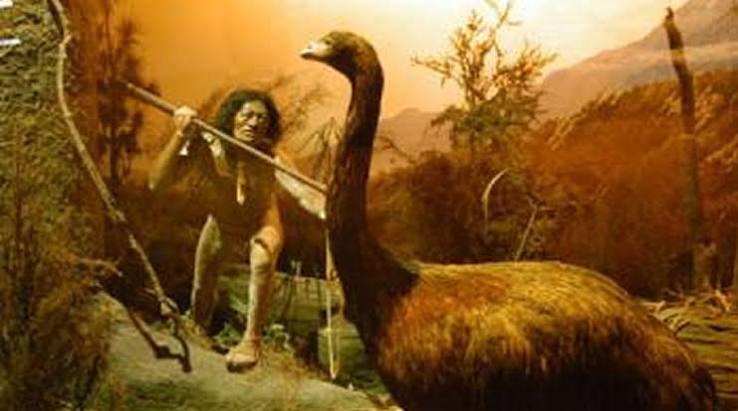
Almost one year to the day after he killed the last surviving moa, Apera led a war party of two hundred warriors to the coast. Among the headmen in their midst was the rangatira’s younger brother and right hand man, Kaihautu. He, too, was a natural leader, which was fitting because his name translated as A man with leadership qualities.
The brothers were always to the fore in any conflict. Opposites in many ways, they were a study in contrasts: Apera was tall and lean while Kaihautu was squat and heavy. The latter hadn’t inherited the family trait, and Kaihautu often ribbed his older bro about the stub of the extra small finger on his right hand. Both men possessed strength and courage in equal measure, often fighting side by side as was their wont. Individually, they were fearsome fighters; together they were an unstoppable force, overpowering all opposition they’d encountered.
Joining with their cousins at Maketu, the original landing place of the Arawa waka, Apera now commanded a force of some three hundred warriors. Six mighty double-hulled wakas carried them south, their destination a coastal cape that was said to be Aotearoa’s most easterly point. Te Arawa scouts had earlier reported the hunting and fishing was good around the cape and the land there was ready for the taking.
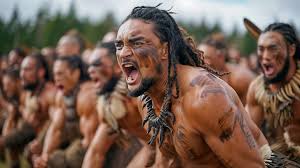
Along the way, Apera’s warriors plundered and looted many of the coastal villages, sometimes attacking from the sea, sometimes overland and sometimes simultaneously from land and sea, using a pincer-like strategy. The raids, like those occurring everywhere else in Aotearoa, began and ended with a mighty haka, or war dance, performed by the raiders – unless it was a surprise attack in which case no haka was performed beforehand.
Unfortunately for the Te Arawa raiders, the early pickings were slim. Heavily-armed northern invaders had recently swept south, wreaking havoc in the villages, slaughtering or enslaving their inhabitants and taking whatever caught their fancy.
Apera discovered that since his scouts’ reports had come in, those same northerners had invaded the eastern cape region as well. By the time the Te Arawa war party rounded the cape it had little to show for its exploits other than twenty or so undernourished slaves and some modest spoils. Those spoils included food, feathered cloaks, tools and weapons, and a single-hulled waka, which Apera used to transport the slaves.
An area just south of the cape held greater promise, according to the slaves who were predictably eager to please their captors. It was, they advised, the territory of the Ngati Porou iwi whose village was some thirty miles away. War parties from the north hadn’t ventured that far and incursions from the south had been repelled by the local iwi, so there were riches to be had there.
#
Dusk was fast approaching when the Te Arawa raiders’ flotilla entered a picturesque bay local Maori called Tokomaru Bay. On the beach, twenty or more wakas lay at rest above the highwater mark, and atop a small rise overlooking it was a pa, or fortified village. It appeared to accommodate about three hundred people, which tallied with estimates Apera’s slaves had provided earlier. The rangatira counted about eighty whares [huts] within the pa’s stockades. Smoke from cooking fires curled up into a darkening sky.
The Te Arawa flotilla’s appearance in the bay caused considerable panic on shore. Armed warriors took up defensive positions while others prepared to launch wakas to intercept the enemy’s flotilla. They evidently had second thoughts when they saw the size of the fleet, retreating instead behind their fortifications to await the invaders’ arrival, which could now be measured in heartbeats.
Apera was standing in the bow of the front waka, his legs braced to maintain his balance. He looked around at his brother who was standing in the bow of the following waka. “Are they Ngati Porou?” he shouted.
Kaihautu turned around and consulted a slave who sat immediately behind him. Looking back at Apera, he shouted, “Ae…They are Ngati Porou.”
The rangatira nodded and turned his attention back to the villagers on shore. He thought it more likely they were a sub-tribe of Ngati Porou given their small numbers and the fact that their settlement was located in that iwi’s territory. His lip curled into a cruel smile as he imagined how much the villagers would now be regretting they hadn’t relocated to the Ngati Porou’s coastal stronghold to the south.
“They are ripe for the plucking,” a warrior at Apera’s shoulder murmured.
The rangatira nodded. “Ae…They are,” he agreed. Though tempted to bypass the village, the lure of a quick slaughter, slaves, wahines and other bounty was strong – too strong to resist.
As the leading waka caught a wave and surfed the last forty yards to the beach, Apera studied the pa’s defences. He was pleased to note the stockade was in a state of disrepair, and there was no sign of the trenches, lookout towers or other defences that were a hallmark of bigger, well-defended pas like the Te Arawa’s own one at Rotorua and their allies’ pa at Maketu.
The Te Arawa raiders were among the very first outsiders to have visited Tokomaru Bay in such numbers, so remote was it, and the villagers believed their isolation kept them safely removed from the conflicts that raged elsewhere – until today.
The conflict that followed was as bloody as it was brief; resistance was weak and short-lived because the villagers had little experience of war.
Apera’s raiders killed almost every villager, sparing only the rangatira Rawiri, his two wives, thirty warriors and twenty-five nubile wahines. The warriors, all big men, were considered suitable candidates for slavery while the wahines would be used by the raiders for pleasure before being enslaved or killed.
As darkness fell, flames lit up the night sky after the raiders set fire to the whares and other structures. It wasn’t long before Rawiri’s whare was the only one left standing. Warriors wandered amongst the fallen, dispatching survivors with a savage thrust of a spear or blow from a club. The larger, meatier corpses – males and females – were stacked in a pile on the marae, a communal meeting place in the middle of the pa. These would be cooked, and the flesh and organs of many would be eaten before the night was over. Uneaten flesh would be cut into strips then smoked, packed and saved for eating in the days and weeks ahead.
It wasn’t long before the cries of the wounded faded. The only sounds were the crackling of flames and the triumphant shouts of the victorious Te Arawa warriors. Those same warriors then performed an impromptu haka to celebrate their triumph. Chanting, gyrating, leaping and stamping the ground in unison, the war dance was awesome, gut-wrenching and terrifying all at the same time. Between chants, the participants poked out their tongues, a chilling reminder that those vanquished would be eaten. Warriors needed no such reminding for all were aware, regardless of which iwi they belonged to, that that was the likely fate of those killed or enslaved. Maoris believed they inherited their enemies’ strength when they ate them.
#
Later that night, after the Te Arawa warriors had had their fill of human flesh and the flames of burning structures had dwindled to smouldering embers, Apera and Kaihautu interrogated the vanquished rangatira. The brothers along with four other warriors had headed straight for Rawiri’s whare at the outset of hostilities. Larger by far than the other structures in the village, it accommodated twenty or so people, including the rangatira’s two wives and their six young children. All except for the rangatira and his wives had been slaughtered.
Rawiri, whose name translated as The Beloved One, trembled as Apera jabbed him with the tip of a spear. He was well named for he was loved by all his people. It wasn’t fear that made Rawiri tremble; it was grief and pain that caused his tremors. A blow from a club had left his right arm shattered, and blood flowed from a head wound. The pain caused by his wounds, however, was nothing compared to the pain he felt at the tragedy that had befallen his people. Around him the bodies of slaughtered children and other members of his extended family lay scattered about like rag dolls. The level of violence and depravity was like nothing the vanquished rangatira or his people had ever before witnessed.
“Are you Ngati Porou?” Apera asked, jabbing the defeated rangatira yet again with his spear.
Rawiri nodded dumbly. “Ae,” he mumbled through bleeding lips, tearing his eyes away from the broken body of his youngest son who lay close by.
The Beloved One’s two wives looked on as the questioning of their husband continued. They were distraught over the loss of their children whose mutilated bodies were almost unrecognisable, but the younger wife, a woman of striking appearance, did her best to hide her distress. She remained surprisingly stoical. This was noted by her husband’s interrogator.
“How far are we from the coastal pa of the Ngati Porou?” Apera asked.
Rawiri remained silent. He just glared at his opposite, his hatred clear for all to see. Apera jabbed his prisoner again, harder this time, causing Rawiri to grunt in pain as the spear’s sharp tip pierced the flesh of his good arm. Blood flowed from the wound.
“Tell him what he wants to know, Rawiri!”
The order came from the bloodied rangatira’s younger wife Emere. A beautiful wahine, she displayed little deference to the raiders who had so brutally invaded her sanctuary and destroyed the world she knew. The screams of wahines being raped outside carried to her, threatening to destroy her resolve. Determined to keep her fear under control, she pretended not to hear them.
Apera observed the outspoken wahine coldly. Unaware that two of the slaughtered children in the whare – a young boy and girl – were hers, he promised himself he would have her later. Returning his attention to Rawiri, he warned that he would kill both his wives if he didn’t cooperate. The warning prompted an outburst of crying and pleading from the older wife.
“It is a two-day trek along the coast to the Ngati Porou pa,” Rawiri said, grimacing as pain shot through his broken arm.
Apera studied his opposite, looking for some sign of subterfuge. He saw no such sign. “How many warriors do they have?”
Rawiri didn’t reply. Apera could see his opposite was struggling to remain conscious. He repeated his question, louder this time.
“About three hundred warriors,” Rawiri mumbled before toppling over, unconscious.
The comatose rangatira’s oldest wife crawled over from where she’d been cowering to comfort her husband while his interrogator considered what he’d learned. The estimate of enemy numbers tallied with the information he’d already received from other sources, so he could now plan his next moves accordingly.
Sensing Kaihautu was becoming restless, Apera nodded toward Rawiri. “Kill him,” he said. This prompted a cry of distress from the older wife. “And do what you like with her,” he added, pointing at the distraught wahine.
“What about her?” Kaihautu asked, looking lustfully at Emere.
“She is mine,” Apere said, locking eyes with the younger wife.
Kaihautu wanted to rape Emere. He had lusted after her the moment he’d set eyes on her. However, he held his tongue for he’d learned the hard way it was unwise to disobey the rangatira, even though they were brothers. Instead, he quickly despatched the still unconscious Rawiri with a savage blow from the club he held then dragged the older wahine, kicking and screaming, from the whare to have her.
Apera had kept his eyes on Emere when his brother killed her husband. He’d noticed she displayed no emotion. Not even a grimace or a flinch. Now she looked directly at him. Their eyes locked once again and he was impressed that she still showed no fear. Suddenly aroused, he realised he needed her. Urgently. Throwing his spear to one side, he stood up and moved toward her.
Emere held up her hand, motioning to him to stop. Apera pulled up one pace short. They stared at each other for one long drawn-out moment, each searching the other’s eyes.
Finally, Emere murmured, “Not here.” The wahine glanced around at the bodies of the others, including her own children. She needed to distance herself from this place of death.
Apera understood. He slowly extended his right hand, and after the briefest hesitation Emere took his hand in hers and allowed him to pull her to him. She came into his arms and he clasped her tight to him, pushing his groin hard against hers. To his surprise, she didn’t resist.
“Not here!” she said again, more insistent this time.
Apera nodded. He led her quickly from the whare in search of a quiet place, his passion increasing with every step.
Emere shared his passion in equal measure. It was something she couldn’t begin to explain or even understand. The widowed wahine mourned the loss of her beloved husband and children yet lusted after the man who had killed them. It went against everything she’d ever believed in, and the suddenness and intensity of her feelings for this monster next to her frightened her. She wondered if it was some kind of defensive reaction to help her remain sane and not succumb to the feelings of darkness and despair that threatened to overwhelm her.
Outside, on the marae, Emere ignored as best she could the celebrations underway. Apera’s warriors were cooking the carcasses of their victims on spits that had been erected over a dozen or more cooking fires while others took turns to rape those wahines who had been spared. Spirits were high. It was always the case after a successful raid. At the sight of the carcasses, the wahine closed her eyes. Her people used to roast moas like that before the big birds became extinct.
Warriors cheered their rangatira after they noticed him emerge from the whare with his captive. The pair ignored them as they hurried off into the darkness.
Apera pulled Emere by the hand into the bush behind the pa, stopping only when they came to a grassy clearing. Away from the prying eyes of the others, they hurriedly discarded their garments then lay down and gave themselves fully to the passion that had overtaken them both.
#
At dawn the following day, Apera dispatched four of his best scouts to survey the Ngati Porou pa further down the coast. They travelled on foot via an inland route in order to avoid the coastal walking tracks and villages. Their orders were to report back on the numbers of enemy warriors, their preparedness and weapons at their disposal, and the strength of their fortifications. Because of the circuitous route they followed, they had a three-day trek ahead of them before they reached the enemy’s pa.
#
Six days later, three of the scouts who had been sent to survey the Ngati Porou stronghold returned. Breathless, they reported directly to Apira’s brother.
“Where is Kiwa?” Kaihautu asked of the missing scout.
“He was captured by Ngati Porou hunters,” the senior scout said.
Kaihautu scowled. “So our enemies know we are coming.” He glared at the senior scout as if he blamed him personally. “What did you learn?”
“Our enemy’s territory includes good hunting and fishing grounds,” the senior scout said.
“Their village has much worth taking,” said the youngest scout who was barely into his mid-teens.
That caught Kaihautu’s attention. “Go on,” he said.
“Many slaves,” the young scout said. “Too many to count… And their wahines must be the most beautiful in the land!”
The other scouts rolled their eyes, indicating their youthful companion may be exaggerating.
Undeterred, the young scout added, “I saw wakas also. Maybe fifty wakas on the beach.”
Not to be outdone, the third scout delivered his assessment of the Ngati Porou iwi’s wealth, further confirming there were rich pickings to be had.
Kaihautu was wise enough to realise people with so much territory and wealth would be no pushover in a conflict. “What are their numbers?” he asked.
“At least eight hundred,” the senior scout said, “including three hundred fighting men.”
“And their defences?”
“Strong. Very strong.”
As the rangatira’s brother listened to the scout describe what he and his companions had observed, he quickly came to the realisation that victory over the Ngati Porou in battle would be no foregone conclusion. When the scouts finished telling him everything they’d observed he strode off to convey the sobering news to Apera. He found him inspecting the raiding party’s cache of weapons and informed him of what he’d learned.
“What of the Ngati Porou fortifications?” Apera asked.
“The scouts reported the pa’s fortifications are strong. Our enemies occupy high ground on a rocky peninsular that cannot be invaded from the sea, and deep trenches have been dug in front of the ramparts.”
The brothers looked at each other gravely. There were some big decisions to make – not the least being whether to risk everything in what could well be a costly attack on a well-defended pa.
CHAPTER 17
Aotearoa, Early 1500s
The late fourteenth century had seen the advent of the pa, the fortified village that served as a stronghold for iwis under siege in Aotearoa. By the early 1500’s, those fortifications were becoming remarkably sophisticated. Nowhere was this better demonstrated than on the rocky headland at the southern end of the bay occupied by the Ngati Porou iwi…
>>> NEW ZEALAND: A NOVEL continues next week.
*
This novel is available via Amazon as a hardcover, paperback, audiobook and Kindle ebook… https://www.amazon.com/New-Zealand-Novel-Lance-Morcan/dp/0473728524/
**************************************************************