
In the following chilling excerpt from the Introduction of our new release book Unit 731: The Japanese Auschwitz, authors James and Lance Morcan alert readers to the horrors World War Two inmates endured at the worst Japanese concentration camp of them all.
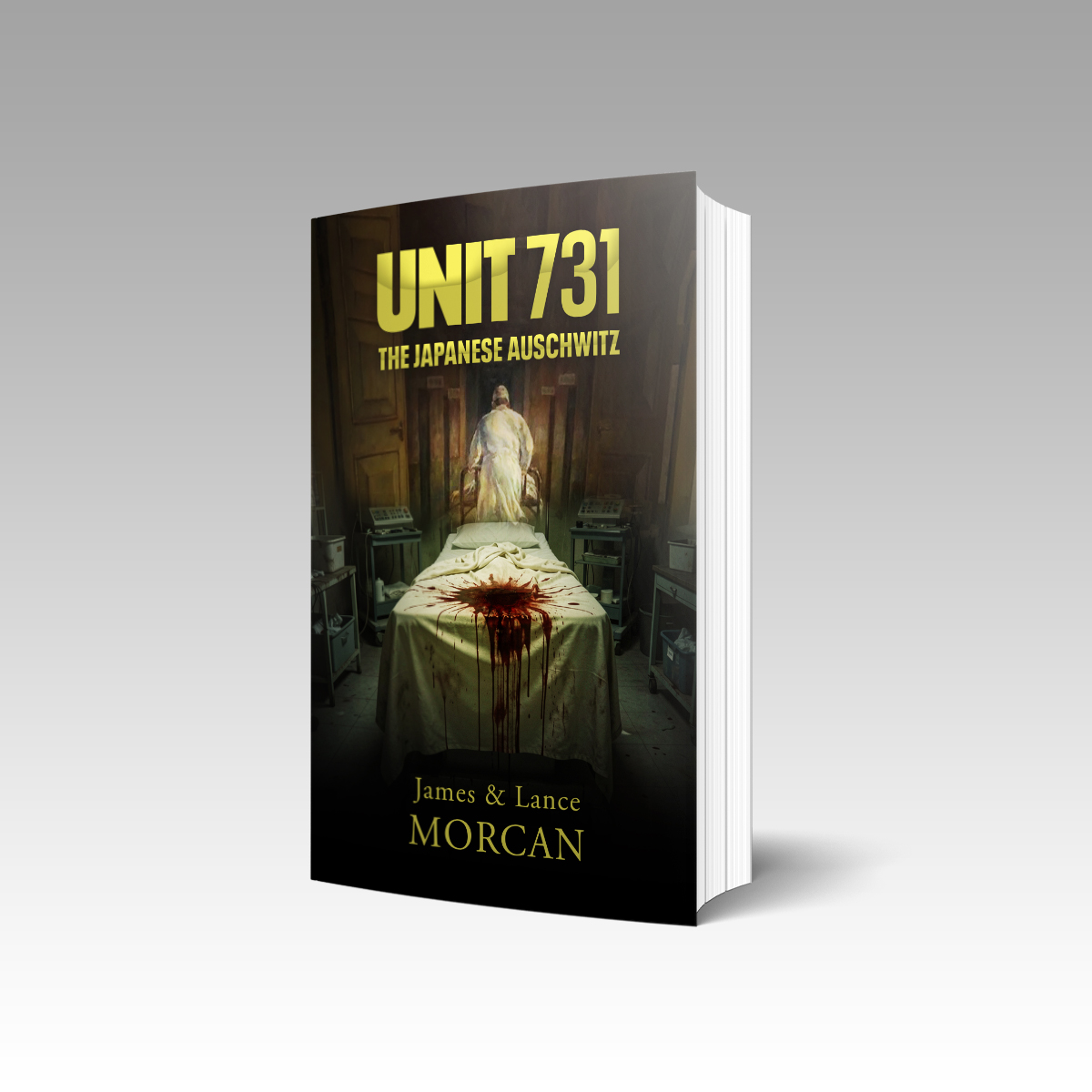
Excerpt begins:
Although less widely reported than Mengele’s medical research at Auschwitz, many historians have compared the hideous medical experiments at Unit 731 to those conducted by the Nazis during the Holocaust.
Unit 731’s condemned endured unimaginable horrors. These included high-voltage electric shock experiments, cyanide poisoning, frostbite studies, and biological weapons testing involving the forced application of anthrax, heroin and other drugs; some inmates were injected with bacteria from plague-infected fleas procured from mice; and slow, live dissections of subjects without the use of painkillers were commonplace.
The prisoners were referred to as “monkeys” in scientific papers, but it was common knowledge in Japanese military and political circles at least that the test subjects were in fact human beings.
The end result was tens of thousands of victims died at Unit 731 and its sister sites, keeping in mind the Pingfang complex was not an isolated entity. Similar units proliferated across Asia – all coordinated in accordance with Ishii’s vision of using biological warfare as a national instrument of modern science and medicine.
Other complexes, including Unit 1644 in Nanjing, Unit 9420 in Singapore, Unit 8604 in Guangzhou, and Unit 1855 in Beijing formed a strategic alliance programmed to support Japan logistically, militarily and politically.
Casualty estimates vary, but our research shows that most historians agree between 10,000 and 12,000 people perished within Unit 731 alone while Japan’s broader biological warfare program killed as many as 250,000 (some say 300,000) people across China.
Unit 731 is a sobering reminder that science and medicine without ethics can evolve into weapons of unforeseen and almost unimaginable destruction.
In the following pages we document what led to the formation of Unit 731, the horrors its inmates endured, and the aftermath following destruction of the unit at war’s end. We also address the uncomfortable truth that most of the perpetrators walked free, their victims forgotten in the proverbial fog and mist of postwar politics.
Be warned: this book is no easy read.
*
Unit 731: The Japanese Auschwitz is available on Amazon and Audible as an ebook and audiobook. (Paperback edition still to come).
Kindle: https://www.amazon.com/gp/product/B0GRJ8LR8P
Audible: https://www.amazon.com/ITEM_NAME/dp/B0GRGFYB6G/
*************************************************************
 Morcan Books & Films