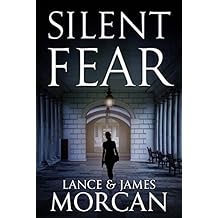
Archive for the ‘SILENT FEAR novel’ Category

The Kindle ebook version of our thriller-horror SILENT FEAR (A novel inspired by true crimes)  will be launched on October 31 and we thought it appropriate this coincides with Halloween. It’s a scary read.

Our friend and collaborator-in-crime Lisa Norris — @ernorris — kindly designed this artwork (below) to commemorate the occasion, and we reckon she nailed it!


SF Halloween poster


Pre-orders for the Kindle version of Silent Fear  are open now  via https://www.amazon.com/dp/B075HRYTVC/ — Order now and it will be auto-delivered to your Kindle at Halloween.

The paperback’s available already via https://www.amazon.com/dp/0473408120

Prepare to be scared!


******************************************

As the October 31 launch date nears for the Kindle version of our new release crime-thriller Silent Fear (A novel inspired by true crimes), a new paperback giveaway competition is underway on Goodreads.com – open to all Goodreads members worldwide.

The competition ends October 29.

To enter go to: https://www.goodreads.com/giveaway/show/259651-silent-fear


Silent Fear (A novel inspired by true crimes)

Paperback giveaway underway.


Silent Fear continues to attract rave reviews. Check them out at: https://www.amazon.com/dp/B075HRYTVC/


***************************************

A solitary figure sweated profusely as he toiled away, unconcerned by the confined space of the basement he worked in or by the wooden floorboards that formed a ceiling just a metre or so above his head. Claustrophobia, it seemed, wasn’t an issue. Stretched out full length on the concrete floor, he worked by the light of a torch he’d left resting beside him. His full attention was on filling a hole, brick by brick, in a wall that dissected one corner of the basement.

It was a painstakingly slow process. He was a thinker and a planner, not a bricklayer or labourer. Even so, he understood the basics of bricklaying and he was blessed with a certain amount of natural strength, and this was helping him now. To protect his hands, he wore a pair of snug-fitting, black, leather gloves not unlike driving gloves.

A little research was all it had taken to familiarise himself with the rudiments of bricklaying. The upshot was he used quick-mix cement. Three parts sand to one part masonry cement. That’s what the supplier’s instructions had stated, but he’d added an extra spadeful of cement for good measure because he felt it needed that.

The instructions also advised using fine-grade masonry sand and fresh masonry cement preferably from an unopened bag. That he hadn’t managed because he didn’t want to be seen purchasing the product, and so he’d had to use what was available. And what was available was a half-used bag of course-grade masonry. Touch wood, it was doing the job – so far at least.

“Mix only what you need” the instructions had read. He’d estimated half a wheelbarrow-full would do it with some to spare, so that’s the amount he’d mixed. Because of the basement’s low head-clearance, he’d had to pour the mixture into buckets – six of them – and drag them one at a time to his cramped workplace.

Two extra trips had been required, including one to fetch a bucket of water. He was using the water to keep the cement from setting before applying it. The other trip had involved dragging the object he was now concealing from a room on the lower floor of the building directly above his head. That had required the most effort as the object weighed almost as much as he did.

The instructions had also recommended the addition of lime to the mixture – “to bond and strengthen the stonework you are building,” according to the supplier’s instructions. He didn’t have any lime, and that had bothered him initially. Now, as he saw how well the cement was bonding with the bricks, he relaxed a little. Easy, he thought. Like falling off a bike.

He was quite proud of his trowelling technique. It improved with the laying of each brick, but it was tricky and he found he had to focus.

“Hold the trowel at a ninety degree angle,” he’d been advised, but he had quickly discovered ninety degrees was a bit too ambitious in the confined space. It wasn’t as if he could work standing up. Lying down, seventy degrees or thereabouts was the best he could manage with the trowel, but that was sufficient.

The main challenge, he’d discovered, was ensuring the quick-mix cement in the buckets didn’t set before he could apply it. Premature setting was only avoided by regular application of water, which he dispensed by using his trowel to transfer small amounts from the water bucket to the other buckets and then giving their contents a good stir. It required some effort, and despite the basement’s cool temperature he found he was sweating more with each passing minute.

Ever so gradually the hole in the brick wall grew smaller as he laid more bricks.

Despite what was at stake, he worked at a leisurely pace, all the while thinking. That was something he did a lot these days. Thinking, that is.

The hole was now so small he could hardly see the object he was concealing. Only the deceased’s face was visible, covered by the transparent plastic bag he’d used so effectively to cut off the other’s air supply just thirty minutes earlier.

He smiled at the memory of the deceased’s final moments. Those last seconds when the young man had recognised his attacker and realised he was about to die.

Beautiful…poetry in motion…slow motion.

Oh how he loved the exhilarating, orgasmic-like feelings he’d experienced as the life of another was snuffed out. He willingly embraced them as he relived the moment. It was as if the helpless young man before him was still dying.

Studying the deceased now, or what he could still see of him at least, he recalled how he’d laughed uproariously just before death came to his victim. The visuals replayed over and over in his mind. He remembered how the veins in the young man’s eyeballs, face and neck appeared to burst as he was deprived of air, and how fragile he’d looked – like a child being tortured.

The icing on the cake had been when he’d used his hands to communicate a final message via sign language. He could still see the look on his victim’s face when, seconds before death came, he realised what was being communicated to him. It was a look of total horror, which was somehow more accentuated when viewed through the transparent plastic bag. That had made this killing even more satisfying.

What he had communicated was simple yet definitive: “Game over!”

As he relived what happened, it felt like every cell in his body was jumping for joy. It was as if his very DNA had been created for one purpose and one purpose only: to kill.

He had been planning the murder these past six months. In fact, he’d first thought of killing him years ago, but it required time for those thoughts to solidify into a plan – a concrete plan in more ways than one.

Now that he’d acted, he wondered why it had taken him so long. It wasn’t as if he was afraid or anything like that. He’d delayed because he couldn’t decide exactly how he wanted the young man to die. Bludgeoning, shooting, stabbing, poisoning, gassing, drowning had all been considered. Finally, he’d opted for suffocation. Why? He couldn’t really say. Certainly he wanted to watch him suffer. And he wanted to prolong his suffering. But stabbing or poisoning or any number of methodologies could have achieved that.

Looking at him now, the killer knew he’d made the right decision. The deceased’s tortured face seemed distorted inside the plastic bag that covered his head, and his sightless eyes still registered the intense fear he’d experienced in his final ghastly moments.

Studying him in the torchlight, he felt his manhood hardening beneath him. He removed one of his gloves then, raising his pelvis off the floor, he reached down and began pleasuring himself, all the while looking at his victim.

Satisfaction arrived quickly and he groaned as he came.

Recovering his composure, he donned his glove and resumed working.

It wasn’t long before the hole was completely bricked over. He shone his torch on the wall and inspected his handiwork.

Perfect.

The newly laid bricks aligned flawlessly with the older bricks. That was no accident because he’d used identical surplus bricks the building’s owner had thoughtfully left in the basement. Finally, he cleaned up, removed his gloves and then began crawling back the way he’d come, taking his buckets and work tools with him.

As he departed, he knew he’d need to kill again. And soon. He had to experience those wonderful feelings again.

He was confident he wouldn’t have long to wait; his master plan was already in motion.

#

Want to read more? The Silent Fear  paperback is available now via Amazon; the Kindle ebook can be pre-ordered now and will be auto-delivered to your Kindle on October 31.


Silent Fear (A novel inspired by true crimes)

https://www.amazon.com/dp/B075HRYTVC/


Silent Fear, which is set in a university for the deaf in London, is dedicated to the many millions of deaf people around the world.

Scotland Yard detective Valerie Crowther is assigned to investigate the murder of a student at a university for the Deaf in London, England. The murder investigation coincides with a deadly flu virus outbreak, resulting in the university being quarantined from the outside world. When more Deaf students are murdered, it becomes clear there is a serial killer operating within the sealed-off university. A chilling cat-and-mouse game evolves as the unknown killer targets Valerie and the virus claims more lives.


See what the critics are saying:

★★★★★ “Can you hear me now? What a great story! I didn’t figure out who the killer was until the last chapter, and it still had a surprising twist! I had to read the book in one sitting!”-bccopanos

★★★★★ “Whoa! What a ride. Excellent book, well constructed, and with brilliant delivery. Great to have a female lead character who is: clever, resourceful, and adaptable. And love requited – or is it? Loved it. The re-romance of the central characters was engaging…(a) bewitching book.”-Jonno

★★★★★ “Spellbinding! I couldn’t put it down…The characters are very realistic and are described so well, they take root in your mind and become alive. The plot has so many twists and turns. Just as you think you have it figured out, they throw another twist in which sets you off in a different direction.”-P. Blevins


**********************************************


Amazon recently invited us to write about our lives as independent, or indie, authors. To be fair, they extended the invitation to all indie authors whose work is self-published via KDP, or Kindle Direct Publishing, and via CreateSpace, Amazon’s print publishing arm. However, vain as we are, we prefer to consider it an exclusive invitation.

Like most indie authors, we need little excuse to talk about our work, or ourselves for that matter, so here goes.

We are Lance and James Morcan, a New Zealand father-and-son writing team. Lance resides in New Zealand while James is based in Sydney, Australia. Together, we’ve co-authored and self-published more than 20 novels and non-fiction books – all under the banner of our publishing company Sterling Gate Books and all exclusive to Amazon.


Lance Morcan    1174474     

Lance and James…the Morcan writing team.


We are also screenwriters and have put several adaptations of our novels into development as feature films with our production company Morcan Motion Pictures. These include our international thrillers Silent Fear and The Ninth Orphan, and our historical adventures Fiji, White Spirit and Into the Americas.

Our other novels comprise The Orphan Factory, The Orphan Uprising and World Odyssey. Screenplay adaptations of these are also planned.

Our journeys as indie authors began over a decade ago when we co-wrote our first novels, The Ninth Orphan and Fiji. After receiving countless rejections from London and New York publishers, we decided to put our destiny into our own hands and form our own publishing company. That was in 2011, and it was a smart move. We recommend this course of action to all authors who may be struggling to get noticed.

We spent months researching the best online publishing platform for our work. After considering all the options, we arrived at the resounding conclusion there was, and is, only one platform worth considering – and that’s Amazon.

Why? Well, check out Amazon’s global market share for starters. Its book marketing platform is unrivaled. They’ve cornered the self-publishing market.

Not convinced? Compare Amazon and its DIY print business CreateSpace with other major players such as Lulu, Smashwords, AuthorHouse and Blurb. There’s no comparison.

And then there’s Amazon’s KDP Select (KDPS), which, in a nutshell, requires exclusivity of authors for their eBooks. We opted to commit to KDPS. It’s a decision we’ve never regretted.

The global reach, higher royalties, Kindle Countdown Deals, free promotions and commissions for book borrows (through Kindle Unlimited) were what most attracted us. However, the full benefits of enrolling with KDPS are too many to list here. If you’re interested, Google “benefits of KDP Select” and scan some of the 1,000 plus entries.

Our first experience with a Kindle book set the pattern for us. Following a seven-day freebie, or free promotion, our thriller The Ninth Orphan achieved the #1 ranking, albeit briefly, in the Spy genre on Amazon.com and Amazon UK during the period December 2011 to January 2012. Not bad for first-time, unknown authors from Down Under!


The Ninth Orphan (The Orphan Trilogy Book 1) 

A former #1 bestseller.


Writing and brainstorming ideas some 1300 miles apart, separated as we are by the Tasman Sea, aka the Ditch, does present its problems even in this modern era. Unreliable Skype connections, mislaid emails and occasionally faulty WattsApp telephone conferences aside, we get by.

And then there’s the inevitable creative differences. These are accentuated no doubt by the father-son relationship and by the generation gap. However, we view these differences as strengths rather than weaknesses. We are our own toughest critics; we keep each other honest as writers, which helps maintain high standards, and we collectively understand what readers from our respective generations are looking for. That’s the theory anyway. It seems to work!

It seems to work for other father-son writing teams, too. Just last month, bestselling author Stephen King and son Owen King released Sleeping Beauties in what’s described as a “spectacular father/son collaboration.” This supernatural thriller, incidentally, is selling as a Kindle ebook, hardcover and paperback on, you guessed it, Amazon.


34466922
Another father-son collaboration.


Our non-fiction books include The Orphan Conspiracies, which highlights and expands on the 29 conspiracy theories covered in our international thriller series The Orphan Trilogy.

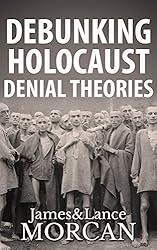
Perhaps our most controversial book is also our latest non-fiction book, Debunking Holocaust Denial Theories: Two Non-Jews Affirm the Historicity of the Nazi Genocide. It’s controversial because it has attracted the ire of Holocaust deniers and so-called revisionists, and has even prompted the publication of books whose sole aim is to denigrate our book.


DEBUNKING HOLOCAUST DENIAL THEORIES: Two Non-Jews Affirm the Historicity of the Nazi Genocide                                                                      Book ridicules the deniers.


With a foreword by Holocaust survivor Hetty E. Verolme (author of The Children’s House of Belsen), Debunking Holocaust Denial Theories was written in close consultation with Holocaust survivors and World War Two historians. Its message, we believe, is important because the spectre of anti-Semitism is rearing its ugly head again.

We have published seven books so far in our Underground Knowledge Series – the most popular being Genius Intelligence, Underground Bases and The Catcher in the Rye Enigma.

The above-mentioned series gave rise to the Underground Knowledge discussion group on Goodreads.com. Designed to encourage debates about important and underreported issues of our era, it’s one of the fastest-growing groups on that Amazon-owned site. The group’s link is https://www.goodreads.com/group/show/142309-underground-knowledge—a-discussion-group  

In addition, we have secured 24 foreign rights agreements for the translation of our books into Arabic, German, Spanish, French, Portuguese, Italian, Afrikaans, Norwegian and Dutch with more contracts pending. These are available across a wide number of retailers internationally, including Amazon.

Our current focus is on our new release crime-thriller Silent Fear (A novel inspired by true crimes), which was launched as a paperback on Amazon just a week ago. The Kindle eBook version is available via Amazon Pre-orders and will be auto-delivered to buyers’ Kindles on October 31st.


Silent Fear (A novel inspired by true crimes)

In Silent Fear, Scotland Yard detective Valerie Crowther is assigned to investigate the murder of a student at a university for the deaf in London, England. The murder investigation coincides with a deadly flu virus outbreak, resulting in the university being quarantined from the outside world. When more deaf students are murdered, it becomes clear there is a serial killer operating within the sealed-off university. A chilling cat-and-mouse game evolves as the unknown killer targets Valerie and the virus claims more lives. 

The Amazon link for Silent Fear is: https://www.amazon.com/dp/B075HRYTVC/   


Dedicated to the many millions of deaf people around the world, Silent Fear was inspired by the murders of several deaf students at Gallaudet University, one of the world’s most prestigious learning institutions for the deaf, in Washington, D.C.

A decade in the making, it was written under the guidance of leading deaf filmmaker Brent Macpherson whose commentary on the unique aspects of deaf culture the story covers appears at the end of the book. Together, the Morcans and Macpherson are developing a feature film adaptation of Silent Fear.

A film trailer promoting the book and planned film can be viewed at https://www.youtube.com/watch?v=-8bv1vbQxYo

We have also set up Silent World, a new Goodreads discussion group, to promote the book at https://www.goodreads.com/group/show/237556-silent-world-a-discussion-group

A final word for any new or would-be authors out there who may feel daunted at the prospect of having to find a home for their book after having shed blood, sweat and tears, over months or possibly years, and who are wondering what the hell to do next. Do your due diligence, of course, and don’t take our word for it, but we recommend the following course of action based on our personal experience.

Take control of your destiny and self-publish. If literary agents and publishing company editors don’t recognise your literary gem or masterpiece, that doesn’t automatically mean readers won’t resonate with it. However, readers won’t be able to respond or resonate if your manuscript remains hidden.

Consider Amazon as your first choice publishing platform, take the bull by the horns and become a KDP Select author. It worked for us!

Lance & James Morcan


Author profiles for Lance and James: https://www.amazon.com/Lance-Morcan/e/B005ET3ZUO/ref=dp_byline_cont_pop_ebooks_2https://www.amazon.com/James-Morcan/e/B005EPOU48/ref=dp_byline_cont_pop_ebooks_1


**********************************************
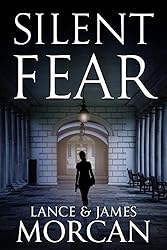
Win one of three paperback copies of Silent Fear (A novel inspired by true crimes) – the new release novel they’re all talking about – on Goodreads.com


Silent Fear (A novel inspired by true crimes)

Scotland Yard detective Valerie Crowther is assigned to investigate the murder of a student at a university for the Deaf in London, England. The murder investigation coincides with a deadly flu virus outbreak, resulting in the university being quarantined from the outside world. When more Deaf students are murdered, it becomes clear there is a serial killer operating within the sealed-off university. A chilling cat-and-mouse game evolves as the unknown killer targets Valerie and the virus claims more lives.


Enter giveaway via https://www.goodreads.com/giveaway/show/256535-silent-fear

Entries close October 15.

Open to residents of US, CA and UK.

To see advance reviews of Silent Fear  visit: https://www.amazon.com/dp/0473408120


**********************************************

Detective Valerie Crowther, the feisty heroine of our new release crime-thriller Silent Fear, is not one to mince her words. Here’s a random selection of statements our Val makes in the course of the novel…

“Don’t say I didn’t warn you!”

“Now I have a serial killer and a killer virus to contend with!”

“Last I heard being gay doesn’t automatically mean you’re a serial killer.”


Detective Valerie Crowther Valerie Crowther

Our Val.


“This plonker’s going to be the death of me!”

“You can’t be serious!”

“Where do they get these guys?”

“Who do these bastards think they are?”

“All I wanted was a nice quiet life!”

You’ll have gathered by now that our Val is not to be messed with. Her feistiness is nowhere more evident than when she’s attacked by rebellious deaf students intent on escaping the deadly quarantine they’ve found themselves caught up in. Here’s an excerpt from that action-packed event: https://morcanbooksandfilms.com/2017/09/15/valerie-takes-on-a-serial-killer-and-a-killer-virus-in-thriller-novel-silent-fear/

As you can see, Detective Valerie Crowther really does kick butt in Silent Fear.

Reminding you the Kindle eBook version is available via Amazon Pre-0rders and will be auto-delivered to buyers’ Kindles on October 31st via: https://www.amazon.com/dp/B075HRYTVC/


Silent Fear (A novel inspired by true crimes)

The paperback is available now via https://www.amazon.com/dp/0473408120


Here is Valerie’s character page on Goodreads: https://www.goodreads.com/characters/…

Bloggers and reviewers note! ARCs (advance review copies) of Silent Fear  are available via this link: https://goo.gl/forms/Dv7GH9oJVAKLuRM23


******************************************


The new release crime-thriller Silent Fear (A novel inspired by true crimes) resonates with the critics if early reviews on Amazon are any guideline. Reviews to date are all five stars.


Product Details            Product Details

     The (Pre-order) Kindle eBook.                The paperback…available now!


Silent Fear  is the latest novel by Lance and James Morcan, co-authors of the international thriller series The Orphan Trilogy  and the historical adventure novels White Spirit and Into the Americas. The paperback is available now via Amazon; the Kindle eBook version is available via Amazon Pre-orders and will be auto-delivered to buyers’ Kindles on October 31st.


Here’s what Amazon reviewers are saying about Silent Fear:

★★★★★ “Silent Fear is a thriller unlike any you’ve read before…I highly recommend (it) for anyone who enjoys books that incorporates interesting characters and a story-line that is not only entertaining, but also will touch upon our basest fears.”-Ila in Maine

★★★★★ “Whoa! What a ride. Excellent book, well constructed, and with brilliant delivery. Great to have a female lead character who is: clever, resourceful, and adaptable. And love requited – or is it? Loved it. The re-romance of the central characters was engaging…(a) bewitching book.”-Jonno

★★★★★ “The premise of this book alone is extremely enticing and original, which means my expectations were high from the start, but boy, do the authors deliver!… It’s superbly written, and there are plenty of red herrings and clues throughout to make you try to guess who the killer is, only for you to then completely change your mind a few pages later.”-Amazon Customer

★★★★★ “Can you hear me now? What a great story! I didn’t figure out who the killer was until the last chapter, and it still had a surprising twist! I had to read the book in one sitting!”-bccopanos

★★★★★ “Spellbinding! I couldn’t put it down…The characters are very realistic and are described so well, they take root in your mind and become alive. The plot has so many twists and turns. Just as you think you have it figured out, they throw another twist in which sets you off in a different direction.”-P. Blevins

★★★★★ “This was a thrilling and captivating novel. Suspenseful, full of twists and engaging from start to finish. Also love how the authors have written about the deaf community as they are an underrepresented minority in current reading markets…A stunning, atmospheric murder mystery, with its riveting combination of the claustrophobia of the situation combined with unrelenting fear.”-Amazon Customer

★★★★★ “Excellent thriller. Simply Splendid…‘Silent Fear’ is right up there as one of my favourites…Hands down this is a wonderful book, and well worth a read.”-Todd Simpson, Top Ranked reviewer Amazon Australia


Silent Fear  is available via Amazon as a Kindle Pre-order book (launch date October 31) via https://www.amazon.com/dp/B075HRYTVC/

The paperback version is available now via https://www.amazon.com/dp/0473408120

Bloggers and reviewers note! ARCs (advance review copies) of Silent Fear  are available via this link: https://goo.gl/forms/Dv7GH9oJVAKLuRM23


******************************************
Deaf New Zealand filmmaker Brent Macpherson, of Stretch Productions, features prominently in the Acknowledgements for our new release crime-thriller Silent Fear (A novel inspired by true crimes) – and for good reason: the story is set in a university for the Deaf, and Brent educated us on the unique challenges facing the Deaf community and corrected potentially embarrassing errors in our portrayal of Deaf and hard of hearing people.


Brent Macpherson

Brent Macpherson…acknowledged in new release novel.


As one of the world’s leading Deaf storytellers working in film, television and other creative mediums, Brent’s passion for bringing to life stories about diverse people, including those in his own Deaf community, really rubbed off on us. Without his assistance this novel may never have been completed!

His commentary on Silent Fear  from a Deaf reader’s viewpoint is included at the end of the book.


Here’s Brent’s unabridged commentary on Silent Fear:

Silent Fear is one of the few mainstream novels to address the unique challenges faced by members of the Deaf community in any great detail. As a member of that community, and as someone who has been Deaf since birth, I believe this book is an important addition to the dearth of literature that exists about Deaf people and Deaf culture.

In the interests of full disclosure, let me state from the outset I have a vested interest in this book: I liaised with the authors in a consultancy capacity to ensure their treatment of the novel’s (fictitious) Deaf characters and the often unique issues they and their family members face were handled accurately and with sensitivity.

The novel provides a valuable insight into the dynamics of the international Deaf community all in one setting. It highlights a wide range of Deaf cultural elements and behavioural characteristics that are unique to members of the Deaf community.

As you’ll have noticed, sign language features prominently throughout. Members of the wider society may have seen Deaf people signing which is often perceived as a different form of communication. This perception is only a small part of the proverbial iceberg: below water, it’s much deeper and more meaningful to be Deaf.

Like myself, most Deaf people acquire sign language at a school for Deaf. In my case, I attended Kelston School for the Deaf in Auckland, New Zealand, at the age of five and subsequently learnt NZ Sign Language (NZSL) from older students. I became disruptive at a ‘normal’ kindergarten and teachers didn’t have a clue how to cope with me. It was decided that I would attend a Deaf school. To do so, I had to catch a taxi and a bus (the famous white bus) to Kelston for the next four years. These trips would be an hour-and-a-half each way so around three hours a day was spent exclusively in the company of many deaf children of all ages.

Reflecting upon how I personally learnt NZSL, those bus trips have renewed meaning for me. It was a unique time for Deaf students to be able to freely use sign language to communicate away from the gaze of disapproving teachers. We didn’t need to hide from them or from our parents. The bus became a relaxing comfort zone where a hidden education flourished. It was a cultural hub on wheels! Signing in the bus was regarded as an ‘underground language’ away from glaring eyes of the public so we could pass on our language to the younger generation.

Sign language was forbidden during my days at the school for the Deaf. If teachers caught us signing in the classroom, they would use a large wooden ruler to strike our hands and then force us to sit on them for the rest the day. Nevertheless, we cleverly found ways of using sign language. Ways that came naturally to us. We hid from teachers during playtime to sign to our peers. I recall hiding in the toilet to be able to sign one of my friends without being caught.

My proud identity as a Deaf person stems from attending a Deaf school and undertaking those long, enjoyable daily bus trips. Today, many of those students are still close friends of mine.

I was mainstreamed to a hearing school at age nine and will never forget my first day at my new school: I was completely cut off from my Deaf friends and was swiftly assimilated into the hearing world. It was totally alien to me.

My soul, identity and pride as a Deaf young person were stripped away in a flick of a switch.

I had to act and speak like a hearing person to fit society’s norm. I struggled with enormous internal conflicts, and these contributed to a sense of identity confusion. People would often comment, “Oh, Brent, you speak very well.” Yes, thank you, but what about my Deaf friends and sign language? I miss them.

Back then, society viewed deafness as a deficiency or an inadequacy – and, to a large extent, it still does. Of course, my parents thought putting me in a hearing school was best for my education. This was based on advice they received from ‘experts’ in deaf education.

A few years after leaving school, I reconnected with the Deaf community at the Auckland Deaf Society. Ah, this was, and is, where I belong. I met many of my long lost friends from primary school there; I immediately felt re-engaged with my identity as a Deaf person.

I am Deaf – period!

The room was full of diverse Deaf people of all ages signing, telling stories and jokes, laughing, having a few drinks, playing pool, enjoying each other’s company – like one happy family. After more than a decade not being allowed to use NZSL, I was amazed I could still remember the signs, and I was able to quickly relearn my natural language. After all those years of identity confusion, I felt re-energised and enthused, having rediscovered my suppressed Deaf identity and I embarked on a journey into the Deaf world where I belong.

The Auckland Deaf Society is at the heart of the NZ Deaf community just as many other organisations around the world are performing similar roles. Each Deaf community is a cultural group which shares a sign language and a common heritage. Members of Deaf communities the world over identify themselves as belonging to a cultural and linguistic group. Identification within the Deaf community is a personal choice and is usually made independent of the individual’s hearing status.

The Deaf community is not automatically composed of all people who are Deaf or Hard of Hearing. It is not limited to those who are Deaf or Hard of Hearing. It may also include family members of Deaf people, sign language interpreters and people who work or socialise with Deaf people and who may display characteristics of Deaf culture. A non-deaf person may become member of the Deaf community by accepting and recognising Deaf culture, and this is usually strongly associated with competence in using sign language.

Deaf people as a linguistic minority have a common experience of life, and this manifests itself in Deaf culture. This includes beliefs, attitudes, history, norms, values, literary traditions and art shared by Deaf people. My language and culture includes body language, facial expression and hand shapes, which all constitute sign language. Behavioural characteristics associated with sign language and Deaf cultural norms are the heart of having Deaf identity. All these elements are critical components for this novel to ensure the Deaf characters portrayed are authentic.

In writing Silent Fear, the Morcans should be commended for the tremendous amount of effort they have invested in researching and ultimately understanding and appreciating the dynamics of Deaf culture and sign language.

The writers strongly recommended I reveal to you that, as Deaf readers will no doubt have noticed, they (the Morcans) have used lower case “deaf” throughout the novel when referring to Deaf characters and to the Deaf community in general – their rationale being that mainstream novelists and newspapers do not (generally) apply the upper case ‘rule’ when referring to this community and its members. This was the one issue we disagreed on…

Enough said.

I am proud to have been a part of this journey and have put my heart and soul into this novel, working closely with the Morcans. The process has been methodical and well considered to ensure the novel captures the essence of being Deaf. I sincerely believe Deaf and Hard of Hearing on a global scale will easily relate to Silent Fear, and I am sure will be enjoyed by all.

The end result is a story, which, in my humble opinion, does justice to the Deaf community.

Brent Macpherson

To learn more about Brent and the planned film adaptation of Silent Fear  visit his website at  https://www.stretchproductions.co.nz/silent-fear    


Silent Fear  is available via Amazon as a Kindle Pre-order book (launch date October 31) via https://www.amazon.com/dp/B075HRYTVC/

The paperback version is available now via https://www.amazon.com/dp/0473408120

Bloggers and reviewers note! ARCs (advance review copies) of Silent Fear  are available via this link: https://goo.gl/forms/Dv7GH9oJVAKLuRM23


******************************************

UK author and reviewer Harry Whitewolf has posted the most insightful review yet of our new release thriller Silent Fear (A novel inspired by true crimes) on the literary site Goodreads.com so we have opted to run it in full – and here it is:


The premise of this book alone is extremely enticing and original, which means my expectations were high from the start, but boy, do the authors deliver!

There are three main facets to this story:

1) It is a whodunnit mystery thriller, where the main protagonist, detective Valerie Crowther tries to track down a serial killer who’s targetting deaf students at a world-renowned university.

2) There is a worldwide virus known as Monkey Flu which is killing hundreds of thousands of people. The U.K has escaped the epidemic until there is a breakout at the very uni Crowther is conducting her investigations, so the school soon becomes quarantined and shut off from the outside world.

3) The story is a great insight into the deaf community.

Combining these three facets makes for an exciting and interesting read. At first, I was a little cautious at embarking on an 800 page story, but I needn’t have worried. It doesn’t feel like a long book at all, and the authors are so adept at breaking up the scenes and the various tangents, and pacing it so well, that I didn’t feel like I was reading a mammoth book at all. I’d thought it would probably take me a couple of months to get through it, but I raced through this in a week. Like all clever and well written thrillers, there are enough cliff-hanging chapters and side stories which made me think I’d just read one more chapter and then before I knew it, I’d read another fifty pages. So don’t let the length of this book put you off at all – it’s exactly the right length that the book needs to be – especially when it’s effectively combining two stories in one (the outbreak of the virus and the whodunnit mystery).

It’s superbly written, and there are plenty of red herrings and clues throughout to make you try to guess who the killer is, only for you to then completely change your mind a few pages later.

There are also plenty of other side stories going on, such as – unexpectedly – Satanic rituals, and the personal stories of the characters. And man, for a book with so many characters (as there needs to be), the authors make it such an easy read to follow who’s who and to have such solid, well-rounded, believeable characters. There are the students – who are a vast array of different types, including some punkish ruffians, there’s the main protagonist Crowther; and her Superintendent ex husband on the outside, there are two news reporters who have bluffed their way into the school and who soon find themselves being quarantined with the rest and becoming the eyes and ears of the media, there are… so many engaging characters with their own stories – and they are all effortlessly portrayed well throughout.

Even the opening scene in the prologue is exceptionally brilliant – it feels like a classic scene from a classic film: where the killer is taking care in bricklaying a wall to conceal his first victim behind it. The attention the killer has to using three parts sand, one part cement and the skill of angling his trowel, with little thought towards the fact that he’s just killed someone in cold blood, is the perfect introduction to a disturbed psychopathic mind. Not to mention that he also then masturbates upon finishing the job.

And knowing that this book is going to be made into a film, I can already see that scene being chillingly played out as clear as mud.

No way will you figure out who the killer is, but you’ll enjoy trying to figure it out. I can guarantee it.

This is such a meaty book, that I could go on for another thousand words detailing just how well it’s all been put together and how well it’s been written, but this review is already turning out to be a long one, so I’ll leave it on this point:

Not only is this a great epidemic-sci-fi and mystery thriller, it’s also a fantastic insight into the deaf community, and it’s very apparent how much research has gone into this book. Reading the afterword from the authors’ consultant makes this clear, and it’s good to know that the writers have gone to lengths to show a very realistic portrayal of that community. Forget the whodunnit and epidemic stories, this book works just as well at being a much needed insight for hearing people into a community we may not know much, or anything, about. As their liaison Brent Macpherson says in the afterword:

“Silent Fear is one of the few mainstream novels to address the unique challenges faced by members of the Deaf community in any great detail. As a member of that community, and as someone who has been Deaf since birth, I believe this book is an important addition to the dearth of literature that exists about Deaf people and Deaf culture.”

Harry Whitewolf is the author of several acclaimed books, including The Road To Purification: Hustlers, Hassles & Hash  and Matrix Visions.


To see all the reviews of Silent Fear go to Goodreads: https://www.goodreads.com/book/show/35626239-silent-fear


Silent Fear (A novel inspired by true crimes) by [Morcan, Lance, Morcan, James]

Amazon pre-orders for this book open now.

https://www.amazon.com/dp/B075HRYTVC/


******************************************************
October 3 is a red letter day for Dan Brown fans: that’s when The Da Vinci Code author’s latest thriller, Origin, is launched on Amazon.


Origin: (Robert Langdon Book 5) by [Brown, Dan]

Book 5 in the Robert Langdon series.


We have an excerpt from Origin  for you below. First, here’s the storyline:

In, Robert Langdon, Harvard professor of symbology and religious iconology, arrives at the Guggenheim Museum Bilbao to attend the unveiling of a discovery that “will change the face of science forever”. The evening’s host is his friend and former student, Edmond Kirsch, a forty-year-old tech magnate whose dazzling inventions and audacious predictions have made him a controversial figure around the world. This evening is to be no exception: he claims he will reveal an astonishing scientific breakthrough to challenge the fundamentals of human existence.

But Langdon and several hundred other guests are left reeling when the meticulously orchestrated evening is blown apart before Kirsch’s precious discovery can be revealed. With his life under threat, Langdon is forced into a desperate bid to escape, along with the museum’s director, Ambra Vidal. Together they flee to Barcelona on a perilous quest to locate a cryptic password that will unlock Kirsch’s secret.

In order to evade a tormented enemy who is one step ahead of them at every turn, Langdon and Vidal must navigate labyrinthine passageways of hidden history and ancient religion. On a trail marked only by enigmatic symbols and elusive modern art, Langdon and Vidal uncover the clues that will bring them face-to-face with a world-shaking truth that has remained buried – until now.


And here’s the promised excerpt from Origin  (courtesy of Amazon):


PROLOGUE

As the ancient cogwheel train clawed its way up the dizzying incline, Edmond Kirsch surveyed the jagged mountaintop above him. In the distance, built into the face of a sheer cliff, the massive stone monastery seemed to hang in space, as if magically fused to the vertical precipice.

This timeless sanctuary in Catalonia, Spain, had endured the relentless pull of gravity for more than four centuries, never slipping from its original purpose: to insulate its occupants from the modern world.

Ironically, they will now be the first to learn the truth, Kirsch thought, wondering how they would react. Historically, the most dangerous men on earth were men of God . . . especially when their gods became threatened. And I am about to hurl a flaming spear into a hornets’ nest.

When the train reached the mountaintop, Kirsch saw a solitary figure waiting for him on the platform. The wizened skeleton of a man was draped in the traditional Catholic purple cassock and white rochet, with a zucchetto on his head. Kirsch recognized his host’s rawboned features from photos and felt an unexpected surge of adrenaline.

Valdespino is greeting me personally.

Bishop Antonio Valdespino was a formidable figure in Spain—not only a trusted friend and counselor to the king himself, but one of the country’s most vocal and influential advocates for the preservation of conservative Catholic values and traditional political standards.

“Edmond Kirsch, I assume?” the bishop intoned as Kirsch exited the train.

“Guilty as charged,” Kirsch said, smiling as he reached out to shake his host’s bony hand. “Bishop Valdespino, I want to thank you for arranging this meeting.”

“I appreciate your requesting it.” The bishop’s voice was stronger than Kirsch expected—clear and penetrating, like a bell. “It is not often we are consulted by men of science, especially one of your prominence. This way, please.”

As Valdespino guided Kirsch across the platform, the cold mountain air whipped at the bishop’s cassock.

“I must confess,” Valdespino said, “you look different than I imagined. I was expecting a scientist, but you’re quite . . .” He eyed his guest’s sleek Kiton K50 suit and Barker ostrich shoes with a hint of disdain. “‘Hip,’ I believe, is the word?”

Kirsch smiled politely. The word “hip” went out of style decades ago.

“In reading your list of accomplishments,” the bishop said, “I am still not entirely sure what it is you do.”

“I specialize in game theory and computer modeling.”

“So you make the computer games that the children play?”

Kirsch sensed the bishop was feigning ignorance in an attempt to be quaint. More accurately, Kirsch knew, Valdespino was a frighteningly well-informed student of technology and often warned others of its dangers. “No, sir, actually game theory is a field of mathematics that studies patterns in order to make predictions about the future.”

“Ah yes. I believe I read that you predicted a European monetary crisis some years ago? When nobody listened, you saved the day by inventing a computer program that pulled the EU back from the dead. What was your famous quote? ‘At thirty-three years old, I am the same age as Christ when He performed His resurrection.’”

Kirsch cringed. “A poor analogy, Your Grace. I was young.”

“Young?” The bishop chuckled. “And how old are you now . . . perhaps forty?”

“Just.”

The old man smiled as the strong wind continued to billow his robe. “Well, the meek were supposed to inherit the earth, but instead it has gone to the young—the technically inclined, those who stare into video screens rather than into their own souls. I must admit, I never imagined I would have reason to meet the young man leading the charge. They call you a prophet, you know.”

“Not a very good one in your case, Your Grace,” Kirsch replied. “When I asked if I might meet you and your colleagues privately, I calculated only a twenty percent chance you would accept.”

“And as I told my colleagues, the devout can always benefit from listening to nonbelievers. It is in hearing the voice of the devil that we can better appreciate the voice of God.” The old man smiled. “I am joking, of course. Please forgive my aging sense of humor. My filters fail me from time to time.”

With that, Bishop Valdespino motioned ahead. “The others are waiting. This way, please.”

Kirsch eyed their destination, a colossal citadel of gray stone perched on the edge of a sheer cliff that plunged thousands of feet down into a lush tapestry of wooded foothills. Unnerved by the height, Kirsch averted his eyes from the chasm and followed the bishop along the uneven cliffside path, turning his thoughts to the meeting ahead.

Kirsch had requested an audience with three prominent religious leaders who had just finished attending a conference here.

The Parliament of the World’s Religions.

Since 1893, hundreds of spiritual leaders from nearly thirty world religions had gathered in a different location every few years to spend a week engaged in interfaith dialogue. Participants included a wide array of influential Christian priests, Jewish rabbis, and Islamic mullahs from around the world, along with Hindu pujaris, Buddhist bhikkhus, Jains, Sikhs, and others.

The parliament’s self-proclaimed objective was “to cultivate harmony among the world’s religions, build bridges between diverse spiritualities, and celebrate the intersections of all faith.”

A noble quest, Kirsch thought, despite seeing it as an empty exercise—a meaningless search for random points of correspondence among a hodgepodge of ancient fictions, fables, and myths.

As Bishop Valdespino guided him along the pathway, Kirsch peered down the mountainside with a sardonic thought. Moses climbed a mountain to accept the Word of God . . . and I have climbed a mountain to do quite the opposite.

Kirsch’s motivation for climbing this mountain, he had told himself, was one of ethical obligation, but he knew there was a good dose of hubris fueling this visit— he was eager to feel the gratification of sitting face-to-face with these clerics and foretelling their imminent demise.

You’ve had your run at defining our truth.

“I looked at your curriculum vitae,” the bishop said abruptly, glancing at Kirsch. “I see you’re a product of Harvard University?”

“Undergraduate. Yes.”

“I see. Recently, I read that for the first time in Harvard’s history, the incoming student body consists of more atheists and agnostics than those who identify as followers of any religion. That is quite a telling statistic, Mr. Kirsch.”

What can I tell you, Kirsch wanted to reply, our students keep getting smarter.

The wind whipped harder as they arrived at the ancient stone edifice. Inside the dim light of the building’s entryway, the air was heavy with the thick fragrance of burning frankincense. The two men snaked through a maze of dark corridors, and Kirsch’s eyes fought to adjust as he followed his cloaked host. Finally, they arrived at an unusually small wooden door. The bishop knocked, ducked down, and entered, motioning for his guest to follow.

Uncertain, Kirsch stepped over the threshold.

He found himself in a rectangular chamber whose high walls burgeoned with ancient leather-bound tomes. Additional freestanding bookshelves jutted out of the walls like ribs, interspersed with cast-iron radiators that clanged and hissed, giving the room the eerie sense that it was alive. Kirsch raised his eyes to the ornately balustraded walkway that encircled the second story and knew without a doubt where he was.

The famed library of Montserrat, he realized, startled to have been admitted. This sacred room was rumored to contain uniquely rare texts accessible only to those monks who had devoted their lives to God and who were sequestered here on this mountain.

“You asked for discretion,” the bishop said. “This is our most private space. Few outsiders have ever entered.”

“A generous privilege. Thank you.”

Kirsch followed the bishop to a large wooden table where two elderly men sat waiting. The man on the left looked timeworn, with tired eyes and a matted white beard. He wore a crumpled black suit, white shirt, and fedora.

“This is Rabbi Yehuda Köves,” the bishop said. “He is a prominent Jewish philosopher who has written extensively on Kabbalistic cosmology.”

Kirsch reached across the table and politely shook hands with Rabbi Köves. “A pleasure to meet you, sir,” Kirsch said. “I’ve read your books on Kabbala. I can’t say I understood them, but I’ve read them.”

Köves gave an amiable nod, dabbing at his watery eyes with his handkerchief.

“And here,” the bishop continued, motioning to the other man, “you have the respected allamah, Syed al-Fadl.”

The revered Islamic scholar stood up and smiled broadly. He was short and squat with a jovial face that seemed a mismatch with his dark penetrating eyes. He was dressed in an unassuming white thawb. “And, Mr. Kirsch, I have read your predictions on the future of mankind. I can’t say I agree with them, but I have read them.”

Kirsch gave a gracious smile and shook the man’s hand.

“And our guest, Edmond Kirsch,” the bishop concluded, addressing his two colleagues, “as you know, is a highly regarded computer scientist, game theorist, inventor, and something of a prophet in the technological world. Considering his background, I was puzzled by his request to address the three of us. Therefore, I shall now leave it to Mr. Kirsch to explain why he has come.”

With that, Bishop Valdespino took a seat between his two colleagues, folded his hands, and gazed up expectantly at Kirsch. All three men faced him like a tribunal, creating an ambience more like that of an inquisition than a friendly meeting of scholars. The bishop, Kirsch now realized, had not even set out a chair for him.

Kirsch felt more bemused than intimidated as he studied the three aging men before him. So this is the Holy Trinity I requested. The Three Wise Men.

Pausing a moment to assert his power, Kirsch walked over to the window and gazed out at the breathtaking panorama below. A sunlit patchwork of ancient pastoral lands stretched across a deep valley, giving way to the rugged peaks of the Collserola mountain range. Miles beyond, somewhere out over the Balearic Sea, a menacing bank of storm clouds was now gathering on the horizon.

Fitting, Kirsch thought, sensing the turbulence he would soon cause in this room, and in the world beyond.

“Gentlemen,” he commenced, turning abruptly back toward them. “I believe Bishop Valdespino has already conveyed to you my request for secrecy. Before we continue, I just want to clarify that what I am about to share with you must be kept in the strictest confidence. Simply stated, I am asking for a vow of silence from all of you. Are we in agreement?”

All three men gave nods of tacit acquiescence, which Kirsch knew were probably redundant anyway. They will want to bury this information—not broadcast it.

“I am here today,” Kirsch began, “because I have made a scientific discovery I believe you will find startling. It is something I have pursued for many years, hoping to provide answers to two of the most fundamental questions of our human experience. Now that I have succeeded, I have come to you specifically because I believe this information will affect the world’s faithful in a profound way, quite possibly causing a shift that can only be described as, shall we say—disruptive. At the moment, I am the only person on earth who has the information I am about to reveal to you.”

Kirsch reached into his suit coat and pulled out an oversized smartphone—one that he had designed and built to serve his own unique needs. The phone had a vibrantly colored mosaic case, and he propped it up before the three men like a television. In a moment, he would use the device to dial into an ultrasecure server, enter his forty-seven-character password, and live-stream a presentation for them.

“What you are about to see,” Kirsch said, “is a rough cut of an announcement I hope to share with the world—perhaps in a month or so. But before I do, I wanted to consult with a few of the world’s most influential religious thinkers, to gain insight into how this news will be received by those it affects most.”

The bishop sighed loudly, sounding more bored than concerned. “An intriguing preamble, Mr. Kirsch. You speak as if whatever you are about to show us will shake the foundations of the world’s religions.”

Kirsch glanced around the ancient repository of sacred texts. It will not shake your foundations. It will shatter them.

Kirsch appraised the men before him. What they did not know was that in only three days’ time, Kirsch planned to go public with this presentation in a stunning, meticulously choreographed event. When he did, people across the world would realize that the teachings of all religions did indeed have one thing in common.

They were all dead wrong.

#

For an advance read of Origin’s chapter 1 go to: http://www.omnivoracious.com/2017/09/dan-browns-new-novel-origin-prologue-and-chapter-one.html

The Kindle ebook, paperback and hardcover versions of Origin  can be pre-ordered via Amazon now. The ebook will be auto-delivered to buyers’ Kindles on October 3.

Origin’s pending release follows in the wake of today’s launch of Nelson DeMille’s latest thriller, The Cuban Affair.

Other notable thriller novels to be launched in the coming weeks include John Grisham’s The Rooster Bar (October 24), Michael Connelly’s Two Kinds of Truth (October 30), David Baldacci’s End Game (October 31), Lance and James Morcan’s Silent Fear (October 31) and Lee Child’s The Midnight Line (November 7).

As was the case with DeMille’s The Cuban Affair, these novels are all available now as Kindle ebooks on Amazon’s Pre-order program.


******************************************