Hi
Welcome to Morcan Books & Films, the blog devoted to providing a unique perspective and intelligent commentary on books and films. It includes commentary on our own books and films – i.e. novels and screenplays co-written by the Morcans, and feature films produced by, or in development with, Morcan Motion Pictures.
Lance & James
Leonardo DiCaprio’s new release movie ONE BATTLE AFTER ANOTHER, helmed by Paul Thomas Anderson, draws high praise fromNew Zealand-Australian writer-director James Morcan via his new Filming Creatives podcast platform.
“One hell of a rollercoaster…it works on every level…I can’t fault it.” That’s Down Under filmmaker James Morcan’s summation of Leonardo DiCaprio’s new release movie ONE BATTLE AFTER ANOTHER.
James, whose directorial debut movie ANNO 2020 premiered on global streaming platforms this month, says ONE BATTLE AFTER ANOTHER really defies genre expectations.
“It’s an epic, nearly three hours long but it’s worth the investment, trust me. It also walks a fine line between intense family relationships and comedic elements in places.
James praises the movie’s director Paul Thomas Anderson (Magnolia, There Will Be Blood), and rates this, Anderson’s latest movie, among the best of the year.
“This surely has to be an Oscar contender.”
*
The blurb for: ONE BATTLE AFTER ANOTHER – starring DiCaprio, Sean Penn, Benicio del Toro, Regina Hall, Teyana Taylor, Chase Infiniti
Bob is a washed-up revolutionary who lives in a state of stoned paranoia, surviving off-grid with his spirited and self-reliant daughter, Willa. When his evil nemesis resurfaces and Willa goes missing, the former radical scrambles to find her as both father and daughter battle the consequences of their pasts.
*
Filming Creatives provides unique perspectives on creativity. Based in Sydney, Australia, it’s managed by James Morcan (writer/director/actor) & Simon Carter (cinematographer/editor).
Our detective thriller Silent Fear is one of the few mainstream novels to address the unique challenges faced by members of the Deaf community in any great detail. That’s according to Brent Macpherson, a prominent member of New Zealand’s Deaf community.
Brent Macpherson…valuable and insightful.
Given ‘Silent Fear’ is set almost entirely inside a London university for the Deaf, my co-author James Morcan and I could not have written it without Brent’s valued and insightful input. So impressed and grateful were we, we invited Brent to pen a commentary on the novel and on his experience as a member of the Deaf community.
Brent’s commentary, which appears at the end of the novel, follows (unabridged):
As a member of the Deaf community, and as someone who has been Deaf since birth, I believe this book is an important addition to the dearth of literature that exists about Deaf people and Deaf culture.
In the interests of full disclosure, let me state from the outset I have a vested interest in this book: I liaised with the authors in a consultancy capacity to ensure their treatment of the novel’s (fictitious) Deaf characters and the often unique issues they and their family members face were handled accurately and with sensitivity.
The novel provides a valuable insight into the dynamics of the international Deaf community all in one setting. It highlights a wide range of Deaf cultural elements and behavioural characteristics that are unique to members of the Deaf community.
As you’ll have noticed, sign language features prominently throughout. Members of the wider society may have seen Deaf people signing which is often perceived as a different form of communication. This perception is only a small part of the proverbial iceberg: below water, it’s much deeper and more meaningful to be Deaf.
Like myself, most Deaf people acquire sign language at a school for Deaf. In my case, I attended Kelston School for the Deaf in Auckland, New Zealand, at the age of five and subsequently learnt NZ Sign Language (NZSL) from older students. I became disruptive at a ‘normal’ kindergarten and teachers didn’t have a clue how to cope with me. It was decided that I would attend a Deaf school. To do so, I had to catch a taxi and a bus (the famous white bus) to Kelston for the next four years. These trips would be an hour-and-a-half each way so around three hours a day was spent exclusively in the company of many deaf children of all ages.
Reflecting upon how I personally learnt NZSL, those bus trips have renewed meaning for me. It was a unique time for Deaf students to be able to freely use sign language to communicate away from the gaze of disapproving teachers. We didn’t need to hide from them or from our parents. The bus became a relaxing comfort zone where a hidden education flourished. It was a cultural hub on wheels! Signing in the bus was regarded as an ‘underground language’ away from glaring eyes of the public so we could pass on our language to the younger generation.
Sign language was forbidden during my days at the school for the Deaf. If teachers caught us signing in the classroom, they would use a large wooden ruler to strike our hands and then force us to sit on them for the rest the day. Nevertheless, we cleverly found ways of using sign language. Ways that came naturally to us. We hid from teachers during playtime to sign to our peers. I recall hiding in the toilet to be able to sign one of my friends without being caught.
My proud identity as a Deaf person stems from attending a Deaf school and undertaking those long, enjoyable daily bus trips. Today, many of those students are still close friends of mine.
I was mainstreamed to a hearing school at age nine and will never forget my first day at my new school: I was completely cut off from my Deaf friends and was swiftly assimilated into the hearing world. It was totally alien to me.
My soul, identity and pride as a Deaf young person were stripped away in a flick of a switch.
I had to act and speak like a hearing person to fit society’s norm. I struggled with enormous internal conflicts, and these contributed to a sense of identity confusion. People would often comment, “Oh, Brent, you speak very well.” Yes, thank you, but what about my Deaf friends and sign language? I miss them.
Back then, society viewed deafness as a deficiency or an inadequacy – and, to a large extent, it still does. Of course, my parents thought putting me in a hearing school was best for my education. This was based on advice they received from ‘experts’ in deaf education.
A few years after leaving school, I reconnected with the Deaf community at the Auckland Deaf Society. Ah, this was, and is, where I belong. I met many of my long lost friends from primary school there; I immediately felt re-engaged with my identity as a Deaf person.
I am Deaf – period!
The room was full of diverse Deaf people of all ages signing, telling stories and jokes, laughing, having a few drinks, playing pool, enjoying each other’s company – like one happy family. After more than a decade not being allowed to use NZSL, I was amazed I could still remember the signs, and I was able to quickly relearn my natural language. After all those years of identity confusion, I felt re-energised and enthused, having rediscovered my suppressed Deaf identity and I embarked on a journey into the Deaf world where I belong.
The Auckland Deaf Society is at the heart of the NZ Deaf community just as many other organisations around the world are performing similar roles. Each Deaf community is a cultural group which shares a sign language and a common heritage. Members of Deaf communities the world over identify themselves as belonging to a cultural and linguistic group. Identification within the Deaf community is a personal choice and is usually made independent of the individual’s hearing status.
The Deaf community is not automatically composed of all people who are Deaf or Hard of Hearing. It is not limited to those who are Deaf or Hard of Hearing. It may also include family members of Deaf people, sign language interpreters and people who work or socialise with Deaf people and who may display characteristics of Deaf culture. A non-deaf person may become a member of the Deaf community by accepting and recognising Deaf culture, and this is usually strongly associated with competence in using sign language.
Deaf people as a linguistic minority have a common experience of life, and this manifests itself in Deaf culture. This includes beliefs, attitudes, history, norms, values, literary traditions and art shared by Deaf people. My language and culture includes body language, facial expression and hand shapes, which all constitute sign language. Behavioural characteristics associated with sign language and Deaf cultural norms are the heart of having Deaf identity. All these elements are critical components for this novel to ensure the Deaf characters portrayed are authentic.
In writing Silent Fear, the Morcans should be commended for the tremendous amount of effort they have invested in researching and ultimately understanding and appreciating the dynamics of Deaf culture and sign language.
The writers strongly recommended I reveal to you that, as Deaf readers will no doubt have noticed, they (the Morcans) have used lower case “deaf” throughout the novel when referring to Deaf characters and to the Deaf community in general – their rationale being that mainstream novelists and newspapers do not (generally) apply the upper case ‘rule’ when referring to this community and its members. This was the one issue we disagreed on…
Enough said.
I am proud to have been a part of this journey and have put my heart and soul into this novel, working closely with the Morcans. The process has been methodical and well considered to ensure the novel captures the essence of being Deaf. I sincerely believe Deaf and Hard of Hearing on a global scale will easily relate to Silent Fear, and I am sure will be enjoyed by all.
The end result is a story, which, in my humble opinion, does justice to the Deaf community.
–Brent Macpherson
*
Silent Fear (A novel inspired by true crimes) is available via public libraries and via Amazon.
Scotland Yard detective Valerie Crowther is assigned to investigate the murder of a student at a university for the Deaf in London, England. The murder investigation coincides with a deadly flu virus outbreak, resulting in the university being quarantined from the outside world.
When more Deaf students are murdered, it becomes clear there is a serial killer operating within the sealed-off university. A chilling cat-and-mouse game evolves as the unknown killer targets Valerie and the virus claims more lives.
Fellow creative Tony Bridge, who hails from New Zealand’s magical Far North, is turning heads with his photographic, artistic and literary brilliance.
Tony Bridge…a true creative.
Tony’s photography experience spans 40 years – and it shows in his visual offerings.
They say a picture paints a thousand words. A visit to Tony’s artist website at www.tonybridgecreates.com reconfirms that old saying. Here’s one of his iconic images (below).
Mitre Peak, Milford Sound…as seen through the lenses of Tony Bridge’s camera.
And here’s the welcome message that greets visitors on the site’s homepage…
Nau mai haere mae ki taku pae tukutuku.
Welcome to my artist website.
We invite you to step into a space where art goes beyond the ordinary. Each piece here tells a story, inviting you to see the world through the cultural lens of the Māori and the people before them, and our relationship with the land.
Explore the mysteries of nature from a Māori perspective, where every artwork reflects the mysterious and ancient wairua (spirit) of the land and the sacred breath that animates it. Just as the seasons change, bringing new colors and life, and the stars guide us through the night, our gallery offers something unique for every moment. Whether you’re searching for a bold, fiery statement or a subtle murmur, you’ll find art here that resonates with the rhythm of nature.
Discover the art that speaks to you.
Welcome to Te Kainga, my home place, where every art piece is a journey into the soul of nature.
A glance at Tony’s biography immediately reveals his connections with Maori. It’s part of his proud whakapapa, or heritage. Many if not all his photographs and artistic images reference that heritage in his website and newsletter – one example being his poems, which are posted in English and in Te reo, the Maori language.
Tony says his art is all about exploring the mystery and wonder of our natural world, and the mystical relationships between the elements of the living being.
Another view of the mountains in one of Tony’s favorite haunts…Fiordland.
However, his art isn’t limited to the natural world – as the image below demonstrates.
Tony’s legacy newsletter “Breathing Light” (pictured below) was also a breath of fresh air for we creatives. It has been replaced by his “Moonmouth Songs” newsletter. You can register for it via his website.
Photographers should note that Tony offers portfolio reviews, online mentoring and bespoke workshops for those wanting to improve their craft. These popular services can be accessed via the “Akoranga – Learning” link on his website.
The New Zealand father-and-son writing team Lance and James Morcan, authors of some 35 published fiction and non-fiction books, today announced the likely release date for their next co-authored novel Anno 2021.
Interim cover image for Anno 2021.
An international action-thriller, its planned pre-Christmas (early December) release follows James Morcan’s successful adaptation of his first solo-authored novel, Anno 2020, to a feature film screenplay and subsequent new-release movie.
The younger Morcan, who is also an actor and director, acted in and directed the Australian-produced movie, which celebrated its world premiere at a red-carpet screening in Sydney last month.
“Anno 2020 is a mystery-drama whereas this novel (Anno 2021) is more of an action-thriller,” said Sydney-based James.
“Their common theme is that both cover the dramas experienced by individuals around the world caught up in the COVID lockdowns of those two unforgettable years, and they capture the zeitgeist of this troubled era as society gets ever more fractured.
“They are both controversial as we, the writers, don’t shy away from covering the contentious issues that divided nations during those years.
“Like the earlier novel, which was set in 17 different destinations on four continents, Anno 2021 will be truly global with a vignette of storylines and characters based in America, England, South Africa, Tahiti and New Zealand.”
Papamoa-based novelist-screenwriter Lance Morcan, who is also Story Consultant and Associate Producer on Anno 2020 the movie, said he and son James were already thinking about the screenplay adaptation of Anno 2021 while they undertook final editing of the novel.
“We are no strangers to this process,” said Lance. “We’ve adapted several of our co-authored novels to feature film screenplays and these are in early development with known and mainly American actors attached in some cases.”
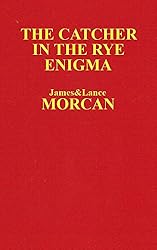
As novelists, the Morcans are best known for their bestselling thrillers The Ninth Orphan and Silent Fear, and for their historical adventure novels White Spirit, Into the Americas and Fiji; their non-fiction books include Genius Intelligence, The Catcher in the Rye Enigma and Debunking Holocaust Denial Theories, which have all been regular visitors to Amazon’s bestseller lists.
Their books all appear under the banner of New Zealand publisher Sterling Gate Books and are currently exclusive to Amazon.
Down Under film fans will be delighted to learn tickets are still available for Sydney’s eagerly awaited Inner West Film Fest 2024, which will roll out across Dendy Cinemas, Palace Cinemas, Actors Centre Australia, Marrickville Golf Club and many more locations from April 11 to 21.
Last year’s event started off as a one-dayer, but quickly expanded to four days. This year, festival organisers have more than doubled that. They say that required a lot more scouting around the world for great content.
Their efforts have certainly paid off this time around with a mouthwatering array of offerings for film-lovers with a special focus on comedy.
Festival co-directors Greg Dolgopolov and Dov Kornits said in a joint statement the Inner West Film Fest will kick off with a very special opening night event.
“Under a (hopefully) starry Inner West sky, a free one-off open-air screening will celebrate the much-loved and oft-quoted surprise breakout 2004 indie hit NAPOLEON DYNAMITE, the Jared Hess-directed cult comedy that helped define a generation.”
Dolgopolov and Kornits describe the movie as a deliriously entertaining cult classic and remind fans it recently enjoyed an anniversary screening at Sundance. This deliriously entertaining offering will screen on its 20th anniversary under the stars at Hole 1 of The Marrickville Golf Club.
This Inner West Film Fest programme is packed with Australian content, including festival favourite Goran Stolevski’s latest work, HOUSEKEEPING FOR BEGINNERS, which won the coveted Queer Lion at The Venice International Film Festival.
The Australian Premiere of PAUL FENECH: OUTBACK OUTLAW COMEDIAN, from the creator of FAT PIZZA, HOUSOS, and BOGAN HUNTERS, also offers behind-the-scenes footage and commentary that will have you crying with laughter.
FIGHT TO LIVE is a riveting, profoundly inspiring documentary that follows Aussie Bare Knuckle Fighting champion “Rowdy” Bec Rawlings’ journey from victim to conqueror. It was directed by Inner West resident Tom Haramis who will be a guest of the festival.
HEART OF THE MAN is a poignant exploration of family dynamics, personal growth, and the power of acceptance, as a young boxer finds the courage to follow his own path. Written, directed by and starring indigenous filmmaker David Cook who will also be a festival guest.
Photographer and documentarian Stephen Dupont’s searing, unforgettable documentary KAUGERE: A PLACE WHERE NOBODY ENTERS is a modern-day parable of once tribal men finding their feet through the game of rugby league.
SAHELA, executive produced by Dev Patel and starring Antonio Aakeel and Anula Navlekar, is director Raghuvir Joshi’s debut feature, and captures the complex, fraught emotion of a married man’s decision to confront the traditional Indian cultural values he was raised with.
The Cannes Film Festival success story DÉSERTS, is an epic road movie that winds its way from Casablanca to the South of Morocco Sahara, with gifted actor director Faouzi Bensaïdi (MILLE MOIS, DEATH FOR SALE) at the wheel.
Another Cannes success story, THE SWEET EAST is the stunning directorial debut of veteran indie cinematographer Sean Price Williams (GOOD TIME, HER SMELL, TESLA, MARJORIE PRIME), and provides an ample showcase for heartthrob-du-jour Jacob Elordi (SALTBURN, PRISCILLA), rising star Earl (son of Nick) Cave, magnetic scene stealer Simon Rex (RED ROCKET), and rising star Talia Ryder.
Blazing a trail at The 2023 Sundance Film Festival and SXSW, and scoring the Best Director prize at the Karlovy Vary Film Festival, FREMONT is a tough, but sweetly tempered tale with stunning performances from exciting newcomer Anaita Wali Zada, award-winning man-of-the-moment Jeremy Allen White (THE BEAR, THE IRON CLAW) and actor-writer-comedian Gregg Turkington (ANT-MAN).
The deliriously funny brainchild of comedian, co-writer, producer and star Esther Povitsky, the satirical comedy DRUGSTORE JUNE boasts a side-splitting support cast, including Beverly D’Angelo, James Remar, Haley Joel Osment, Bobby Lee, and executive producers Bill Burr and Al Madrigal.
French high-stylist and stand-alone auteur Luc Besson is back with the highly original DOGMAN, a quirky collision of rich characterisation and hard-edged action to rival the director’s best work in the genre, including LEON, NIKITA and LUCY. Gifted leading man Caleb Landry Jones delivers a masterclass in outsider iconoclasm to match Besson’s bravura moves.
Caleb Landry Jones in Dogman.
And that’s just a snapshot of what’s screening at this year’s Inner West Film Fest!
The eight books in our bestselling, somewhat contentious ‘Underground Knowledge Series’ cover details, concepts and little-known events not usually reported in mainstream media or mainstream academia, or if they are, they’re underreported for various reasons.
For the most part, we (the authors) have written about subjects that can be backed with facts. These facts include evidence substantiated in court cases, declassified government files, MSM reports and well-documented quotes from respected leaders in their fields. Wherever we do briefly deviate into pure speculation, we try to point that out so the dividing line between fact and rumor is always clear.
Many of the books have been regular visitors to Amazon’s bestseller lists in their categories.
Our entire ‘Underground Knowledge Series’ is available via Amazon.
The individual books (with Amazon links) are listed below:
Book 1: GENIUS INTELLIGENCE: Secret Techniques and Technologies to Increase IQ https://lnkd.in/gfA9K4Bg
Our Underground Knowledge global discussion group’s membership has topped 16,000 on Goodreads, confirming its status as one of the fastest-growing, most popular groups on the Amazon-owned site for books, authors, readers and all things literary.
The group has been designed to encourage debates about important and underreported issues of our era. All you need is an enquiring mind and a desire to gain or share underground knowledge.
So what is underground knowledge? Our definition is: Underground knowledge covers details, concepts and little-known events not usually reported in mainstream media (MSM), or, if they are, they’re underreported for various reasons. Nor are they usually covered by mainstream academia.
Our Underground Knowledge group is open to everyone no matter your beliefs or nationality, and all viewpoints are welcome. Undergrounders (our members) come from many walks of life and include award-winning authors, everyday readers, teachers and students, historians, scientists, military and former intelligence personnel, conspiracy theorists and agitators, Christians and non-believers, Islamists and Buddhists, and a lot more.Y’all welcome!
The link between diet and health is well proven and, more importantly, widely acknowledged by doctors, for ailments such as diabetes and heart disease, but are roundly ignored by them in treating other human conditions – cancer being one of those. We address this in our book Medical Industrial Complex, and we ask why mainstream (Western) medicine seems to go out of its way to discourage cancer patients from making too much of the cancer-diet connection.
Further to our blog of October 28, here’s another excerpt from Medical Industrial Complex:
The good health site HoneyColony.com neatly addresses this in an article quoting Dr. Carolyn Dean, a medical advisory board member of the nonprofit Nutritional Magnesium Association. She says, “There are many reasons why diet is not stressed in cancer treatment” and “Most of them stem from the fact that medicine does not put any emphasis on nutrition…
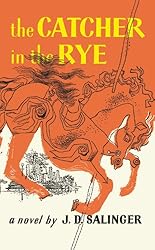
In our book The Catcher in the Rye Enigma, we observe that J.D. Salinger’s bestselling novel The Catcher in the Rye is now ‘required reading’ in most high school English courses in the US and throughout much of the Western world. This despite the fact it has been banned by various schools and libraries, and criticized by numerous parent and teacher groups as being immoral literature due to its use of profanity and themes of excessive rebellion and alienation.
Salinger’s classic novel.
We explore this in the following excerpt from (our book) The Catcher in the Rye Enigma:
The fact that The Catcher in the Rye is now required reading has inspired some conspiracy theorists – most probably of the Tinfoil Hat variety – to envisage a grand conspiracy in which mind control is being conducted on a mass scale in order to corrupt, pacify or otherwise…


 Morcan Books & Films