An orphan grows up to become an assassin for a highly secretive organization. When he tries to break free and live a normal life, he is hunted by his mentor and father figure, and by a female orphan he spent his childhood with. On the run, the mysterious man’s life becomes entwined with his beautiful French-African hostage and a shocking past riddled with the darkest of conspiracies is revealed.


TheNinthOrphan ebook cover

THE NINTH ORPHAN (The Orphan Trilogy, #1)


Prologue

A deer grazed on lush grass in a forest clearing. Around her, early morning mist clung to the tops of the spruce and fir trees common to Montana’s Custer National Park. Her ears twitched as the distant screech of a Merlin falcon carried to her in the still mountain air. The deer looked up, but mist concealed any view of the small and relatively rare bird of prey. She resumed grazing.

The deer wasn’t to know, but her remaining lifespan could be measured in minutes.

Two hundred yards downwind, an unusually large hunting party approached. This was a hunting party with a difference. Only one of the hunters was armed – their leader, Tommy Kentbridge; the others were all children ranging in age from ten to twelve. Male and female, they were of various racial backgrounds. Following Kentbridge, they walked silently in single file along a forest trail.

A tall, powerfully-built man in his mid-thirties, Kentbridge moved effortlessly across the hilly terrain. In his wake, the youngsters had to scramble to keep up. Muddy underfoot conditions added to their difficulties. Despite the challenges posed by keeping pace with their fast-moving leader, the children were doing admirably well. Their faces were flushed with excitement.

Kentbridge, who earlier that day had transported the kids from Chicago’s Pedemont Orphanage, kept one eye on his charges as the trail took them along the edge of a cliff. He noted with satisfaction not one of them seemed fazed by the thousand foot drop. They appeared to cope with the danger with all the poise of adults, or of young adults at least.

As he continued to observe the orphans, Kentbridge’s keen eyes missed nothing. A head count confirmed all twenty three were still with him. Strangely, he only ever referred to them by numbers. The oldest child was Number One, the youngest Twenty Three.

Directly behind Kentbridge, following like a shadow, was a serious-looking, twelve-year-old boy. Number Nine, who was the ninth-born orphan, had startling green eyes that seemed all-knowing and gave him a maturity beyond his years. Nine’s intelligent face was framed by dark, wavy hair. He wore a silver necklace. A ruby dangled from it, bouncing on his chest as he walked. The exquisite stone gave off a blood red glow in the sunlight.

A slightly younger, blonde-haired girl followed close behind. Number Seventeen was, of course, the seventeenth-born orphan. She surveyed the world through icy-blue eyes. Those same eyes were now fixed on the center of Nine’s back. It irked the competitive Seventeen that Nine had ensconced himself between Kentbridge and herself. She felt like she was always following in the boy’s footsteps.

Kentbridge slowed momentarily as the trail took them away from the cliff-top. The screech of a Merlin falcon attracted his attention. Just as the mist had concealed the falcon from the deer’s view moments earlier, it also concealed the falcon from Kentbridge’s view.

Some sixth sense prompted Kentbridge to unshoulder his rifle – a powerful, semi-automatic, military-issue weapon which he handled with the familiarity of a sniper.

The orphans’ leader suddenly froze. Behind him, the children became motionless also. A hundred yards upwind, a beautiful deer stood grazing, superimposed against the green foliage. She continued to graze, unaware humans were in the vicinity.

Kentbridge flashed military-style hand signals to his young charges. In unison, the orphans dropped to the ground. Close behind Kentbridge, Nine and Seventeen watched in awe as their leader sunk down onto one knee and aimed his rifle at the deer. At the last second, he lowered his weapon a fraction then fired. The shot shattered the silence. The deer went down.

The orphans and their leader raced over to the deer to discover she was not yet dead. On her side, the deer was trembling and white foam covered her nose and mouth. The foam turned pink then red as her inner organs reacted to the trauma caused by one not-so-well-placed bullet. Her breathing came in short rasps. The dying animal pawed the air with her legs as the orphans crowded around her.

Kentbridge handed his rifle to his shadow, Number Nine, and nodded toward the trembling animal. Of all the orphans, Nine was his most brilliant pupil. He was stubborn and defiant, but also highly intelligent. In many ways he reminded Kentbridge of himself.

The other twenty two orphans felt varying degrees of jealousy as they watched Nine psyching himself up to carry out their teacher’s order. Although very intelligent and gifted in their own right, the others sensed Nine had some indefinable X-factor that gave him an edge over them. It set him apart and they knew it.

Not even Kentbridge could say exactly what it was that gave the ninth-born orphan the edge. It wasn’t as if Nine was necessarily smarter than the others. He just seemed more sensitive and maybe that, Kentbridge reasoned, was where the boy’s genius lay. Nine appeared to feel life so deeply at times it was as if he had an extrasensory awareness.

Indeed, Kentbridge knew that kind of heightened consciousness, or right-brained intuitiveness, was the common element among all great thinkers. It was the mental frequency he hoped all his orphans would eventually operate at.

Cradling the rifle which was almost as long as he was tall, Nine looked down at the deer and prepared to put the animal out of its misery. The others watched intently as he lifted the weapon to his shoulder and took aim. Through the rifle’s scope, he saw the deer’s terrified eyes staring back at him. The boy hesitated.

“Finish the mission, Nine,” Kentbridge commanded. Nine looked up at his master then returned his gaze to the deer which was now twitching violently. “That’s an order!” Kentbridge said, raising his voice.

Nine was feeling increasingly traumatized. Seventeen shuffled close behind, as if encouraging him to hand the weapon to her. Unable to do the deed, Nine lowered the rifle.

Kentbridge snatched the rifle from him and handed it to the blonde-haired girl. “Complete the mission, Seventeen.”

Seventeen was delighted. She’d been waiting all her life for an opportunity to outdo Nine. However, she hid her delight as she expertly raised the rifle and took aim.

Unable to watch, Nine walked away from the scene. As he did, Kentbridge observed the boy had the same haunted look the deer had at that very moment.

A single shot rang out, its echo rebounding off the surrounding hills. The sound reverberated in Nine’s head, like a jackhammer inside his brain.

Without looking back, Nine walked deeper into the forest. He began to cry as he internalized the deer’s pain. Almost without realizing, Nine touched the ruby that hung from his necklace. As always, for no apparent reason, its touch brought him comfort.


Product Details


THE NINTH ORPHAN (The Orphan Trilogy, #1)  is exclusive to Amazon: http://www.amazon.com/dp/B0056I4FKC


***********************************************

For those who love historical adventures, romance and true-life, action-packed, wilderness survival tales, here’s an excerpt from our critically acclaimed, new release epic WHITE SPIRIT (A novel based on a true story) – set in 19th Century Australia.
Product Details

WHITE SPIRIT / Chapter 1

A wiry Aboriginal tracker ran fast through the undergrowth, following tracks only he could see. He carried a spear in one hand and a nulla nulla, or club, in the other. Wearing only a loincloth, he covered the ground with effortless ease, his bare feet hardly touching the sun-baked earth.

This was Barega, one of the last surviving members of the mysterious Joondaburri, a tribe whose menfolk were renowned up and down Australia’s east coast for their superior tracking abilities. In the language of his people, his name meant the Wind, which was appropriate for he ran like the wind. To the British soldiers who employed him, he was simply known as the Tracker.

Although only average height, Barega’s legs were out of proportion in that they were unusually long in relation to his torso – a fact that gave him a distinct advantage in his chosen occupation. Few men, black or white, could match him for speed in a cross-country foot race, and, like others of his tribe, he could run all day long, seemingly without tiring or succumbing to the relentless heat.

The tracks he followed were those of three convicts who had escaped custody earlier that morning. They were heading west, away from the coast and away from Moreton Bay – the site of Britain’s newest penal colony and home to two hundred or so convicts and soldiers. The route was leading deeper into the tropical rainforest that hugged this part of the coast. It became progressively steeper as the hills gave way to mountains.

Barega was accompanied by three soldiers who followed him on horseback. He glanced back at them from time to time to ensure they remained in contact. Though their horses were doing most of the work, it was clear to him the men were having a hard time of it in the heat. They stopped every so often to drink from their water bottles.

Leading the way was Lieutenant Desmond Hogan, a dashing Englishman who was a career soldier through and through. Hogan’s ambition to succeed in his chosen career was hinted at by his senior ranking, which was an achievement in itself for one so young. He was only twenty-six. His rapid rise up the ranks had undoubtedly been influenced by the fact that his father and his father’s father had both been high ranking army officers, and he was candid enough to acknowledge that, but that didn’t change the fact he was a man of some ability whose promotion had largely been based on merit.

Hogan caught Barega’s eye. “How close, Tracker?” he asked.

Pulling up, the tracker pointed at the sun, which at that moment was to the northeast, and then he pointed dead north. “Soon, Mister,” he said by way of explanation, though no explanation was necessary.

The young lieutenant had used Barega so often he could readily understand the other’s hand signals. On this occasion, the tracker had indicated they’d catch up to their quarry by mid-day when the sun would be where he’d indicated – dead north. By Hogan’s reckoning, that would be in an hour’s time give or take. He glanced around at his two men. “Another hour should do it,” he said.

“Thank Christ,” one of them muttered.

Like their commanding officer, the two soldiers – both privates – had removed their red tunics, which now hung loosely from their saddles. It was the one allowance Hogan made for the heat, but only when out of sight of the penal settlement as it bucked the army’s rigid dress code.

Behind the pair, in the distance, Hogan could still see Moreton Bay. Trees concealed the penal settlement that had taken its name from the bay, but from the current vantage point there was an unobstructed view of the bay itself. And beyond it, the blue of the Pacific Ocean merged with the blue of the sky. It was a sight to behold.

Hogan and the others weren’t here to admire the view, however. They’d been tasked with capturing the runaways, and to a man they were aware the sooner they accomplished that the sooner they could return to base and enjoy some well-earned refreshments – and escape the accursed heat and humidity.

Ahead of them, Barega had resumed running. His black skin glistened with sweat as he picked up the pace. It was clear he sensed his prey were close now.

The soldiers followed, staying close to the tracker so as not to lose touch with him in the dense rainforest. Vines and creepers clawed at them, threatening to unseat them from their mounts, as they proceeded. Despite their discomfort, the soldiers were grateful the convicts had opted to keep to a well-worn trail carved out over the centuries by nomadic natives. They knew if their quarry had opted to deviate from the path, the horses would be no use to them and they’d have been forced to follow on foot.

Lieutenant Hogan knew something his men didn’t know, however. He alone knew they weren’t expected to bring all of the runaways back alive. Before setting out, the penal settlement’s commandant had made it very clear to Hogan privately that he’d be upset if more than one escapee survived.

Lord Bertram Cheetham’s reputation for cruelty had preceded him before he took up his new posting as Moreton Bay’s commander-in-chief four months earlier. Since then, Hogan and the other officers had come to see Cheetham’s reputation was well deserved; he viewed the convicts as animals and expected the soldiers under his command to treat them as such. As a result, floggings had become a daily event, the overworked convicts were starved and regularly beaten, and the dysentery and other ailments that plagued them and some of the soldiers, too, had reached epidemic proportions. Nearly every single convict had at least one serious illness or injury and, to make matters worse, medical care was basic to say the least. Despite this, as long as a convict could draw breath, he was forced to endure sixteen-hour days of hard labour, seven days a week.

So harsh were the conditions – reportedly as harsh as those at infamous Norfolk Island – a few convicts had opted to commit suicide rather than serve out their sentences, and more than a few others were contemplating such drastic action.

Another consequence of the cruelty was barely a week passed without one or more convicts attempting to escape. Where they hoped to escape to was anyone’s guess because Moreton Bay was many hundreds of miles from the nearest civilization. Convicts escaping overland risked death by heatstroke, thirst, starvation, snakebite or unfriendly natives, and escape by sea was out of the question because the only vessels visiting Moreton Bay were those servicing the penal settlement.

Rebellion was inevitable, of course, and since Lord Cheetham’s arrival illness, escape attempts and deaths amongst the convicts were all increasing. This had only served to infuriate Cheetham whose solution was to work the convicts even harder and to impose harsher punishments for any transgression.

Attempts by Hogan and the other officers to appeal to the commandant’s common sense, if not his humanity, had fallen upon deaf ears. Hence Cheetham’s private instructions to Hogan earlier that morning – to make an example of these latest escapees and ensure only one of them was returned to Moreton Bay alive. So desperate was he to deter the other convicts from attempting to escape.

Such instructions didn’t sit well with Hogan, but he felt his hands were tied. Experience had taught him if he returned the three escapees alive, the eccentric Cheetham was likely to order the execution of all three, and possibly one or two others as well. He’d seen that happen before.

In a clearing, Hogan glanced behind him and was distracted by the sight of a sailing ship some two or three miles offshore. She was far to the south – so distant that he wouldn’t have noticed her had it not been for her billowing white sails. They could easily have been mistaken for clouds had it not been a cloudless day. The young officer knew immediately the vessel was the Hoogley for she was the only one scheduled to visit Moreton Bay this week. She was bringing another shipment of convicts from the Parramatta penal settlement near Sydney Town. A regular occurrence these days. Had Hogan not been prevailed upon to supervise the capture of the escapees he’d have been tasked with greeting the Hoogley and her cargo of convicts. As it was, that particular chore would fall to his commanding officer on this occasion.

Though compassion and sympathy didn’t figure highly in his make-up, the lieutenant almost felt sorry for the men incarcerated in the hold of the schooner he was observing. Almost but not quite. He was aware that convicts unlucky enough to be shipped out to Moreton Bay, or to the other hell-hole that was Norfolk Island, were considered the most incorrigible of the convicts. Beyond Repatriation was the army’s official term for these men. As far as the military was concerned, they were unlikely to taste freedom again let alone ever return to their countries of origin. As far as Hogan was concerned, they deserved to rot in hell.

Hogan’s horse stumbled on the protruding root of a tree, forcing him to focus on the task at hand. He realised he’d lost sight of the tracker, and dug his heels into his mount’s flanks, encouraging the horse to move faster.

Product Details

Offshore, the Hoogley was making hard work of it as she plied north through high, rolling seas. The conditions were the lingering aftermath of a storm, which, up until the previous evening, had battered the three-masted schooner without let-up since she’d departed Sydney Town six days earlier. Her timbers creaked in protest as her bow rose and fell alarmingly, and the waves that crashed over her threatened to tear the sails from their masts. In the rigging, high above deck, riggers hung on for dear life as they carried out their death-defying duties.

Below deck, the conditions were scarcely any better. As well as putting up with the rolling motion of the vessel, the forty mainly Irish convicts and their guards had to contend with the constant sea spray and saltwater, which poured through the portholes and open hatches, and which ensured the men remained permanently wet.

The convicts had the worst of it for they had been confined below deck for the entirety of the voyage. Permanently shackled, their ankles were secured by chains, which, in turn, passed through a longer chain bolted to the hull’s interior at each end of the hold. Their condition wasn’t helped any by the lack of adequate food and water throughout the voyage, nor by the temperatures, which soared in the confined space by day and dropped to near-freezing by night.

The overpowering stench of urine and shit combined with the ever-present bilge water that sloshed about in the bottom of the hold was all pervasive. An outbreak of dysentery early in the voyage had swept through the vessel, affecting convicts, guards and crew alike, adding to the misery of all.

Not all the convicts had survived the voyage. One, a sickly young man from Belfast, had succumbed to pneumonia. His body had been unceremoniously dumped at sea two days earlier. And several others were critically ill. Their condition wasn’t helped any by the fact there was no doctor or even any rudimentary medical facilities on board.

Harsh though this voyage was, it was nothing compared to the three or four-month journeys these convicts had originally endured out from England. In some cases, fatalities had been as high as forty per cent, and on one ship fatalities had topped sixty per cent.

Two survivors of that hellish voyage aboard the most notorious of prison ships were now aboard the Hoogley. Twenty-eight-year-old John Graham and the slightly younger Noel Thomas whose date of birth was unknown – unknown to Noel at least – were chained together toward the rear of the hold. Originally from Dundalk, in County Louth, Ireland, they were boyhood friends. The former had been sentenced to seven years’ transportation to Australia for stealing ten pounds from a shady employer he alleged hadn’t paid him, while the latter – hackneyed though it may sound – had been sentenced to five years for stealing a loaf of bread.

The two friends were a study in contrasts. John was broad-shouldered and taller than most of his companions, and certainly better looking. His unruly black, shoulder-length hair framed a pale but interesting face that women invariably found attractive. What really set him apart, however, was his startling blue eyes. Ever-alert, they missed nothing. Even here, chained in the hold of a ship, John constantly surveyed his fellows and the guards who watched over them.

Noel, on the other hand, was short and wiry, and not overly handsome. Nevertheless, he had an engaging manner and a cheeky wit that endeared him to all – all except his jailers that is. His cheekiness constantly landed him in trouble, with fellow convicts and guards alike, and John had had to come to his rescue more than once.

Chained alongside them was elderly Dubliner who was ailing rapidly. Leith Donovan, who claimed to be forty-five but looked to be all of sixty-five, had been ill even before departing Parramatta. He began throwing up as soon as the schooner set sail and was still throwing up now. In the last six days he’d lost damn near half his bodyweight.

“Hang in there, Leith,” Noel urged as Donovan disgorged the last of the meagre rations he’d managed to keep down. The remains of those rations, including vestiges of cabbage and corn, ended up on Noel’s leg.

“Sorry, Thomas,” Donovan mumbled as he made a half-hearted attempt to wipe the mess from his companion’s leg with his hand.

John glanced at Noel. His friend’s expression signalled that he thought it likely Donovan’s journey would end soon – an opinion that John shared.

Noel waved to the nearest guard to catch his attention. “We have a sick man here,” he said.

The guard, a callous Englishman who took every opportunity to show his contempt for the Irish, just grinned at Noel. He quickly looked away when he noticed John staring at him.

John Graham’s startling blue eyes had that effect. Few men could hold his gaze. There was something behind those eyes that unnerved them.

Product Details

At the same time, in the hinterland behind Moreton Bay, the three convict escapees were so exhausted they had slowed to a walk. While they’d started out full of running in the cool of the pre-dawn, the exertion, heat and thirst had quickly reduced them to a slow shuffle. They weren’t helped either by the leg irons they wore. The heavy shackles made running almost impossible, and the clinking noise they made gave the convicts’ whereabouts away to anyone within fifty yards or so. Only the thought of what awaited them back at Moreton Bay should they be caught kept them going. To a man, they’d rather die than return to the place they called hell.

They were a mixed bunch. About all they had in common was they were English convicts with a shared yearning for freedom. And they were armed. The older man carried a tomahawk and the two younger men carried knives.

Tim Brady, the ringleader, was the oldest of the three by some years. A forty-five-year-old Cornishman, he was considerably shorter than his two companions, but he was almost as wide as he was tall. What he lacked in height he made up for with strength, and it was widely accepted he was the strongest of all the convicts – and all the soldiers, too, for that matter – at Moreton Bay.

Brady’s companions, both Cockneys and both in their early twenties, naturally looked to Brady for guidance. After all, the escape had been his idea. Unfortunately for them, Brady was now out of ideas and so exhausted he was no use to them or to himself for that matter.

The two Cockneys pulled up when they realised Brady had fallen behind.

“Hurry up Brady!” the younger man shouted.

Gasping for breath, the Cornishman tried to run, but his legs gave out from under him and he crashed to the ground. “Water,” he mumbled. “I need water.”

“We all need water, Brady!” the older Cockney said. “We ’ave to keep movin’.”

Brady slowly pushed himself to his feet and stumbled forward to catch up with his companions.

The two Cockneys looked at each other.

“He’s slowin’ us down,” one mumbled.

“Yeah fuck ’im,” the other said.

The pair took off, leaving Brady to fend for himself.

“Wait, you bastards!” Brady called. He hurried after them, desperate not to be left behind.

The first the Cornishman realised they had company was when the tip of the tracker’s spear skewered him from behind. He saw its tip emerge from his chest before he felt any pain. And what pain he felt was only fleeting as Barega’s nulla nulla smashed his skull, killing him moments after the spear had entered him.

Barega stopped only long enough to retrieve his spear then resumed running after the other two. Behind him, the sound of horses’ hooves told him the soldiers were close by. Ahead of him, he could hear the two Cockneys’ clinking leg irons as they crashed through the undergrowth.

Although less than fifty yards ahead of their pursuers, the surviving escapees had no clue they were about to be captured, or worse. For the moment, they were blissfully unaware of Brady’s untimely end or the fact that their freedom could now be measured in minutes, or less.

The first they realised the game was up was when the sound of the horses reached them. They immediately hid in dense bush and waited, their knives drawn.

Looking through the foliage, they were confused by a series of movements too quick for the eye to follow. Barega moved with such speed and stealth he gave the impression there were two or even three of him.

In the confusion, the younger Cockney moved, revealing his hiding place. It was the last thing he ever did. The tracker’s spear went straight through his throat, pinning him to a tree.

Terrified, the surviving convict took off, running blindly through the trees.

Not for the first time that day, twenty-three-year-old Frank Patterson pondered the wisdom of attempting to escape. In fact, he had regretted his decision almost immediately, but he’d made his choice and had to keep going.

Patterson didn’t see the nulla nulla that flew through the air, striking the back of his head and stunning him.

Barega retrieved his weapon and prepared to finish off the stunned Cockney. He was distracted by the arrival of Hogan and the others. His hesitation gave Patterson time to retrieve the long-bladed hunting knife he’d dropped. Barega brought his nulla nulla down hard, shattering his victim’s forearm and causing him to scream out in agony.

The tracker looked on, amused, as the desperate convict retrieved the fallen knife with his good hand and shaped up to attack again.

To Patterson’s surprise, Barega suddenly lay prone on the earth. The young Cockney glanced up to see the two soldiers with Hogan had their muskets pointed his way. Two shots rang out as a single volley. Such was his shock Patterson fell to the ground, convinced he was dead. It took him a moment or to realise he’d been spared. He looked up to see the soldiers were laughing at him.

“Welcome back to the land of the living, lad!” one of the soldiers shouted, prompting more laughter. They’d pulled the same trick on other escapees, aiming their weapons high or wide of their would-be victim, though Patterson wasn’t to know that.

Grinning, the tracker rose and pulled the long-bladed knife from the Cockney’s grasp, claiming it for himself. Such spoils were his as of right. That was the arrangement he’d made with the British. Barega beamed at Hogan who motioned to him to lift the relieved but still shocked survivor to his feet and start marching him back to Moreton Bay.
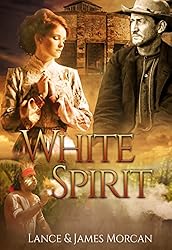
 

White Spirit (A novel based on a true story)

WHITE SPIRIT (A novel based on a true story)  is exclusive to Amazon: https://www.amazon.com/White-Spirit-novel-based-story-ebook/dp/B01LWIRH9J/


************************************ 

Authors’ note:

Much of this novel was directly inspired by the diary entries of young English seaman John Jewitt during his time aboard the brig The Boston and also during his sojourn at Nootka Sound, on North America’s western seaboard, from 1802 to 1805.


Into the Americas (A novel based on a true story)

A novel based on a true story.


“Many paddles, one canoe” –First Nations saying


Prologue

In the skies above North America’s west coast, amongst the clouds, a bald eagle glided in lazy circles. With her magnificent white head and tail feathers, and her six-foot wingspan, she was the queen of her domain as she made use of the thermals that rose from the unseen terrain below.

The clouds parted to reveal a village – one of many populated by the indigenous people of the remote Northwest Pacific region. Nootka village was bordered by rugged, forest-covered hills which rose up out of the sea. Comprised of twenty or so large, wooden lodges, it was home to the Mowachaht tribe, one of the twenty-five Nuu-chah-nulth indigenous groups that occupied the region’s craggy coastline. A two-masted schooner lay at anchor offshore, safe for the moment in an inlet with the unlikely name of Friendly Cove.

Distance was no problem for the eagle whose sharp eyesight could distinguish any object from another, even if those objects were little bigger than a pinhead. Right now, her eyes were focused on a Chinook salmon swimming between the schooner and shore. The eagle flattened her wings and dove head first, extending her wings moments before she struck the water. Talons extended and now in a shallow dive, the eagle grasped the salmon and, with a few mighty beats of her wings, rose sluggishly skyward with her catch.

The eagle’s labored flight took her directly over the village. If any of the villagers had been waiting for her, with bow or musket primed, they’d have shot her down easily for she was as yet barely higher than the colorful totem poles that lined the shore. Fortunately for her, eagles were sacred to these people and so they ruled the skies with impunity.

A trade was going down with a dozen crewmen from the schooner. Unkempt and ill disciplined, the crewmen were typical of the freebooters who visited these shores in increasing numbers. They carried with them an assortment of weapons and were clearly no strangers to violence.

Armed Mowachaht warriors, ever-mindful of bad experiences they’d had with other European traders, kept a wary eye on the visitors. Most were armed with muskets, some carried blunderbusses and a few bore traditional weapons, including clubs, spears and tomahawks.

The traders had come to exchange muskets for sea-otter pelts. Much sought-after, the beautiful pelts fetched a princely sum in the civilized world – especially in London and in Macau, China. Consequently, Nootka village and the sound named after it was an increasingly popular port of call for traders intent on filling their ships’ holds with the bounty of the New World.

Most of Nootka’s fifteen hundred residents were present to observe the trade, which was being conducted on a sandy beach in front of the village. Trading, especially with visiting Europeans, was a highlight of their short, hard lives. More so after the long winter months – as was the case on this pleasant spring day.

Among the Mowachahts, the common or untitled people wore sealskin and coarse cedar bark clothing, which afforded protection from the constant rain in these parts. The chiefs and men and women of high ranking wore animal skins and colorful capes or, in rare cases, the pelt of the sea-otter.

Headmen invariably wore the striking black sea otter pelt. It extended to the knees and was fastened around the waist by a wide band of colorful, woven cedar bark. The warriors wore square-cut, yellow mantles with holes cut for the arms – similar to those worn by the commoners except theirs were dyed red and were more basic.

Absent from the trading activities were the Mowachahts’ slaves. Acquired in raids on neighboring tribes, the slaves were readily identifiable as such as they collected firewood and performed other menial tasks in and around the village. Though they spoke the same Wakashan language as their Mowachaht masters, their appearance was quite different: each bore the physical characteristics of his or her tribe. Some were lighter skinned, others darker; some were tall and slender, others short and stocky; some male slaves were bald or wore their hair short, others wore their hair in long ringlets; most wore raggedy sealskin clothing while some were near-naked. Their number included almost as many females as males – the former more often than not serving as sex slaves as well as manual workers.

Above the beach, the Mowachahts’ lodges extended to the tree line. They were a sprawling collection of wooden dwellings, the remnants of a Spanish trading outpost vacated some years earlier. Smoke from cooking fires curled up into the sky from strategically placed openings in the lodges’ roofs.

The totem poles – some even taller than the surrounding fir trees – towered over the lodges.

On the beach, there was an air of tension as the schooner’s master, Captain Alvin Walsh, an abrasive New Yorker with a well deserved reputation for dishonest trades, bargained with a group of headmen. Foremost among the latter was Maquina, chief of the Mowachahts. Tall, bronze and muscular, the middle-aged Maquina cut an impressive figure in his ceremonial cloak. Feathers protruded from his long, black hair, which he wore as a bun on top of his head. Like all the headmen, white down covered his head and shoulders, conveying the impression of falling snow.

Captain Walsh’s steely gaze was fixed on the bundles of pelts that lay at his feet while Maquina’s hawk-like eyes were fixed on a dozen new muskets stacked end-to-end in an open casket. The casket lay on top of five identical unopened caskets.

Hard-nosed bartering had begun soon after the traders had stepped ashore earlier in the day and, to both parties, it seemed a successful trade was no closer. Tempers were becoming frayed.

Maquina pointed at the caskets and, in broken English, said, “Maquina say…five pelts…one musket.”

Walsh shook his head. “One musket…ten pelts.” He appeared ready to depart, a shrewd strategy he’d fine-tuned years earlier when trading watered-down whisky to the East Coast tribes.

The chief quickly nodded to his opposite, indicating they had a deal. Walsh gestured to his men who immediately began scooping up bundles of pelts.

Maquina intervened. “Try musket first,” he said.

Walsh cursed under his breath as he motioned to his men to hold off for the moment. He then selected a musket from the open casket and handed it to Maquina. The shrewd chief ignored the offering and selected another musket. He expertly primed it and fired it into the air. The shot echoed throughout Nootka Sound. Still suspicious, Maquina broke open another casket. He tested a second musket with the same result. Satisfied, he made the faintest of hand gestures to his warriors who immediately uplifted the caskets and carried them away.

A relieved Walsh motioned to his men to resume gathering up the pelts. Under Maquina’s penetrating gaze, the captain appeared tense and he exhorted his men to hurry.

There was good reason for Maquina’s suspicion. The Mowachahts – like all members of the wider Nuu-chah-nulth community – had been short-changed, and worse, by European traders. As the number of visiting trading vessels increased, so too had the number of unsavory incidents. The indiscriminate shooting of villagers by drunk or disgruntled traders was becoming almost commonplace and the rape and mistreatment of women even more so.

And so it was with some malevolence that Maquina and his people observed these latest traders as they ferried their trade items back to the waiting ship.

#

Early next morning, Maquina led a six-strong hunting party into the hills behind Nootka village. His five companions included Peshwar, a forbidding headman whose reputation as a fearsome warrior rivalled that of the chief and extended far beyond the borders of the Mowachahts’ territory. All six hunters carried shiny, new muskets acquired in the previous day’s trade, and they were keen to put them to good use.

Ahead of them, in dense forest, an elk grazed. Something spooked him. He wasn’t sure what – a scent or a sound perhaps – and he took off.

Soon after, Maquina spotted the elk’s tracks and knelt down to study them. He then led his fellow hunters deeper into the trees at a fast trot.

Elsewhere in the forest, the same elk burst into a clearing, disturbing a twelve-strong war party of Haachaht warriors, traditional enemies of the Mowachahts. They carried bows, tomahawks and other traditional weapons, and wore the grotesque wolf’s brow mask associated with their tribe.

The Haachahts’ chief, Callicum, a stocky man who wore a large nose-ring, stared into the surrounding trees. He flashed a hand signal at his warriors and they quickly dispersed. Now hidden from sight, they could hear the Mowachaht hunters moving through the undergrowth in pursuit of the elk.

Reaching the forest clearing, the Mowachahts stopped to study their quarry’s tracks. Maquina’s eyes were drawn to an eagle circling high above. He stared at the bird for a few seconds before returning his gaze to the trees. Sensing danger, he primed his musket. His fellow hunters followed suite.

A Haachaht bowman stepped out from behind a tree and aimed an arrow directly at Maquina. The bowman held his bow horizontal, in the manner of the indigenous people of the west coast. Maquina dropped to one knee and swung his musket up just as the bowman loosed his arrow. The arrow lodged in the throat of a tall Mowachaht standing directly behind Maquina. Mortally wounded, the warrior collapsed, choking on his own blood. Maquina killed the bowman with one well placed shot.

Haachaht war cries rang out as Callicum led his warriors out from the trees. Another arrow found its mark, killing a young Mowachaht. Reduced to four, the remaining Mowachahts fought like men possessed.

Two Haachahts closed in on Peshwar. He aimed his musket at the nearest of the two. A hollow click signalled it had malfunctioned. Cursing, Peshwar threw his musket aside and drew his tomahawk. “Peshak!” he swore as he grappled with his enemies. With two mighty swings of his tomahawk, the two Haachahts lay dead at his feet, their heads almost severed from their bodies.

As the fight escalated, a short Mowachaht aimed his musket at a burly Haachaht who rushed him, club in hand. His musket also misfired and he was clubbed to the ground. The Haachaht finished him off before he was felled by a musket shot.

Nearby, Maquina found himself fighting alongside Peshwar. “The muskets are faulty!” Maquina shouted.

Peshwar nodded. “The White-Faces have deceived us!”

The chief found himself face-to-face with Callicum who charged him with a tomahawk in each hand. Maquina raised his musket and pulled the trigger. This time his weapon misfired. Before he could reload, the Haachaht chief was onto him. Maquina was forced to back-peddle and use his musket to block his attacker’s blows. Peshwar came to his aid, wounding Callicum with his own tomahawk.

Seeing their chief in trouble, the other Haachahts seemed unsure what to do next.

Maquina and Peshwar took advantage of their enemies’ indecision and fled, dragging with them the other surviving hunter.

As they made good their escape, Maquina was consumed by the anger he felt toward the European traders. Yet again his people had fallen foul of the traders’ unscrupulous ways. On this occasion, faulty muskets had contributed to the deaths of three of his finest warriors.


INTO THE AMERICAS (A novel based on a true story)  is available as a paperback and Kindle ebook exclusively via Amazon: http://www.amazon.com/Into-Americas-novel-based-story-ebook/dp/B00YJKM51E/


*****************************

A female detective is assigned to investigate the murder of a student at a prestigious university for the deaf in London. The investigation coincides with a deadly flu virus outbreak, resulting in the university being quarantined from the outside world… That’s the premise of our soon-to-be-released book Silent Fear (A novel inspired by true crimes).

Silent Fear (A novel inspired by true crimes)

New thriller novel…chilling.


Set in the often underreported world of the Deaf, we hope Silent Fear will give readers a unique insight into what everyday life for deaf people is like. We have worked closely with the Deaf community to ensure authenticity.

This novel was inspired by the murders of two deaf students at Gallaudet University, one of the world’s most prestigious learning institutions for the deaf, in the early 2000’s. The investigating authorities didn’t know if it was an ‘inside job’ and for a time nearly everyone connected to Gallaudet was under suspicion.

We have also penned a screenplay adaptation of the book and are concurrently developing a feature film adaptation of Silent Fear. Here’s a two-minute teaser trailer for the movie: https://www.goodreads.com/videos/1136…

One of the producers on board the film adaptation, New Zealand’s premiere Deaf filmmaker Brent Macpherson, is obviously a fantastic asset to the production. We are very appreciative that Brent has seen the cinematic potential in our story and has poured his heart and soul into developing the associated film project.

Silent Fear (A novel inspired by true crimes): https://www.goodreads.com/book/show/3…


Other novels by Lance & James Morcan include:

The Orphan Trilogy (The Orphan Trilogy #1-3)  

Into the Americas (A novel based on a true story)  

White Spirit (A novel based on a true story)   

The World Duology (The World Duology #1-2)  


To view all our fiction and non-fiction books check out our authors’ pages on Amazon: https://www.amazon.com/James-Morcan/e/B005EPOU48/           


**************************************
 

Underground Knowledge, the global discussion group we founded on Goodreads, has cracked the 3,000 membership milestone, making it one of the fastest-growing and most active groups on the popular Amazon-owned literary site for books, authors and readers.


The Underground Knowledge group was designed to encourage debates about important and underreported issues of our era.

If you are interested, check it out at https://www.goodreads.com/group/show/142309-underground-knowledge—a-discussion-group — New members are welcome! All you need is an enquiring mind and a desire to gain or share “underground knowledge”. Our current members (Undergrounders) range from award winning authors, scientists, teachers and historians to former intelligence agents, journalists, students and everyday readers.


Here’s a snapshot of what the group’s Undergrounders are discussing now:

The multi-trillion dollar WW2 cover-up  

Finding (hiding) a cure for cancer

Other UFO theories  

Illuminati

The 2016 U.S. Presidential Election    

The overpopulation myth (part 1)

Bobby Kennedy – “RFK must die”  

Unit 731 – the Japanese Auschwitz

The MK-Ultra theory  

Where do you guys get your daily news from?

Evidence for scientifically advanced Ancient civilizations?   

Is McDonalds actually food?

James Morcan’s rant against Holocaust Deniers  

Does the UK control the US? And did America ever achieve full independence from Britain?

Book of Genesis – not an original document?

Was 9/11 a false flag attack and ‘Inside Job’? 54% of you voted YES

The Queen’s position in modern Britain  

The Monster Study

Hollywood stars on Ormus  

The Untold History of The United States

The heroin connection  

Universal income

…………And the list goes on!


To visit the Underground Knowledge group go to: https://www.goodreads.com/group/show/142309-underground-knowledge—a-discussion-group


*************************************

To celebrate the successful launch of our new release historical adventure WHITE SPIRIT (A novel based on a true story)  the publisher has reduced the Amazon Kindle ebook price to 99c for a few days.


White Spirit (A novel based on a true story)

For lovers of action, romance and adventure.


Based on the remarkable true story of Irish convict John Graham, WHITE SPIRIT   is an epic historical adventure set in 19th Century Australia. After escaping from the notorious Moreton Bay Penal Settlement, Graham finds refuge with the Kabi, a tribe of Aborigines who eventually accept him as one of their own.


See what Amazon Australia Top 50 reviewer Todd Simpson has to say about this novel:  ★★★★★ A very good book. Both Lance and James Morcan have done an amazing job with this incredible story. Being based on a true story, made it that much more interesting…”


WHITE SPIRIT (A novel based on a true story)  is exclusive to Amazon. To see all the reviews for this book go to: https://www.amazon.com/White-Spirit-novel-based-story-ebook/dp/B01LWIRH9J/

99c price promotion ends December 20 PST.


 *****************************************


There’s a theory that contends the US Federal Reserve, aka the Fed, is an institution that acts independent of the US Congress, has zero transparency or accountability, and even determines its own monetary policy. If one day proven to be correct, the alternative theory surrounding the Federal Reserve is one that may explain a variety of unusual occurrences in financial markets over the years.


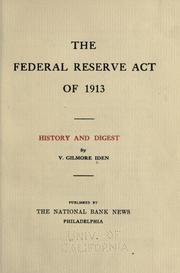
Image result for federal reserve act of 1913


We investigate the Fed, in general, and the Federal Reserve Act of 1913, in some detail, in our book INTERNATIONAL BANKSTER$: The Global Banking Elite Exposed and the Case for Restructuring Capitalism. An excerpt from the book follows…

In 1913, the banksters finally succeeded in creating a US central bank with the passing of the Federal Reserve Act. This bill, which had already been soundly defeated several times, appears to have come to fruition only because of well-orchestrated timing: the Federal Reserve Act was slipped through a skeleton Congress on December 23, 1913 when most of the bill’s opponents had already left Congress for the holidays.

The Federal Reserve System, which was first devised in that secret meeting on Jekyll Island, was now codified by Congress and remains in effect to this day.

Fact: The Federal Reserve is the central bank of the United States even though it’s not a part of the US Government.

Say what?

It’s not a part of the government. Not even remotely.

But it says Federal! Surely it cannot be a privately owned organization?

The Fed is not a part of the government, at all.

Critics of the Federal Reserve say its sole purpose is to strip wealth from honest, hardworking American citizens and make the world’s leading banking clans even richer.

John Hylan, Mayor of New York City from 1917 until 1925, made some extraordinary statements in a speech he delivered in 1922. What Mayor Hylan said seems to confirm a grand conspiracy was indeed devised for the American banking system by the global elite.

“The real menace of our Republic is the invisible government, which like a giant octopus sprawls its slimy legs over our cities, states and nation,” said Mayor Hyland. “To depart from mere generalizations, let me say that at the head of this octopus are the Rockefeller-Standard Oil interests and a small group of powerful banking houses generally referred to as the international bankers. The little coterie of powerful international bankers virtually run the United States government for their own selfish purposes. They practically control both parties, write political platforms, make catspaws of party leaders, use the leading men of private organizations, and resort to every device to place in nomination for high public office only such candidates as will be amenable to the dictates of corrupt big business.”

Only nine years after the Federal Reserve System was created, Mayor Hylan already seemed to be aware that this “invisible government” of “powerful international bankers” was controlling the US Government.

Cast your eye over these other quotes about the Fed and make up your own mind…

“The regional Federal Reserve banks are not government agencies…but are independent, privately owned and locally controlled corporations.”–Lewis vs. United States, 680 F. 2d 1239 9th Circuit 1982

“Most Americans have no real understanding of the operation of the international money lenders. The accounts of the Federal Reserve System have never been audited. It operates outside the control of Congress and manipulates the credit of the United States.”–Senator Barry Goldwater

“The Federal Reserve bank buys government bonds without one penny.”–Congressman Wright Patman, Congressional Record, Sept 30, 1941

“The financial system has been turned over to the Federal Reserve Board. That Board administers the finance system by authority of a purely profiteering group. The system is Private, conducted for the sole purpose of obtaining the greatest possible profits from the use of other people’s money.” –Charles A. Lindbergh Sr., 1923


INTERNATIONAL BANKSTER$: The Global Banking Elite Exposed and the Case for Restructuring Capitalism (The Underground Knowledge Series Book 5)


INTERNATIONAL BANKSTER$  is exclusive to Amazon: http://www.amazon.com/INTERNATIONAL-BANKSTER-Restructuring-Capitalism-Underground-ebook/dp/B015QN5RTY/


********************************************* 
 

For readers seeking underground knowledge and for those interested in important and underreported issues of our era, check out the seven books published (so far) in our sometimes controversial, often contentious, always hard-hitting Underground Knowledge Series.

For what it’s worth, our definition for the term “underground knowledge” follows at the end of this post along with reasons why we believe underground knowledge is so crucial for our present society.


Image result for underground knowledge


The Underground Knowledge Series  of books (listed below in order) is exclusive to Amazon. All are available as Kindle ebooks, and the books are progressively being released as paperbacks. (***  denotes available now  as a paperback).


Product Details

*** #1 in series http://www.amazon.com/GENIUS-INTELLIGENCE-Techniques-Technologies-Underground-ebook/dp/B00QXQQWXO/

Product Details

*** #2 in series http://www.amazon.com/ANTIGRAVITY-PROPULSION-Technologies-Underground-Knowledge-ebook/dp/B00RSF22SI/

Product Details

#3 in series http://www.amazon.com/MEDICAL-INDUSTRIAL-COMPLEX-Suppressed-Underground-ebook/dp/B00Y8Y3TUM/

Product Details

#4 in series (paperback release imminent) http://www.amazon.com/Catcher-Rye-Enigma-Coincidental-Underground-ebook/dp/B00YVROKZ4/

Product Details

#5 in series http://www.amazon.com/INTERNATIONAL-BANKSTER-Restructuring-Capitalism-Underground-ebook/dp/B015QN5RTY/

Product Details

#6 in series http://www.amazon.com/BANKRUPTING-THE-THIRD-WORLD-Underground-ebook/dp/B0176UHWH0/

Product Details

*** #7 in series http://www.amazon.com/UNDERGROUND-BASES-Subterranean-Facilities-Underground-ebook/dp/B0184KA4KS/


Our definition of the term “underground knowledge” essentially covers details and concepts and little-known events that are usually not reported in the Mainstream Media (MSM), or if they are mentioned by MSM they are underreported for various reasons. Likewise, underground knowledge is usually not taught at universities in history courses or other academic fields, or if it is it’s often whizzed over (e.g. the radical science of Nikola Tesla is briefly taught at universities of the world but not in any great detail compared to say the more mainstream and agreed-upon science of Newton and Einstein).

Keep in mind knowledge is not simply facts – it’s also theories. For example, one could study in detail an economic theory from the 1950s which economists now universally agree and have proven to be an incorrect or impossible theory. However, studying such disproven theories is still just as much knowledge as studying anything else. Equally, one could study the history of famous lies told or grand hoaxes (all shown to be not factual) and knowing these historical details would also amount to a form of knowledge. Therefore, many topics covered in our books, by their very nature will and must go beyond facts and explore various theories in order to cover all possible angles…angles that are not covered by MSM or mainstream academia.

Have we piqued your interest? If so, do check out our fast-growing Underground Knowledge discussion group on the authors and readers literary site Goodreads.com – https://www.goodreads.com/group/show/142309-underground-knowledge—a-discussion-group


*****************************************
 

In Underground Bases, book seven in our Underground Knowledge  series, we advise readers that most underground bases most are built inside or directly above natural, pre-existing cave networks; and in our blog of October 26 we listed examples of some of these networks. Now we turn our attention to the extensive underground cave system known as Craighead Caverns, in Sweetwater, Tennessee.


Image result for craighead caverns in tennessee

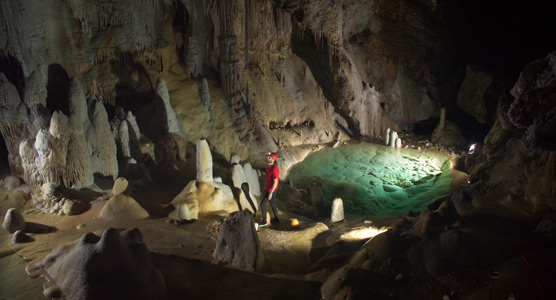
The mysterious Lost Sea inside Craighead Caverns…


In the following excerpt from Underground Bases, we take our readers inside Craighead Caverns and we visit New Mexico’s Lechuguilla Cave, which is another example of the scale of underground cave systems:

According to Wikipedia, Craighead Caverns are “best known for containing the United States’ largest and the world’s second largest non-subglacial underground lake, The Lost Sea. In addition to the lake, the caverns contain an abundance of crystal clusters called anthodites, stalactites and stalagmites, plus a waterfall.”

Seen Magazine, of America’s Southeast Education Network, claims Craighead Caverns was named after an Indian chief who at one time owned the property and the cave, and who may well have discovered the tiny opening that was its natural entrance.

In an article dated November 19, 2010, Seen Magazine reports, “During the Civil War (1863) parts of the cave were mined for salt-peter — which was used as a principal ingredient in the manufacturing of gunpowder.

“In 1905 Mr. Ben F. Sands, then just a boy…pushed beyond the fluctuating pool of the Spring Room through the tiny mud crawlway — and into the Lake Room — discovering the Lost Sea. Rumors of a large lake in Craighead Caverns had existed before Ben Sands discovery, but these may have referred to the elusive back-waters in the Spring Room, and not the actual chamber of the Lost Sea.

“In 1927 Craighead Caverns was formed. A larger more accessible entrance was opened below the natural one to make entering the cave less strenuous. The Tennessee Power Co. installed the first lighting system — which was among the first cave systems in the country.”

The Lechuguilla Cave, in New Mexico, is another example of the scale of underground cave systems. Only officially discovered in 1986, Lechuguilla is the deepest cave in the US and the seventh-longest explored cave in the world.


Image result for The Lechuguilla Cave

New Mexico’s Lechuguilla Cave…a more recent discovery.


According to ExtremeScience.com, this cave is a winding, twisting underground maze which has yet to be completely explored and mapped. Currently, 101 miles of Lechuguilla have been explored and mapped, with no end in sight. So far, the deepest part of the cave measured goes down 1,632 feet.

This almost pales to insignificance when compared to the deepest cave in the world – identified by ExtremeScience.com  as Voronja, or “Crow’s Cave”, in the western Caucasus Mountains of the Georgian Republic, which “has officially been verified to be 7,021 feet deep.” According to Wikipedia, it remains the only known cave on Earth deeper than 2,000 meters or one and a quarter miles.


UNDERGROUND BASES: Subterranean Military Facilities and the Cities Beneath Our Feet (The Underground Knowledge Series Book 7)

Underground Bases  is available exclusively via Amazon:  http://www.amazon.com/UNDERGROUND-BASES-Subterranean-Facilities-Underground-ebook/dp/B0184KA4KS/


**********************************************
Why should anyone be concerned by the existence of Holocaust denialism? We ask this question in our book DEBUNKING HOLOCAUST DENIAL THEORIES: Two Non-Jews Affirm the Historicity of the Nazi Genocide. The answer to the question is really very simple…


DEBUNKING HOLOCAUST DENIAL THEORIES: Two Non-Jews Affirm the Historicity of the Nazi Genocide


Any denial or distortion of a historically proven event is an attack on the truth. In the case of the Holocaust, persecution of Jews by the Nazis ended in genocide. However, the Jewish community weren’t the only ones who suffered. Millions of other ‘undesirables’ died at the hands of the Nazis – a graphic reminder that when one race or group of people is targeted, everyone is vulnerable. To deny or undermine the historicity of the Holocaust at a time when anti-Semitism is once again on the rise worldwide, is to fan the flames of racism and hate; to tolerate it is to invite a repeat of history…

_____________________________________________________

“Injustice anywhere is a threat to justice everywhere.”Martin Luther King, Jr.

_____________________________________________________

Deniers will pretend they are impartial and say they simply wish to report anomalies they’ve discovered in historical records, but deep down there abides a hatred of Jews. In some, or even many, cases their hatred may only be subconscious, as in partially hidden even from themselves, or it may be purely unconscious, as in automatic or reflexive, without them understanding why they are anti-Semitic. Either way, it amounts to hatred.

All too often, anti-Semitism is like a subtle form of brainwashing that is either conspiracy-based or religious-based. With the former, classic examples include the conspiracy theory which would have us believe the banking elite are all Jewish, or the age-old myth that the Jews control the entire world; with the latter, certain fundamentalists – most notably in extremist forms of Christianity or Islam – believe the Jews are an inferior people or practice an inferior religion.

_____________________________________________________

“Thus, a story concocted by Mark strictly for evangelistic purposes to shift the blame for Jesus’s death away from Rome is stretched with the passage of time to the point of absurdity, becoming in the process the basis for two thousand years of Christian anti-Semitism.”Reza Aslan, Zealot: The Life and Times of Jesus of Nazareth

_____________________________________________________

An article on the United States Holocaust Memorial Museum (USHMM) website does an excellent job of summarizing the various ways people end up becoming deniers. Titled Origins of Holocaust Denial, the article states that many “deny the Holocaust for more overtly racist, political, or strategic reasons.”

The USHMM article continues, “These deniers begin with the premise that the Holocaust did not happen. This premise suits their broader purposes. They deny the Holocaust as an article of faith and no amount of rational argumentation can dissuade them. This denial is irrational, largely unrelated either to the facts of the history or to the enormity of the event. Some people deny the Holocaust because of innate antisemitism, irrational hated of Jews.

“In fact, Holocaust denial has been called by some scholars the “new antisemitism” for it recycles many of the elements of pre-1945 antisemitism in a post-World War II context. Holocaust deniers argue that reports of the Holocaust are really part of a vast shadowy plot to make the white, western world feel guilty and to advance the interest of Jews.

“Holocaust denial, then, unites a broad range of radical right-wing hate groups in the United States and elsewhere, ranging from Ku Klux Klan segregationists to skinheads seeking to revive Nazism to radical Muslim activists seeking to destroy Israel”.

The USHMM article concludes, “Holocaust deniers want to debate the very existence of the Holocaust as a historical event. They want above all to be seen as legitimate scholars arguing a historical point. They crave attention, a public platform to air what they refer to as ‘the other side of the issue’. Because legitimate scholars do not doubt that the Holocaust happened, such assertions play no role in historical debates. Although deniers insist that the idea of the Holocaust as myth is a reasonable topic of debate, it is clear, in light of the overwhelming weight of evidence that the Holocaust happened, that the debate the deniers proffer is more about antisemitism and hate politics than it is about history.”

Incidentally, the USHMM makes a perceptive point about Holocaust deniers. It reminds us the very views they perpetuate, accusing Jews of conspiracy and world domination, are the same “hateful charges that were instrumental in laying the groundwork for the Holocaust” in the first place.


You have been reading an excerpt from Debunking Holocaust Denial Theories – by James & Lance Morcan. The book is exclusive to Amazon:  http://www.amazon.com/DEBUNKING-HOLOCAUST-DENIAL-THEORIES-Historicity-ebook/dp/B01EYY7T7Y/  


************************************