Most people old enough remember exactly where they were when they heard the news that John Lennon was shot dead in New York City on December 8, 1980. The murderer was Mark David Chapman – yet another lone gunman who stood glassy-eyed at the crime scene waiting for the police to arrive. A witness to the shooting asked him if he was aware what he’d just done. “I just shot John Lennon,” Chapman calmly replied.

The scene of Lennon’s assassination.

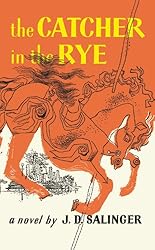
To add yet another curiosity to the mix, while Chapman patiently waited for the police to arrive and arrest him, he stood at the scene of the crime reading a copy of The Catcher in the Rye.

The Catcher in the Rye

Many conspiracy theorists believe that finding this particular book in the hands of an assassin is no mere coincidence. Regardless, it must have been a macabre sight to see Lennon lying dead on the ground with his murderer standing over him happily reading J.D. Salinger’s classic novel.

File:JohnLennonpeace.jpg

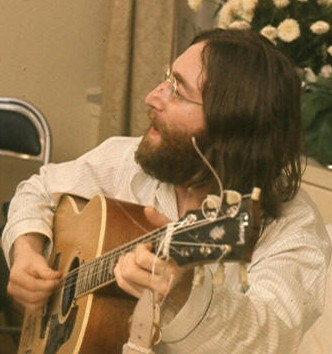
Lennon in rehearsal.

Chapman’s assassination of John Lennon was probably the mother of all Catcher incidents. Not long before the murder, Chapman had wanted to change his name to the novel’s narrator and anti-hero Holden Caulfield – so enamored was he with this fictitious character; inside the very copy of the book Chapman had purchased on the day of the murder, police found he’d written, “To Holden Caulfield, From Holden Caulfield, This is my statement”; and during the court case that followed, Chapman read a passage from the novel when addressing the judge and jury during his sentencing.


You have been reading an excerpt from our new release book The Catcher in the Rye Enigma: J.D. Salinger’s Mind Control Triggering Device or a Coincidental Literary Obsession of Criminals? – Available now via Amazon: http://www.amazon.com/Catcher-Rye-Enigma-Coincidental-Underground-ebook/dp/B00YVROKZ4/


The Catcher in the Rye Enigma: J.D. Salinger's Mind Control Triggering Device or a Coincidental Literary Obsession of Criminals? (The Underground Knowledge Series Book 4)


*****************************

Do you believe capitalism should be restructured, replaced by another economic system or left exactly as is? That’s the question we put to our Underground Knowledge group members in our latest poll on Goodreads.com; we also address that question in our upcoming INTERNATIONAL BANKSTER$: The Global Banking Elite Exposed and the Case for Restructuring Capitalism (book five in our Underground Knowledge Series).

INTERNATIONAL BANKSTER$: The Global Banking Elite Exposed and the Case for Restructuring Capitalism (The Underground Knowledge Series, #5)

Interim poll results show that 53% of respondents believe capitalism should be restructured or reformed; 27% say it should be replaced by another system; 10% insist it should be left exactly as is; and the balance are unsure.

Poll respondents’ comments make for interesting reading. Sample abridged comments (names withheld) follow: 

I’m essentially a Capitalist as I believe (however flawed) Capitalism is the only economic system ever devised that rewards entrepreneurial and/or hard-working individuals. So I’d never vote for Socialism or communism. However, I also think unregulated Capitalism has become one of the biggest problems facing society right now. It is allowing big business (including multinational monopoly-style companies) too much power and the average 9-5 worker is getting screwed.

Communism need not be the only alternative to Capitalism. A system should be devised which incorporates the good from both.

There is such abuse of capitalism… When money is the only objective at any cost you have a problem. The proposed TPP trade agreement is inherently wrong, again giving more power to the corporations. If you look at the 1888 introduction to Edward Bellamy’s Looking Backward you will see the workers still in the same position today. There must be social, economic, governmental and political change. Accountability must be instituted for corporations, none of which, including banks are too big to fail. War profiteering must end. Endless war must end. No one needs excessive billions of dollars at the expense of everyone else. Economic morality must be sadly legislated.

Capitalism should be reformed, so freedom can be secure for all, and finally the ones who were once left behind can be reached.

I think what critics are currently calling Capitalism and the free market are really corporatocracy and cronyism or “unregulated Capitalism” which is a different thing from what was originally in place in the US and much of the Western world. But whatever the case, I do think the wide scale economic or financial corruption by the elites is leading to increasing numbers becoming homeless, losing their homes, going bankrupt, not being able to pay their medical bills, etc, etc.

The greatest flaw of capitalism is the ability of corporate leaders to manipulate the political system to their benefit and to the detriment of everyone else. Making behavior like this a criminal offence, and enforcing the law, would go a long way toward reforming capitalism. To paraphrase Churchill, capitalism is the worst economic system there is, except for all the others.

Capitalism’s turned us into competitive human beings (which I don’t believe is good)and means we live in a system that benefits the rich and f…. the poor. Whether it’s modified or replaced, I don’t much care, as long as we can find a system that helps provide the necessities of life for everyone first. Then you can buy your Gucci dresses and blood diamonds.

Society must find a wise way to give food, shelter, education and health care to everyone. The change from capitalism to another system, needs first a big change in the way the majority thinks.

Poverty could be solved instantly if we wanted it to be- which would reduce crime, benefit the economy and be better for all concerned (oh, other than that current 1% at the top, but they’ve had their turn). I think it’s important we look beyond such things in the way that if someone says they’re anti-capitalist it must mean they’re a socialist, for instance. We base our understanding on the past and not with common sense in the present. . Feed, house, give water and energy to everyone and the world would soon change for the better. THEN you can start trying to attain whatever else your heart desires. Capitalism, in its current form, certainly doesn’t aid any of that.

Surely the genius and greatest evil of capitalism is that we all become both product and customer, consumer and consumed?

The problem cannot be blamed on shareholders, nor marketers. We must take self-responsibility.


To view all the comments, or better still to have YOUR say, go to: https://www.goodreads.com/poll/list/142309-underground-knowledge—a-discussion-group?type=group

Poll ends June 18 PST.

*

Our Underground Knowledge discussion group is aimed at those with an interest in the world we live in and a desire to learn or to uncover “underground knowledge” on important issues of our times.

Everyone’s welcome to join! All you need is an enquiring mind. Our members include scientists, social activists, teachers, historians, authors, military and intelligence agency personnel, bankers, housewives, whistleblowers, students, former police officers, journalists, readers and many more.

Visit the group at: https://www.goodreads.com/group/show/142309-underground-knowledge—a-discussion-group


**********************************


We are constantly inundated with reports and allegations – some well-founded, some not – regarding the alarming state of the public healthcare system worldwide. Which raises the question just how reliable are these reports and how valid the allegations. We investigate this in our new release book MEDICAL INDUSTRIAL COMPLEX: The $ickness Industry, Big Pharma and Suppressed Cures.

MEDICAL INDUSTRIAL COMPLEX: The $ickness Industry, Big Pharma and Suppressed Cures (The Underground Knowledge Series Book 3)

New book pulls no punches.

As you may have guessed from the title of our book we are highly critical of the medical system. We are not alone in this of course, and we address these concerns in the very first chapter.


Relevant excerpts (abridged) from the book follow:  

“…UK peer-reviewed journal BMC International Health and Human Rights, which estimates healthcare expenditures globally total 3 trillion US dollars, indicates it’s little wonder this sector is vulnerable to corruption. In an article dated May 3, 2012 and published on its respected biomedcentral.com website, BMC highlights the huge expense associated with the procurement of the many services the sector offers, and points out that the nature of healthcare is such that the demand is not fully predictable and often exceeds supply.

“Health care systems also tend to have weak or non-existent rules and regulations, lack of accountability, information imbalances between providers and patients and suppliers and providers, and low salaries for health care professionals and public officials. These characteristics of the health sector make it susceptible to corruption.”

BMC also claims that theft, diversion and resale of drugs are other sources of corruption that occur at the distribution point of the pharmaceutical supply chain. Examples listed include theft without falsification of inventory records, dispensing of drugs to patients who did not actually attend the pharmacy or clinic, recording of drugs as dispensed to legitimate patients but the patients do not receive them, and dispensing of drugs to patients who pay for them but the health care provider keeps the funds.

The article also gives examples of “illegal kickbacks” to surgeons and false claims allegations, stating that, in one case, “Physicians were allegedly awarded vacations, gifts and annual ‘consulting fees’ as high as $200,000 in return for physician endorsements of their implants or use of them in operations”.

BMC states that the medical device industry, especially in orthopaedics, is an area where there are relatively large sums of money involved and thus there is a susceptibility to corruption.

Clearly, healthcare corruption is a global problem – and a major one at that. Certainly, that’s the perception of the majority of independent analysts. Most alarming, or at least as alarming, is the reluctance – or downright unwillingness – of those involved to discuss the problem.

Now why is this? Is it because guilty parties are afraid that discussion could lead to investigation of corrupt practices? And are those same parties afraid of what an investigation will uncover?

…Despite the gloom and doom surrounding the Medical Industrial Complex, all is not lost in our opinion. Many good people remain within the healthcare system and devote their lives to improving the quality of their patients’ lives…

Modern technology may eventually empower the public and provide a path to a fairer healthcare system.

One subscriber to the technology-as-a-medical-solution theory is Eric Topol, MD, a professor of translational genomics and the director of the Scripps Translational Science Institute in La Jolla, California. Topol, who is described as a pioneer of the medicine of the future, is also author of the bestselling book, The Patient Will See You Now: The Future of Medicine is in Your Hands.

The book’s splurge reads as follows:

“In this new era, patients will control their data and be emancipated from a paternalistic medical regime in which ‘the doctor knows best.’ Mobile phones, apps, and attachments will literally put the lab and the ICU in our pockets. Computers will replace physicians for many diagnostic tasks, and enormous data sets will give us new means to attack conditions that have long been incurable. In spite of these benefits, the path forward will be complicated: some in the medical establishment will resist these changes, and digitized medicine will raise serious issues surrounding privacy. Nevertheless, the result – better, cheaper, and more humane health care for all – will be worth it. The Patient Will See You Now is essential reading for anyone who thinks they deserve better health care”.

It seems readers are resonating with Topol’s book if reviewers’ comments are anything to go by…”


Product Details

Medical Industrial Complex is available via Amazon: http://www.amazon.com/MEDICAL-INDUSTRIAL-COMPLEX-Suppressed-Underground-ebook/dp/B00Y8Y3TUM/


*****************************************

The Catcher in the Rye Enigma: J.D. Salinger's Mind Control Triggering Device or a Coincidental Literary Obsession of Criminals? (The Underground Knowledge Series Book 4)

THE CATCHER IN THE RYE ENIGMA, by James and Lance Morcan, unearths the mysteries surrounding the 1951 novel The Catcher in the Rye, by J.D. Salinger – arguably the most controversial book of all time.

Product Details

Nicknamed the ‘Bible of teenage angst’, Salinger’s classic novel, which is frequently labeled immoral by different groups, has been banned in various parts of America over the decades. However, the main controversy, and indeed the most common reason for it being banned, was that it either inspired or was associated with some of the most infamous crimes of the 20th Century. These crimes include the murder of John Lennon and the attempted assassination of President Reagan.

JD Salinger.jpg

J.D. Salinger…still controversial today.

The allegation directed at Salinger is that he (and/or his publisher) craftily implanted into the book neurolinguistic passages, or coded messages, that act as post-hypnotic suggestions or mind control “triggers”. In turn, these triggers enabled CIA handlers to activate Manchurian Candidates for assassinations. Some conspiracy theorists also believe the novel was part of the CIA’s now mostly-declassified mind control program MK-Ultra, and that while assassins were being brainwashed they were forced to read the book over and over until it was embedded in their minds.

But given that Salinger’s critically acclaimed masterpiece was one of the biggest selling books of the 20th Century, are the crimes it was associated with merely happenstance? Today, if a handful of different murderers had a copy of The Da Vinci Code or a Harry Potter book, or were all fixated on a similarly popular book, would it even make the news headlines?

Novelists, filmmakers and independent researchers James & Lance Morcan investigate these theories and counter arguments in THE CATCHER IN THE RYE ENIGMA – the fourth book of The Underground Knowledge Series. This balanced exposé ultimately leaves it up to you, the reader, to decide whether J.D. Salinger’s novel is a “Mind Control Triggering Device” or simply a “Coincidental Literary Obsession of Criminals” just as this book’s subtitle suggests.

Besides the criminals who targeted Lennon and Reagan, THE CATCHER IN THE RYE ENIGMA also details other deranged individuals who were obsessed with Salinger’s book including stalkers and murderers of leading political figures, film stars and other celebrities.

JohnLennonpeace.jpg

John Lennon… forever linked with ‘Catcher’.

The idea that assassination codes are buried deep in Salinger’s book is one of the oldest conspiracy theories around and has been explored repeatedly over the decades with no smoking gun ever found. In fact, many familiar with Catcher conspiracies may think all the theories have already been proven to be false and there’s no need to drag them up yet again.

However, given what the authors have uncovered in their research for THE CATCHER IN THE RYE ENIGMA – especially the unique revelations on the history of mind control, the effectiveness of subliminal messages, the latest scientific studies on the brain, Salinger’s underreported dealings with the Americanized Nazis of Project Paperclip and the recently declassified documents on real-life Manchurian Candidates – they believe some of the theories swirling about the classic novel deserve another look.

Note that this title is an extended version of several chapters in The Orphan Conspiracies: 29 Conspiracy Theories from The Orphan Trilogy (Sterling Gate Books, 2014) also by James & Lance Morcan. The Catcher in the Rye Enigma therefore contains a combination of new material as well as some recycled material from The Orphan Conspiracies.


THE CATCHER IN THE RYE ENIGMA is available on Amazon at: http://www.amazon.com/Catcher-Rye-Enigma-Coincidental-Underground-ebook/dp/B00YVROKZ4/


*****************************

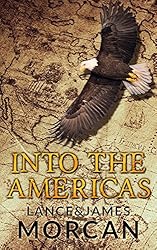
Into the Americas, the latest novel by New Zealand father-and-son writing team Lance & James Morcan, provides an insight into an intriguing, but surprisingly little known event in in North American history. It’s based on the true account of young English seaman John Jewitt’s enslavement by one of the native tribes of the Pacific Northwest in the early 1800’s. 

Into the Americas (A novel based on a true story)

Into the Americas (A novel based on a true story)

An excerpt from Into the Americas  follows. It describes 19-year-old John Jewitt’s arrival in Nootka Sound, on the west coast of Vancouver Island, aboard the brig The Boston  in 1803:

A noise resembling the beating of drums signaled to the men of The Boston that their arrival at Friendly Cove, Nootka Sound, had been noticed even though rain and mist had reduced visibility to less than thirty yards. The mist hung over the sea and the surrounding hills like a white shroud, adding to the eeriness of the occasion.

In fact, the drumming noise came not from drums but from the beating of sticks and branches against the timber roofs and walls of the Mowachahts’ lodges.

John was standing at the starboard rail. Through the mist he caught an occasional glimpse of a forbidding, rocky shoreline. Forest-covered hills rose up from the sea, and low cloud clung to the treetops. Fir trees abounded – spruce and pine being especially prominent – along with groves of beech and cedar trees, and other varieties John couldn’t identify.

A totem pole rose even higher than the trees around it, its top hidden by mist. The mist cleared momentarily to reveal its top resembled the head of an eagle.

Soon, other crew members joined John. They included Dorthy, second mate William Ingraham, black sailor Jupiter Senegal, steward Abraham Waters, sailmaker Jonathan Thompson and his namesake Edward Thompson, the boatswain. All shared John’s excitement as more than five months had now passed since their last landfall.

As the brig negotiated the unchartered waters of the inlet, regular depth soundings were taken to ensure her safe passage.

Gradually, the rain eased and the mist cleared. For those who had never visited the Northwest Pacific region before, it was a sight to behold: the forest-covered hills rose higher and higher toward distant horizons; beyond them, the snow-capped peaks of unnamed mountains could be seen rising above the clouds; smoke from unseen cooking fires spiraled into the sky; seals dozed along the rocky shore, squawking seagulls hovered above a rotting sea lion carcass, and a bull elk grazed on lush grass between the rocks and the trees.

“Look!” William shouted.

John turned to see the second mate pointing behind the brig to where dozens of bald eagles were diving into the sea to snare fish. Most, it seemed, succeeded at their first attempt. Those who didn’t immediately launched another sortie. They were joined by more eagles and within minutes scores of the magnificent birds of prey were plunging into the sea.

Those witnessing the spectacle for the first time couldn’t believe their eyes. They marveled at the eagles’ speed of descent, how hard they hit the water and how successful they were at this spectacular food-gathering method.

John and the others returned their attention to the shoreline ahead as The Boston entered Friendly Cove. Nootka village came into view and the drumming sound that had heralded the brig’s arrival earlier intensified.

Mowachaht villagers could be seen drumming sticks against the exterior of their lodges. To John’s eyes, those employed in such a way appeared to be working themselves up into a frenzy.

On the sandy beach in front of the village, warriors were in the process of launching some of the twenty or so canoes resting there. John could see the Mowachahts were intent on approaching The Boston and he hoped they meant the brig’s crew no harm. The fact that all were armed and most carried muskets did nothing for his confidence.

Dorthy, who stood alongside John, noticed his assistant’s interest in the activity ashore. “Them the Mowachahts,” the armorer said. “Savages every one of ’em, so watch your scalp.”

John hoped Dorthy was joking. The expression on his face indicated he wasn’t. John turned his attention to the villagers’ European-style lodges. He counted twenty-three of the impressive dwellings. The lad pointed to the nearest lodge – a huge structure that looked like it could accommodate up to sixty or more people. “How did these people build those?” he asked.

“They didn’t,” Dorthy replied. “They were left behind by the Spaniards some years back.”

“Settlers?”

“Aye. Settlers and merchants. The Spanish had a monopoly on trade in these parts for many years.” Dorthy managed a rare smile. “Then it all changed and Britain reminded Spain, France and the rest of the world who really rules the waves.”

At the bow, the two sailors performing sounding duties conferred with each other under the watchful eye of Delouissa. One of them, Norwegian Peter Alstrom, shouted, “Twelve fathoms, Chief!”

Delouissa relayed the information to Salter who anxiously paced the quarter-deck. “Twelve fathoms, Captain!”

“Drop anchor!” Salter ordered.

“Aye, Captain.” Turning back to the two sailors, Delouissa said, “You heard the captain.”

“Yes, Chief,” Alstrom said. He and his companion then hurried off to drop anchor.

Delouissa turned to John and the others who were still observing their new surroundings. “Back to your stations, you layabouts,” he ordered. “Plenty o’ time for sightseeing later.”

The crewmen returned to their duties. As the rain was holding off, John opted to work on deck. He quickly set about firing up the forge. At the same time he kept an eye on the Mowachahts who were rapidly closing with the brig in their canoes.

Salter was keeping a close eye on the approaching Mowachahts, too. He ordered Delouissa to ensure that an armed reception party awaited the visitors.

#

Within minutes of the brig dropping anchor, she was surrounded by canoes whose occupants observed her in silence. The canoes, which ranged in size from four to twenty-man vessels, were dugouts fashioned from the giant red cedar trees found in these parts. Their occupants handled them with no small amount of skill.

On board The Boston, a dozen armed crewmen lined the near rail, their muskets primed and at the ready. Salter was taking no chances.

John couldn’t decide whether the Mowachahts were pleased to see the traders or whether they meant them harm. The natives’ expressions seemed benign to his eyes, though he sensed an underlying resentment.

One canoe – bigger than the others – drew up alongside The Boston. Maquina, the Mowachaht chief, stood, arms folded, at the prow. Ever-impressive, he wore the same ceremonial cloak he always wore when the occasion demanded. His hawk-like eyes swept over the brig and over the men who manned her, finally resting on the armed detail lined up along the brig’s starboard rail.

Looking on, John guessed this was the chieftain he’d so often heard his crewmates talking about. From where he stood, the muscular Maquina looked all of six foot tall and was clearly not a man to cross. The natural dark copper hue of his skin contrasted with the white eagle down that covered his long, black hair and his broad shoulders. His warriors were similarly adorned, though few matched the chief’s physical presence.

By all accounts, Maquina had a fearsome reputation. However, he presided over a territory in which the valuable sea-otter abounded, so it was financially expedient for traders to deal with him……

Product Details

Into the Americas (A novel based on a true story)  is available on Amazon: http://www.amazon.com/Into-Americas-novel-based-story-ebook/dp/B00YJKM51E/

*************************************


This weekend — June 6-7 (US time) — a selection of our books, including our most recently published non-fiction and fiction titles, are free to download for Amazon Kindle users worldwide. Listed below, they include our new release The Catcher in the Rye Enigma.

The Catcher in the Rye Enigma: J.D. Salinger's Mind Control Triggering Device or a Coincidental Literary Obsession of Criminals? (The Underground Knowledge Series Book 4)

The Catcher in the Rye Enigma: J.D. Salinger’s Mind Control Triggering Device or a Coincidental Literary Obsession of Criminals? (The Underground Knowledge Series, Book 4)
http://www.amazon.com/Catcher-Rye-Eni…
https://www.goodreads.com/book/show/2…

MEDICAL INDUSTRIAL COMPLEX: The $ickness Industry, Big Pharma and Suppressed Cures (The Underground Knowledge Series Book 3)

MEDICAL INDUSTRIAL COMPLEX: The $ickness Industry, Big Pharma and Suppressed Cures (The Underground Knowledge Series, Book 3)
http://www.amazon.com/dp/B00Y8Y3TUM
https://www.goodreads.com/book/show/2…

Into the Americas (A novel based on a true story)

INTO THE AMERICAS (A novel based on a true story):
This epic historical novel is a gritty, real-life adventure based on one of history’s greatest survival stories. It’s a tale of two vastly different cultures – Indigenous North American and European civilization – colliding head on in the early 1800’s in the Pacific Northwest. Into the Americas is also a Romeo and Juliet story set in the wilderness.
https://www.goodreads.com/book/show/2…
http://www.amazon.com/Into-Americas-n…

The Orphan Uprising (The Orphan Trilogy Book 3)

The Orphan Uprising (The Orphan Trilogy Book 3):
A frenetic spy thriller that follows a desperate father around the world – from Tahiti to America, Germany, Greenland and the Congo – as he hunts those he suspects have kidnapped his young son.
http://www.amazon.com/dp/B00BFC66DM/
https://www.goodreads.com/book/show/1…

The following books are free for Saturday June 6 (US time) only:

The World Duology (World Odyssey / Fiji: A Novel)

The World Duology (World Odyssey / Fiji: A Novel)
Set in the 19th century, this 2-book fictional series follows the fortunes of three young travelers. Their dramatic adventures span sixteen years and see them engage with Native American Indians, Barbary Coast pirates, Aborigines, Maoris and Pacific Islanders as they travel around the world – from America to Africa, from England to the Canary Islands, to Australia, New Zealand, Samoa and Fiji.
http://www.amazon.com/World-Duology-O…
https://www.goodreads.com/book/show/2…

The Orphan Factory (The Orphan Trilogy Book 2)

The Orphan Factory (The Orphan Trilogy, Book 2)
A coming-of-age spy thriller that begins with 23 genetically superior orphans being groomed to become elite spies in Chicago’s Pedemont Orphanage and concludes with a political assassination deep in the Amazon jungle.
http://www.amazon.com/dp/B008M9WWKW/
https://www.goodreads.com/book/show/1…

Kindle Unlimited subscribers can also borrow the above books for free any time.


Happy reading!  –Lance & James


*****************************************

The Catcher in the Rye Enigma, our latest book in The Underground Knowledge Series, was prompted by our belief some of the theories swirling about J.D. Salinger’s literary classic, The Catcher in the Rye, deserve another look.


The Catcher in the Rye Enigma cover 5 (2)

The Catcher in the Rye Enigma: J.D. Salinger’s Triggering Device or a Coincidental Literary Obsession of Criminals?


The idea that assassination codes are buried deep in Salinger’s book is one of the oldest conspiracy theories around and has often been explored over the decades. In fact, many readers familiar with Catcher conspiracies may think all the theories have already been proven to be false and there’s no need to drag them up yet again.

Rye catcher.jpg

Salinger’s classic. 

However, given what we, the authors, unearthed in our research for this book, we believe some of the theories swirling about it do deserve further analysis. Especially the unique revelations on the history of mind control, the effectiveness of subliminal messages, the latest scientific studies on the brain, the Americanized Nazis in Project Paperclip and the recently declassified documents on real-life Manchurian Candidates.

These revelations, and more, are explored in depth in The Catcher in the Rye Enigma.

This new release book is available on Amazon at: http://www.amazon.com/Catcher-Rye-Enigma-Coincidental-Underground-ebook/dp/B00YVROKZ4/


*

Catcher is one of numerous topics up for discussion in our Underground Knowledge group on Goodreads. The group is open to everyone! All you need is an enquiring mind, an interest in the world we live in and a desire to learn or to uncover ‘underground knowledge’ on important issues of our times. Check it out at: https://www.goodreads.com/group/show/142309-29-conspiracy-theories—a-discussion-group


***************************************


In the introduction to our new release book MEDICAL INDUSTRIAL COMPLEX: The $ickness Industry, Big Pharma and Suppressed Cures, we remind readers you don’t need to be a genius to know that corruption is rife in the world’s most lucrative fields –and it seems mainstream medicine may be no exception.
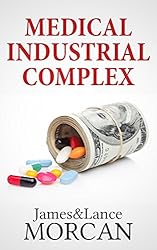
MEDICAL INDUSTRIAL COMPLEX: The $ickness Industry, Big Pharma and Suppressed Cures (The Underground Knowledge Series Book 3)

Our introduction (to the book) follows unabridged:

Sometimes it seems as if few in positions of power have the strength to resist the temptation of generating vast sums of money via devious if not downright dishonest means.

Whether it be profiting from manufactured arms conflicts or manipulating financial markets, history proves greed is often the rule and not the exception when it comes to the global elite’s pursuit of wealth – or, perhaps more pertinently and disturbingly, when it comes to their pursuit of greater wealth.

Many argue that when it comes to greed and corruption the medical sector is no different to other lucrative business sectors. This seems a strange accusation given most in the medical field, including doctors, nurses and hospital staffers, embark on their careers out of a compassionate and genuine desire to care for the sick.

Unfortunately, there are powers-that-be whose motives are not so noble. Collectively and unofficially called the Medical Industrial Complex, they comprise a surprisingly large number of individuals, corporations, government health services, medical equipment manufacturers and suppliers, and, dare we say it, hangers-on. Those in the latter category include the likes of health systems consultants, insurers, banking executives, accountants, lawyers, construction company reps and even realtors.

However, the so-called Big Three in this complex are readily identifiable. They are ‘Organized Medicine’ (the medical profession as a whole), the Food & Drug Administration (FDA) and, of course, the pharmaceutical industry – let’s not forget them.

For readers outside of America, replace FDA with your government agency responsible for allegedly protecting and promoting public health in your country.

To put the Medical Industrial Complex into perspective, consider this: modern medicine is one of the largest and most profitable industries on the planet. Some medical insiders have described it as America’s biggest industry. Not sure it’s as big as the war industry, but if it ain’t, it must be a close second.

At the time of writing, Americans were transfixed, bemused and frustrated by the partisan squabbling surrounding President Obama’s attempts to sort out the country’s healthcare provisions once and for all.

One who summarizes America’s health problems better than most is William A. Collins, a former state representative and former Mayor of Norwalk, Connecticut. In an article dated August 21, 2013, on OtherWords.org, Collins says in the US, the health industry’s big players focus on making as much money as possible.

Collins claims that those who devise the health system do so with profits in mind, and patients who can’t help with that are “shunted off to government services” or snubbed. He’s also critical of what he describes as a network of handshakes and private agreements linking hospitals to pharmaceutical company reps and medical equipment manufacturers, claiming this inflates America’s health cost as much as the insurance and Big Pharma.

“Fortunately,” he says, “the main offenders can be clearly labeled. Chief among them are the health insurers and the drug manufacturers. Big Pharma wields an army of lobbyists and administers large doses of campaign contributions to their friends in Congress”.

For those not familiar with the term Big Pharma, it’s the nickname given to the major pharmaceutical conglomerates which collectively form this multi-trillion dollar industry. Many believe Big Pharma can be compared to the most corrupt banks, media monopolies or oil corporations.

In the pages of this book, we explore the contention that Big Pharma and other participants in the Medical Industrial Complex put profits ahead of patients’ wellbeing and dollars ahead of lives.

One of our recurring themes is that all of us must stop giving away complete responsibility to doctors or other medical practitioners. It’s time to start looking at these people as they actually are: advisors for you to make decisions about what’s best for your body.

Let’s face it, most people simply accept whatever pills are prescribed, or surgeries are recommended, or other treatments advised, to them by their doctor without ever questioning. There are hundreds of examples given in this book which prove that approach in dealing with doctors is an unhealthy one (figuratively and literally).

The way to avoid becoming another statistic of the Medical Industrial Complex – and more importantly staying healthy or else returning to full health – is to become informed. We assume that might be why you are reading this book: to gain knowledge about modern medicine. And knowledge is the necessary ingredient we all need to make informed decisions about our health.

We have known parents who trusted their doctors who prescribed unnecessary drugs such as Ritalin for their children. Unnecessary because these parents later discovered there were other (less aggressive) ways to treat their children’s problem. However, at the time they had no idea of the cozy and little-known relationship between doctors and Big Pharma – a relationship they eventually discovered involved financial kickbacks for doctors. Once again, in instances like these, knowledge is power and it has the potential to shield the unwitting against corrupt elements within the Medical Industrial Complex.

An interrelated point we wish to make here is we are definitely not anti-doctors.

Only a fool would deny doctors save lives. When it’s a medical emergency and you are in a life-and-death situation, a doctor is always your best friend.

However, when you simply have a health problem, or suspected problem, that you wish to resolve or clarify, that’s when doctors can sometimes do you a disservice. The disservice we refer to is committing what can only be described as a medical sin – such as overprescribing drugs or advising surgery before exploring other less risky treatments.

Such a disservice is usually inadvertent (aka unintentional or careless), but the end result is the same: you suffer the consequences.

Our purpose in writing this book is not to alarm, even though some of the despicable acts committed by medical professionals exposed in the coming pages are indeed alarming. Rather, our intention is to arm readers with “underground knowledge” about the medical system, the major players in that system and their many associates. Once you are aware of certain nefarious trends in modern healthcare, you will be able to spot those trends a mile off and thereby protect yourself and your loves ones from harm, or from being inconvenienced at the very least.

As well as exposing corruption, we wish to enlighten those readers who are not already aware that there are long-standing and rather convincing claims of alternative remedies for so-called incurable illnesses. These professed cures, it seems, are either being withheld or blocked by multinational drug companies and/or rigid medical academia. Having researched alternative treatments, we are convinced at least some of these really do cure so-called incurable illnesses, but are being suppressed from the public as they are unpatentable (aka unprofitable).

Keep in mind most illnesses and diseases labeled incurable are usually only described as such within mainstream medicine in the West. When you consider the number and variety of medical and alternative health treatments and systems available around the world – including traditional Chinese (TCM) and Indian (Ayurveda) and numerous others – “incurable” is possibly a state of mind, or a misnomer even, and there is in all likelihood an existing cure for every known medical ailment. A cure awaiting discovery by Western medical professionals.

No matter what your state of health is now – even if you are poorly or, heaven forbid, extremely ill – you can build and improve your health. Remember, where there’s life there is always hope…so never give up!

Lastly, we must point out we are not doctors or medical professionals, and nothing we, the authors, say in this book should be construed as imparting medical or health advice.

You will note many of the statements throughout are not ours. Rather, they are quotes made in the public domain by medical professionals and others far better qualified than us. (The others we refer to include respected authors, medical and health reporters, insiders in various professions and, last but not least, medical watchdogs). Often, but not always, their views on health reflect ours. In every case, we hope, their comments help to give you a better understanding of the medical establishment.

James Morcan & Lance Morcan

Product Details

Medical Industrial Complex  is available via Amazon: http://www.amazon.com/MEDICAL-INDUSTRIAL-COMPLEX-Suppressed-Underground-ebook/dp/B00Y8Y3TUM/


*****************************************

Two civilizations — European and First Nations — clash in the top rating new release novel INTO THE AMERICAS (A novel based on a true story).

Into the Americas (A novel based on a true story)

The novel was inspired by the diary entries of young English blacksmith John Jewitt during his time aboard the brigantine The Boston and also during his sojourn at Nootka Sound, on North America’s western seaboard, from 1802 to 1805.

The storyline:

Nineteen year-old blacksmith John Jewitt is one of only two survivors after his crewmates clash with the fierce Mowachaht tribe in the Pacific Northwest.

John Jewitt.

A life of slavery awaits John and his fellow survivor, a belligerent American sailmaker, in a village ruled by the iron fist of Maquina, the all-powerful chief. Desperate to taste freedom again, they make several doomed escape attempts over mountains and sea. Only their value to the tribe and John’s relationship with Maquina prevents their captors from killing them.

Mowachaht chief Maquina.

As the seasons pass, John ‘goes Indian’ after falling in love with Eu-stochee, a beautiful maiden. This further alienates him from his fellow captive whose defiance leads to violent consequences. In the bloodshed that follows, John discovers another side to himself – a side he never knew existed and a side he detests. His desire to be reunited with the family and friends he left behind returns even stronger than before.

Nootka village where Jewitt was held captive.

The stakes rise when John learns Eu-stochee is pregnant. When a final opportunity to escape arises, he must choose between returning to civilization or staying with Eu-stochee and their newborn son.

To view INTO THE AMERICAS  on Amazon go to: http://www.amazon.com/Into-Americas-novel-based-story-ebook/dp/B00YJKM51E/

*********************************** 

MEDICAL INDUSTRIAL COMPLEX: The $ickness Industry, Big Pharma and Suppressed Cures (The Underground Knowledge Series Book 3)

In the Foreword to our new release book MEDICAL INDUSTRIAL COMPLEX: The $ickness Industry, Big Pharma and Suppressed Cures, retired pharmacist and author Denis Toovey says in his own career as a pharmacist spanning 40 years, he has seen many examples of patients falling through the cracks in the health system.

Denis’s foreword follows in full:

This book is part of The Underground Knowledge Series by James & Lance Morcan. In it, they raise some very important questions concerning the state of modern medicine today and the major players in the highly profitable medical sector. Questions that certainly need to be brought out into the open and discussed with politicians and administrators who often hide behind closed doors.

While it would be nice to think none of the negative issues raised in this book are true, my suspicions are that, sadly, this is not the case.

In my own career as a pharmacist spanning 40 years, I have seen many examples of patients falling through the cracks in the health system as a direct result of health providers focusing on high patient turnover on a ‘fee-for-service’ basis with no guarantee of results.

On top of this, all too often health professionals have to work within systems created by politicians and administrators that allow for zero direct responsibility for patient outcomes. In fact, it is interesting to consider that, despite the millions of dollars invested in research, we have few medicines that actually cure patients in the real sense of the word.

Sadly, for many doctors, ‘cure’ means ‘a quick fix,’ often putting patients on a medicine for the rest of their lives with the possibility of adverse side effects, and no guarantee of a positive outcome. In light of this, there is no hiding the huge influence drug companies have on the practice of medicine which has stalled finding real cures.

The health system is more about the ambulance at the bottom of a cliff than a fence at the top. What we need, I believe, is a focus on real cures and prevention of disease with a strong focus on the body (healthy lifestyle), mind and spirit.

I am sure people want to take more responsibility for their health, but often do not know where to start. Equally, some health professionals do not take too kindly to patients who want to be involved in decisions about their treatment.

The Morcans highlight the tendency to label holistic as quackery – an ironic description when you consider holistic practitioners tend to focus on dealing with the causes of disease rather than just treating symptoms with medicines.

I am excited that more doctors today are practicing functional medicine, which has a lot in common with a holistic approach. Incidentally, I encourage people to spell holistic ‘wholistic’ to emphasise the whole (big) picture.

Serious questions need to be asked about a health ‘system’ in which politicians are often reluctant to invest money in long term, preventative measures. Measures that may take years to show a return on investment. Instead, they tend to focus on short term tangible things like spending more money to reduce waiting surgical waiting lists (to win votes) instead of dealing with the long term underlying causes, such as obesity, that are plaguing our world.

Regarding obesity, the public health message to reduce fat intake has actually led to many people getting their energy from high Glycaemic index carbohydrates. These often lead to insulin resistance, diabetes and, believe it or not, the production of fat in the body, giving rise to obesity, which is linked to many diseases including cancer.

-Denis Toovey B. App. Sc. (Pharmacy) and Post Grad. Dip. (Clinical Pharmacy)

*

Denis Toovey is author of Better Health for You – An Insider’s Big Picture Guide.

Better Health for You: An Insider's Big Picture Guide

To check it out on Amazon go to: http://www.amazon.com/Better-Health-You-Insiders-Picture-ebook/dp/B00R5YK1HG/

Denis’ Better Health for You  website is worth checking out also:  www.betterhealthforyou.co.nz 


*************************************