The Challenges and Benefits of Co-Writing According to Authors Lance and James Morcan

New Zealand father-and-son writing team Lance and James Morcan have just co-authored and released their ninth novel, an action-adventure titled The Dogon Initiative (The Deniables, Book 1)

In the following interview, Morcan Senior (Lance) talks about the challenges of collaborating on books and also the inspiration behind their latest novel.

Please tell us about yourself and your books

I’m an author/screenwriter and former journalist who collaborates with my son. I’m based in New Zealand; my co-writer/son James, who is also an actor, is based in Sydney, Australia.

We could be described as a prolific Kiwi father-and-son writing team and together we’ve co-authored more than 20 fiction and non-fiction titles.

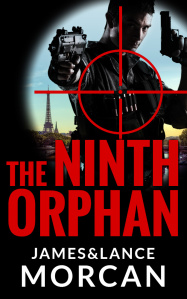
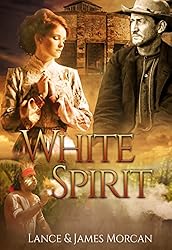
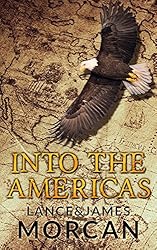
Our established novels include the bestselling historical adventures White Spirit and Into the Americas, which are both based on true stories, and the modern thrillers The Orphan Trilogy and Silent Fear; our non-fiction titles include Debunking Holocaust Denial Theories and the bestseller Genius Intelligence.

New releases include the action-thriller The Dogon Initiative (The Deniables, Book 1) and the non-fiction book Vaccine Science Revealed: Are Childhood Immunizations As Safe As Claimed?

We have adapted (and are adapting) several of our novels to feature film screenplays, and some are now in development with our production company Morcan Motion Pictures.

Could you tell us something about The Dogon Initiative that is not found in the book description?

The book and the series it has spawned (or is about to spawn) were inspired by the belief American intelligence contracts foreign mercenaries to undertake clandestine missions abroad. They’re known as deniable assets. Deniable because, if a mission goes belly up, the agency will deny any knowledge of their existence and no-one’s to their assistance. For obvious reasons, we refer to the assets as the Deniables.

Book one in the series shows how the CIA’s New Paradigms Team, a newly-formed humanitarian division of the agency, is tasked with saving Mali’s persecuted Dogon people from genocide. Although fictional, we consider it’s not too unlikely the CIA is pursuing humanitarian goals, and, with that in mind, that’s the basis of the entire series. Each book will focus on the Deniables’ latest mission.    

What do you want readers to take away from this story?

That ethnic groups throughout Africa – the mysterious Dogon of Mali in particular – are not ignorant desert nomads or cow herders, but are keepers of ancient knowledge the rest of us would do well to treasure. In the case of the Dogon, who many believe have links to the ancient Egyptians, they have an uncanny understanding of the heavens that has intrigued astronomers for centuries. Some believe that knowledge came from alien visitations.

Did you plan for this book to the first in a series? How many books do you have planned for The Deniables?

Yes, we always planned for The Dogon Initiative to be the first in the series. We have almost limitless story line ideas so the series could eventually comprise many books… Or we could run outta steam and end up with only a few. Time will tell!

What was your process for writing The Dogon Initiative? Is this different or the same as other books?

The writing process differs from book to book. Usually, the one whose brainchild it was ‘drives’ the project and the other acts more as an editor and sounding board. I usually drive our historical novels and James usually drives our contemporary novels and non-fiction books.

Regardless of who drives a book project, we both agree on an overall story outline and then one of us takes the reins to craft a first draft. In this case, it was me who crafted the first draft.

Can you share with us what are the challenges and benefits of co-writing a novel?

As a (somewhat rare) father-and-son writing team based in different countries (NZ and Aussie) there are many challenges as you can imagine. Electronic communication overcomes the distance problem, but there are numerous artistic disagreements regarding plots and story lines. However, the benefits far outweigh any disadvantages because our generational differences mean we can cater for young and old reading tastes, and we edit each other’s writing mercilessly. (Usually, whoever argues or cries the loudest prevails… and the end result seems to be okay… So far)!

What is the biggest thing you learned when it comes to publishing and marketing your novels?

It’s all about the book’s launch. If you screw up the launch, the book will be lucky to rise to the top of the rankings because it won’t be noticed. This is a generalization because we have screwed up a book’s launch and the book still rose to the top. Our best example of this is our latest historical adventure White Spirit, which missed the launch completely, but ultimately became our best ever seller.

Being active on Goodreads is one of the best marketing activities an author can undertake. We believe many book sales can be attributed to an author’s following on Goodreads. In our case, we have formed the Underground Knowledge global discussion group on the site. Its membership has topped 10,600 making it one of the biggest and fastest growing groups on Goodreads. This has generated tremendous interest in our books. (New members are welcome, and authors of alternative thinking books are welcome to post their books on the site)!

In your opinion, what is the measure of a book’s success?

Number of sales and quality of reviews.

What would be your advice for aspiring co-authors?

Read, read, read and write, write, write… then write some more… then rewrite what you’ve written and rewrite some more! If you’re still passionate about what you’re doing after all that… then you are a writer!

What are you working on next?

Book two in The Deniables Series.


The Dogon Initiative (The Deniables Book 1) 

by Lance & James Morcan

A group of foreign mercenaries hired as deniable assets by a newly-formed humanitarian division of the CIA is tasked with saving Mali’s persecuted Dogon people from genocide. The operation must be carried out in stealth while journeying across some of West Africa’s most hostile terrain. As if all that’s not enough, they are also instructed to help solve an ancient astronomical mystery linked to the pyramids of Egypt.

Mission impossible? Duh!

Nicknamed the Deniables because their existence isn’t officially acknowledged by the CIA, the mercenaries are crazy enough to accept the mission anyway. However, they soon find themselves fighting for their lives when they get caught in the middle of warring ethnic factions in Mali. Their only way to survive is to join with the Dogon in a race against the clock. The stakes are so high that not only could an entire indigenous group be wiped off the face of the Earth, but all evidence that supports advanced ancient technology theories surrounding the Dogon and a lost civilization thesis may be destroyed in the process.

Inspired by a true-life mystery of astronomy, THE DOGON INITIATIVE highlights some of the many myths and theories surrounding the fascinating Dogon people of Mali. In particular, their unexplained knowledge of the invisible-to-the-eye Sirius B white dwarf star, the rings of Saturn and other heavenly bodies, and their rumored ancestral relationship to ancient Egyptians.

The Dogon Initiative – “An excellent black ops adventure,” says one reviewer.
Author interview supplied courtesy of This is Writing – “A place where stories can be
shared without judgement; a place were books and words are valued above all.”
****************************** 

Artificial Intelligence (AI), Big Data, Transhumanism, quantum computation, drones and the 5G Network are among the topics being aired in our Underground Knowledge group’s Futuristic Tech discussion thread on Goodreads.com. With 604 posts to date, AI is the most popular topic among Undergrounders at present.

These clickable links show the full list of topics under discussion:

Artifical Intelligence (AI)

Transhumanism

QUANTUM, BIOLOGICAL AND DNA COMPUTING

Big Data, analytics, social media, privacy and digital ethics

FINANCE, BUSINESS AND ECONOMY

FUTURE TECH SHOWCASE

OSINT, INFOSEC AND CYBER-SECURITY

IMPACT INVESTING, WILDLIFE CONSERVATION, SAVING THE ECOSYSTEM (with AI and other tech)

BIOTECH AND NANOTECHNOLOGY

Is quantum computation a threat for us?

TECHNOLOGY RELATED MOVIES / TV SHOWS / BOOKS / DOCUMENTARIES

Drones

WEB 3.0, VIRTUAL AND DIGITAL ECONOMIES

The 5G network. And is it anything to worry about? (and will humanity still be around for 6G?!)

How will VR (Virtual Reality), AR (Augmented Reality) and MR (Mixed reality) alter the world?

HEALTH, FITNESS AND WEARABLES

MINING, ENERGY AND POWER SOLUTIONS

AGRICULTURE AND COMMERCIAL FISHING

Will the outernet one day replace the internet?

SPORTS, SPORTS BETTING AND ENTERTAINMENT

TECH COMPANIES TO WATCH

The emergence of a Security Industrial Complex?

Holographic Technologies

Can Little Brother (and Little Sister) overthrow Big Brother?

What impact will the IoT (Internet of Things) have on society?

Smart cities – one solution for the planet’s future?

Smart Fabrics Being Developed

Silicon vs. DNA Microprocessors

How valid are health concerns about the dangers of EMFs and WI-FI?

*

To visit the Underground Knowledge group, or better still to have YOUR say, go to:  

https://www.goodreads.com/group/show/142309-underground-knowledge-a-discussion-group  

The Underground Knowledge global discussion group has been designed to encourage debates about important and under-reported issues of our era. All you need is an enquiring mind, an interest in the world we live in and a desire to learn or share ‘underground knowledge’. Current membership 10,891 members and growing fast! New members welcome!


*****************************************************

When we began researching our book Vaccine Science Revisited: Are Childhood Immunizations As Safe As Claimed?  we weren’t quite able to figure out why babies receive so many vaccines before they start creating their own antibodies. We also wondered whether a vaccine would have a different effect on an infant than it would on a child with a fully developed immune system. Although we came up short on some of these concerns, we were able to get some answers, which we share with readers.

Interested? Here’s an excerpt from the book:


The helper cell 

“The best advisers, helpers and friends, always are not those who tell us how to act in special cases, but who give us, out of themselves, the ardent spirit and desire to act right, and leave us then, even through many blunders, to find out what our own form of right action is.”Phillips Brooks (American clergyman and preacher).

When a woman is pregnant, she carries a fetus which has its own sets of cells, its own DNA. It is its own individual being, which presents a problem for the immune system as it is designed to attack whatever is foreign in the body. This is an issue humans have dealt with since the beginning of time. 

Nature has forced the female body to adapt and accept new life growing within. The body has had a long time to evolve and improve. Long enough that it now has the mechanisms in place to deal with the conundrum of new life smoothly. Nature itself has prepared the female body to allow a foreign entity to grow inside it. 

In order to protect itself, the body uses many types of immune cells. One type is something called T-helper (Th or helper) cells. We have many different kinds of helper cells and their functions are distinguished by adding numbers to their names. 

The most significant Th cells in relation to this book are the Th1 and Th2 cells. The main function of a Th1 cell is to help destroy our cells already infected by germs. The Th2 cells balance this out by helping destroy the germs outside the cells before they get the chance to attack them. This creates a Th1/Th2 cell balance. In other words, Th1 cells recognize your infected cells and help kill them before they produce other corrupted cells. 
The Th2 cells recognize the free-floating germs and help create antibodies against them. 

In the case of the fetus, the Th1 cells are the problem. These cells believe the fetal cells are corrupt, so they signal an attack to destroy them. Since life has continued on this planet for who knows how long, it’s apparent that nature has taught the body to bypass this fetal destruction. The body’s immune system restructures its purpose in order to protect the fetus. It does this by suppressing the production of Th1 cells until after birth . This way, the body doesn’t have enough Th1 cells to attack what it believes to be corrupted cells. 

This means the Th1/Th2 balance is interrupted and the future mother now has tipped the scales towards Th2 cells. This also means the mother has mostly Th2 cells and very little Th1 cells available to share with the fetus. 
Therefore, the placenta transfers almost entirely Th2 cells to the fetus. 

It should come as no surprise that when we are born our immune system consists almost completely of Th2 cells. It’s not until the baby is exposed to the outside environment that Th1 cells become stimulated and start multiplying until they become a balanced part of the immune system again. 

We rely almost entirely on our mother’s antibodies until we are about six months old, which is when we slowly start developing a more complex immune system. As a baby starts building its own immunity, the mother’s antibodies disappear from the baby’s body. 

Something we weren’t quite able to figure out was why babies receive so many vaccines before they start creating their own antibodies. A vaccine is meant to encourage the body to create antibodies against it. We can see how vaccinating an infant that’s not good at creating its own antibodies yet, would only have limited protective effects. We also wondered whether the vaccine would therefore have a different effect on the infant than it would on a child with a fully developed immune system. Although we came up short on some of these concerns, we were able to get some answers we’ll share with you in this book.

Hunt, eat and destroy

The first line of defense is the surface of our skin. The average skin pH is 4.7, which is acidic and ideal for our normal skin flora . Another acidic location is our gut. Those of you who are gardeners will likely know how difficult it can be to grow plants in an acidic environment. It’s the same with germs. Many germs don’t survive being in contact with such acidic environment. 

If the skin is compromised in any way, an open cut for instance, it will allow germs to make their way inside. This is where the germs meet our macrophages (i.e. phagocytes). They are called phagocytes because they eat everything foreign (phago = eat, cyte = cell). They are the first ones to the scene and will grab hold of the invaders then devour and destroy them. They don’t distinguish between the foreign particles. They don’t care what it is, as long as it’s foreign. The macrophages then gather genetic information about the invader and bring it to the lymph nodes where the T cells and B cells hang out. 

A quick recap: The T cells in question are the Th1 and Th2 cells. Th1 cells help destroy the infected cells and the Th2 cells help B cells make antibodies to inactivate the germs floating around outside our cells. 

We never forget

As we just mentioned, B cells and Th2 cells work together in antibody production.

Some B cells go by the name of memory cells because they remember information about the invader for the rest of our lives (or close thereto). This means that when the same invader attacks again, the memory B cells are alerted much quicker. The B cells carrying the information begin cloning themselves and start spitting out antibodies at a much faster rate. 

It will not pass

In nature, a germ is introduced to the body via the mucosal route such as the eye, nose or throat. When antigens (foreign invaders) enter the body naturally, the first defenders, which are a part of the innate immune system, respond instantaneously. 

Vaccines are designed to skip the first responders (innate immunity) and go straight for the antibody producing responders (acquired immunity). 

What’s worth noting is if a vaccine manufacturer states that its vaccine elicits T cell response, it doesn’t necessarily mean the vaccine elicits response from all types of T cells. This is because there are different types of T cells. 

We have explained that Th1 and Th2 are promoting an action and not actually performing the task itself. Hence the name helper cell. 
Like the Th1 cells. When we look at their function a little closer, their job is to relay instructions that tell Killer-T cells what to do. 
The Killer-T cells receive the instructions, multiply themselves until they are an army carrying the same instructions and then they go kill the corrupted cells they were instructed to kill. 

Once the Killer-T cells have destroyed corrupted cells, the macrophages come over to clean up the mess. The same goes for the Th2 cells. They carry instructions for the B-cells. After receiving instructions, the B cells will multiply until they are an army of cells carrying the same instructions. 

What good is a titer?

The way physicians check to make sure your body has become properly immunized against a specific disease is to send you to the lab for a blood draw. Then your blood will be tested for the presence of the antibodies against specific antigens. A quick reminder, B cells produce antibodies. 

When checking for vaccine immunity, the antibodies are often measured in titers. When we learned how vaccine immunity is measured in titers, we knew it was measuring the activity of Th2 cells and the B cells. What was completely missing was the activity performed by the Th1 cells and the Killer-T cells. 

Given the way vaccinations are presented to our system, it seems to us there may be other factors than antibody concentration to consider. We found an interesting older study in The Lancet that tested individuals who were unable to produce their own antibodies . When these individuals came down with measles, they showed all the natural signs and symptoms of natural disease. After the course of the illness, they became immune to measles. 

The scientists conducting this study had blood drawn from these patients and tested it for antibody levels. There were no antibodies for measles in the blood (serum) samples. This goes to show that the immune system can create immunity against a disease without producing antibodies. And this means the immunity had nothing to do with Th2 cells or B cells, which are a part of the acquired (adaptive) immunity. 

This study could be an example of the great importance of our first responders, the innate immune response, which reacts to the initial exposure of a disease. Our innate immune system is nonspecific, it attacks anything foreign. Our acquired immunity, the one that produces antibodies, the one lacking in the individuals in above study, consists of cells which only attack what they’re instructed to attack. 

The adjuvant rejuvenant

Most vaccines contain either inactivated germs or portions germs – an antigen nonetheless. If it were to be injected into the body all by itself, nothing would happen. It would just float uselessly around and the body wouldn’t view it a threat. 

The immune system needs to be artificially triggered and tricked into attacking these useless invaders. As a solution to this problem, scientists came up with the idea of attaching a substance to the vaccine antigen that would trigger B cells to produce antibodies. This substance is called an adjuvant.

Up until the early 2000s, mercury was often used as an adjuvant. As a result of some severe consequences and pressure from concerned citizens, mercury was eliminated from most vaccines. 

The scientists knew the vaccine still needed an adjuvant if it was going to elicit an immune response. So, they added aluminum (Al) instead to do the job. 

An adjuvant is designed to shock the B cells (and Th2 cells) into antibody production. Each vaccine antigen is coated with an adjuvant. 

This raised two important questions for us: How many antigens are there in a vaccine; and when injecting multiple vaccines simultaneously, could this accumulation of adjuvants be more harmful – especially for infants? 

Unfortunately, there are far too many antigens in a vaccine to be counted. 

When adjuvants trigger antibody production for multiple antigens, the B cells are instructed to produce a wide variety and magnitude of antibodies. Keep in mind, it isn’t natural for the body to be exposed to a variety of diseases all at the same time, especially all bypassing the innate immune system (first responders). And yet how many times have you heard of children being naturally sick with multiple childhood diseases all at the same time? 

The CDC’s recommended childhood vaccine schedule recommends 69 shots up until age 18. This is not 69 different diseases. As you may recall, some vaccines require booster shots, so this count includes each booster as well. Some of these will be combined in the same vaccine. For example, measles, mumps & rubella (MMR) would be considered three shots as would diphtheria, tetanus & acellular pertussis (DTaP). 

If the foreign antigens are too numerous and overpower the immune system, they will have the opportunity to run wild, and multiply within the body and vandalize it. Whatever the body is unable to eliminate stays there. 

Once the vaccine ingredients are inside the body, is the body able to take care of them? Are they being excreted or are they accumulating? If they are accumulating, where are they, where are they going and are they causing damage? We hope to satisfactorily answer these questions and more in the coming chapters.

References for Chapter 8: The helper cell:

Sykes, L., MacIntyre, D. A., Yap, X. J., Ponnampalam, S., Teoh, T. G., & Bennett, P. R. (2012). Changes in the Th1:Th2 cytokine bias in pregnancy and the effects of the anti-inflammatory cyclopentenone prostaglandin 15-deoxy-Δ(12,14)-prostaglandin J2. Mediators of inflammation, 2012, 416739.
Lambers H., Piessens, S., Bloem, A., Pronk, H., and Finkel, P. (2006). Natural skin surface pH is on average below 5, which is beneficial for its resident flora.” International Journal of Cosmetic Science, 28(5), 359-370. 
Burnet F.M. (1968). Measles as an Index of Immunological Function. The Lancet, 292(7568), 610-613. 
Centers for Disease Control and Prevention. (2018, May 14). Recommended Immunization Schedule for Children and Adolescents Aged 18 Years or Younger, United States, 2018. Retrieved from https://www.cdc.gov/vaccines/schedule…
Center for Disease Control. (n.d.). Recommended Immunization Schedule for 
Children and Adolescents Aged 18 Years or Younger, UNITED STATES, 2018. Retrieved from https://www.cdc.gov/vaccines/schedule…

VACCINE SCIENCE REVISITED: Are Childhood Immunizations As Safe As Claimed? (The Underground Knowledge Series Book 8) by [Morcan, James, Morcan, Lance]

Vaccine Science Revisited is available via Amazon:  https://www.amazon.com/gp/product/B07MQTN3CG/


****************************************


GENIUS INTELLIGENCE: Secret Techniques and Technologies to Increase IQ, our first book in the popular Underground Knowledge Series, is holding its Amazon #1 Bestseller ranking in the Non-formal Education category. At the time of writing (this blog post) it was also #2 in the Experimental Education Methods category on Kindle.


GENIUS INTELLIGENCE: Secret Techniques and Technologies to Increase IQ (The Underground Knowledge Series Book 1) by [Morcan, James, Morcan, Lance]

Alternative education book retains popularity.


See what reviewers say about Genius Intelligence:

“This is essential lore for the mind hacker…The best outline of intelligence increase tools I have read. An essential primer on intelligence increase.” –Thomas A. Sturgeon

“This is not a dull, erudite work, but a fascinating journey of discovery. You are taken on a journey beyond the normal public schooling” –Cyrano1db

“Fascinating and very thought provoking. It challenges the myth that geniuses are born not developed.” –Reviewer Sheri Wilkinson

“Highly recommended for those looking to gain a creative edge.” –Amazon Reviewer

“This is an important work of high merit.” –Reviewer J. Rogers Barrow


Genius Intelligence  is available via Amazon as a paperback and Kindle ebook: http://www.amazon.com/GENIUS-INTELLIGENCE-Techniques-Technologies-Underground-ebook/dp/B00QXQQWXO/


************************************

VACCINE SCIENCE REVISITED: Are Childhood Immunizations As Safe As Claimed? (The Underground Knowledge Series Book 8) by [Morcan, James, Morcan, Lance]

Amazon No.1 bestseller.


“Easily the most comprehensive work I have read on the subject of vaccine safety. This book is truly a masterpiece!” -Amazon Reviews

“Thought-provoking and very readable (with) 740 references with hyperlinks to the original papers.” -Pro-vaccine author and mom Lee Murray

“Possibly the most well-referenced work yet to explore this contentious healthcare subject.” –Medical Laboratory Scientist Elísabet Norris (B.S.)

“Essential book for any Medical Professional and/or parent trying to navigate the confusing world of childhood vaccines.” -Ila in Maine


To see all Amazon reviews for VACCINE SCIENCE REVISITED: Are Childhood Immunizations As Safe As Claimed?  go to: https://www.amazon.com/gp/product/B07MQTN3CG/


***************************************

Critically acclaimed historical fiction novel White Spirit  dedicated this month to Women’s History Month worldwide

White Spirit (A novel based on a true story) by [Morcan,James, Morcan, Lance]

4.5 out of 5 stars after 86 book reviews.


“It is real, very, very real with fascinating characters at the helm. Very highly recommended! Both men and women will enjoy the story.” – a ‘History and Women’ review


White Spirit  is available as a paperback and Kindle ebook via Amazon: https://www.amazon.com/White-Spirit-novel-based-story-ebook/dp/B01LWIRH9J/


************************************************

Members of our Underground Knowledge global discussion group on Goodreads.com have been alerted to the fact that since 9/11 America has invaded and/or bombed seven Muslim nations, resulting in the loss of millions, possibly tens of millions, of lives.

These nations (with relevant ‘conflict’ dates) include:

Yemen – 2002, 2009, 2011

Iraq – 2003-2015

Afghanistan – 2001-2015

Pakistan – 2007-2015

Somalia – 2007-8, 2011

Libya – 2011, 2015

Syria – 2014-2015, 2018-2019

One Undergrounder (group member) says, “I’m not sure what death toll from all that would be, probably millions or even tens of millions…but I don’t think many, if any, of these military assaults would be justifiable without the 2001 attack on U.S. soil.”

He suggests, “We need to go back to the inciting incident and figure out was that for real or a false flag attack or something in between?”

Given most Undergrounders are American, some of the comments in this particular discussion thread make for interesting reading. The thread is titled ‘ FALSE FLAG OPERATIONS > The U.S. Military Industrial Complex VERSUS the American People.’ (Click on the link above to view comments).

It follows a poll we ran, which asked, “Was 9/11 a false flag attack and ‘Inside Job’?” Exactly 50% of respondents answered Yes.

Poll respondents’ comments (all 419 of them) can be viewed at: https://www.goodreads.com/topic/show/2071995-was-9-11-a-false-flag-attack-and-inside-job-poll-50-of-you-say-yes

Image result for underground knowledge

*   *   *

The Underground Knowledge global discussion group has been designed to encourage debates about important and under-reported issues of our era. All you need is an enquiring mind, an interest in the world we live in and a desire to learn or share ‘underground knowledge’. Check it out at: https://www.goodreads.com/group/show/142309-underground-knowledge—a-discussion-group  Current membership 10,832 members and growing fast! New members welcome!


*****************************************************

Whether scientists intended it to or not, vaccines are quite effective in causing the body to react in a way nature did not prepare it for. We elaborate on this in an early chapter of our new release book Vaccine Science Revisited: Are Childhood Immunizations As Safe As Claimed?

Excerpt follows:

Our own army of superheroes

“Birds born in cages think that flying is a disease.” -Alejandro Jodorowsky (Chilean-French filmmaker)

Vaccines entering the body come fully loaded with heavy artillery. Not all vaccine ingredients are well behaved, but rather are prone to vandalism once inside the body. In their defense, these ingredients are put in the vaccines because of their ability to ravage.

Whether the scientists intended it to or not, the vaccines are quite effective in causing the body to react in a way nature did not prepare it for. Most of the vaccine ingredients and trace elements are added in order to provide safety and efficacy. Each vaccine is different and comes with its own recipe and ingredients. So far, regardless of which vaccine it is or which recipe is used, our immune system reacts accordingly.

The body is extremely methodological in its defense/attack strategies. As authors, we felt it was very important to understand how some of these strategies work. The immune system is an extremely intelligent and intricate mechanism and we cannot possibly do it justice in only a few pages. In this chapter we share a fraction of its intricate puzzle, but hopefully it’s enough to make sense of how our bodies are designed to react when presented with foreign substances.

Concepts such as the immune system adjusting to a growing fetus bring to mind other instances that may have had similar outcomes. The body adjusts to the germs in the environment and is able to protect itself from these germs and even draw benefits from them.

Sometimes the germs are so clever at surviving and upholding their genetic makeup they become a part of our human DNA.

A recent article at Livescience.com mentions some research papers on how ancient viruses could be the reason humans have conscious thoughts, a functioning immune system and are able to develop embryo.

Another interesting finding the article points out is that we have a viral gene called the Arc gene . This gene plays an important role in writing genetic information and getting it across to other neurons. It’s so important, in fact, that without it, synapses will fade away. (A synapse is the area where the nerve signalling takes place: From the axon terminal, across the synaptic cleft and over to the dendrite). People who have been diagnosed with autism or other atypical neural diseases have been shown to have a dysfunctioning Arc gene.

Having read some of the massive amount of information on vaccines and related topics, we do wonder if our bodies would have evolved in such a way to withstand the diseases that concern us today without help of drugs or vaccines.

We understand that even before vaccinations, diseases killed huge numbers of people all over the world. As we mentioned at the end of the first chapter, when populations grew and people started living closer together, germs had more opportunities to spread amongst humans, especially where sanitation was a major problem. So, it makes us wonder if with improved living conditions would these diseases have been such a big issue? Did scientists become too focused on being a part of the medical revolution to see that perhaps the real solution lies in improving our environment?

The story of surgeon Ignas Semmelweis, who claimed washing hands would make childbirth much safer, is one example of improving the environment. He is now known for the recognize-explain-act approach, which is still used today as an epidemiological model for preventing infections.


References for Chapter 7: Our own army of superheroes:

Letzter, R. (2018, February 2). An Ancient Virus May Be Responsible for Human Consciousness. Retrieved from https://www.livescience.com/61627-anc

https://www.genecards.org/cgi-bin/car

WHO Guidelines on Hand Hygiene in Health Care: First Global Patient Safety Challenge Clean Care Is Safer Care. Geneva: World Health Organization; 2009. 4, Historical perspective on hand hygiene in health care. Available from: https://www.ncbi.nlm.nih.gov/books/NB


VACCINE SCIENCE REVISITED: Are Childhood Immunizations As Safe As Claimed? (The Underground Knowledge Series Book 8) by [Morcan, James, Morcan, Lance]

Vaccine Science Revisited is available via Amazon: https://www.amazon.com/gp/product/B07MQTN3CG/

****************************************

Fiji: A Novel (The World Duology Book 2) by [Morcan, Lance, James Morcan]

Fiji: A Novel  is a spellbinding tale of adventure, cultural misunderstandings, religious conflict and sexual tension. Co-authored by the authors of the bestselling historical adventures White Spirit  and Into the Americas, it is set in one of the most exotic and isolated places on earth.

By the mid-1800’s, Fiji has become a melting pot of cannibals, warring native tribes, sailors, traders, prostitutes, escaped convicts and all manner of foreign undesirables. It’s in this hostile environment an innocent young Englishwoman and a worldly American adventurer find themselves.

Susannah Drake, a missionary, questions her calling to spread God’s Word as she’s torn between her spiritual and sexual selves. As her forbidden desires intensify, she turns to the scriptures and prayer to quash the sinful thoughts – without success.

Nathan Johnson arrives to trade muskets to the Fijians and immediately finds himself at odds with Susannah. She despises him for introducing the white man’s weapons to the very people she is trying to convert and he pities her for her naivety. Despite their differences, there’s an undeniable chemistry between them.

When their lives are suddenly endangered by marauding cannibals, Susannah and Nathan are forced to rely on each other for their very survival.


Fiji: A Novel  is available via Amazon as a paperback and Kindle ebook: http://amazon.com/Fiji-A-Novel-ebook/dp/B0057YCZM0/


************************************* 

In the following excerpt from our bestselling, new release book, VACCINE SCIENCE REVISITED: Are Childhood Immunizations As Safe As Claimed?, we highlight germs and different types of vaccines. You’ll see we discovered the differences between some vaccine types doesn’t seem to be clearly understood by many we’ve come across in the medical field.


“Without laboratories men of science are soldiers without arms.” -Louis Pasteur (French biologist)


Some inactivated vaccines use the entire germ, while others use disease-causing portions of the germ. In vaccines containing the whole germ, scientists will inactivate or kill the germ in order to prevent viral replication. They do this by using chemicals. A chemical that’s very good at this job is formaldehyde (FA) or formalin (liquid form of FA).

Even though the germ is killed and can no longer replicate, it’s still whole, so our immune system is able to recognize it and attack it.

Unfortunately, the killed germ doesn’t keep our body immune as long as a living germ will, so we need to get booster shots every so often to keep the immune response up. Examples of vaccines using killed germs are Hepatitis A and polio (shot).

Inactivated toxins (toxoids) vaccine

When the disease is caused by bacteria, it’s often not the actual bacteria itself causing the sickness, but rather a toxic component of the bacteria. The goal of this vaccine is to inactivate the toxic component (toxoid), so it can be injected into our body without harming it. Toxoids are not quite the same as toxins. Toxins are the pure product of the bacteria and toxoids are the toxins after they have been chemically altered or inactivated in the lab.

Examples of toxoid vaccines are diphtheria and tetanus.

Subunit/conjugate/recombinant vaccine

The differences between these types of vaccines (subunit/conjugate/recombinant) doesn’t seem to be clearly understood by many we’ve come across in the medical field.

Subunit vaccines use only portions of the germ or as the NIH website explains it, they “include only the antigens that best stimulate the immune system.”

The conjugate vaccines, on the other hand, use only the bacterial sugar coat in order to “disguise a bacterium’s antigens so that the immature immune systems of infants and younger children can’t recognize or respond to them.” The coating also contains the information that makes us sick.

But this is not an actual germ, so if it is just injected into the body by itself, we won’t recognize how dangerous the coating is. To solve this problem, the scientists attach it to a toxic molecule that will stir up our immune system. In order to attach the coating to the toxin, they need other chemicals to finish the job. By using a chemical, the coating material attaches to a carrier protein. Examples of these types of vaccines are the Hib, HPV, pneumococcal and meningococcal vaccines.

The recombinant vaccines, use carriers or vectors “to introduce microbial DNA to cells of the body.” These carriers/vectors are weakened viruses or bacteria, meaning they mix and match DNA from different sources into one germ or cell.

There are different ways to produce these vaccines. One way is to isolate a specific piece from a germ and use it in the vaccine. Another way is via genetic engineering. Here the germ is inserted into plasmid that has been manipulated by scientists. This type of plasmid is circular segments of DNA extracted from bacteria to serve as a vector. Scientists can add multiple genes and whatever genes they want into this plasmid. In case of vaccines, this includes a genetic piece of the vaccine germ and normally a gene for antibiotic resistance.

This means that when the toxic gene is cultured inside the yeast, it has been designed with a new genetic code that makes it resistant to the antibiotic it’s coded for.

The gene-plasmid combo is inserted into a yeast cell to be replicated. When the yeast replicates, the DNA from the plasmid is reproduced as a part of the yeast DNA. Once enough cells have been replicated, the genetic material in the new and improved yeast cell is extracted and put into the vaccine. Examples of this vaccine are the acellular pertussis and hepatitis B vaccines.

One thing that doesn’t seem to concern scientists is the fact that the manmade genetic combination becomes the vaccine component. This mixture of intended and unintended genetic information may cause our immune system to overreact. This can be especially complicated for a child with compromised immune system.

Another concern is that this new genetic code can become integrated with our own genetic material. Yeast, for instance, is very much like human DNA. It shares about one third of our proteins.

What have they done?

Here you have substances that are designed to aggravate the immune system towards an attack. So, that’s what it does. Our immune system launches an attack on the invader. Sometimes the invader, like yeast, has many of the same protein codes as us. Our immune system downloads these protein codes and labels them as enemies. It signals a full-on attack on everything with that code in our body. Unfortunately, when the codes are similar, we don’t always know how to distinguish between vaccine proteins and our own proteins.

Trace elements

Trace components that end up in the final product and become a part of the vaccine are usually left-over elements from the manufacturing process.

These components were added during production in order to either keep cells alive or kill them or keep them free from contamination or to alter genetic materials during production. Other components are added to stir up our immune system to respond to the vaccine. As you perhaps can see, the materials scientists purposely add to the vaccine-making process serve the purpose of keeping us as safe as possible.

The concern arises when these materials become a danger to our body, which becomes overwhelmed from being bombarded with toxins and protein particles. This attack is, for some children, too much to handle, and they suffer permanent ill health or lose the fight to live.

What is it exactly that ends up in the vaccines our children are given, and what happens when these vaccines enter their bodies? We attempt to answer these questions in the next chapter.


References for Chapter 6: Altered germs:

World Health Organization. (n.d.) Module 2: Types of Vaccine and Adverse Reactions. Retrieved from https://vaccine-safety-training.org/s


VACCINE SCIENCE REVISITED: Are Childhood Immunizations As Safe As Claimed? (The Underground Knowledge Series Book 8) by [Morcan, James, Morcan, Lance]

Amazon #1 Bestseller in Emergency Pediatrics: https://www.amazon.com/gp/product/B07MQTN3CG/

****************************************