Set in the nineteenth century, World Odyssey (The World Duology, #1)  follows the fortunes of three young travelers as each embarks on an epic journey. Their dramatic adventures span sixteen years and see them engage with Native American Indians, Barbary Coast pirates, Aborigines, Maoris and Pacific Islanders as they travel around the world – from America to Africa, from England to the Canary Islands, to Australia, New Zealand and Samoa.
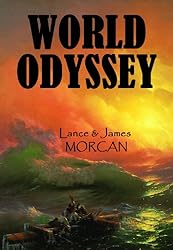
 

World Odyssey (The World Duology Book 1)

Prologue

Summer, 1832

Alone in his father’s study, young Philadelphian Nathan Johnson surveyed the lavishly furnished but slightly musty room. His keen eyes rested momentarily on the titles of some of the hundreds of books lining the shelves behind his father’s desk. Many had a nautical theme, alluding to the occupation of the absent Captain Benjamin Johnson.

The boy never tired of being in his father’s study and often ventured into it even though Johnson Senior had made it clear the study was out of bounds whenever he was away.

Although physically absent for the moment, his father was present in a sense: a recent portrait painting of the forty-year-old captain hung on the far wall. Dark, curly, shoulder-length hair framed his unsmiling but still youthful face. The ruggedly handsome Johnson Senior had the appearance of someone who didn’t suffer fools. His startlingly blue eyes seemed to bore into Nathan’s as the boy studied the painting.

Nathan couldn’t know it, but he was looking at a mirror image of himself in later years. Even at the tender age of ten he was already a chip off the old block. Tall for his age, he was more mature than his schoolmates, and more serious, too.

Sounds of children’s laughter drifted in through an open window. His two older sisters and their friends were making the most of a sunny day after several days of constant rain. From the kitchen downstairs, the clink of crockery could be heard as the maid cleared away the breakfast dishes.

Nathan switched his attention to a faded world map hanging alongside the painting. A dotted line connecting North America’s west coast and the coast of mainland China showed where his father had journeyed on his latest expedition. Johnson Senior was a successful trader whose latest enterprise had involved trading goods to the Native Americans for their prized sea otter furs. He had transported those same furs to China where they fetched huge prices.

The thought of sailing to some exotic destination thrilled Nathan to the core. He lived for the day he was old enough to go to sea. Meanwhile, he contented himself studying the world map and dreaming of far-off places.

So engrossed was he, he didn’t hear his father arrive home from town. It wasn’t until the study door burst open and Johnson Senior strode in that Nathan realized he was in trouble.

When Johnson Senior saw Nathan, he turned livid. He grabbed his son by the hair and began cuffing him hard about the head.

Johnson Senior’s mood wasn’t helped by the fact he’d been drinking and gambling since the previous night, and had lost a considerable amount of money. As a man of means, it was money he could afford to lose, but that hadn’t helped dampen his already foul temper.

Nathan could tell his father had been drinking. He could smell the whisky fumes on his breath, and Johnson Senior was unsteady on his feet and slurring his words as he cursed and beat the son he wished he’d never had.

Determined to remain staunch, Nathan bit his lip to stop from crying out. This further infuriated his father who removed his belt and began flailing the boy with all his considerable strength. The belt’s buckle cut into Nathan’s bare arm and drew blood.

As Nathan covered up as best he could to protect himself, he fixed his gaze on a portrait painting of his mother hanging on the near wall. It gave him strength. The painting was the work of one of Philadelphia’s leading artists and it captured pretty Charlotte Johnson as she was in her early twenties. There was a quiet determination in her sparkling brown eyes.

Charlotte was the mother Nathan had never known for she had died giving birth to him ten years earlier.

The beating ended as quickly as it had begun when Johnson Senior pushed the boy from the study and slammed the door shut after him.

Now alone at the top of the first floor landing, Nathan swore he’d run away from home as soon as he was old enough.

*     *     *

At that very moment, across the Atlantic in England, little Susannah Drake was playing with dolls and other girlie things while watching two white swans that had taken up residency in the lily pond behind her Methodist clergyman father’s rectory in the affluent west London district of Kensington.

The cute, red-headed, six-year-old closed her eyes to protect them from the bright sunlight reflecting off the pond’s surface. When she reopened them, one of the swans had paddled to within an arm’s length of her at the pond’s edge, causing her to jump back in surprise. Swan and child stared at each other for a second or two before the majestic bird paddled off to rejoin his mate.

On the lawn behind Susannah, her father Reverend Brian Drake was chatting to visiting members of his congregation while her mother, Jeanette, served Devonshire tea. It was a very English scene.

Jeanette, a pretty but frail woman, called out to Susannah who promptly skipped over to join her parents. Jumping up onto her father’s knee, she licked the strawberry jam off one of her mother’s famous scones as Drake Senior talked to the other adults.

Susannah amused herself as the conversation turned to the missionary work the Methodist Church was engaged in, in far-off places. Drake Senior expressed a desire to become a missionary one day. Jeanette didn’t seem to share her husband’s enthusiasm for missionary work and quickly changed the subject.

Finding the adult conversation boring, Susannah jumped off her father’s knee and ran back down to the lily pond. She laughed delightedly when the two swans paddled to the pond’s edge to greet her. Her laughter turned to screams as one of the swans waddled up onto the lawn and proceeded to chase after her, hissing. It seemed the swan was intent on securing the remains of the scone Susannah was still holding.

Chuckling at his daughter’s predicament, Drake Senior advised Susannah to give the swan what it wanted. Although frightened, Susannah refused to back down. She rammed the remains of the scone into her mouth and shooed her tormentor away. Beaten, the swan gave up and waddled back to the pond.

The adults laughed and commented how cute Susannah was. Drake Senior and Jeanette observed their daughter with pride. Not for the first time, she had demonstrated that, despite her angelic appearance, she was not easily intimidated.

*     *     *

Several miles away, in southeast London, sixteen-year-old Jack Halliday was traipsing from door to door looking for work in the capital’s busy dockyards. The Cockney’s spirits were uncharacteristically low. Since his mother had kicked him out of the family home two weeks earlier, he’d been job-hunting without success.

Back in the East End, Jack had a reputation for being a lovable larrikin. Shorter than average and not especially good looking, the curly-haired lad nevertheless had a mischievous face and engaging personality which generally endeared him to others. Generally because his cheeky manner ensured he had his share of enemies too. Any who underestimated him did so at their own risk. He never took a backward step and he compensated for his lack of height by fighting with all the fury of a pitbull.

The shadows were lengthening when Jack arrived at Sullivan’s Foundry, a large establishment next to the River Thames. Having experienced around twenty rejections from prospective employers that day, he had to force himself to adopt his normally cheerful disposition as he entered the noisy foundry. The fact he hadn’t eaten in two days gave him extra motivation. He desperately needed to earn some money. If he didn’t land a job soon, he knew he’d have to find money via other means.

Approaching the front office, Jack was suddenly confronted by a big, bad-tempered man who demanded to know what he wanted. The young Cockney guessed, correctly, the man was the foundry owner, Henry Sullivan. When Jack explained he wanted a job, Sullivan advised him he wasn’t in the habit of employing runts and ordered him off the property.

Jack stood his ground, his perceptive green eyes flashing with anger. The look wasn’t missed by Sullivan who decided to put him to the test. He’d recently laid off an apprentice blacksmith who hadn’t measured up, so Jack’s interest in a job was timely. Pointing to a thirty-foot long steel shaft resting on the floor nearby, Sullivan challenged the young Cockney to lift it up onto a shelf that was just above Jack’s head.

Without hesitating, Jack bent down to lift the shaft. He suddenly realized every eye in the foundry was on him. Taking a deep breath, he managed to straighten up while holding the shaft, but when he tried to lift it up onto the shelf it fell to the floor with a mighty clang. Several onlookers chuckled at his misfortune.

Unimpressed, Sullivan turned his back on Jack and returned to his office.

To the surprise of those still watching, Jack prepared to make another attempt. This time, he put everything into it and, to the resounding cheers of the assembled, managed to hoist the steel shaft up onto the shelf just as Sullivan re-emerged from his office. Suitably impressed, the proprietor immediately hired Jack as an apprentice.

Mindful of the hunger pangs that were now causing frequent tummy rumbles, Jack tried to negotiate his first week’s pay in advance. Tightwad Sullivan agreed to pay him two days in advance on condition that he put in some extra hours unpaid. Jack reluctantly agreed. At least now he could afford a square meal.

*     *     *

Jack Halliday, Susannah Drake and Nathan Johnson had no way of knowing their paths would cross one day; their destinies were integrally linked. Fate and the unfathomable twists and turns of life would eventually throw them together on the far side of the world in a place some called the Cannibal Isles.
 

Product Details


World Odyssey (The World Duology, #1)  is exclusive to Amazon:  http://www.amazon.com/World-Odyssey-Duology-1-ebook/dp/B00HHVOMO0/


*******************************************
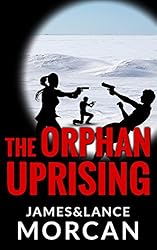


In this explosive conclusion to The Orphan Trilogy, the ninth-born orphan’s dramatic story resumes five years after book one, The Ninth Orphan, ends.


The Orphan Uprising (The Orphan Trilogy Book 3)

THE ORPHAN UPRISING (The Orphan Trilogy, #3)


Chapter 1

A man and a small boy knelt before a large, golden Buddha statue inside a temple and recited an affirmation in well-practiced unison.

“I am a free man and a polymath. Whatever I set my mind to, I always achieve. The limitations that apply to the rest of humanity, Do not apply to me.”

A hundred flickering candles added to the tranquility of the setting. They’d been lovingly prepared by an elderly Buddhist monk who sat cross-legged just inside the temple door as he waited for his two guests to finish their devotions.

The distant sound of children playing outside carried to them on a gentle tropical breeze. Unfortunately, the breeze did little to alleviate the humidity, which was already oppressive even though the sun had not long risen. The temple’s occupants were drenched in sweat, but they were used to it: heat and humidity were part of everyday life in the Pacific Islands.

Finally, the guests arose and walked hand in hand toward the exit. The man was Sebastian Hannar, or Number Nine  as he’d been unceremoniously labeled by the Omega Agency when he was brought into the world thirty-six eventful years ago; the boy was his five-year-old son Francis. They enjoyed the temple’s peaceful atmosphere and the togetherness they experienced within its confines, and so such visits had become a regular occurrence of late.

The affirmation they’d just recited was similar to one that Nine had been forced to recite every day of his life alongside the other twenty-two orphans raised at Omega’s Pedemont Orphanage in Riverdale, Chicago. Since breaking free of the agency five years earlier, Nine had changed the affirmation’s opening line from I am an Omegan and a polymath  to I am a free man and a polymath.

Although the affirmation reminded him of a past he’d rather forget, it also served to remind him that not everything he’d experienced at the orphanage had been bad, and many of the lessons learned could be applied to everyday life.

As father-and-son approached, the elderly, bald-headed monk stood to receive them. Luang Alongkot Panchan, a native of Thailand, couldn’t help thinking how alike Nine and Francis were. Living in the tropics had darkened their skin so that they were hard to distinguish from the Marquesas Islanders who made up the bulk of the population in this remote corner of French Polynesia.

When the pair reached Luang, they bowed to him. He and Nine exchanged pleasantries. The ninth-born orphan treated the kindly monk with respect bordering on reverence. He viewed Luang as his adopted spiritual master.

Nine’s startling green eyes locked with Luang’s all-knowing eyes. There was much between them that was unsaid. Over the years, they’d come to know each other so well they could communicate without even speaking. Nine felt it was as if his friend could look into his innermost being and know him better than he knew himself.

Luang could see that Francis was straining to get outside and play, so he stepped aside and smiled at Nine. “Remain in light, my friend,” Luang said, bowing deeply with hands clasped in prayer.

“And you, my friend,” Nine said responding in kind.

The former orphan-operative allowed Francis to pull him by the hand outside. Though it was still early morning, the sun’s rays hit them like a furnace, serving as a rude reminder how hot it could get in the islands.

A cluster of frangipani trees some fifty yards away beckoned them, and the pair hurried toward the trees and the heavily pregnant woman who waited for them in the shade. She was Nine’s French-born mixed-race wife Isabelle, the mother of Francis.

“Race you!” Francis challenged his father.

“You’re on!” Nine said. “On three. One, two–”

The boy knew this game well and set off before Nine finished counting.

“Three, go!” Nine said. “Hey!” He took after his son whose athletic little legs were pumping like pistons. Nine quickly made up the lost ground, but slowed to make a race of it.

By now Francis was shrieking with laughter, alerting his mom to the imminent arrival of the two favorite men in her life.

“Faster, Francis!” Isabelle shouted in French.

Before the boy could reach his mom, Nine scooped him up with one arm and collapsed, panting, beside Isabelle. They were all laughing now.

As soon as he’d regained his breath, Nine kissed his wife tenderly. “Miss me?” he asked in English. As they’d done since first meeting, they effortlessly switched between English and French whenever they conversed with each other.

“Yes and so did our daughter,” Isabelle chuckled, rubbing her pregnant belly. This time she, too, spoke English, but there was no hiding the strong French inflection.

Nine placed his palm on her belly and immediately felt the baby kick. At the same time, he observed his wife lovingly. What a goddess. He never tired of her beauty. Thirty-three-year-old Isabelle’s French-African heritage combined with her strong accent gave her an exoticness that excited him even in her current state. Nine was convinced she looked more radiant than ever. It was obvious that motherhood and years of island living agreed with her.

“I’m thirsty,” Francis announced, breaking the mood.

Isabelle laughed and immediately produced a tumbler of freshly squeezed pineapple juice from a cooler, which the thirsty boy gulped down.

Squeals of delight carried to them from a nearby grove of coconut trees. Local island children were playing tag while their mothers looked on. The children didn’t seem to notice the heat. Beyond them, fishermen could be seen casting their nets into the turquoise waters of the bay. It was an idyllic scene so typical of this part of the world.

Francis recognized a couple of the children. “Can I go play, mama?”

“Of course you can, but don’t outstay your welcome!” Isabelle chuckled in French.

Francis ran off to play. His doting parents watched as he unabashedly introduced himself to the children and joined in their play.

“He makes friends so easily,” Isabelle said.

“Yes he does,” Nine agreed. “He gets that from you.”

“And from you,” Isabelle countered.

Nine shook his head. “No he has made more friends in the past year than I did in the first thirty years of my life.”

“Well, there’s a good reason for that, my love.” Isabelle kissed him tenderly.

“I guess.” Nine smiled. His eyes were drawn to the ruby that hung from the silver necklace Isabelle wore. He had inherited it from the mother he’d never known and had given it to Isabelle as a declaration of his love for her.

Isabelle noticed the object of his attention and reflexively touched the ruby. For some reason, its touch brought her comfort, as it had Nine when he’d worn it.

“Well, I must love you and leave you,” Nine announced.

Isabelle watched as her husband donned a pair of running shoes in preparation for his daily training run. “Don’t overdo it in this heat,” she warned.

“No, mother.”

“I mean it, Sebastian!”

“Don’t worry.” Smiling mischievously, Nine set off at a gentle pace. As always, he would pick the pace up as soon as he was out of his wife’s sight.

Isabelle’s concern was not without good reason. Nine had developed a heart condition, which his specialist had diagnosed as a relatively common complaint called stenosis – a narrowing of one of the heart valves.

The former operative had become aware all was not well soon after he and Isabelle had arrived in the tropics from France. Chest pains had prompted him to seek professional advice. The specialist had prescribed physical activity and a heart-smart diet, but warned an operation would be required if Nine’s condition deteriorated. That had been four-and-a-half years ago, and so far so good. Sensible food and exercise had seen no recurrence of chest pains. Even so, Isabelle had insisted Nine keep to the recommended schedule of quarterly visits to the specialist. A major inconvenience considering the specialist was based in Tahiti, nearly a thousand miles away.

A caring Isabelle watched Nine as he jogged away. She noted for possibly the hundredth time how different he was to the man who had abducted her while on the run in Paris. Apart from a few gray hairs around the temple, she thought he looked as youthful and vibrant as ever. There was a certain calmness surrounding him – proof of the peace he’d found. Proof also that he’d finally banished the inner demons that had plagued him since his unusual and some would say abusive upbringing at the Pedemont Orphanage.

Once out of sight of Isabelle, Nine strode out. Though not in the same peak condition as when an elite operative with the Omega Agency, he was still a fine physical specimen – a shade over six foot and toned like an athlete. He moved like an athlete, too. Soon he was breathing hard and sweating even more profusely.

As he ran, Nine reflected on how content he was with his life. After many years as a virtual prisoner of the Omega Agency, constantly traveling the globe and killing at the whim of his Omega masters, he finally had the life he’d always wanted – a family and a normal existence. It was, he reminded himself, a far cry from the dark days working as an operative. An assassin more like it. He used to have nightmares about those days, but no more.

After he’d broken away from Omega, he and Isabelle had fled France and settled on an isolated and unoccupied island he’d inherited in the Marquesas Islands, effectively getting off the grid. Their stay there had been short-lived. The onset of Nine’s heart condition and other circumstances had conspired to prompt their relocation to the main settlement of Taiohae, on the island of Nuku Hiva, elsewhere in the Marquesas group.

A difficult pregnancy with Francis meant Isabelle had required ready access to medical assistance – assistance that wasn’t available on their former island paradise. And she and Nine also wanted Francis and any future offspring to receive proper schooling.

So the move to Taiohae had been almost inevitable. It had worked out for the best. The couple, who married soon after they relocated, had been readily accepted by the locals and had made many good friends. Francis had also adapted well to life at school. The boy spoke French and English equally well, and could even communicate with the islanders in their native tongue.

In material terms, life was treating the family pretty well, too. Some shrewd offshore investments had seen Nine increase his not-inconsiderable wealth several times over, so money wasn’t a problem.

Nine was following a well worn path that took him high into the steep hills overlooking Taiohae Bay. He could just make out his wife and son down near the waterfront. Francis was playing an impromptu game of soccer with his newfound friends while Isabelle and the other mothers sat in the shade, looking on.

The sweat was pouring off him as he ran up a steep incline. Sudden shortness of breath prompted him to slow to a walk. He thought nothing of it, putting it down to the heat. You’re getting old, Sebastian.

Still looking down at Taiohae Bay, he noticed an inflatable craft approaching the distant waterfront at speed. It was manned by two men and appeared to have come from a floatplane Nine had seen touch down on the water a short time earlier out in the bay. He watched as the inflatable nosed up onto the beach and two men jumped out. They began walking purposefully toward where Francis and the other children played.

Something about the pair bothered Nine. He couldn’t put his finger on it, but it didn’t seem right. Even from a distance, he could see the two weren’t your average tourists. Besides the dark sunglasses they wore, there wasn’t a camera, sun hat or beach towel in sight. They looked more like business executives in their white shirts and long, dark trousers. One even wore a tie.

Nine found himself growing apprehensive as he continued to watch the pair closely.


Product Details


THE ORPHAN UPRISING (The Orphan Trilogy, #3) is exclusive to Amazon: http://www.amazon.com/dp/B00BFC66DM/


*************************************************
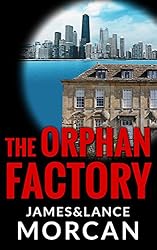
An epic, atmospheric story that begins with twenty three genetically superior orphans being groomed to become elite spies in Chicago’s Pedemont Orphanage and concludes with a political assassination deep in the Amazon jungle.


The Orphan Factory (The Orphan Trilogy Book 2)

THE ORPHAN FACTORY (The Orphan Trilogy, #2)


Prologue

An old vagrant hummed tunelessly to himself as he warmed his bony hands over a fire he’d lit minutes earlier in a drum long since blackened by perhaps a hundred such fires. Certainly more fires than he, or any of his street cronies, could remember. He stopped humming when, across a busy thoroughfare, a gravel-voiced busker began reciting poetry.

“Stormy, husky, brawling,” the busker rumbled. “City of the big shoulders.” He was reciting verse from the works of hometown poet-made-good, Carl Sandburg. The poem was appropriately titled Chicago. “Come and show me another city with lifted head singing so proud to be alive and coarse and strong and cunning.” The busker, a long-haired Vietnam veteran whose only concession to his military past was his VSM service medal which he still wore with pride, looked directly at the old vagrant opposite.

The vagrant imagined the busker smiled at him, though he couldn’t be sure in the fading early evening light. Even so, he flashed a toothless grin in the other’s direction.

Soon, the old man was joined by half a dozen street pals. All homeless like him, they appeared like disheveled ghosts out of the shadows, attracted partly by the warmth of the fire and partly by the busker. They listened intently to the poet’s words that flowed effortlessly from the busker’s mouth. Words that painted images so vivid in their minds it was as if the men were watching a kaleidoscope of their own youth.

“Under the smoke, dust all over his mouth, laughing with white teeth,” the busker continued. “Under the terrible burden of destiny laughing as a young man laughs.”

Several passersby paused to listen, but none bothered to drop a donation into the hat that lay at the busker’s feet. Finally, as the busker finished his recital, a business executive threw a quarter into the hat without breaking stride. Encouraged, the busker launched into another Sandberg poem.

Listening to the busker delivering further verses about his beloved Windy City, the old vagrant couldn’t help but note the irony: there wasn’t a breath of wind on this still Chicago evening.

The vagrant’s parents had always assured him the city’s misleading nickname had nothing to do with the weather. His mother had insisted the Windy City  label came from the longwinded speeches given by the city’s Nineteenth Century politicians, while his father claimed the moniker had been mischievously bestowed by competitive New Yorkers in their attempt to win the World Trade Fair of 1893.

To add to the contradictions, even though it was February, it was an unusually mild winter’s evening. The vagrants gathered around the fire warming their hands did so more out of habit than necessity on this occasion.

Chicago’s streets were busy and the mood downtown was fairly upbeat. President Jimmy Carter was due to visit the city and greater Illinois the following day. Word had spread: the President would be here soon, and come hell or high water he was going to receive a right, royal Illinois welcome.

As Chicagoans went about their business, hurrying home after a long day at the office or heading out to sample the city’s nightlife, none were remotely aware of the sinister, Nazi-like experiment taking place virtually under their noses.

Despite the experiment’s seventy five million dollar price tag, only a select few knew about it. Those in the know did not include the city’s Mayor or any state politicians; at Federal level, not even the President knew about it.

The experiment was taking place in a laboratory in the concealed basement of a renovated warehouse just off North Michigan Avenue. Seven pregnant women were in various stages of labor in the lab that served as a makeshift maternity hospital.

Like some Orwellian nightmare, the women were giving birth in clockwork-like fashion, almost in unison.

Small teams comprised of doctors and white-coated geneticists assisted the women. A specialist induced latecomers. In the lab’s far corner, two suited men looked on expectantly.

The numerous personnel in attendance were all in the employ of the Omega Agency, a recently formed and highly secretive outfit which would one day become the world’s most powerful shadow organization.

Supervising the eerie experiment was Omega’s own Doctor Frankenstein – better known as Doctor Pedemont, the brilliant biomedical scientist responsible for the radical science behind it. Over the past few years, with the help of his team of geneticists, Doctor Pedemont had painstakingly selected the fetus’ genes from thousands of sperm donations combined with the genes of his female subjects. The donations had come from another medical experiment referred to as the Genius Sperm Bank.

The motivation behind the Genius Sperm Bank, which had been initiated over a decade earlier, was to advance the breeding of super-intelligent people. The bank was stocked full of semen donations solicited from many of the world’s most intelligent men.

Benefiting from the efforts of some of Omega’s elite operatives, Doctor Pedemont had unlawfully obtained hundreds of samples from the Genius Sperm Bank. Then, taking the best of the sperm donations, he’d artificially inseminated the very women who were now in the process of giving birth. This meant each child that was about to be born effectively had one mother and numerous fathers.

The legalities of the entire operation were of no concern to Omega. Although still in its formative stages, the agency was already above the law.

A tense Doctor Pedemont and three geneticists fussed over the first mother-to-be, a young redheaded woman, as she entered the final stages of labor. The two suits observing from afar waited anxiously as the geneticists used advanced scientific equipment to monitor the birth.

The redhead gave birth to female twins. They arrived six minutes apart. Doctor Pedemont picked up the first twin. After removing the umbilical cord, he placed the newborn baby on a set of scales. “Number Five,” he announced. “Born 7.43 pm. Weight seven pounds, thirteen ounces.”

One of the geneticists recorded the doctor’s findings in a file labeled Number Five. Sadly, this would be the closest the girl would ever have to a real name.

Doctor Pedemont gave the baby to another geneticist then grabbed her newborn sister and weighed her. “Number Six. Born 7.49 pm. Weight seven pounds, one ounce.”

The advent of twins was no accident, of course. Their arrival had been planned for, like everything else that occurred within the Omega Agency.

The next baby was born minutes later to an African-American woman. It was a boy who was clearly of African descent. However, he had a much lighter skin tone than his mother, indicating most or all of the sperm donations inseminated into the woman were taken from Caucasian men.

“Number Seven,” Doctor Pedemont announced. “Born 7.56 pm. Weighs exactly five pounds. A few weeks prem, but is perfectly healthy.”

Because Number Seven was a premature birth, one of the geneticists immediately placed him in an incubator. Number Eight, who was born quarter of an hour later, was a healthy girl of Oriental descent.

When Number Nine was born, the mother, a beautiful dark-haired woman with striking green eyes, reached out to Doctor Pedemont to indicate she wished to hold the boy she had just birthed. The doctor looked around enquiringly at the two mysterious suits who remained in the corner. After discussing it between themselves, the older of the two nodded.

Doctor Pedemont looked back at the newborn’s mother cautiously. “You know you’ll never see him again, Annette?”

Annette nodded forlornly. She fully understood the ramifications of her agreement with the Omega Agency. Doctor Pedemont reluctantly placed Number Nine in Annette’s arms. The baby boy reached out and placed his tiny hand on the ruby that hung from a silver necklace she wore.

“Sebastian,” Annette whispered tearfully as she looked into her son’s eyes. “I name you Sebastian, after my father.”

Anxious to avoid further bonding between mother and son, Doctor Pedemont took Number Nine from Annette and handed him to one of the geneticists who, without ceremony, jabbed a needle into the boy. Predictably, Nine started screaming. His mother looked on resignedly.

Later that night, two more boys and another girl were born. Like Number Nine, all three were Caucasian.

As Number Twelve, the last of the newborns, was weighed, the two suits approached a relieved Doctor Pedemont. They looked more relaxed now. The older of the two, a short, stocky, dapper individual with heavily pock-marked skin, reached for the doctor’s hand and shook it firmly. This was Andrew Naylor, the Omega Agency’s hard-nosed director who was known for his foul temper as well as for his lazy eye, which never quite managed to focus on whomever he was addressing at the time.

“Congratulations, doctor,” Naylor mumbled without even a hint of a smile.

“Thank you,” a beaming Doctor Pedemont responded, taking care to avoid eye contact with Naylor as he found the other’s lazy eye highly disconcerting.

Naylor’s companion, Special Agent Tommy Kentbridge, patted the doctor on the back in congratulatory fashion. “Well done,” Kentbridge said. Tall and ruggedly handsome – physically the polar opposite of Naylor – the special agent was one of Omega’s young stars. As a field operative, he had the sort of record most agents twice his age would be proud of. Although only in his early twenties, Kentbridge had been assigned to manage the products of this agency experiment. Like it or not, he would be the nearest to a father any of them would have.

It was a long-term experiment and no-one knew exactly what the outcome would be. The experiment was known in Omega circles as The Pedemont Project


Product Details


THE ORPHAN FACTORY (The Orphan Trilogy, #2)  is exclusive to Amazon: http://www.amazon.com/dp/B008M9WWKW/


*****************************************
An orphan grows up to become an assassin for a highly secretive organization. When he tries to break free and live a normal life, he is hunted by his mentor and father figure, and by a female orphan he spent his childhood with. On the run, the mysterious man’s life becomes entwined with his beautiful French-African hostage and a shocking past riddled with the darkest of conspiracies is revealed.


TheNinthOrphan ebook cover

THE NINTH ORPHAN (The Orphan Trilogy, #1)


Prologue

A deer grazed on lush grass in a forest clearing. Around her, early morning mist clung to the tops of the spruce and fir trees common to Montana’s Custer National Park. Her ears twitched as the distant screech of a Merlin falcon carried to her in the still mountain air. The deer looked up, but mist concealed any view of the small and relatively rare bird of prey. She resumed grazing.

The deer wasn’t to know, but her remaining lifespan could be measured in minutes.

Two hundred yards downwind, an unusually large hunting party approached. This was a hunting party with a difference. Only one of the hunters was armed – their leader, Tommy Kentbridge; the others were all children ranging in age from ten to twelve. Male and female, they were of various racial backgrounds. Following Kentbridge, they walked silently in single file along a forest trail.

A tall, powerfully-built man in his mid-thirties, Kentbridge moved effortlessly across the hilly terrain. In his wake, the youngsters had to scramble to keep up. Muddy underfoot conditions added to their difficulties. Despite the challenges posed by keeping pace with their fast-moving leader, the children were doing admirably well. Their faces were flushed with excitement.

Kentbridge, who earlier that day had transported the kids from Chicago’s Pedemont Orphanage, kept one eye on his charges as the trail took them along the edge of a cliff. He noted with satisfaction not one of them seemed fazed by the thousand foot drop. They appeared to cope with the danger with all the poise of adults, or of young adults at least.

As he continued to observe the orphans, Kentbridge’s keen eyes missed nothing. A head count confirmed all twenty three were still with him. Strangely, he only ever referred to them by numbers. The oldest child was Number One, the youngest Twenty Three.

Directly behind Kentbridge, following like a shadow, was a serious-looking, twelve-year-old boy. Number Nine, who was the ninth-born orphan, had startling green eyes that seemed all-knowing and gave him a maturity beyond his years. Nine’s intelligent face was framed by dark, wavy hair. He wore a silver necklace. A ruby dangled from it, bouncing on his chest as he walked. The exquisite stone gave off a blood red glow in the sunlight.

A slightly younger, blonde-haired girl followed close behind. Number Seventeen was, of course, the seventeenth-born orphan. She surveyed the world through icy-blue eyes. Those same eyes were now fixed on the center of Nine’s back. It irked the competitive Seventeen that Nine had ensconced himself between Kentbridge and herself. She felt like she was always following in the boy’s footsteps.

Kentbridge slowed momentarily as the trail took them away from the cliff-top. The screech of a Merlin falcon attracted his attention. Just as the mist had concealed the falcon from the deer’s view moments earlier, it also concealed the falcon from Kentbridge’s view.

Some sixth sense prompted Kentbridge to unshoulder his rifle – a powerful, semi-automatic, military-issue weapon which he handled with the familiarity of a sniper.

The orphans’ leader suddenly froze. Behind him, the children became motionless also. A hundred yards upwind, a beautiful deer stood grazing, superimposed against the green foliage. She continued to graze, unaware humans were in the vicinity.

Kentbridge flashed military-style hand signals to his young charges. In unison, the orphans dropped to the ground. Close behind Kentbridge, Nine and Seventeen watched in awe as their leader sunk down onto one knee and aimed his rifle at the deer. At the last second, he lowered his weapon a fraction then fired. The shot shattered the silence. The deer went down.

The orphans and their leader raced over to the deer to discover she was not yet dead. On her side, the deer was trembling and white foam covered her nose and mouth. The foam turned pink then red as her inner organs reacted to the trauma caused by one not-so-well-placed bullet. Her breathing came in short rasps. The dying animal pawed the air with her legs as the orphans crowded around her.

Kentbridge handed his rifle to his shadow, Number Nine, and nodded toward the trembling animal. Of all the orphans, Nine was his most brilliant pupil. He was stubborn and defiant, but also highly intelligent. In many ways he reminded Kentbridge of himself.

The other twenty two orphans felt varying degrees of jealousy as they watched Nine psyching himself up to carry out their teacher’s order. Although very intelligent and gifted in their own right, the others sensed Nine had some indefinable X-factor that gave him an edge over them. It set him apart and they knew it.

Not even Kentbridge could say exactly what it was that gave the ninth-born orphan the edge. It wasn’t as if Nine was necessarily smarter than the others. He just seemed more sensitive and maybe that, Kentbridge reasoned, was where the boy’s genius lay. Nine appeared to feel life so deeply at times it was as if he had an extrasensory awareness.

Indeed, Kentbridge knew that kind of heightened consciousness, or right-brained intuitiveness, was the common element among all great thinkers. It was the mental frequency he hoped all his orphans would eventually operate at.

Cradling the rifle which was almost as long as he was tall, Nine looked down at the deer and prepared to put the animal out of its misery. The others watched intently as he lifted the weapon to his shoulder and took aim. Through the rifle’s scope, he saw the deer’s terrified eyes staring back at him. The boy hesitated.

“Finish the mission, Nine,” Kentbridge commanded. Nine looked up at his master then returned his gaze to the deer which was now twitching violently. “That’s an order!” Kentbridge said, raising his voice.

Nine was feeling increasingly traumatized. Seventeen shuffled close behind, as if encouraging him to hand the weapon to her. Unable to do the deed, Nine lowered the rifle.

Kentbridge snatched the rifle from him and handed it to the blonde-haired girl. “Complete the mission, Seventeen.”

Seventeen was delighted. She’d been waiting all her life for an opportunity to outdo Nine. However, she hid her delight as she expertly raised the rifle and took aim.

Unable to watch, Nine walked away from the scene. As he did, Kentbridge observed the boy had the same haunted look the deer had at that very moment.

A single shot rang out, its echo rebounding off the surrounding hills. The sound reverberated in Nine’s head, like a jackhammer inside his brain.

Without looking back, Nine walked deeper into the forest. He began to cry as he internalized the deer’s pain. Almost without realizing, Nine touched the ruby that hung from his necklace. As always, for no apparent reason, its touch brought him comfort.


Product Details


THE NINTH ORPHAN (The Orphan Trilogy, #1)  is exclusive to Amazon: http://www.amazon.com/dp/B0056I4FKC


***********************************************

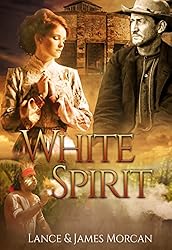
For those who love historical adventures, romance and true-life, action-packed, wilderness survival tales, here’s an excerpt from our critically acclaimed, new release epic WHITE SPIRIT (A novel based on a true story) – set in 19th Century Australia.

Product Details

WHITE SPIRIT / Chapter 1

A wiry Aboriginal tracker ran fast through the undergrowth, following tracks only he could see. He carried a spear in one hand and a nulla nulla, or club, in the other. Wearing only a loincloth, he covered the ground with effortless ease, his bare feet hardly touching the sun-baked earth.

This was Barega, one of the last surviving members of the mysterious Joondaburri, a tribe whose menfolk were renowned up and down Australia’s east coast for their superior tracking abilities. In the language of his people, his name meant the Wind, which was appropriate for he ran like the wind. To the British soldiers who employed him, he was simply known as the Tracker.

Although only average height, Barega’s legs were out of proportion in that they were unusually long in relation to his torso – a fact that gave him a distinct advantage in his chosen occupation. Few men, black or white, could match him for speed in a cross-country foot race, and, like others of his tribe, he could run all day long, seemingly without tiring or succumbing to the relentless heat.

The tracks he followed were those of three convicts who had escaped custody earlier that morning. They were heading west, away from the coast and away from Moreton Bay – the site of Britain’s newest penal colony and home to two hundred or so convicts and soldiers. The route was leading deeper into the tropical rainforest that hugged this part of the coast. It became progressively steeper as the hills gave way to mountains.

Barega was accompanied by three soldiers who followed him on horseback. He glanced back at them from time to time to ensure they remained in contact. Though their horses were doing most of the work, it was clear to him the men were having a hard time of it in the heat. They stopped every so often to drink from their water bottles.

Leading the way was Lieutenant Desmond Hogan, a dashing Englishman who was a career soldier through and through. Hogan’s ambition to succeed in his chosen career was hinted at by his senior ranking, which was an achievement in itself for one so young. He was only twenty-six. His rapid rise up the ranks had undoubtedly been influenced by the fact that his father and his father’s father had both been high ranking army officers, and he was candid enough to acknowledge that, but that didn’t change the fact he was a man of some ability whose promotion had largely been based on merit.

Hogan caught Barega’s eye. “How close, Tracker?” he asked.

Pulling up, the tracker pointed at the sun, which at that moment was to the northeast, and then he pointed dead north. “Soon, Mister,” he said by way of explanation, though no explanation was necessary.

The young lieutenant had used Barega so often he could readily understand the other’s hand signals. On this occasion, the tracker had indicated they’d catch up to their quarry by mid-day when the sun would be where he’d indicated – dead north. By Hogan’s reckoning, that would be in an hour’s time give or take. He glanced around at his two men. “Another hour should do it,” he said.

“Thank Christ,” one of them muttered.

Like their commanding officer, the two soldiers – both privates – had removed their red tunics, which now hung loosely from their saddles. It was the one allowance Hogan made for the heat, but only when out of sight of the penal settlement as it bucked the army’s rigid dress code.

Behind the pair, in the distance, Hogan could still see Moreton Bay. Trees concealed the penal settlement that had taken its name from the bay, but from the current vantage point there was an unobstructed view of the bay itself. And beyond it, the blue of the Pacific Ocean merged with the blue of the sky. It was a sight to behold.

Hogan and the others weren’t here to admire the view, however. They’d been tasked with capturing the runaways, and to a man they were aware the sooner they accomplished that the sooner they could return to base and enjoy some well-earned refreshments – and escape the accursed heat and humidity.

Ahead of them, Barega had resumed running. His black skin glistened with sweat as he picked up the pace. It was clear he sensed his prey were close now.

The soldiers followed, staying close to the tracker so as not to lose touch with him in the dense rainforest. Vines and creepers clawed at them, threatening to unseat them from their mounts, as they proceeded. Despite their discomfort, the soldiers were grateful the convicts had opted to keep to a well-worn trail carved out over the centuries by nomadic natives. They knew if their quarry had opted to deviate from the path, the horses would be no use to them and they’d have been forced to follow on foot.

Lieutenant Hogan knew something his men didn’t know, however. He alone knew they weren’t expected to bring all of the runaways back alive. Before setting out, the penal settlement’s commandant had made it very clear to Hogan privately that he’d be upset if more than one escapee survived.

Lord Bertram Cheetham’s reputation for cruelty had preceded him before he took up his new posting as Moreton Bay’s commander-in-chief four months earlier. Since then, Hogan and the other officers had come to see Cheetham’s reputation was well deserved; he viewed the convicts as animals and expected the soldiers under his command to treat them as such. As a result, floggings had become a daily event, the overworked convicts were starved and regularly beaten, and the dysentery and other ailments that plagued them and some of the soldiers, too, had reached epidemic proportions. Nearly every single convict had at least one serious illness or injury and, to make matters worse, medical care was basic to say the least. Despite this, as long as a convict could draw breath, he was forced to endure sixteen-hour days of hard labour, seven days a week.

So harsh were the conditions – reportedly as harsh as those at infamous Norfolk Island – a few convicts had opted to commit suicide rather than serve out their sentences, and more than a few others were contemplating such drastic action.

Another consequence of the cruelty was barely a week passed without one or more convicts attempting to escape. Where they hoped to escape to was anyone’s guess because Moreton Bay was many hundreds of miles from the nearest civilization. Convicts escaping overland risked death by heatstroke, thirst, starvation, snakebite or unfriendly natives, and escape by sea was out of the question because the only vessels visiting Moreton Bay were those servicing the penal settlement.

Rebellion was inevitable, of course, and since Lord Cheetham’s arrival illness, escape attempts and deaths amongst the convicts were all increasing. This had only served to infuriate Cheetham whose solution was to work the convicts even harder and to impose harsher punishments for any transgression.

Attempts by Hogan and the other officers to appeal to the commandant’s common sense, if not his humanity, had fallen upon deaf ears. Hence Cheetham’s private instructions to Hogan earlier that morning – to make an example of these latest escapees and ensure only one of them was returned to Moreton Bay alive. So desperate was he to deter the other convicts from attempting to escape.

Such instructions didn’t sit well with Hogan, but he felt his hands were tied. Experience had taught him if he returned the three escapees alive, the eccentric Cheetham was likely to order the execution of all three, and possibly one or two others as well. He’d seen that happen before.

In a clearing, Hogan glanced behind him and was distracted by the sight of a sailing ship some two or three miles offshore. She was far to the south – so distant that he wouldn’t have noticed her had it not been for her billowing white sails. They could easily have been mistaken for clouds had it not been a cloudless day. The young officer knew immediately the vessel was the Hoogley for she was the only one scheduled to visit Moreton Bay this week. She was bringing another shipment of convicts from the Parramatta penal settlement near Sydney Town. A regular occurrence these days. Had Hogan not been prevailed upon to supervise the capture of the escapees he’d have been tasked with greeting the Hoogley and her cargo of convicts. As it was, that particular chore would fall to his commanding officer on this occasion.

Though compassion and sympathy didn’t figure highly in his make-up, the lieutenant almost felt sorry for the men incarcerated in the hold of the schooner he was observing. Almost but not quite. He was aware that convicts unlucky enough to be shipped out to Moreton Bay, or to the other hell-hole that was Norfolk Island, were considered the most incorrigible of the convicts. Beyond Repatriation was the army’s official term for these men. As far as the military was concerned, they were unlikely to taste freedom again let alone ever return to their countries of origin. As far as Hogan was concerned, they deserved to rot in hell.

Hogan’s horse stumbled on the protruding root of a tree, forcing him to focus on the task at hand. He realised he’d lost sight of the tracker, and dug his heels into his mount’s flanks, encouraging the horse to move faster.

Product Details

Offshore, the Hoogley was making hard work of it as she plied north through high, rolling seas. The conditions were the lingering aftermath of a storm, which, up until the previous evening, had battered the three-masted schooner without let-up since she’d departed Sydney Town six days earlier. Her timbers creaked in protest as her bow rose and fell alarmingly, and the waves that crashed over her threatened to tear the sails from their masts. In the rigging, high above deck, riggers hung on for dear life as they carried out their death-defying duties.

Below deck, the conditions were scarcely any better. As well as putting up with the rolling motion of the vessel, the forty mainly Irish convicts and their guards had to contend with the constant sea spray and saltwater, which poured through the portholes and open hatches, and which ensured the men remained permanently wet.

The convicts had the worst of it for they had been confined below deck for the entirety of the voyage. Permanently shackled, their ankles were secured by chains, which, in turn, passed through a longer chain bolted to the hull’s interior at each end of the hold. Their condition wasn’t helped any by the lack of adequate food and water throughout the voyage, nor by the temperatures, which soared in the confined space by day and dropped to near-freezing by night.

The overpowering stench of urine and shit combined with the ever-present bilge water that sloshed about in the bottom of the hold was all pervasive. An outbreak of dysentery early in the voyage had swept through the vessel, affecting convicts, guards and crew alike, adding to the misery of all.

Not all the convicts had survived the voyage. One, a sickly young man from Belfast, had succumbed to pneumonia. His body had been unceremoniously dumped at sea two days earlier. And several others were critically ill. Their condition wasn’t helped any by the fact there was no doctor or even any rudimentary medical facilities on board.

Harsh though this voyage was, it was nothing compared to the three or four-month journeys these convicts had originally endured out from England. In some cases, fatalities had been as high as forty per cent, and on one ship fatalities had topped sixty per cent.

Two survivors of that hellish voyage aboard the most notorious of prison ships were now aboard the Hoogley. Twenty-eight-year-old John Graham and the slightly younger Noel Thomas whose date of birth was unknown – unknown to Noel at least – were chained together toward the rear of the hold. Originally from Dundalk, in County Louth, Ireland, they were boyhood friends. The former had been sentenced to seven years’ transportation to Australia for stealing ten pounds from a shady employer he alleged hadn’t paid him, while the latter – hackneyed though it may sound – had been sentenced to five years for stealing a loaf of bread.

The two friends were a study in contrasts. John was broad-shouldered and taller than most of his companions, and certainly better looking. His unruly black, shoulder-length hair framed a pale but interesting face that women invariably found attractive. What really set him apart, however, was his startling blue eyes. Ever-alert, they missed nothing. Even here, chained in the hold of a ship, John constantly surveyed his fellows and the guards who watched over them.

Noel, on the other hand, was short and wiry, and not overly handsome. Nevertheless, he had an engaging manner and a cheeky wit that endeared him to all – all except his jailers that is. His cheekiness constantly landed him in trouble, with fellow convicts and guards alike, and John had had to come to his rescue more than once.

Chained alongside them was elderly Dubliner who was ailing rapidly. Leith Donovan, who claimed to be forty-five but looked to be all of sixty-five, had been ill even before departing Parramatta. He began throwing up as soon as the schooner set sail and was still throwing up now. In the last six days he’d lost damn near half his bodyweight.

“Hang in there, Leith,” Noel urged as Donovan disgorged the last of the meagre rations he’d managed to keep down. The remains of those rations, including vestiges of cabbage and corn, ended up on Noel’s leg.

“Sorry, Thomas,” Donovan mumbled as he made a half-hearted attempt to wipe the mess from his companion’s leg with his hand.

John glanced at Noel. His friend’s expression signalled that he thought it likely Donovan’s journey would end soon – an opinion that John shared.

Noel waved to the nearest guard to catch his attention. “We have a sick man here,” he said.

The guard, a callous Englishman who took every opportunity to show his contempt for the Irish, just grinned at Noel. He quickly looked away when he noticed John staring at him.

John Graham’s startling blue eyes had that effect. Few men could hold his gaze. There was something behind those eyes that unnerved them.

Product Details

At the same time, in the hinterland behind Moreton Bay, the three convict escapees were so exhausted they had slowed to a walk. While they’d started out full of running in the cool of the pre-dawn, the exertion, heat and thirst had quickly reduced them to a slow shuffle. They weren’t helped either by the leg irons they wore. The heavy shackles made running almost impossible, and the clinking noise they made gave the convicts’ whereabouts away to anyone within fifty yards or so. Only the thought of what awaited them back at Moreton Bay should they be caught kept them going. To a man, they’d rather die than return to the place they called hell.

They were a mixed bunch. About all they had in common was they were English convicts with a shared yearning for freedom. And they were armed. The older man carried a tomahawk and the two younger men carried knives.

Tim Brady, the ringleader, was the oldest of the three by some years. A forty-five-year-old Cornishman, he was considerably shorter than his two companions, but he was almost as wide as he was tall. What he lacked in height he made up for with strength, and it was widely accepted he was the strongest of all the convicts – and all the soldiers, too, for that matter – at Moreton Bay.

Brady’s companions, both Cockneys and both in their early twenties, naturally looked to Brady for guidance. After all, the escape had been his idea. Unfortunately for them, Brady was now out of ideas and so exhausted he was no use to them or to himself for that matter.

The two Cockneys pulled up when they realised Brady had fallen behind.

“Hurry up Brady!” the younger man shouted.

Gasping for breath, the Cornishman tried to run, but his legs gave out from under him and he crashed to the ground. “Water,” he mumbled. “I need water.”

“We all need water, Brady!” the older Cockney said. “We ’ave to keep movin’.”

Brady slowly pushed himself to his feet and stumbled forward to catch up with his companions.

The two Cockneys looked at each other.

“He’s slowin’ us down,” one mumbled.

“Yeah fuck ’im,” the other said.

The pair took off, leaving Brady to fend for himself.

“Wait, you bastards!” Brady called. He hurried after them, desperate not to be left behind.

The first the Cornishman realised they had company was when the tip of the tracker’s spear skewered him from behind. He saw its tip emerge from his chest before he felt any pain. And what pain he felt was only fleeting as Barega’s nulla nulla smashed his skull, killing him moments after the spear had entered him.

Barega stopped only long enough to retrieve his spear then resumed running after the other two. Behind him, the sound of horses’ hooves told him the soldiers were close by. Ahead of him, he could hear the two Cockneys’ clinking leg irons as they crashed through the undergrowth.

Although less than fifty yards ahead of their pursuers, the surviving escapees had no clue they were about to be captured, or worse. For the moment, they were blissfully unaware of Brady’s untimely end or the fact that their freedom could now be measured in minutes, or less.

The first they realised the game was up was when the sound of the horses reached them. They immediately hid in dense bush and waited, their knives drawn.

Looking through the foliage, they were confused by a series of movements too quick for the eye to follow. Barega moved with such speed and stealth he gave the impression there were two or even three of him.

In the confusion, the younger Cockney moved, revealing his hiding place. It was the last thing he ever did. The tracker’s spear went straight through his throat, pinning him to a tree.

Terrified, the surviving convict took off, running blindly through the trees.

Not for the first time that day, twenty-three-year-old Frank Patterson pondered the wisdom of attempting to escape. In fact, he had regretted his decision almost immediately, but he’d made his choice and had to keep going.

Patterson didn’t see the nulla nulla that flew through the air, striking the back of his head and stunning him.

Barega retrieved his weapon and prepared to finish off the stunned Cockney. He was distracted by the arrival of Hogan and the others. His hesitation gave Patterson time to retrieve the long-bladed hunting knife he’d dropped. Barega brought his nulla nulla down hard, shattering his victim’s forearm and causing him to scream out in agony.

The tracker looked on, amused, as the desperate convict retrieved the fallen knife with his good hand and shaped up to attack again.

To Patterson’s surprise, Barega suddenly lay prone on the earth. The young Cockney glanced up to see the two soldiers with Hogan had their muskets pointed his way. Two shots rang out as a single volley. Such was his shock Patterson fell to the ground, convinced he was dead. It took him a moment or to realise he’d been spared. He looked up to see the soldiers were laughing at him.

“Welcome back to the land of the living, lad!” one of the soldiers shouted, prompting more laughter. They’d pulled the same trick on other escapees, aiming their weapons high or wide of their would-be victim, though Patterson wasn’t to know that.

Grinning, the tracker rose and pulled the long-bladed knife from the Cockney’s grasp, claiming it for himself. Such spoils were his as of right. That was the arrangement he’d made with the British. Barega beamed at Hogan who motioned to him to lift the relieved but still shocked survivor to his feet and start marching him back to Moreton Bay.


White Spirit (A novel based on a true story)

WHITE SPIRIT (A novel based on a true story)  is exclusive to Amazon: https://www.amazon.com/White-Spirit-novel-based-story-ebook/dp/B01LWIRH9J/


************************************ 

Authors’ note:

Much of this novel was directly inspired by the diary entries of young English seaman John Jewitt during his time aboard the brig The Boston and also during his sojourn at Nootka Sound, on North America’s western seaboard, from 1802 to 1805.


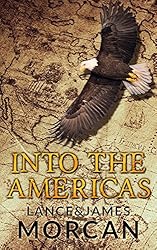
Into the Americas (A novel based on a true story)

A novel based on a true story.


“Many paddles, one canoe” –First Nations saying


Prologue

In the skies above North America’s west coast, amongst the clouds, a bald eagle glided in lazy circles. With her magnificent white head and tail feathers, and her six-foot wingspan, she was the queen of her domain as she made use of the thermals that rose from the unseen terrain below.

The clouds parted to reveal a village – one of many populated by the indigenous people of the remote Northwest Pacific region. Nootka village was bordered by rugged, forest-covered hills which rose up out of the sea. Comprised of twenty or so large, wooden lodges, it was home to the Mowachaht tribe, one of the twenty-five Nuu-chah-nulth indigenous groups that occupied the region’s craggy coastline. A two-masted schooner lay at anchor offshore, safe for the moment in an inlet with the unlikely name of Friendly Cove.

Distance was no problem for the eagle whose sharp eyesight could distinguish any object from another, even if those objects were little bigger than a pinhead. Right now, her eyes were focused on a Chinook salmon swimming between the schooner and shore. The eagle flattened her wings and dove head first, extending her wings moments before she struck the water. Talons extended and now in a shallow dive, the eagle grasped the salmon and, with a few mighty beats of her wings, rose sluggishly skyward with her catch.

The eagle’s labored flight took her directly over the village. If any of the villagers had been waiting for her, with bow or musket primed, they’d have shot her down easily for she was as yet barely higher than the colorful totem poles that lined the shore. Fortunately for her, eagles were sacred to these people and so they ruled the skies with impunity.

A trade was going down with a dozen crewmen from the schooner. Unkempt and ill disciplined, the crewmen were typical of the freebooters who visited these shores in increasing numbers. They carried with them an assortment of weapons and were clearly no strangers to violence.

Armed Mowachaht warriors, ever-mindful of bad experiences they’d had with other European traders, kept a wary eye on the visitors. Most were armed with muskets, some carried blunderbusses and a few bore traditional weapons, including clubs, spears and tomahawks.

The traders had come to exchange muskets for sea-otter pelts. Much sought-after, the beautiful pelts fetched a princely sum in the civilized world – especially in London and in Macau, China. Consequently, Nootka village and the sound named after it was an increasingly popular port of call for traders intent on filling their ships’ holds with the bounty of the New World.

Most of Nootka’s fifteen hundred residents were present to observe the trade, which was being conducted on a sandy beach in front of the village. Trading, especially with visiting Europeans, was a highlight of their short, hard lives. More so after the long winter months – as was the case on this pleasant spring day.

Among the Mowachahts, the common or untitled people wore sealskin and coarse cedar bark clothing, which afforded protection from the constant rain in these parts. The chiefs and men and women of high ranking wore animal skins and colorful capes or, in rare cases, the pelt of the sea-otter.

Headmen invariably wore the striking black sea otter pelt. It extended to the knees and was fastened around the waist by a wide band of colorful, woven cedar bark. The warriors wore square-cut, yellow mantles with holes cut for the arms – similar to those worn by the commoners except theirs were dyed red and were more basic.

Absent from the trading activities were the Mowachahts’ slaves. Acquired in raids on neighboring tribes, the slaves were readily identifiable as such as they collected firewood and performed other menial tasks in and around the village. Though they spoke the same Wakashan language as their Mowachaht masters, their appearance was quite different: each bore the physical characteristics of his or her tribe. Some were lighter skinned, others darker; some were tall and slender, others short and stocky; some male slaves were bald or wore their hair short, others wore their hair in long ringlets; most wore raggedy sealskin clothing while some were near-naked. Their number included almost as many females as males – the former more often than not serving as sex slaves as well as manual workers.

Above the beach, the Mowachahts’ lodges extended to the tree line. They were a sprawling collection of wooden dwellings, the remnants of a Spanish trading outpost vacated some years earlier. Smoke from cooking fires curled up into the sky from strategically placed openings in the lodges’ roofs.

The totem poles – some even taller than the surrounding fir trees – towered over the lodges.

On the beach, there was an air of tension as the schooner’s master, Captain Alvin Walsh, an abrasive New Yorker with a well deserved reputation for dishonest trades, bargained with a group of headmen. Foremost among the latter was Maquina, chief of the Mowachahts. Tall, bronze and muscular, the middle-aged Maquina cut an impressive figure in his ceremonial cloak. Feathers protruded from his long, black hair, which he wore as a bun on top of his head. Like all the headmen, white down covered his head and shoulders, conveying the impression of falling snow.

Captain Walsh’s steely gaze was fixed on the bundles of pelts that lay at his feet while Maquina’s hawk-like eyes were fixed on a dozen new muskets stacked end-to-end in an open casket. The casket lay on top of five identical unopened caskets.

Hard-nosed bartering had begun soon after the traders had stepped ashore earlier in the day and, to both parties, it seemed a successful trade was no closer. Tempers were becoming frayed.

Maquina pointed at the caskets and, in broken English, said, “Maquina say…five pelts…one musket.”

Walsh shook his head. “One musket…ten pelts.” He appeared ready to depart, a shrewd strategy he’d fine-tuned years earlier when trading watered-down whisky to the East Coast tribes.

The chief quickly nodded to his opposite, indicating they had a deal. Walsh gestured to his men who immediately began scooping up bundles of pelts.

Maquina intervened. “Try musket first,” he said.

Walsh cursed under his breath as he motioned to his men to hold off for the moment. He then selected a musket from the open casket and handed it to Maquina. The shrewd chief ignored the offering and selected another musket. He expertly primed it and fired it into the air. The shot echoed throughout Nootka Sound. Still suspicious, Maquina broke open another casket. He tested a second musket with the same result. Satisfied, he made the faintest of hand gestures to his warriors who immediately uplifted the caskets and carried them away.

A relieved Walsh motioned to his men to resume gathering up the pelts. Under Maquina’s penetrating gaze, the captain appeared tense and he exhorted his men to hurry.

There was good reason for Maquina’s suspicion. The Mowachahts – like all members of the wider Nuu-chah-nulth community – had been short-changed, and worse, by European traders. As the number of visiting trading vessels increased, so too had the number of unsavory incidents. The indiscriminate shooting of villagers by drunk or disgruntled traders was becoming almost commonplace and the rape and mistreatment of women even more so.

And so it was with some malevolence that Maquina and his people observed these latest traders as they ferried their trade items back to the waiting ship.

#

Early next morning, Maquina led a six-strong hunting party into the hills behind Nootka village. His five companions included Peshwar, a forbidding headman whose reputation as a fearsome warrior rivalled that of the chief and extended far beyond the borders of the Mowachahts’ territory. All six hunters carried shiny, new muskets acquired in the previous day’s trade, and they were keen to put them to good use.

Ahead of them, in dense forest, an elk grazed. Something spooked him. He wasn’t sure what – a scent or a sound perhaps – and he took off.

Soon after, Maquina spotted the elk’s tracks and knelt down to study them. He then led his fellow hunters deeper into the trees at a fast trot.

Elsewhere in the forest, the same elk burst into a clearing, disturbing a twelve-strong war party of Haachaht warriors, traditional enemies of the Mowachahts. They carried bows, tomahawks and other traditional weapons, and wore the grotesque wolf’s brow mask associated with their tribe.

The Haachahts’ chief, Callicum, a stocky man who wore a large nose-ring, stared into the surrounding trees. He flashed a hand signal at his warriors and they quickly dispersed. Now hidden from sight, they could hear the Mowachaht hunters moving through the undergrowth in pursuit of the elk.

Reaching the forest clearing, the Mowachahts stopped to study their quarry’s tracks. Maquina’s eyes were drawn to an eagle circling high above. He stared at the bird for a few seconds before returning his gaze to the trees. Sensing danger, he primed his musket. His fellow hunters followed suite.

A Haachaht bowman stepped out from behind a tree and aimed an arrow directly at Maquina. The bowman held his bow horizontal, in the manner of the indigenous people of the west coast. Maquina dropped to one knee and swung his musket up just as the bowman loosed his arrow. The arrow lodged in the throat of a tall Mowachaht standing directly behind Maquina. Mortally wounded, the warrior collapsed, choking on his own blood. Maquina killed the bowman with one well placed shot.

Haachaht war cries rang out as Callicum led his warriors out from the trees. Another arrow found its mark, killing a young Mowachaht. Reduced to four, the remaining Mowachahts fought like men possessed.

Two Haachahts closed in on Peshwar. He aimed his musket at the nearest of the two. A hollow click signalled it had malfunctioned. Cursing, Peshwar threw his musket aside and drew his tomahawk. “Peshak!” he swore as he grappled with his enemies. With two mighty swings of his tomahawk, the two Haachahts lay dead at his feet, their heads almost severed from their bodies.

As the fight escalated, a short Mowachaht aimed his musket at a burly Haachaht who rushed him, club in hand. His musket also misfired and he was clubbed to the ground. The Haachaht finished him off before he was felled by a musket shot.

Nearby, Maquina found himself fighting alongside Peshwar. “The muskets are faulty!” Maquina shouted.

Peshwar nodded. “The White-Faces have deceived us!”

The chief found himself face-to-face with Callicum who charged him with a tomahawk in each hand. Maquina raised his musket and pulled the trigger. This time his weapon misfired. Before he could reload, the Haachaht chief was onto him. Maquina was forced to back-peddle and use his musket to block his attacker’s blows. Peshwar came to his aid, wounding Callicum with his own tomahawk.

Seeing their chief in trouble, the other Haachahts seemed unsure what to do next.

Maquina and Peshwar took advantage of their enemies’ indecision and fled, dragging with them the other surviving hunter.

As they made good their escape, Maquina was consumed by the anger he felt toward the European traders. Yet again his people had fallen foul of the traders’ unscrupulous ways. On this occasion, faulty muskets had contributed to the deaths of three of his finest warriors.


INTO THE AMERICAS (A novel based on a true story)  is available as a paperback and Kindle ebook exclusively via Amazon: http://www.amazon.com/Into-Americas-novel-based-story-ebook/dp/B00YJKM51E/


*****************************

A female detective is assigned to investigate the murder of a student at a prestigious university for the deaf in London. The investigation coincides with a deadly flu virus outbreak, resulting in the university being quarantined from the outside world… That’s the premise of our soon-to-be-released book Silent Fear (A novel inspired by true crimes).

Silent Fear (A novel inspired by true crimes)

New thriller novel…chilling.


Set in the often underreported world of the Deaf, we hope Silent Fear will give readers a unique insight into what everyday life for deaf people is like. We have worked closely with the Deaf community to ensure authenticity.

This novel was inspired by the murders of two deaf students at Gallaudet University, one of the world’s most prestigious learning institutions for the deaf, in the early 2000’s. The investigating authorities didn’t know if it was an ‘inside job’ and for a time nearly everyone connected to Gallaudet was under suspicion.

We have also penned a screenplay adaptation of the book and are concurrently developing a feature film adaptation of Silent Fear. Here’s a two-minute teaser trailer for the movie: https://www.goodreads.com/videos/1136…

One of the producers on board the film adaptation, New Zealand’s premiere Deaf filmmaker Brent Macpherson, is obviously a fantastic asset to the production. We are very appreciative that Brent has seen the cinematic potential in our story and has poured his heart and soul into developing the associated film project.

Silent Fear (A novel inspired by true crimes): https://www.goodreads.com/book/show/3…


Other novels by Lance & James Morcan include:

The Orphan Trilogy (The Orphan Trilogy #1-3)  

Into the Americas (A novel based on a true story)  

White Spirit (A novel based on a true story)   

The World Duology (The World Duology #1-2)  


To view all our fiction and non-fiction books check out our authors’ pages on Amazon: https://www.amazon.com/James-Morcan/e/B005EPOU48/           


**************************************


Underground Knowledge, the global discussion group we founded on Goodreads, has cracked the 3,000 membership milestone, making it one of the fastest-growing and most active groups on the popular Amazon-owned literary site for books, authors and readers.


The Underground Knowledge group was designed to encourage debates about important and underreported issues of our era.

If you are interested, check it out at https://www.goodreads.com/group/show/142309-underground-knowledge—a-discussion-group — New members are welcome! All you need is an enquiring mind and a desire to gain or share “underground knowledge”. Our current members (Undergrounders) range from award winning authors, scientists, teachers and historians to former intelligence agents, journalists, students and everyday readers.


Here’s a snapshot of what the group’s Undergrounders are discussing now:

The multi-trillion dollar WW2 cover-up  

Finding (hiding) a cure for cancer

Other UFO theories  

Illuminati

The 2016 U.S. Presidential Election    

The overpopulation myth (part 1)

Bobby Kennedy – “RFK must die”  

Unit 731 – the Japanese Auschwitz

The MK-Ultra theory  

Where do you guys get your daily news from?

Evidence for scientifically advanced Ancient civilizations?   

Is McDonalds actually food?

James Morcan’s rant against Holocaust Deniers  

Does the UK control the US? And did America ever achieve full independence from Britain?

Book of Genesis – not an original document?

Was 9/11 a false flag attack and ‘Inside Job’? 54% of you voted YES

The Queen’s position in modern Britain  

The Monster Study

Hollywood stars on Ormus  

The Untold History of The United States

The heroin connection  

Universal income

…………And the list goes on!


To visit the Underground Knowledge group go to: https://www.goodreads.com/group/show/142309-underground-knowledge—a-discussion-group


*************************************
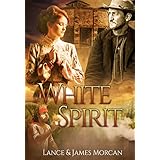
To celebrate the successful launch of our new release historical adventure WHITE SPIRIT (A novel based on a true story)  the publisher has reduced the Amazon Kindle ebook price to 99c for a few days.


White Spirit (A novel based on a true story)

For lovers of action, romance and adventure.


Based on the remarkable true story of Irish convict John Graham, WHITE SPIRIT   is an epic historical adventure set in 19th Century Australia. After escaping from the notorious Moreton Bay Penal Settlement, Graham finds refuge with the Kabi, a tribe of Aborigines who eventually accept him as one of their own.


See what Amazon Australia Top 50 reviewer Todd Simpson has to say about this novel:  ★★★★★ A very good book. Both Lance and James Morcan have done an amazing job with this incredible story. Being based on a true story, made it that much more interesting…”


WHITE SPIRIT (A novel based on a true story)  is exclusive to Amazon. To see all the reviews for this book go to: https://www.amazon.com/White-Spirit-novel-based-story-ebook/dp/B01LWIRH9J/

99c price promotion ends December 20 PST.


 *****************************************


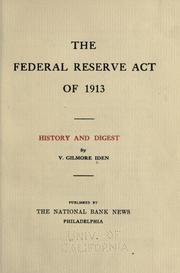
There’s a theory that contends the US Federal Reserve, aka the Fed, is an institution that acts independent of the US Congress, has zero transparency or accountability, and even determines its own monetary policy. If one day proven to be correct, the alternative theory surrounding the Federal Reserve is one that may explain a variety of unusual occurrences in financial markets over the years.


Image result for federal reserve act of 1913


We investigate the Fed, in general, and the Federal Reserve Act of 1913, in some detail, in our book INTERNATIONAL BANKSTER$: The Global Banking Elite Exposed and the Case for Restructuring Capitalism. An excerpt from the book follows…

In 1913, the banksters finally succeeded in creating a US central bank with the passing of the Federal Reserve Act. This bill, which had already been soundly defeated several times, appears to have come to fruition only because of well-orchestrated timing: the Federal Reserve Act was slipped through a skeleton Congress on December 23, 1913 when most of the bill’s opponents had already left Congress for the holidays.

The Federal Reserve System, which was first devised in that secret meeting on Jekyll Island, was now codified by Congress and remains in effect to this day.

Fact: The Federal Reserve is the central bank of the United States even though it’s not a part of the US Government.

Say what?

It’s not a part of the government. Not even remotely.

But it says Federal! Surely it cannot be a privately owned organization?

The Fed is not a part of the government, at all.

Critics of the Federal Reserve say its sole purpose is to strip wealth from honest, hardworking American citizens and make the world’s leading banking clans even richer.

John Hylan, Mayor of New York City from 1917 until 1925, made some extraordinary statements in a speech he delivered in 1922. What Mayor Hylan said seems to confirm a grand conspiracy was indeed devised for the American banking system by the global elite.

“The real menace of our Republic is the invisible government, which like a giant octopus sprawls its slimy legs over our cities, states and nation,” said Mayor Hyland. “To depart from mere generalizations, let me say that at the head of this octopus are the Rockefeller-Standard Oil interests and a small group of powerful banking houses generally referred to as the international bankers. The little coterie of powerful international bankers virtually run the United States government for their own selfish purposes. They practically control both parties, write political platforms, make catspaws of party leaders, use the leading men of private organizations, and resort to every device to place in nomination for high public office only such candidates as will be amenable to the dictates of corrupt big business.”

Only nine years after the Federal Reserve System was created, Mayor Hylan already seemed to be aware that this “invisible government” of “powerful international bankers” was controlling the US Government.

Cast your eye over these other quotes about the Fed and make up your own mind…

“The regional Federal Reserve banks are not government agencies…but are independent, privately owned and locally controlled corporations.”–Lewis vs. United States, 680 F. 2d 1239 9th Circuit 1982

“Most Americans have no real understanding of the operation of the international money lenders. The accounts of the Federal Reserve System have never been audited. It operates outside the control of Congress and manipulates the credit of the United States.”–Senator Barry Goldwater

“The Federal Reserve bank buys government bonds without one penny.”–Congressman Wright Patman, Congressional Record, Sept 30, 1941

“The financial system has been turned over to the Federal Reserve Board. That Board administers the finance system by authority of a purely profiteering group. The system is Private, conducted for the sole purpose of obtaining the greatest possible profits from the use of other people’s money.” –Charles A. Lindbergh Sr., 1923


INTERNATIONAL BANKSTER$: The Global Banking Elite Exposed and the Case for Restructuring Capitalism (The Underground Knowledge Series Book 5)


INTERNATIONAL BANKSTER$  is exclusive to Amazon: http://www.amazon.com/INTERNATIONAL-BANKSTER-Restructuring-Capitalism-Underground-ebook/dp/B015QN5RTY/


*********************************************