In our book MEDICAL INDUSTRIAL COMPLEX: The $ickness Industry, Big Pharma and Suppressed Cures, we focus on the alarming overmedication of children diagnosed, or misdiagnosed, as having ADHD, depression and other such ailments.

An excerpt from Medical Industrial Complex  follows:

Overmedication of children diagnosed – and often misdiagnosed or even not diagnosed – with ADHD (Attention Deficit Hyperactivity Disorder) has, it seems, reached alarming levels, and the public debate has been as vocal as that surrounding the issue of overprescribing antidepressants.

By some estimates, around four million children in the US have been diagnosed with ADHD and more than half of them have been prescribed drugs. This despite the fact there are very real concerns about the impact the drugs have on growth and brain development – especially in preschoolers.

One who has had something to say on this matter of late is Dr. Nancy Rappaport, a certified child and adolescent psychiatrist at Cambridge Health Alliance and an associate professor of psychiatry at Harvard Medical School. In a Washington Post article dated June 4, 2014, and headed ‘We are overmedicating America’s poorest kids,’ she claims that thousands of children between the ages of two and three are being prescribed stimulants like Ritalin or Adderall for ADHD even though the medicine’s safety and effectiveness has barely been explored in that age group.

Dr. Rappaport says she finds it even more troubling that a disproportionate number of those children were on Medicaid, which to her is an indicator of poverty. “That,” she says, “is the huge red flag”.

Referring to her experience as a child psychiatrist, working with at-risk children for more than 20 years, she points out the simple fact is that underprivileged children often grow up in home environments that lead to troubling behavior.

“To the untrained observer, it looks as if these children suffer from ADHD. But they don’t need medicine. They need stability and support”.

This raises the obvious question: Why are physicians prescribing potentially harmful drugs instead of recommending family-based support services for toddlers who display ADHD symptoms and disruptive behavior?

Dr. Rappaport asks this very question. She says, “Medication may be judiciously used to help ADHD when a biological illness is truly present, but true ADHD cannot be differentiated from other problems at such young ages. We owe it to our children to give the consistent message that we will do whatever it takes to foster their development. And that doesn’t always mean prescribing a pill”.

Amen to that.

It’s a fact that in this modern era most of us look for a quick fix for whatever ails us or for whatever ails our children. Our willingness to pop a pill in order to get a good night’s sleep or to ease a queasy tummy or to clear a foggy head or to…(the list goes on) is frightening. Even more so when we pass such quick fix ideas onto our children.

We seem very willing to overlook the fact that all drugs – prescribed or otherwise – have side-effects. Sometimes deadly side-effects, often unhealthy or otherwise undesirable side-effects.

We also overlook the fact that oftentimes there’s a simple, readily available, natural remedy available for those day-to-day ailments we encounter.

For example, physical exercise has long been recognized as an effective way to combat depression. Not for all, granted, but, we suspect, for many.

The Atlantic article referred to earlier reports that a growing body of research suggests that exercise is one of its best cures for depression. It claims a randomized controlled trial showed that depressed adults who took part in aerobic exercise improved as much as those treated with Zoloft, and a recommendation was made that physicians counsel their depressed patients to try it.

A later study looked at 127 depressed people who hadn’t experienced relief from a commonly used antidepressant and found that exercise led 30% of them into remission – a result described “as good as, or better than” drugs alone.

The article continues, “Though we don’t know exactly how any antidepressant works, we think exercise combats depression by enhancing endorphins: natural chemicals that act like morphine and other painkillers. There’s also a theory that aerobic activity boosts norepinephrine, a neurotransmitter that plays a role in mood. And like antidepressants, exercise helps the brain grow new neurons”.

The article concludes that “this powerful, non-drug treatment” hasn’t yet become a mainstream remedy. Why not? And why are so many people still popping pills?

We suspect the conclusion speaks volumes about the state of our mental health services and infrastructure, the physician reimbursement system (more about doctors’ kickbacks coming up) and the alacrity with which doctors dispense prescription drugs ahead of advising on diet, exercise and other lifestyle changes.

Regrettably, it also speaks volumes about our unwillingness to take responsibility for, and control of, our own health, preferring, instead, to entrust that to our family doctor.

You have been reading an excerpt from Medical Industrial Complex. To find this book on Amazon go to:  http://www.amazon.com/MEDICAL-INDUSTRIAL-COMPLEX-Suppressed-Underground-ebook/dp/B00Y8Y3TUM/
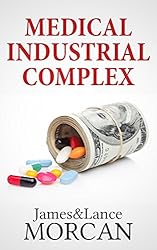
MEDICAL INDUSTRIAL COMPLEX: The $ickness Industry, Big Pharma and Suppressed Cures (The Underground Knowledge Series Book 3)

****************************************

Image result for 2016 us presidential election logos

Bernie Sanders, the junior US Senator from Vermont, is by far and away the preferred US Presidential hopeful if the Underground Knowledge group’s on going poll on Goodreads.com  is anything to go by. Sanders has thus far gotten more than twice the ‘vote’ of the nearest candidate.

Bernie Sanders.jpg

Bernie Sanders…poll frontrunner.

In response to the question Who would you like to see win the 2016 United States presidential election?, interim poll results show 29% nominate Sanders / 12% prefer Ben Carson / 12% want Hillary Clinton / 8% want Donald Trump / 5% want Jeb Bush / 4% want Rand Paul.

Interestingly, 12% voted for NONE of the names on this list.

Poll respondents’ comments make for interesting reading. Here’s a few to go on with. (Respondents’ names withheld):

As if the presidency was some great seat of power. But as long as we’re pretending, how about someone like Jon Rappoport, not these decoys, half-wits and criminals.

With the higher IQ of this group, it’s inevitably biased towards Bernie. In fact, I’m a little surprised that anyone else even got a vote at all. If only the whole nation could mirror our group.

I am not impressed with any candidate but Bernie Sanders got my vote!If Joe Biden runs than he will get my vote!

Bernie has a plan, a heart…compassion, experience, and is not a corporate toy who has sold his soul. He is positive, not back biting, not belligerent, simply rational and naming the problems of this oh so corrupt corporate/political structure and advocating alternatives.

If Trump becomes President, we’ll end up being at war w/every country in the world!

(I nominate) Angelina Jolie.

The whole world should be allowed to vote in American presidential election. America controls all our lives.

Ben Carson seems good to me so far…Maybe Trump. But definitely NOT Hillary. *cough cough liar*

Will be a difficult election to predict a winner. Should be some heated debates between the likes of Hillary, Trump, Bernie and Bush!

Something tells me if a genuinely caring and uncompromising American candidate were to come along they would not belong to either of those two parties as “DemoCRIPS” and “ReBLOODlicans” are clearly in bed with big (multinational) corporations.

To view all the comments in our Underground Knowledge group poll, or better still to have YOUR say, go to: https://www.goodreads.com/poll/list/142309-underground-knowledge—a-discussion-group?type=group

*

The Underground Knowledge discussion group is open to everyone! All you need is an enquiring mind, an interest in the world we live in and a desire to learn or to uncover “underground knowledge” on important issues of our times. This group is also for like-minded people to discuss the controversial topics explored in The Underground Knowledge Series, which includes the non-fiction books Genius Intelligence, Antigravity Propulsion, Medical Industrial Complex and The Catcher in the Rye Enigma.

Our members include scientists, journalists, moms and dads, historians, doctors, whistleblowers, authors, bankers, teachers, intelligence personnel, housewives, students, Army vets, pacifists, conspiracy theorists, the odd redneck and the Average Joe. All viewpoints welcome!

To visit the group go to: https://www.goodreads.com/group/show/142309-underground-knowledge—a-discussion-group  

**************************************

The courage of the First Nations people of North America is highlighted in our new release historical adventure novel Into the Americas. In particular, we focus on the hardy Mowachahts, of Nootka Sound, Vancouver Island, and their powerful chief Maquina.

Nootka village, the traditional home of the Mowachaht tribe…as it once was.

The following excerpt from the novel describes a whale hunt, which was an annual event for the Mowachahts and other Nuu-chah-nulth peoples of the Pacific Northwest. This passage describes the Mowachahts’ first whale hunt of the season. (The year is 1803; the setting is the chilly waters off Nootka Sound):

“Big fish!” the cry went up from a warrior in the stern of the lead canoe.

Maquina looked directly ahead. A mile distant, water spouts revealed the presence of a pod of humpbacks. The chief stood up and, pointing at the whales, rubbed his stomach theatrically. “Tonight, we fill our bellies until we burst!” he declared.

Maquina’s men paddled with more urgency now. The times they and their families had gone hungry over the long winter months were still fresh in the minds of each. A successful kill would provide sufficient food to feed them and, indeed, all the villagers for many weeks to come.

The paddlers were breathing hard by the time they reached their prey. A few final strokes and Maquina’s canoe was alongside the huge creatures of the deep. The other two canoes arrived moments later.

All powerful Mowachaht chief Maquina.

Maquina had already established there were seven whales in the pod, including a calf that swam leisurely beside his mother. Their sonar-like calls echoed hauntingly in the morning air.

At a signal from the chief, the three canoes suddenly darted in amongst the whales. Still the creatures showed no concern over the new arrivals in their midst.

Standing up in the prow of his canoe, Maquina drove his harpoon into the mother whale, which happened to be the nearest, then two warriors threw spears into her back. Lines tied to the spears were attached to sealskin floats.

The spiked tip of Maquina’s harpoon had lodged firmly in the whale’s head, prompting the mighty mammal to thrash her tail about. Maquina and his men had to hold on for dear life as the whale’s gyrations threatened to overturn their canoe. Blood appeared in the water all around them, attracting the tell-tale fins of sharks.

Only now did the whale’s calf realize something was wrong. The calf darted left and right in the water, but wouldn’t leave his mother’s side.

As expected, the wounded whale dived deep, taking the floats with her. The rope connecting the harpoon to the canoe’s bowsprit rapidly uncoiled and once again everyone aboard the canoe held on tight. The calf followed his mother, responding to the cries of distress that came from her.

When the whale took up the last of the rope’s slack, Maquina’s canoe was abruptly jerked forward at a steep downwards angle as the whale continued her dive.

“She is ours!” Maquina cried triumphantly.

The rope suddenly slackened. Mystified, Maquina started pulling it in. He eventually retrieved the harpoon and saw its iron spike was missing. Furious, he threw his broken harpoon into the bottom of the canoe.

Those in the other canoes fared no better. Peshwar’s experience was identical to Maquina’s, and Toowin’s harpoon snapped as soon as it struck the intended target. Three strikes and three broken harpoons. It was an all too common result.

Maquina cursed their luck as he motioned to his men to return home. They paddled in silence. Behind them, the wounded whale and her calf surfaced and quickly swam away to rejoin the others in their pod.

#

You have been reading an excerpt from INTO THE AMERICAS (A novel based on a true story). To read more go to: http://www.amazon.com/Into-Americas-novel-based-story-ebook/dp/B00YJKM51E/

Into the Americas (A novel based on a true story)

★★★★★ “Wow…never a dull moment.” –Tony Parsons –Amazon reviewer


***************************************  

INTERNATIONAL BANKSTER$: The Global Banking Elite Exposed and the Case for Restructuring Capitalism (book five in our Underground Knowledge Series) is scheduled for a September/October release as a Kindle ebook on Amazon.

International Banksters cover

Book #5 in series.

The other books in The Underground Knowledge Series  (in order of release) are:

Product Details

Product Details

Product Details

Product Details

More books coming soon! Watch this space…

*****************************************

INTO THE AMERICAS (A novel based on a true story), the latest novel penned by New Zealand father-and-son writing team Lance and James Morcan, has entered Amazon’s bestseller lists, climbing into the top 10 Kindle ebooks in the crowded Action and Adventure category.

IntoTheAmericas ebook cover

Readers resonate with this top 10 book.

A gritty, real-life adventure based on one of history’s greatest survival stories, Into the Americas  was inspired by the diary entries of young English blacksmith John Jewitt during his time aboard the brigantine The Boston and also during his sojourn at Nootka Sound, on North America’s western seaboard, from 1802 to 1805.

It’s a tale of two vastly different cultures – Indigenous North American and European civilization – colliding head on. It is also a Romeo and Juliet story set in the wilderness.

To see what reviewers are saying about this top rating book go to: http://www.amazon.com/Into-Americas-novel-based-story-ebook/dp/B00YJKM51E/

****************************************** 

Have you ever accessed the Deep Web and looked at any of the “secret” content on the Internet that’s not indexed via Google or other regular search engines? That’s the question posed in the latest poll in our Underground Knowledge discussion group on Goodreads.com – and interim results show few have (accessed it).

As of August 26 (US time) only 12% of poll respondents claim to have accessed the Deep Web; the balance either haven’t or are unsure.

A random sample of poll respondents’ comments follows:

I haven’t visited the Deep Web and not sure what technology or software allows one to access it, but recently became interested in the subject as per this discussion thread: https://www.goodreads.com/topic/show/…

It seems like the Deep Web could potentially have a lot of positive benefits…Kind of like the last line of defence if governments turn fascist or otherwise totalitarian. For example, the documentary mentioned how the Deep Web is being used in nations like China and Iran where the regular internet is highly censored by those governments and most (innocent) citizens are spied on. But again, the Deep Web definitely seems like a place where networks of criminals can work undetected and orchestrate crimes such as human trafficking more effectively.

As it is with almost everything, what makes the Deep Web dangerous is not the Deep Web itself, but the intent of one when accessing it. For instance, I know that some people go there and download technical books – mostly needed for work/academical reasons – when they can’t find such books anywhere else. That can’t be bad, right? But then again, if you go there looking for bad stuff, you might end up finding it.

My (limited) understanding is the Deep Web is legal content and the Dark Web is illegal content. So I guess I’m primarily focused primarily on the (legal) Deep Web and whether it can eventually become some kind of “Little Brother” technology the masses use to fight back against all the advanced technology of Big Brother… 🙂

No, and it doesn’t have any appeal for me either!

The news media kept telling me only criminals use the Deep Web…But then I heard 96% of the internet is the Deep Web that’s invisible to most users and that accessing the Deep Web is perfectly legal. So the criminal side is just one side to it, by the sounds of it. So now I’m wondering if there may be some useful or even life-changing info in that 96%…But I don’t pretend to understand the Deep Web and the concept is hard to get my head around it.

As far as I know, there is nothing illegal about accessing the Deep Web. What is illegal is to access it with criminal intentions in mind. There are actually very “out there” softwares that allow you to access it with considerable safety.

Deep Web for Journalists – Comms, Counter-Surveillance, Search looks along the lines of what I’m wondering might happen in future i.e. The Deep Web could become a way for whistleblowers to protect themselves.

As the mainstream media has repeatedly reported, there is obviously some really dark and sickening stuff occurring on the Deep/Dark Web – including crimes against children and even the hiring of assassins online to kill other citizens.

To view all the comments go to: https://www.goodreads.com/poll/list/142309-underground-knowledge—a-discussion-group?type=group

Poll ends September 7, 2015.

*

The Underground Knowledge discussion group is open to everyone! All you need is an enquiring mind, an interest in the world we live in and a desire to learn or to uncover “underground knowledge” on important issues of our times. This group is also for like-minded people to discuss the controversial topics explored in The Underground Knowledge Series, which includes the non-fiction books Genius Intelligence, Antigravity Propulsion, Medical Industrial Complex and The Catcher in the Rye Enigma.

Our members include scientists, journalists, moms and dads, historians, doctors, whistleblowers, authors, bankers, teachers, intelligence personnel, housewives, students, Army vets, pacifists, conspiracy theorists, the odd redneck and the Average Joe. All viewpoints welcome!

To visit the group, or better still to join the group and have YOUR say, go to: https://www.goodreads.com/group/show/142309-underground-knowledge—a-discussion-group  

**************************************

Even more depressing than our ever-increasing reliance on drugs to combat high blood pressure is the overprescribing and over-use of antidepressants – especially where children are concerned.  We address this in our book MEDICAL INDUSTRIAL COMPLEX: The $ickness Industry, Big Pharma and Suppressed Cures, and we examine the role mainstream medicine plays in all of this.


An excerpt from Medical Industrial Complex  follows:

Statistically, there’s a very good chance you know someone who is taking Prozac or some other antidepressant right now. It may be a neighbor, or colleague, or a friend or family member, or, it may be you.

This no doubt has something to do with the readiness of people to talk about their depression or even their mental illness – conditions which, thankfully, are no longer burdened by stigma. It no doubt also has something to do with the widespread consumer acceptance of antidepressants as a solution for their depression.

According to some estimates, depression, that most common of mental illnesses, affects one quarter of all Americans.

A March 24, 2014 report in The Atlantic claims Americans are awash in pills. “The use of antidepressants has increased 400 percent between 1988 and 2008. They’re now one of the three most-prescribed categories of drugs, coming in right after painkillers and cholesterol medications”.

The situation, it seems, is little better elsewhere in the Western world. In the UK, for example, more than 50 million prescriptions for antidepressants are written every year if latest estimates are correct.

This figure is “staggeringly high,” according to an article in The Guardian dated April 13, 2014. It quotes Dr Matthijs Muijen, head of mental health at the World Health Organization Europe, as saying prescription levels have gone through the roof, claiming “There’s a degree of fashion about antidepressants”.

Dr Muijen admits his worry is “We are medicalising all forms of sadness in the belief that antidepressants are a safe drug that you just prescribe”.

In a report dated August 3, 2013, BBC News asks the question: “Is England a nation on anti-depressants?” It also asks why we are seeing “such huge and rising numbers of people” regularly taking anti-depressants when GPs are advised to prescribe them only for more seriously ill patients.

The report continues, “In some places the number of patients prescribed anti-depressants exceeds the number of people in that area estimated to suffer from depression and anxiety by the NHS England’s Psychiatric Morbidity Survey (PMS)”.

On June 21, 2013, Healthline News reported that a Mayo Clinic study found that nearly 70% of Americans are prescribed at least one medication, with antidepressants (along with antibiotics and opioids) topping the list.

The article quotes the National Alliance on Mental Illness as estimating one in four Americans experience a mental health disorder, such as depression or anxiety, in a given year. “Typical first-line treatments for mental health issues are medication and some type of psychotherapy…Critics who say antidepressant medications are overused often claim there is a chicken-and-egg phenomenon, saying that antidepressants are prescribed for normal human reactions to life events, leading to a lasting diagnosis of mental illness”.

The article concludes, “However, as the public mindset continues to change, there’s now less stigma attached to getting help for mental disorders, which may help explain the rise in antidepressant use”.

“Suicide rates have not slumped under the onslaught of antidepressants, mood-stabilizers, anxiolytic and anti-psychotic drugs; the jump in suicide rates suggests that the opposite is true. In some cases, suicide risk skyrockets once treatment begins (the patient may feel not only penalized for a justifiable reaction, but permanently stigmatized as malfunctioning). Studies show that self-loathing sharply decreases only in the course of cognitive-behavioral treatment.” –Antonella Gambotto-Burke, The Eclipse: A Memoir of Suicide

Predictably, the Psychiatric Times, whose audience is American psychiatrists and mental health professionals, doesn’t agree that antidepressants are overprescribed in the US. In an article dated September 1, 2014, that publication’s editor-in-chief Ronald W. Pies, MD, reports that, “by and large”, he doesn’t agree with the allegation that America has become a kind of Prozac Nation – a none-too-subtle reference to the title of Elizabeth Wurtzel’s 1994 memoirs perhaps.

“In many respects, the claim that ‘too many Americans are taking antidepressants’ is a myth,” according to Dr. Pies. “…To be sure: in some primary care settings, antidepressants are prescribed too casually; after too little evaluation time; and for instances of normal stress or everyday sadness, rather than for MDD (major depressive disorder),” he says.

“And, in my experience, antidepressants are vastly over-prescribed for patients with bipolar disorder, where these drugs often do more harm than good: mood stabilizers, such as lithium, are safer and more effective in bipolar disorder. But these kernels of truth are concealed within a very large pile of chaff”.

Dr. Pies continues, “For example, the media often report that antidepressant use in the United States has ‘gone up by 400%’ in recent years—and that’s probably true…But the actual percentage of Americans 12 years or older taking antidepressants is about 11%—a large proportion of the population, for sure, but not exactly Prozac Nation”.

So, though Dr. Pies – and by default Psychiatric Times and no doubt the majority of psychiatric professionals in the US – disputes the allegation that America has become a kind of Prozac Nation, there seems to be a reluctant acknowledgement that antidepressants are vastly over-prescribed for patients suffering one type of mental illness at least, and that it’s probably true that antidepressant use has risen 400% in the US.

If that doesn’t constitute a Prozac Nation, not sure what does…

Washington D.C. writer Brendan L. Smith, reporting on the American Psychological Association’s website in June 2012, reports that research shows that all too often, Americans are taking medications that may not work or that may be inappropriate for their mental health problems.

Smith observes that writing a prescription to treat a mental health disorder is easy, but it may not always be the safest or most effective route for patients, according to some recent studies and a growing chorus of voices concerned about the rapid rise in the prescription of psychotropic drugs.

“Today, patients often receive psychotropic medications without being evaluated by a mental health professional, according to…the Centers for Disease Control and Prevention. Many Americans visit their primary-care physicians and may walk away with a prescription for an antidepressant or other drugs without being aware of other evidence-based treatments…that might work better for them without the risk of side effects”.

Smith quotes Steven Hollon, PhD, a psychology professor at Vanderbilt University, as saying at least half the folks who are being treated with antidepressants aren’t benefiting from the active pharmacological effects of the drugs themselves but from a placebo effect. “If people knew more,” Hollon says, “I think they would be a little less likely to go down the medication path than the psychosocial treatment path”.

Smith claims Prozac opened the floodgates. “Since the launch of Prozac, antidepressant use has quadrupled in the United States…Antidepressants are the second most commonly prescribed drug in the United States, just after cholesterol-lowering drugs”.

Smith also quotes Daniel Carlat, MD, associate clinical professor of psychiatry at Tufts University, as saying health insurance reimbursements are higher and easier to obtain for drug treatment than therapy, which has contributed to the increase in psychotropic drug sales.

“There is a huge financial incentive for psychiatrists to prescribe instead of doing psychotherapy,” Dr. Carlat says. “You can make two, three, four times as much money being a prescriber than a therapist”.

“As James Surowiecki noted in a New Yorker article, given a choice between developing antibiotics that people will take every day for two weeks and antidepressants that people will take every day forever, drug companies not surprisingly opt for the latter. Although a few antibiotics have been toughened up a bit, the pharmaceutical industry hasn’t given us an entirely new antibiotic since the 1970s.” -Bill Bryson, A Short History of Nearly Everything


You have been reading an excerpt from Medical Industrial Complex. Watch this space for our take on the prescribing of antidepressants to children. Meanwhile, you can find this book on Amazon:  http://www.amazon.com/MEDICAL-INDUSTRIAL-COMPLEX-Suppressed-Underground-ebook/dp/B00Y8Y3TUM/

MEDICAL INDUSTRIAL COMPLEX: The $ickness Industry, Big Pharma and Suppressed Cures (The Underground Knowledge Series Book 3)

****************************************

Flight MH370, Princess Diana, Boston Bombings, 9/11, suppressed science, hidden cures, MK-Ultra, undeclared fortunes, drugs wars, media manipulation, banned books of Bible, global warming and more… No subject is off limits in our Underground Knowledge group on the popular literary site Goodreads.

James Morcan discusses Underground Knowledge on Boston's Philosophic Perspectives Radio Show

Membership of the group has just topped 1100, reinforcing our belief that members welcome our freedom of speech policy and our no rules ‘rule’.

The group is open to everyone! All you need is an enquiring mind, an interest in the world we live in and a desire to learn or to uncover “underground knowledge” on important issues of our times. Our members include scientists, journalists, moms and dads, historians, doctors, whistleblowers, authors, bankers, teachers, intelligence personnel, housewives, students, Army vets, pacifists, conspiracy theorists, the odd redneck and the Average Joe. Everyone’s welcome!

A small sample of some of the group’s most contentious or interesting discussion threads follows:

Alternative thinking books 

The 2016 U.S. Presidential Election  

Was 9/11 a false flag attack and ‘Inside Job’? 54% of you voted YES 

The Slap TV show, Child Trafficking and Corrupt Child Protection with Tammi Stefano

Finding (hiding) a cure for cancer 

New Zealand Now Recognizes ALL Animals As Sentient Beings

James Morcan discusses Underground Knowledge on Boston’s Philosophic Perspectives Radio Show

How to spot a sociopath

What really happened to AA Flight 587?

25 Signs That The Global Elite’s Ship Is About To Sink

Is the Islamic State (IS/ISIS) another invention of the West? 

Global Warming – is it real?

The US Military’s proposal to kill American civilians (Operation Northwoods declassified)

Mozart & shattering the inborn genius myth

Are aliens visiting Earth or not????  

How much is Queen Elizabeth II worth??

To visit the Underground Knowledge group, or better still to join and have YOUR say, go to: https://www.goodreads.com/group/show/142309-underground-knowledge—a-discussion-group


*********************************
James Morcan

Check out the video for the recent radio interview I did on Boston’s Philosophic Perspectives Radio Show with Arthur D. Schwartz.

The controversial subjects I discuss in this interview include false flag terrorism sponsored by Western governments, the Americanized Nazis involved in the CIA’s Operation Paperclip, suppressed technologies, and the world’s hidden system of finance involving undeclared fortunes.

Thanks guys n gals! James Morcan

Is it our imagination or are the goalposts for high blood pressure ever changing?

We address this issue in book three of our Underground Knowledge Series — MEDICAL INDUSTRIAL COMPLEX: The $ickness Industry, Big Pharma and Suppressed Cures. An excerpt from the book follows:

It doesn’t seem that long ago the “safe” systolic blood pressure (SBP) reading was your age + 100. So, for a 60-year-old, your SBP could be 160 over, say, 90 DBP (diastolic blood pressure) without your doctor suddenly becoming flustered and informing you a heart attack or stroke is imminent and immediately prescribing a lifetime course of BP medication.

Then the BP safety guideline dropped to 140 over 90. Imagine how many additional patients that little adjustment resulted in for doctors and medical centers. And perhaps more to the point, imagine how much in additional profits that yielded for the corner pharmacies and the big pharmaceutical companies.

Now all of a sudden – or since 2014 at least – the American Medical Association recommends drugs should be used to treat anyone aged 60 or over whose BP is 150/90 or higher.

That tidbit was gleaned from a February 5, 2014 article in JAMA, the Journal of the AMA. In that article, JAMA states the BP recommendation “is based on evidence statements…in which there is moderate- to high-quality evidence…that in the general population aged 60 years or older, treating high BP to a goal of lower than 150/90 mm Hg reduces stroke, heart failure, and coronary heart disease”.

Okay, so that’s a reversal of the downward trend we referred to, but it certainly fits the ‘moving goalposts’ analogy.

That said, we note the American Heart Association (AHA) recommends that BP for an adult aged 20 years or over “should normally be less than 120/80” and if your reading is 140/90 or higher “your doctor will likely want you to begin a treatment program”. That’s according to AHA’s heart.org website.

By its reckoning, about one in three American adults has high blood pressure. Little wonder given its BP parameters.

Here in New Zealand, our homeland, the Heart Foundation’s BP guideline for healthy adults, according to its website at heartfoundation.org.nz, should be below 140/85.

Back to the American Medical Association’s take on blood pressure – commenting on AMA’s new guidelines, WebMD, which promotes itself as “America’s healthy living magazine,” confirms on its website the AMA guideline sets a higher bar for treatment than the current guideline of 140/90.

WebMD quotes guidelines author Dr. Paul James as saying the recommendations are based on clinical evidence showing that stricter guidelines provided no additional benefit to patients. “We really couldn’t see additional health benefits by driving blood pressure lower than 150 in people over 60 (years of age)…It was very clear that 150 was the best number”.

We wonder how that went down with the drug companies? Not too well, we suspect. The 10-point upward adjustment of the SBP reading is no doubt costing them millions. Or should that read billions?

Certainly, the revised BP guidelines didn’t go down too well, according to WebMD, which reports the AHA expressed reservations. It quotes AHA president-elect Dr. Elliott Antman as saying the AHA is concerned that relaxing the recommendations may expose more persons to the problem of inadequately controlled BP.

Apparently, the AHA’s concerns aren’t shared by American local government and social issues reporter Aaron Kase who is highly critical of what he describes as the over-prescription of blood pressure meds.

Kase came to our attention courtesy of the American law site Lawyers.com, which ran an article first posted in Medical Malpractice on August 27, 2012. In that article, Kase (the author) states that, according to a new study, tens of millions of people taking BP medication prescribed by their doctors may be consuming the drugs for no reason.

“The report, which was conducted independently from any drug company money or influence, found the vast majority of people who take meds for hypertension (high blood pressure) see no benefit from them, and do not show reduced levels of heart attack or stroke”.

The article continues, “According to the Center for Disease Control, some 1 in 3 adults in America, or 68 million people, have high blood pressure. However, for most of them the condition is considered mild. Historically, even those mild cases are prescribed medication; but the study says the drugs do no good for mild hypertension and could cause harm to patients through side effects”.

Kase reports there are dozens of different medications prescribed for high BP, spread across a number of categories – each with its own side effects, ranging from constipation, excessive hair growth, erection problems, rashes and fever to heart palpitations and other adverse reactions.

“A tall price to pay, if the drugs aren’t actually helping people live longer,” he says.

The writer concludes that, unfortunately, big drugs are big business, and wherever money is involved, motivations can come into question when medications are prescribed to people who might not need them.

Such claims aren’t new of course. On January 8, 2012, the UK’s The Observer reported the BP bar was set at 140/90 whereas 15 years earlier the threshold was 160/100.

And way back in June 2005, The Seattle Times reported that, in recent years, expert panels from prestigious medical-research organizations such as the World Health Organization (WHO) and the federal National Institutes of Health (NIH) have called for lower thresholds for blood pressure – and, the report points out, “Behind each of those panels were the giant pharmaceutical companies that manufacture the new and expensive hypertension drugs”.

That report concludes, “The drug industry welcomed the new treatment guidelines and marketed them vigorously. Not surprisingly, as doctors followed the new guidelines and treated hypertension at lower readings, sales of the newer drugs increased”.

High BP is unquestionably a bigger problem in the West, and many experts attribute that to our higher consumption of salt.

This is touched on in The Observer article referred to earlier. It reports that Brazil’s Yanomami tribe, whose members eat a diet low in salt and saturated fat and high in fruit, have the lowest mean blood pressure of any population on earth – 95/61.

Nor, apparently, does their blood pressure increase with age. “By contrast, in the west, where people eat an average of 10-12 grams of salt per day, blood pressure rises with age by an average of 0.5mm Hg a year. That may not sound a lot, but over the average lifespan that is a difference of between 35 and 44mm Hg systolic”.

The article concludes that the most recent meta-analysis of trials involving more than 6000 people from around the world, found that a reduction in salt intake of just 2 grams a day reduced the risk of cardiovascular events by 20%.

That may well be the case although we suspect that applies to everyday table salt and not to pure, unadulterated, unrefined sea salt or Himalayan salt.

Even more depressing than our ever-increasing reliance on drugs to combat high blood pressure is the overprescribing and over-use of antidepressants – especially where children are concerned.

MEDICAL INDUSTRIAL COMPLEX: The $ickness Industry, Big Pharma and Suppressed Cures (The Underground Knowledge Series Book 3)

To read more about overprescribing blood pressure pills — and antidepressants too — you can find Medical Industrial Complex  on Amazon. Go to: http://www.amazon.com/MEDICAL-INDUSTRIAL-COMPLEX-Suppressed-Underground-ebook/dp/B00Y8Y3TUM/

************************************************