
Spanning five centuries, New Zealand: A Novel is a sweeping tale of discovery, destiny, and forbidden love in which the old and new worlds collide. While this novel may not always convey exactly what happened during the discovery and settlement of New Zealand, first by Pacific Islanders and later by Europeans, I believe it captures the spirit of those sometimes romantic, always fascinating and often bloody times. –Lance Morcan (Author)
CHAPTER 8
Aotearoa, Summer, 1302 AD
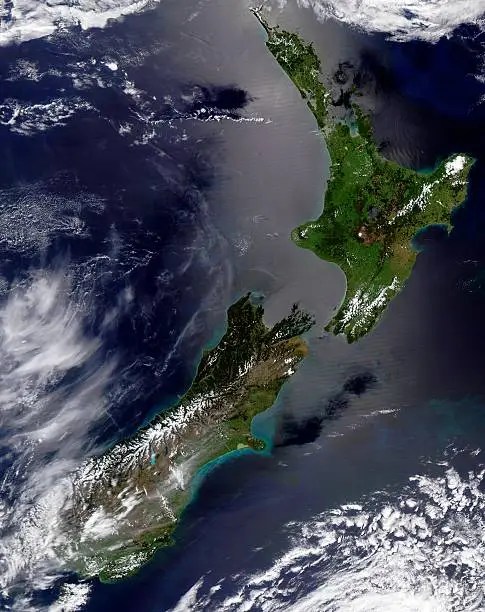
The early days in the new land were difficult days for those Hawaikans who survived the epic sea voyage from their homeland. In the first year more deaths further reduced their number although those were partly offset by the births of several babies. And so far the land of the long white cloud was living up to its name: it was cloudy. With the clouds came rain and cooler temperatures, and the new arrivals shivered as they adapted to life in this foreign place.
Food, or lack of it, was the most crucial issue facing them. The abundant food sources of the islands of the South Pacific were sadly lacking. There was no sign of the pigs, turtles, bananas, coconuts, kumaras or yams they were familiar with. Wild berries from the hīnau, karaka and other native trees were the only fruits available. Though there was a profusion of fish and bird life, new fishing and hunting techniques had to be mastered before those creatures could be added to the recently arrivals’ diet in any quantity.
More than a few of the Ronui survivors wondered if they’d made the right decision in coming here.
Hotu remained staunch. The rangatira knew there’d be hardships to overcome before his people would be at one with the land. He was sure Kupe’s followers had faced the same problems all those centuries ago. Whether they had survived was another story. The same unanswered question applied to Ra and the others aboard Tautira as well as to those who had planned to follow Ra and himself to the new land as soon as their craft were seaworthy.
So far not one sign of another human being had been found. Not even a solitary footprint.
The first hunting expedition into the unexplored interior provided a much-needed boost for flagging spirits. Concerned they’d seen no pigs, or any animals for that matter, along the coast, Hotu led a dozen hunters inland. Their number included Kafoa who made up for his tender age and inexperience with enthusiasm. The hunters never found pigs, but what they did find soon proved to be as good.
On the flatlands and rolling hills between the coast and the mountains, they discovered mobs of giant birds. The biggest of these emu-like creatures stood taller than the tallest man, and, Hotu observed, they had plenty of meat on their bones. Better still, like some other birds in this land, they were flightless. With no natural predators, until now, they had no need of wings. The moa, as they came to be called, were timid and easily killed. Moas quickly became a staple part of their hunters’ diet and would remain so until their extinction less than two centuries later.
In a land curiously devoid of land animals – apart from the dogs and rats the new arrivals brought with them – the moa’s meat provided a valuable source of much-needed protein. And their plumage, like that of their smaller relative, the kiwi, was put to good use making warm and decorative feather cloaks and blankets.
As the months passed and the summer of 1302 faded into autumn, Hotu’s people learned new hunting and fishing techniques, and other foods were added to their diet. These included numerous species of birds, fish, eels, shellfish, berries and root crops. The latter included the shoots and root of the commonplace fern.
As familiarity with the land’s natural resources grew, so did mastery of new building techniques grow. Small, single-entrance, windowless whares [huts], designed to keep their occupants snug and warm, were constructed while native flax was used as the basis for clothes and matting in place of the paper mulberry tree of the islands.
Life slowly became more bearable for the new settlers. Hawaiki and those loved-ones who had been left behind were always in their thoughts, but every one of them accepted their future was here, in Aotearoa. Here, they were safe. They had no enemies. Not yet at least.
By the end of their second summer, they were already becoming tangata whenua – people of the land.
CHAPTER 9
Matavai Bay, Tahiti, April 14, 1769
The morning after the Endeavour’s arrival at Matavai Bay dawned bright and sunny, a welcome change from the recent foul weather.
Even before the crew had finished breakfasting in the mess, a cry went up that a canoe was approaching. Nicholas and several other crewmen hurried topside and saw two paddlers propelling the canoe toward them across the calm waters of the lagoon. Behind the paddlers sat an impressive-looking Tahitian resplendent in a fine black cloak. His handsome head was adorned by a head-dress of colourful feathers. It was obvious…
>>> NEW ZEALAND: A NOVEL continues next week.
*
This novel is available via Amazon as a hardcover, paperback, audiobook and Kindle ebook… https://www.amazon.com/New-Zealand-Novel-Lance-Morcan/dp/0473728524/

*****************************************************

