
“New Zealand: A Novel is more than just a historical saga. It doesn’t just focus on major discoveries or conflicts, but also on the quieter, more personal moments of longing, loss, and connection…A vivid, compelling historical novel that still feels relevant today.” –Elisabet Norris, Scientist, USA
CHAPTER 10
Aotearoa, Spring, 1303 AD
A few full moons shy of two years after arriving in Aotearoa, Hotu was ready to honour his promise to return for those he’d left behind in Hawaiki. The rangatira had vowed he’d return for them. Now he planned to make good on that.
Sitting on the same beach Ronui had delivered him to, he reflected on his time in the land of Kupe. The migration had proven to be an inspired move, and, after a difficult period of adjustment, the new land had been good to him and his followers.
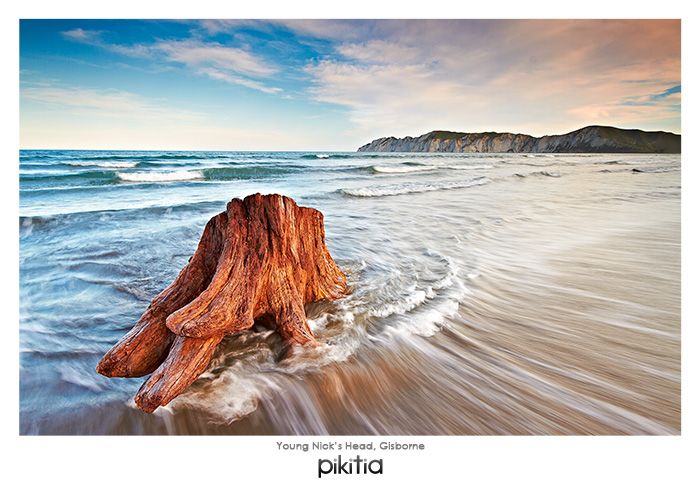
This peaceful and bountiful place was everything he’d hoped for and more. He felt content. But he was aware he couldn’t truly relax until he’d brought the remainder of the villagers from his Hawaikan homeland to this southern sanctuary – or until he’d brought those prepared to undertake the dangerous voyage at least. He wondered if his beloved parents would be among them. That was if they were still alive.
Hotu surveyed the blue waters of the bay. This was his bay. Already it had the familiarity of home. It was almost as though he’d been born here. To his right was the headland he viewed as the guardian of the bay, and beyond the bay’s calm waters he could make out the white caps of the open sea. Far beyond them, in his mind’s eye, he could picture another bay – a bay more tropical than this, fringed by palm trees and guarded by the twin volcanic peaks of Ronui and Tautira.
A cool easterly breeze ruffled the waters of the bay, prompting Hotu to pull his feathered shawl about his broad shoulders. It was a reminder that temperatures in the new land were significantly cooler than the Tropics. Summer was fast approaching, but it still felt more like winter.
Hotu’s thoughts turned, as they often did, to Ra and the others aboard Tautira. The rangatira and his men and had spent many long weeks searching north and south along the coastline, but there’d been no sign of the others and no sightings of bodies, possessions or flotsam from their canoe. The obvious conclusion was they’d perished at sea. He wasn’t to know his fellow voyagers had landed safely several hundred miles to the north. A trek of many weeks separated the two groups, and they would never meet in his lifetime.
Of equal or greater concern to Hotu was the non-appearance of one or more of the great fleet of canoes that had been expected to follow soon after he and Ra departed Hawaiki. He had anticipated at least one of the seven vessels would have made landfall on this section of the coastline, but there hadn’t been any sightings to suggest that others had arrived in Aotearoa.
Hotu suspected the fleet had either been destroyed by storms or by his people’s longtime enemies, the Dogfaces. In fact, he was right on both counts. A cyclone had delayed the fleet’s departure, sinking three of the craft, and their enemies had arrived soon after, commandeering the remaining canoes and killing many villagers.
The sounds of construction brought the rangatira back to the present. Above the high water mark a little way along the beach, a dozen men were busy adding the finishing touches to a new voyaging canoe Hotu had named Nuku Hiva after the Hawaikan island that was once their home. Smaller than the giant craft that had delivered them to these shores, it was nevertheless a sturdy vessel capable of carrying as many as thirty passengers and crew. They called it a waka, their name for this new style of canoe, and it was now only days from completion.
The rangatira became aware of Kafoa’s presence as the boy sat next to him on the sand. Now eight, his son remained a source of great pride. He reminded him of himself at that age. They acknowledged each other with a smile.
“I wish I could go with you, papa,” a wistful Kafoa said.
“Our people need a leader while I am away,” Hotu reminded him.
Kafoa nodded. He knew the real reason he wouldn’t be accompanying his father was the outward journey, against the prevailing winds, would be very dangerous and only the most experienced sailors could cope with the challenges it would throw at them. “When do you leave?”
“Soon.” Hotu put an arm around his son’s shoulders. “It must be soon if we are to avoid the cyclone season.”
Kafoa absentmindedly studied the stub of the additional finger on his left hand. At length, he said, “You will return safely, papa.” He spoke with the confidence of the young.
“Of course,” Hotu agreed. “The spirits of our ancestors are with us.”
They studied the nearby waka. The Nuku Hiva was of similar design to Ronui, but smaller and constructed of different timbers. A hand-picked crew of twenty experienced sailors would accompany Hotu. They would include Rangi, the rangatira’s faithful navigator of many years.
#
A week later, the Nuku Hiva departed for Hawaiki with Hotu at the helm. The journey proved every bit as arduous as he had feared. Fierce storms dogged the voyagers for much of the way, testing them to their limits. The waka capsized twice and three crewmembers were lost overboard before the survivors reached Hawaiki some seven weeks after departing Aotearoa.
Hotu and his men received a rapturous welcome from the Hawaikan villagers. Tearful reunions and celebrations lasted many days as friends and family members were reunited and their stories were shared.
There was sadness, too, as the new arrivals learned of the deaths of loved-ones who had perished as a result of illness, old age, famine or violence at the hands of their enemies. Among those who had passed were Hotu’s parents. The rangatira learned his father had died in his sleep a year earlier, and his mother of a broken heart shortly after. There were many similar stories.
Hotu was hailed as a hero by the villagers. Against all odds, their rangatira had not only found Kupe’s land, but he’d returned for them – just as he’d promised.
Returning to Hawaiki proved something of a bitter sweet experience for the new arrivals. While it was wonderful to be reunited with loved-ones, the sights that greeted them upon their arrival confirmed their decision to leave had been the right one. The village had been attacked quite recently by the Dogfaces. Almost every bure had been burnt to the ground, most of the fighting men had been slaughtered and many of the women and children killed or taken as slaves. Those villagers who remained were despondent. The returned travellers felt guilty they hadn’t been here to protect them.
Hotu learned that neighbouring settlements, including Ra’s former village, had suffered a similar fate. To make matters worse, the people were starving after two years of drought and failed crops, and one of the worst cyclones in living memory had levelled most of the coastal villages.
It took little persuasion to convince the villagers – or those of them who were young and fit enough at least – to rebuild the fleet and return to Aotearoa with Hotu and his men. The prevailing attitude was different now that the existence of Kupe’s land had been proven beyond all doubt. To the downtrodden Hawaikans it sounded like paradise.
So, the rebuilding of seven giant voyaging wakas began and it wasn’t long before the sounds of construction rang out from dawn to dusk at various seaside villages around the island. This would be the big migration, and departure of the great fleet was scheduled for early the following spring.
Hotu personally supervised the design and construction of the vessels. He named one of them Arawa in honour of his late grandfather. Villagers made human sacrifices and prayed to their gods, asking them to keep cyclones and enemies at bay until after the great fleet departed.
For once the gods listened.
#
In the spring of 1304, the seven wakas that comprised the Great Fleet departed Hawaiki for Aotearoa. The southern ocean’s winds and currents dispersed the fleet far and wide, but at least five vessels, including the Arawa, reached their destination. Landfall for the new arrivals was at widely separate points along the eastern and western coastlines of Aotearoa’s northern island. More migrations would follow with wakas landing on the shores of both the northern and southern islands.
The descendants of these people would retain their common ancestry, and their tribal names would forever link them with the craft that brought them to these shores. Unfortunately, this would count for nothing when Aotearoa became over-populated and the competition for land and food began.
CHAPTER 11
Matavai Bay, Tahiti, May 3, 1769
It was early May and the men of the Endeavour were enjoying their stay at Matavai Bay so much that many had all but forgotten the purpose of their visit. As the transit of Venus neared, Cook reminded his men in no uncertain terms of the reason they were in Tahiti.
Construction of a fort, appropriately named Fort Venus, at the northeastern end of the bay was almost…
>>> NEW ZEALAND: A NOVEL continues next week.
*
This novel is available via Amazon as a hardcover, paperback, audiobook and Kindle ebook… https://www.amazon.com/New-Zealand-Novel-Lance-Morcan/dp/0473728524/
*************************************************************

