For lovers of crime-thriller-horror novels with a touch of sci-fi here’s Chapter 1 from the upcoming novel Silent Fear — co-authored by the writers of The Orphan Trilogy, Into the Americas  and White Spirit.

First, here’s the storyline in brief:

Detective Valerie Crowther is assigned to investigate the murder of a student at a university for the deaf in London. The murder investigation coincides with a deadly flu virus outbreak, resulting in the university being quarantined from the outside world. When more deaf students are murdered, it’s clearly the work of a serial killer. The stakes rise when Valerie becomes the killer’s next target and the deadly virus claims more lives.


Silent Fear – Chapter 1

London, like the rest of England and most of Western Europe, was unseasonably hot. Summer had only officially arrived a week ago and already the capital’s maximum temperatures had topped 29°C. Forecasters were predicting the nation’s record high of 38.5 would topple before summer was over.

On this particular weeknight, in West London’s Royal Borough of Kensington and Chelsea, the pubs and bars were full to overflowing as office workers and residents mingled over a few drinks of the alcoholic variety as they endeavoured to assuage their thirst.

In the posh district of South Kensington, not far from Old Brompton Road and only ten minutes’ walk north to Hyde Park or fifteen minutes south to the River Thames, take your pick, an elderly gent emerged from his favourite local bar and weaved his way unsteadily across a busy street. He’d clearly had one or two drinks too many. He came to the attention of a passing cop a few minutes later when he stopped to address the larger-than-life statue of Lord Chester Wandsworth, which towered over the entrance of the university he founded over a decade earlier.

Wandsworth University was no ordinary educational institution. It was a university for the deaf community. Correction. It was the university for the deaf community – in Britain at least, and, if those responsible for the running of similar institutions elsewhere were honest, it was probably the university for the deaf community anywhere. Its student fees certainly reflected that, and it attracted deaf and hard of hearing students from throughout the world.

Lord Wandsworth was no ordinary individual either. Partially deaf himself, he took it upon himself to champion deaf students and see to it that they had the same education opportunities as those of normal hearing. The end result of this benefactor’s generosity was a state-of-the-art educational facility whose stellar reputation was known and admired worldwide.

Unfortunately, Lord Wandsworth was in no condition to enjoy the fruits of his generosity. Since suffering a serious brain injury in a horse-riding accident, the good lord had been confined to bed at his private estate in South Cambridgeshire. But his statue at least continued to watch over the university 24/7.

Looking up at the statue, the elderly bar patron had no idea the gentleman it was named after was still alive. Not surprising given death usually comes before the commissioning of a statue in someone’s honour. Such was Lord Wandsworth’s reputation and popularity the tribute had been fast-tracked.

The bar patron usually had a word for Lord Wandsworth on those evenings his wife allowed him out for a tipple, and tonight was no different except that he’d imbibed more than was customary and so was somewhat more talkative than usual. “I’ve always looked up to you, guv,” he shouted, looking up at the stern, stony features of the man he addressed. “But then… I s’pose everyone looks up to you.” He chuckled at his attempt at humour and nearly fell over when he stepped back into the gutter.

“Are you alright, sir?” a gruff voice enquired.

The elderly gent turned around to see a police car had pulled up nearby. The driver, a fresh-faced young cop, asked again if he was alright.

“Aye, I’m fine,” the old man assured him. Not wanting to get offside with the law, he resumed his homeward journey, bidding both the cop and Lord Wandsworth a good evening as he went his merry way.

The cop watched the gent’s progress for a moment before gazing up at the impressive statue and the even more impressive multi-storied campus building behind it.

Wandsworth University was six storeys high and spanned the length of one entire block. Its top floor was ablaze with lights, and the silhouettes of its occupants could be seen at many of the windows.

The cop took one last look at the building then drove off. He drove with all the windows down, preferring natural ventilation to air-conditioning to cope with the evening’s heat and with the humidity that accompanied it.

#

In Wandsworth University’s student common room young, trendy, deaf students of various nationalities chilled out, played pool and watched television. Others ate at a bistro at the far end of the crowded room. Their lightweight attire left no doubt they, too, were feeling the heat.

Most conversed in sign language, their hand signs almost too fast for the eye to follow. Some wore hearing aids, others high-tech cochlear implants. Some even conversed in spoken language while those who were profoundly deaf either relied on their devices or sign language to communicate. More than a few flirted with each other, as to be expected in a gathering of so many young singles.

They were a mixed lot, ranging in age from late teens to mid-thirties, and they were in the main from well-heeled families. They had to be well off to afford the steep fees. There were exceptions, however. Some of the students were sponsored – most by charitable institutions in their own city or country, and a few by Wandsworth University itself by way of scholarships. Lord Wandsworth had expressed a desire that well deserving students from lower socio-economic backgrounds be accommodated as much as possible, and the uni’s board members had honoured that to the best of their ability, or to the extent their budget allowed at least.

A casual observer wouldn’t have picked it, but the normally animated students were more subdued than usual. And it wasn’t because of the oppressive heat. They, along with the rest of the nation, had received concerning news in recent days.

Many crowded around a big screen television set, watching a BBC news report and reading the subtitles that ran along the bottom of the screen as the newsreader delivered the latest sobering instalment of news.

“The World Health Organisation reports the death toll from the Monkey Flu virus has risen to twenty thousand worldwide,” the newsreader said.

More students stopped to watch, engrossed, as disturbing images from around the world flashed across the screen.

Off screen, the newsreader continued, “Although still in its early stages, the pandemic is already more potent than the 2009 Swine Flu outbreak.”

Images included overcrowded New York hospital wards, mass cremations in Mumbai, emergency medical meetings in Moscow, mass burials in Cape Town, panicked citizens wearing face masks in some unnamed Latin American country, sheet-covered bodies on stretchers lining hospital corridors somewhere in Australia, and the bodies of victims being wheeled into Tokyo morgues.

Still off screen, the newsreader said, “In addition to severe flu symptoms, those who contract the virus suffer blurred vision, which almost invariably leads to blindness.”

The BBC news report then cut to distressed Monkey Flu patients in a hospital ward in Brussels. Most of those in the foreground were looking straight at camera and many seemed to have a white film over the pupils of their eyes. Some appeared to be blind. It made for difficult viewing and some students had to look away. For members of the deaf community, blindness was something too awful to consider.

The newsreader continued, “World Health Organisation doctors describe the alarming symptom as a never-before-seen flu ailment and a type of ON, or Optic Neuritis, which is inflammation of the optic nerve and is often associated with multiple sclerosis. Unlike regular Optic Neuritis, many victims display cloudy, cataract-like symptoms in their eyes and invariably end up blind.”

Wandsworth’s dapper fifty-year-old chancellor Ron Fairbrother chose this moment to enter the room. A distinguished-looking West Indian Brit, immaculately dressed with fashionable glasses and a hearing aid, Fairbrother joined his students and watched the news. His sudden arrival was nothing out of the ordinary. The personable chancellor’s management style was very hands on, and he regularly mixed with students and staff in and out of normal working hours.

“No cases of Monkey Flu have been reported in the UK,” the newsreader continued. “The Secretary of State for Health attributes this to the rigid anti-virus strategies in place.”

Britain’s Secretary of State for Health appeared onscreen, looking slightly anxious, but determined. “We are one of the few countries left without a single confirmed case of the virus,” the stressed official said. “This is likely the result of our decision to close the UK’s borders before any other country in the world. You’ll recall this unpopular decision was referred to by some media as paranoid or alarmist, but even they can see it is now paying dividends.”

The newsreader reappeared onscreen and resumed speaking to camera. “Massive disruptions are resulting from the government’s decision to seal off our borders. Tens of thousands of British citizens are stranded overseas due to the ban on all arrivals into the UK.”

That bit of news was especially sobering for the students. A few British students had parents who were overseas on holiday or on business, and some foreign students had relatives who had been preparing to fly to London to visit them. For students affected – especially for those away from home for the first time – the arrivals ban wasn’t good news.

Fairbrother had heard and seen enough. Before departing, he inserted himself in the eye-line of students and waved his arms overhead. Most students caught the movement and turned their attention to the chancellor. Signing, Fairbrother advised them the board would be meeting tomorrow to make a decision about suspending classes. “Until then, we remain open as usual,” he signed. He repeated himself, using regular speech for the benefit of those with hearing aids who may not have been able to see him. His perfect English hinted at his privileged upbringing and his university education. Smiling, he added, “That means your mid-semester deadlines still stand.”

Students nodded resignedly. There were a few glum faces, but the students couldn’t complain. Fairbrother was strict but fair, and he was generally popular with students and staff alike.

#

Two floors below the student common room, in the privacy of his room in the resident male students’ quarters, Welsh student Jamie Lewis typed an email on his laptop at his desk. The nuggetty twenty-one-year-old was drafting a weekly report for his parents. They liked to be kept informed about what he was up to. Jamie, an only child, was close to his parents, so it was no chore at all to keep in touch regularly.

The room was snug but well appointed. Identical to the others on the floor – and near-identical to the rooms in the female quarters on the floor above – it was fully carpeted and comprised a single bed, bedside table, desk and chair, free-standing wardrobe and a bookshelf, which, in this room at least, was fully stocked. All the books bar one were reflective of the subjects Jamie was studying, the one exception being a book on Welsh rugby, his big passion. In his hometown Cardiff he’d played rugby through all the junior and senior grades at school, and here at Wandsworth he was considered a sitter to crack the uni’s First Fifteen in the coming winter.

Not surprisingly, one entire wall was decorated with posters and photos of the Welsh rugby team, including action shots of his favourite players.

Deaf since birth, Jamie was one of a number of students enrolled at Wandsworth who was considering whether to receive a CI, or cochlear implant – that miraculous electronic medical device, which, in theory at least, allows a deaf person to hear. Jamie’s parents were very keen for him to receive a CI, but he was in two minds. He was mindful the CI issue was highly political in the deaf community, and deaf adults who received an implant were oftentimes perceived as traitors and shut out of that community. The political tension that existed between CI surgeons and the deaf populace – in the recent past at least – was legendary. Jamie had witnessed some of that tension first hand, and he wasn’t at all sure he wanted to receive an implant. He was happy as he was.

That’s what he was trying to relay to his parents by email. It wasn’t easy. They were convinced a CI would be the solution for his problem, as they somewhat insensitively called his deafness.

The specialists said he was profoundly deaf, but he wasn’t certain that diagnosis was one hundred percent correct: he suffered tinnitus, and regularly heard the sounds associated with that annoying condition. Those sounds included a ringing, whistling, hissing, buzzing and even chirping on occasion. The tinnitus was intermittent, sometimes disappearing for days on end, and in between bouts his inner world was reduced to a deathly silence – as was the case now. Even then, though, he often imagined he heard something. Or perhaps it was just wishful thinking.

Jamie was so engrossed in his typing, he didn’t notice the handle of the unlocked door behind him slowly turn. If he had, he’d have seen the door open a few inches and he’d have seen a gloved hand on the handle. The glove was black leather fashioned in the style of snug-fitting driving gloves.

A male intruder entered the room. He wore a lightweight, hoodie-style sweatshirt with the hood all but concealing his face, and he carried a shoulder bag in one hand.

The intruder carefully closed the door behind him, locked it and then stepped behind the free-standing wardrobe.

Some sixth sense made Jamie look around. All seemed normal and he returned to his email.

Still behind the wardrobe, the intruder reached into his bag and drew out a steel claw hammer. In three quick strides he was right behind Jamie.

Only now as the intruder’s shadow covered the desktop did the Welsh student realise he wasn’t alone. Surprised, he spun around too late to avoid the hammer the intruder brought down on his head. The blow was delivered with sufficient force to knock Jamie out. Senseless, he slumped forward in his chair, his bloodied forehead coming to rest on the laptop’s keyboard.

Jamie’s attacker glanced up at the smoke alarm on the ceiling above the bed. He climbed onto the bed, reached up and disabled the alarm before returning to his victim’s side. Then he reached into his bag again and pulled out a tin of lighter fluid and two blue ear candles of the type used for outer-ear hygiene. He unscrewed the tin’s cap and doused the still unconscious student before returning the now empty tin to his bag. Next, he inserted the candles in Jamie’s ears and then, as calm as you like, he removed the glove from his right hand, reached down inside the tracksuit pants he wore and began fondling himself.

The sadistic intruder was soon groaning with pleasure.

A fluttering of the eyelids signalled that Jamie was regaining consciousness so the intruder donned his discarded glove, reached into his bag yet again and pulled out a length of rope and a scarf. The latter item he used to gag his victim, the former to tie him to the chair. His actions were clinical and efficient. It was as if he’d rehearsed this a thousand times. In fact, he had – in his mind at least. He wasn’t one to leave anything to chance and, in the days and weeks leading up to this moment, he’d thought of little else.

Without further ado, he pulled a lighter from his pocket and lit each candle. He became momentarily mesmerised by the dancing flames, cocking his head as if awaiting some reaction from the now semi-conscious student. There was no reaction for the moment. Not that he noticed at least.

Finally, Jamie moaned as the candles burned down closer to his ears. Fumes rose from the lighter fluid and then ignited with a whoosh. It took a few moments before the student became aware he was gagged, tied up and on fire.

The intruder watched, entranced, as his victim struggled to escape the flames that enveloped him and the bonds that tied him to the chair.

Jamie was now writhing in agony. The flames were fierce and his skin was visibly blackening by the second. Such was his desperation, he overbalanced in the chair he was tied to and ended up on his back on the floor. He now resembled a fireball. A human fireball. So hot was it that his attacker had to take two steps backwards.

The intruder became excited and felt himself hardening again as he observed his victim’s pain and terror. Jamie was now in his death throes, and his movements, so vigorous a few seconds ago, were slowing with every passing moment.

For the intruder, the need to make haste and quit the scene suddenly became the priority. He’d been here long enough. He lifted his shoulder bag from where he’d left it on the bed and took a final look around the smoky room. He was anxious not to leave behind any DNA or other evidence that could incriminate him.

By this time Jamie was unrecognisable and very dead.

Satisfied he’d overlooked nothing – the leather gloves he wore meant he didn’t have to worry about leaving any fingerprints behind – Jamie’s killer signed “Game over, asshole” to the still burning body as he departed, turning the light switch off as he exited the room.

#

If you want to read more, another five chapters have been posted in more recent blogs. Enjoy!

   Inline image 1

https://www.goodreads.com/book/show/35626239-silent-fear

*************************************************
You are invited to enter our Goodreads giveaway competition to win a copy of the paperback edition of Fiji, another action-packed historical adventure novel by Lance & James Morcan, co-authors of White Spirit  and Into the Americas.  


Fiji: A Novel (The World Duology Book 2)

By the mid-1800’s, Fiji has become a melting pot of cannibals, warring native tribes, sailors, traders, prostitutes, escaped convicts and all manner of foreign undesirables. It’s in this hostile environment an innocent young Englishwoman and a worldly American adventurer find themselves.

Susannah Drake, a missionary, questions her calling to spread God’s Word as she’s torn between her spiritual and sexual selves. As her forbidden desires intensify, she turns to the scriptures and prayer to quash the sinful thoughts – without success.

Nathan Johnson arrives to trade muskets to the Fijians and immediately finds himself at odds with Susannah. She despises him for introducing the white man’s weapons to the very people she is trying to convert and he pities her for her naivety. Despite their differences, there’s an undeniable chemistry between them.

When their lives are suddenly endangered by marauding cannibals, Susannah and Nathan are forced to rely on each other for their very survival.


If the Fiji  paperback is of interest, you can enter the Goodreads giveaway competition at: https://www.goodreads.com/book/show/12884662-fiji?from_search=true

Entries close September 1. (All countries, or almost all countries, eligible).


****************************************

Silent Fear: A Novel Inspired by True Crimes  is by Lance and James Morcan. I had an advanced Review Copy from James.

★★★★★

This book is a suspense that deals with the deaf and deaf community as well as murder and an outbreak of a terrible disease for which there is no vaccine. It is set in a school for the deaf in London. The book is definitely worth reading. It draws you into the story until you can’t put the book down. The characters are very realistic and are described so well, they take root in your mind and become alive. The plot has so many twists and turns. Just as you think you have it figured out, they throw another twist in which sets you off in a different direction.

Detective Superintendent Valerie Crowthers was called to Wandsworth University for the Deaf to investigate the murder of Jamie Lewis, a deaf student. She was called to the scene specifically because she knew and used sign language on a daily basis. Her Mother was deaf. She was also one of their best investigators. Her boss, Chief Superintendent Mark Bennett, knew she would do a good job on the investigation. He would be questioned on his choosing her because they had been married but were now divorced. Valerie set out to find the murderer as quickly as possible.

Shortly after her arrival on the scene, one of the girls was diagnosed with Monkey Flu. This flu hit worldwide and was said to be more viral that the Spanish Flu was. It wasn’t in the UK before because the UK shut its borders and allowed no one in nor out. When Carol was diagnosed, the Prime Minister ordered Wandsworth to be quarantined. Everyone in the building at that time would stay. The windows were boarded up and the entire residential building was wrapped in cellophane. Then due to the airborne quality of the disease, the air conditioning was turned off despite record breaking high temperatures. Valerie has her work cut out for her.

The book is excellent. The writing is brilliant and the structure is unbelievably realistic. Once you start reading, it becomes impossible to put it down. I found myself staying up all night just to finish the book. If possible, I would give this book ten stars. It is spellbinding. — Pamela Blevins (USHMM Museum Teacher Fellow, Retired Reading Specialist, Retired Oklahoma Master Teacher)

For the full review, and other readers’ comments, go to:  https://www.goodreads.com/book/show/35626239-silent-fear

Inline image 1

Silent Fear…scheduled for release soon.


*****************************************************

For lovers of crime, thriller, mystery novels with a touch of sci-fi here’s the Prologue for our upcoming novel Silent Fear.

First, here’s the storyline in brief:

Detective Valerie Crowther is assigned to investigate the murder of a student at a university for the deaf in London. The murder investigation coincides with a deadly flu virus outbreak, resulting in the university being quarantined from the outside world. When more deaf students are murdered, it’s clearly the work of a serial killer. The stakes rise when Valerie becomes the killer’s next target and the deadly virus claims more lives.


Prologue for Silent Fear

A solitary figure sweated profusely as he toiled away, unconcerned by the confined space of the basement he worked in or by the wooden floorboards that formed a ceiling just a metre or so above his head. Claustrophobia, it seemed, wasn’t an issue. Stretched out full length on the concrete floor, he worked by the light of a torch he’d left resting beside him. His full attention was on filling a hole, brick by brick, in a wall that dissected one corner of the basement.

It was a painstakingly slow process. He was a thinker and a planner, not a bricklayer or labourer. Even so, he understood the basics of bricklaying and he was blessed with a certain amount of natural strength, and this was helping him now. To protect his hands, he wore a pair of snug-fitting, black, leather gloves not unlike driving gloves.

A little research was all it had taken to familiarise himself with the rudiments of bricklaying. The upshot was he used quick-mix cement. Three parts sand to one part masonry cement. That’s what the supplier’s instructions had stated, but he’d added an extra spadeful of cement for good measure because he felt it needed that.

The instructions also advised using fine-grade masonry sand and fresh masonry cement preferably from an unopened bag. That he hadn’t managed because he didn’t want to be seen purchasing the product, and so he’d had to use what was available. And what was available was a half-used bag of course-grade masonry. Touch wood, it was doing the job – so far at least.

“Mix only what you need” the instructions had read. He’d estimated half a wheelbarrow-full would do it with some to spare, so that’s the amount he’d mixed. Because of the basement’s low head-clearance, he’d had to pour the mixture into buckets – six of them – and drag them one at a time to his cramped workplace.

Two extra trips had been required, including one to fetch a bucket of water. He was using the water to keep the cement from setting before applying it. The other trip had involved dragging the object he was now concealing from a room on the lower floor of the building directly above his head. That had required the most effort as the object weighed almost as much as he did.

The instructions had also recommended the addition of lime to the mixture – “to bond and strengthen the stonework you are building,” according to the supplier’s instructions. He didn’t have any lime, and that had bothered him initially. Now, as he saw how well the cement was bonding with the bricks, he relaxed a little. Easy, he thought. Like learning to walk.

He was quite proud of his trowelling technique. It improved with the laying of each brick, but it was tricky and he found he had to focus.

“Hold the trowel at a ninety degree angle,” he’d been advised, but he had quickly discovered ninety degrees was a bit too ambitious in the confined space. It wasn’t as if he could work standing up. Lying down, seventy degrees was the best he could manage with the trowel, but that was sufficient.

The main challenge, he’d discovered, was ensuring the quick-mix cement in the buckets didn’t set before he could apply it. Premature setting was only avoided by regular application of water, which he dispensed by using his trowel to transfer small amounts from the water bucket to the other buckets and then giving their contents a good stir. It required some effort, and despite the basement’s cool temperature he found he was sweating more with each passing minute.

Ever so gradually the hole in the brick wall grew smaller as he laid more bricks.

Despite what was at stake, he worked at a leisurely pace, all the while thinking. That was something he did a lot these days. Thinking, that is.

The hole was now so small he could hardly see the object he was concealing. Only the deceased’s face was visible, covered by the transparent plastic bag he’d used so effectively to cut off the other’s air supply just thirty minutes earlier.

He smiled at the memory of the deceased’s final moments. Those last seconds when the young man had recognised his attacker and realised he was about to die.

Beautiful…like poetry in motion…slow motion.

Oh how he loved the exhilarating, orgasmic-like feelings he’d experienced as the life of another was snuffed out. He willingly embraced them as he relived the moment. It was as if the helpless young man before him was still dying.

Studying the deceased now, or what he could still see of him at least, he recalled how he’d laughed uproariously just before death came to his victim. The visuals replayed over and over in his mind. He remembered how the veins in the young man’s eyeballs, face and neck appeared to burst as he was deprived of air, and how fragile he’d looked – like a child being tortured.

The icing on the cake had been when he’d used his hands to communicate a final message via sign language. He could still see the look on his victim’s face when, seconds before death came, he realised what was being communicated to him. It was a look of total horror, which was somehow more accentuated when viewed through the transparent plastic bag. That had made this killing even more satisfying.

What he had communicated was simple yet definitive: “Game over!”

As he relived what happened, it felt like every cell in his body was jumping for joy. It was as if every strand of his DNA had been created for one purpose and one purpose only: to kill.

He had been planning the murder these past six months. In fact, he’d first thought of killing him years ago, but it required time for those thoughts to solidify into a plan – a concrete plan in more ways than one.

Now that he’d acted, he wondered why it had taken him so long. It wasn’t as if he was afraid or unsure or anything like that. He’d delayed because he couldn’t decide exactly how he wanted the young man to die. Bludgeoning, shooting, stabbing, poisoning, gassing, drowning had all been considered. Finally, he’d opted for suffocation. Why? He couldn’t really say. Certainly he wanted to watch him suffer. And he wanted to prolong his suffering. But stabbing or poisoning or any number of methodologies could have achieved that.

Looking at him now, the killer knew he’d made the right decision. The deceased’s tortured face seemed distorted inside the plastic bag that covered his head, and his sightless eyes still registered the intense fear he’d experienced in his final ghastly moments.

Studying him in the torchlight, he felt his manhood hardening beneath him. He removed one of his gloves then, raising his pelvis off the floor, he reached down and began pleasuring himself, all the while looking at his victim.

Satisfaction arrived quickly and he groaned as he came.

Recovering his composure, he donned his glove and resumed working.

It wasn’t long before the hole was completely bricked over. He shone his torch on the wall and inspected his handiwork.

Perfect.

The newly laid bricks aligned flawlessly with the older bricks. That was no accident because he’d used identical surplus bricks the building’s owner had thoughtfully left in the basement. Finally, he cleaned up, removed his gloves and then began crawling back the way he’d come, taking his buckets and work tools with him.

As he departed, he knew he’d need to kill again. And soon. He had to experience those wonderful feelings again.

He was confident he wouldn’t have long to wait; his master plan was already in motion.

#

Inline image 1

https://www.goodreads.com/book/show/35626239-silent-fear

*************************************************

Is zero a number? Sounds like a simple enough question, but when posed to fellow ‘Undergrounders’ (members of our Underground Knowledge discussion group on Goodreads) it turns out to be quite complicated.


Image result for zero


Keeping in mind ‘Undergrounders’ are global and from all walks of life, including professionals, academics and blue-collar workers, here’s a snapshot of what they think:

Lisa says: Historically it (zero) did not start out as a number, but as a placeholder (1, 10, 100, 1000, etc.) and to fill in empty columns. But as a human species, we like to complicate things…learning about stuff in more depth….science and shit….we are a bunch of crazies! Zero is not defined. Does it prove the presence of something? Does it prove the absence of something? In a mathematical problem, can you cancel out a zero?

Krishna says: …there r many anomalies in maths regarding 0…but if u see the decimal number system, it’s basically a set of repetitions… 00 to 09, then 10 to 19, and so on and if u see the next set, it’s 100,101,102……111,112……and so on… so here 0 is not treated as anything “special” but treated as other digits only…. so I think 0 is a number….

Harry says: It (zero) existed way before decimal systems. Babylonians (Mayans etc.) first had the concept of zero… “It began to take shape as a number, rather than a punctuation mark between numbers, in India in the fifth century A.D.,” says Robert Kaplan, author of The Nothing That Is: A Natural History of Zero.

Masi says: Zero does have a value, it’s nothing. and it could be expressed as a word, symbol, or figure… (and) Less than zero just means it’s not a whole number, but less than it but it still has value.

James says: Ok, I’ve been converted to The Way of Zero. And fight all those (like Lisa!) who imply Zero is just nothing and not worthy 🙂 Acknowledge equal mathematical rights for Zero! Say no to mathematical discrimination! Yes 9 and 8 are the elite, but zero is a ground hero, forming a grassroots movement…trying to help those less even privileged like -1, -2, -3 etc.

Krishna says: Yes! Zero is our hero!

James says: Krishna, you now belong to the Way of Zero. Here we believe nothing is not nothing. Even if you have nothing, deep down you still got something and therefore you’re a Zero Hero 🙂

Harry says: If we’re actually in a matrix, then zeroes and ones were here long before anything else…. 🙂

Tim says: Zero is represented by a circle that symbolically means nothing, yet, because a circle has no beginning or end, it is eternal. Also, the planets in the sola system are round and are in permanent cycles of the sun and often each other… The circle, or zero, is profound me thinks… 🙂 I love this stuff…

Masi asks: Is infinity a variable? (I’m just asking random questions to make this go somewhere).

James says: This is the zero (nothing) thread, so why does nothing need to go somewhere, Masi?

Lisa says: With zero, the devil is in the details….hence Zero is not really a number, but the name given the very first eternal multiversal being….you can argue both for and against it and be right and wrong all at the same time… It is time to revise the First Law of Thermodynamics. Empty space is full of atoms and therefore DOES NOT consist of nothing.

Tim says: I think zero is an aspect of truth, thus its value is incalculable…

James says: Here’s a song about zero by the little known 1980s Scottish indie rock band TV21 https://m.youtube.com/watch?v=-htBdwn


To view all comments, or better still to have YOUR say, go to: https://www.goodreads.com/topic/show/18630809-is-zero-a-number?page=1

*

The Underground Knowledge discussion group has been designed to encourage debates about important and underreported issues of our era. All you need is an enquiring mind, an interest in the world we live in and a desire to learn or share “underground knowledge”.


******************************************
In a chapter headed “Questioning the confirmed death toll” in our book Debunking Holocaust Denial Theories, we take the deniers to task for asserting it would have been impossible to six millions Jews at Auschwitz and other death camps over the course of the Holocaust. (See our blog of February 3).

The deniers of course mischievously overlook the fact that many of the Jewish deaths occurred in what historians refer to as “open-air killings” throughout Europe outside  of the death camps.


A member of the Einsatzgruppen shooting naked Jews.


A further excerpt from the book follows:

One of many such examples is Babi Yar, a ravine in Ukraine’s capital city Kiev, where over just two September days (29th to 30th) in 1941, approximately 34,000 Jews were killed by death squads.

The History.com website details this event beneath the headline “Babi Yar massacre begins.” An excerpt from the article follows:

“The German army took Kiev on September 19, and special SS squads prepared to carry out Nazi leader Adolf Hitler’s orders to exterminate all Jews and Soviet officials found there. Beginning on September 29, more than 30,000 Jews were marched in small groups to the Babi Yar ravine to the north of the city, ordered to strip naked, and then machine-gunned into the ravine. The massacre ended on September 30, and the dead and wounded alike were covered over with dirt and rock.

“Between 1941 and 1943, thousands more Jews, Soviet officials, and Russian prisoners of war were executed at the Babi Yar ravine in a similar manner. As the German armies retreated from the USSR, the Nazis attempted to hide evidence of the massacres by exhuming the bodies and burning them in large pyres. Numerous eyewitnesses and other evidence, however, attest to the atrocities at Babi Yar, which became a symbol of Jewish suffering in the Holocaust.”

We have spoken to local Ukrainians of non-Jewish descent who confirm that in the western Ukraine entire towns that were almost exclusively Jewish before WW2 now have no Jews as all were executed by the Nazis.

Most tellingly, eyewitnesses to some of these massacres include high ranking German officers – one of those being convicted war criminal German SS-Gruppenführer Otto Ohlendorf, head of the intelligence and security division Inland-SD and commanding officer of Einsatzgruppe D task force, which perpetrated mass murder in Moldova, Ukraine and the Crimea.

In Herr Ohlendorf’s own words, “The Einsatzgruppen had the mission to protect the rear of the troops by killing the Jews, Gypsies, Communist functionaries, active Communists, and all persons who would endanger the security.”

The Einsatzgruppe’s victims were in reality almost entirely Jewish civilians. And directly contradicting Ohlendorf’s assertion that the mission was to “protect the rear of the troops,” not a single Einsatzgruppe member was killed in action during these operations – essentially proof that the true mission was to slaughter innocent people.

In its first year alone (1941), the Einsatzgruppen killed 300,000 civilians, mainly by shootings at mass-killing sites outside major towns.

The United States Holocaust Memorial Museum (USHMM) has recorded the eyewitness account of one survivor of an Einsatzgruppen massacre in Piryatin, Ukraine, where on April 6, 1942, the Germans killed 1600 Jews. It reads as follows:

“I saw them do the killing. At 5:00 pm they gave the command, “Fill in the pits.” Screams and groans were coming from the pits. Suddenly I saw my neighbor Ruderman rise from under the soil … His eyes were bloody and he was screaming: “Finish me off!” … A murdered woman lay at my feet. A boy of five years crawled out from under her body and began to scream desperately. “Mommy!” That was all I saw, since I fell unconscious.”

You have been reading an excerpt from Debunking Holocaust Denial Theories – by James & Lance Morcan.

DEBUNKING HOLOCAUST DENIAL THEORIES: Two Non-Jews Affirm the Historicity of the Nazi Genocide

The book is exclusive to Amazon:  http://www.amazon.com/DEBUNKING-HOLOCAUST-DENIAL-THEORIES-Historicity-ebook/dp/B01EYY7T7Y/  


************************************ 
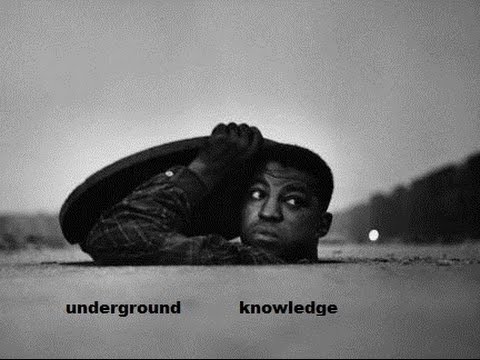
We invite authors to promote their Alternative thinking books free of charge in our burgeoning Underground Knowledge discussion group on Goodreads. The group achieved a milestone recently when membership topped 5,000 ‘Undergrounders’ (members) worldwide! (See our previous blog post).


Image result for underground knowledge


To check out the titles listed in our Alternative thinking books thread, or better still to post YOUR book, go to: https://www.goodreads.com/topic/group_folder/241268?group_id=142309

Our members include award-winning authors and bestselling authors whose titles make for engrossing reading…


Here are some of the authors who are Underground Knowledge members and who have each written books which in my opinion are all profound in their own way:

Holocaust survivor Peter Kubicek is an author I recommend to all those interested in history, WW2 and human nature https://www.goodreads.com/author/show… Peter has written one of the most powerful yet concise Holocaust memoirs I have ever read titled Memories of Evil: Recalling a World War II Childhood.

Sibel Edmonds (AKA ‘The most classified woman in U.S. history’) https://www.goodreads.com/author/show… Sibel has written some brilliant whistleblowing books, both in non-fiction and fiction, and is one fearless woman.

Award-winning journalist and Pulitzer Prize nominated author Gerald Posner: https://www.goodreads.com/author/show… Gerald’s recently published God’s Bankers: A History of Money and Power at the Vatican is well worth a read.

Former journalist and military veteran Martin Roy Hill is the prolific and award-winning author of thrillers & sci-fi: https://www.goodreads.com/author/show

Educational researcher Tony Sunderland has just released a new book (published by Vivid Publishing) titled A Crisis of Faith (The battle of beliefs between the Christian Church and Gnosticism) https://www.goodreads.com/author/show

Hetty Verolme is another Holocaust survivor with an astonishing true survival story https://www.goodreads.com/author/show… She tells the Holocaust from a different perspective, having been placed by the Nazis in the “Children’s House” in the Belsen Concentration Camp and forced to become a mother to younger children while still a young teenager herself.

Boston-based philosopher Arthur D. Schwartz has written a non-fiction book for radical thinking titled Ethical Empowerment: Virtue Beyond the Paradigms: https://www.goodreads.com/book/show/1

British author/poet (and honorary Undergrounder!) Harry Whitewolf: https://www.goodreads.com/author/show… Harry’s book The Road To Purification: Hustlers, Hassles & Hash is one of my favorite books. Also highly recommend Matrix Visions which reveals the hidden ancient symbolism believed to be used by the global elite…

Rupert Dreyfus is a fairly new novelist on the scene who is garnering some attention and who the Morning Star called “an authentic and vital writer”. Rupert is a rebel who takes cynical swipes at the establishment at every opportunity! https://www.goodreads.com/author/show

New Zealand author Ian J. Miller is a semi-retired chemist which gives him an obvious advantage when writing all his science fiction books… https://www.goodreads.com/author/show

J.J. Mainor is another sci-fi author you may like to check out – his book the USS Krakowski is about an “alien drone ship”… https://www.goodreads.com/book/show/2

English journalist, traveller and climate-change researcher Mike Robbins has a series of fiction and non-fiction books out including his latest release Such Little Accident: British Democracy and Its Enemies: https://www.goodreads.com/author/show

UCLA fiction writing teacher Tantra Bensko has some intriguing neo-noir and psychological suspense novels available: https://www.goodreads.com/author/show

Nik Krasno fled his native Soviet Union and immigrated to Israel where he became a lawyer and author. Check out his exciting ‘Oligarch series’ which is partly based on real corruption and crime in the former USSR and modern-day Russia: https://www.goodreads.com/author/show

Bruce R. Fenton is currently stirring things up: https://www.goodreads.com/author/show… Bruce has written a controversial new book (with a foreword by Graham Hancock) that challenges commonly accepted theories on human origins – it’s titled The Forgotten Exodus: The Into Africa Theory of Human Evolution.

Donald Jeffries is the author of the best-seller “Hidden History: An Expose of Modern Crimes, Conspiracies and Cover-Ups in American Politics”. His second nonfiction book, “Survival of the Richest,” was recently published https://www.goodreads.com/author/show

American author Gregory Ness is a technologist who writes about ancient history and theology/spirituality blended with the history of science… https://www.goodreads.com/author/show

And finally, there’s my co-writer Lance Morcan and myself and our non-fiction series (7 books so far and counting) aptly titled Underground Knowledge: https://www.goodreads.com/series/1425… This series discloses more than a few secrets, if I do say so myself!

Lastly, if you’re still unsure what the hell this group is all about, then have a read of this intro post: What is “underground knowledge” and why is it important? https://www.goodreads.com/topic/show/


Be seein’ you in the Underground…

James


*************************************


Our Underground Knowledge global discussion group on Goodreads.com has cracked the 5,000 membership milestone, confirming its status as one of the fastest-growing and most active groups on the hugely popular literary site.


The Underground Knowledge group was designed to encourage debates about important and underreported issues of our era. All you need is an enquiring mind and a desire to gain or share “underground knowledge”.

We promote freedom of speech and welcome all viewpoints.

Our valued members include professional and blue collar workers, scientists, historians and teachers, humanitarians, radicals and conspiracy theorists, students, housewives, emergency services and military personnel, former intelligence operatives and more than a few bestselling authors.


Our Mission Statement reads:

No genuine change in society ever occurs without the mass public getting behind a cause. The good guys in government are counting on enough of us common people waking up and demanding more rights and greater freedoms.

So let’s start building this new world together…A fairer society where every citizen is truly equal regardless of wealth, social background, nationality, education, race, gender or sexuality.

This goal has clearly resonated with many, and our membership is truly international with members from First and Third World countries.


Our (often contentious) discussion threads include:

The racist science > The overpopulation myth (part 1).  https://www.goodreads.com/topic/show/1961414-the-overpopulation-myth-part-1?page=1

Was 9/11 a false flag attack and ‘Inside Job’? (POLL: 50% of you say YES).  https://www.goodreads.com/topic/show/2071995-was-9-11-a-false-flag-attack-and-inside-job-poll-50-of-you-say-yes

Childhood immunizations — Are vaccines for kids as safe as Big Pharma claims they are? https://www.goodreads.com/topic/show/2270994-childhood-immunizations—-are-vaccines-for-kids-as-safe-as-big-pharma

A glimpse of the future? (star towers, free energy, revolutionary medicine, Space colonization, technology to reverse global warming & other scientific inventions to come?)  https://www.goodreads.com/topic/show/18477864-a-glimpse-of-the-future-star-towers-free-energy-revolutionary-medici

Is President Trump for the common people? Or has he secretly been installed by the 1% elite?   https://www.goodreads.com/topic/show/18333157-is-president-trump-for-the-common-people-or-has-he-secretly-been-instal

The science of biocentrism can prove there is an Afterlife, claims Professor Robert Lanza.  https://www.goodreads.com/topic/show/2271236-the-science-of-biocentrism-can-prove-there-is-an-afterlife-claims-profe

Are aliens visiting Earth or not????  https://www.goodreads.com/topic/show/1966591-are-aliens-visiting-earth-or-not

November 22, 1963. Dallas, Texas. — Investigating the assassination of President John F. Kennedy.  https://www.goodreads.com/topic/show/1962467-november-22-1963-dallas-texas—-investigating-the-assassination-of

“Imagine there’s no countries” – the case for global citizenship.  https://www.goodreads.com/topic/show/18041504-imagine-there-s-no-countries-the-case-for-global-citizenship

Should drugs be decriminalized?  https://www.goodreads.com/topic/show/1964760-should-drugs-be-decriminalized

The Queen’s position in modern Britain.  https://www.goodreads.com/topic/show/1955439-the-queen-s-position-in-modern-britain

Forbidden history of the Bible > Earlier historical versions of Jesus Christ?  https://www.goodreads.com/topic/show/2246325-earlier-historical-versions-of-jesus-christ

Antarctica – what goes on down there?  https://www.goodreads.com/topic/show/12077935-antarctica—what-goes-on-down-there

Is McDonalds actually food?  https://www.goodreads.com/topic/show/18099843-is-mcdonalds-actually-food

The U.S. Military’s official proposal to kill American civilians, bomb U.S. cities and fly planes into buildings in staged terrorist attacks (Operation Northwoods declassified).  https://www.goodreads.com/topic/show/1953908-the-u-s-military-s-official-proposal-to-kill-american-civilians-bomb-u

Fluoride – is it safe for consumption?  https://www.goodreads.com/topic/show/17514923-fluoride—is-it-safe-for-consumption

What is Terrorism and Who gets to define the term?  https://www.goodreads.com/topic/show/2122895-what-is-terrorism-and-who-gets-to-define-the-term


To view all discussion threads in the Underground Knowledge group — or better still to have YOUR say — go to: https://www.goodreads.com/group/show/142309-underground-knowledge-a-discussion-group

Everyone’s welcome! All viewpoints welcome! Come visit!


*******************************************


One book reviewer described our historical adventure INTO THE AMERICAS (A novel based on a true story)  as being “like a motion picture in words.” Understandable given it’s set in the Pacific Northwest, which must surely be one of the most picturesque places on earth. 

Nootka Sound, Vancouver Island…where this true-life story is set.


Into the Americas is a tale of two vastly different cultures – indigenous North American and European civilization – colliding head on. It is also a Romeo and Juliet story set in the wilderness.

The storyline:

It’s 1802. Nineteen year-old English blacksmith John Jewitt is one of only two survivors after his crewmates clash with the fierce Mowachaht tribe in the Pacific Northwest.

John Jewitt…years later.

A life of slavery awaits John and his fellow survivor, a belligerent American sailmaker, in a village ruled by the iron fist of Maquina, the all-powerful chief. Desperate to taste freedom again, they make several doomed escape attempts over mountains and sea. Only their value to the tribe and John’s relationship with Maquina prevents their captors from killing them.

Mowachaht chief Maquina.

As the seasons pass, John ‘goes Indian’ after falling in love with Eu-stochee, a beautiful maiden. This further alienates him from his fellow captive whose defiance leads to violent consequences. In the bloodshed that follows, John discovers another side to himself – a side he never knew existed and a side he detests. His desire to be reunited with the family and friends he left behind returns even stronger than before.

Nootka village where Jewitt was held captive.

The stakes rise when John learns Eu-stochee is pregnant. When a final opportunity to escape arises, he must choose between returning to civilization or staying with Eu-stochee and their newborn son.

Nootka Sound…as it was in the days of the trading ships.

Nootka Sound…in more recent times.

Strait of Georgia, Vancouver Island….a potential escape route for Jewitt.

An older Jewitt…after his escape.


Into the Americas (A novel based on a true story)

Into the Americas  is available exclusively via Amazon: http://www.amazon.com/Into-Americas-novel-based-story-ebook/dp/B00YJKM51E/


*****************************************

There’s no doubt good nutrition and healthy diets have been compromised by the advent of GMO’s, or genetically modified organisms. GMOs – those organisms whose genetic material has been altered using genetic engineering techniques – are the source of genetically modified foods and are also widely used in scientific research and to produce goods other than food.


Image result for genetically modified food


We address the contentious GMO issue in our book MEDICAL INDUSTRIAL COMPLEX: The $ickness Industry, Big Pharma and Suppressed Cures – in a chapter titled “When did your doctor last talk to you about your diet?” to be exact.

A relevant excerpt from the book follows:

Now we can’t blame the Medical Industrial Complex for the advent of genetically modified foods, but there are some parallels as you’ll see. For the sake of this little exercise, replace the term Big Pharma with the equally emotive term Big Brother and you’ll get the picture.

Genetic modification has been around, in its modern form, since the 1970’s – and has sparked a major debate ever since. Advocacy groups and opponents of GMO have long claimed that genetically modified food presents potential dangers to the very future of Mankind’s health.

The debate is no less fierce amongst members of our ‘Underground Knowledge’ discussion group on Goodreads.com. It was prompted by one member who asked, “What’s the deal with GMO’s? Why are they banned in Europe and not in the USA? If there is nothing wrong with them then why is the government NOT requiring that food be labeled as containing GMOed items? Why is Monsanto so adamant that labeling NOT be required or permitted? Who are these people anyway? It should be my decision as to what I put in my body!”

Random samples of members’ responses follow. (Names withheld):

“Yep, the whole GM thing is scary- just like tales of chemtrails or tap water poisoning us- but, yeah, we should be able to know the truth about what GM products are in what foods, and I’ve read stuff before about even with labels, there can still sometimes be a GM product ‘through a loop hole’.”

“It’s a worrying state of affairs when we don’t know if our meat is cow or horse, and we’re digesting more and more GM products, and there never seems to be any straight answers as to who to trust with these kinds of subjects.”

“Food should just be food! Why did ‘they’ have to go mess with nature? If they could restructure the air and make a buck out of it, they would!”

“My wife and I have stopped eating anything processed and only eat organic as much as possible.”

“I saw an interesting program on TV this morning. They were talking about fortified breakfast cereal. The man ground up some of the flakes and mixed it with some liquid in a breaker and dropped in a magnetic stirrer. After a few moments he removed the stirrer and gently rinsed it off. Guess what was all over it? Iron filings! Apparently they are supposed to be in the cereal.”

You may be asking what genetically modified foods have to do with medicine. Well, technically speaking, not much. However, the point is if some of the food supply has been poisoned or otherwise become toxic and therefore is partially responsible for the dramatic recent increases of certain diseases (such as autoimmune disorders), then surely doctors would be amongst those who’d recognize this fact. But is that a fair assumption given most doctors do not seem to commonly believe what we put into our bodies matters that much?

#

Returning to our original question – When did your doctor last talk to you about your diet? If the answer to that is Never, perhaps it’s time you did. Talk to him/her, that is. Be it to address high cholesterol, an excess weight problem, a heart condition, cancer or high blood pressure, perhaps it’s time to have that little chat.

If doctors are aware their patients are diet-conscious and if they’re constantly reminded nutrition is important to them, perhaps they’ll fall into line and give it (nutrition) the importance it deserves when it comes to treating people.

Hopefully, this chapter has provided you with some ammunition to fire their way.

________________________________________________________

“I actually like how doctors talk. I like the sound of science. I like how words you don’t understand explain things you can’t understand.” –American author (Ms.) R.J. Palacio

________________________________________________________

We must add a little footnote here and acknowledge that the inference that doctors are not nutrition-minded or, for that matter, not supportive of alternative health measures is very much a generalization; we are aware there’s a growing number of physicians (and other health providers) in mainstream medicine who are very knowledgeable about nutrition and alternative health, and who incorporate this knowledge into their everyday practice.

Unfortunately, they are very much in the minority.


MEDICAL INDUSTRIAL COMPLEX: The $ickness Industry, Big Pharma and Suppressed Cures  is Book #3 in The Underground Knowledge Series  and is available exclusively via Amazon: http://www.amazon.com/MEDICAL-INDUSTRIAL-COMPLEX-Suppressed-Underground-ebook/dp/B00Y8Y3TUM/


MEDICAL INDUSTRIAL COMPLEX: The $ickness Industry, Big Pharma and Suppressed Cures (The Underground Knowledge Series Book 3)


**********************************