Posts Tagged ‘historical novels’

Authors’ note:

Much of this novel was directly inspired by the diary entries of young English seaman John Jewitt during his time aboard the brig The Boston and also during his sojourn at Nootka Sound, on North America’s western seaboard, from 1802 to 1805.
 

Into the Americas (A novel based on a true story)

A novel based on a true story.


“Many paddles, one canoe” –First Nations saying


Prologue

In the skies above North America’s west coast, amongst the clouds, a bald eagle glided in lazy circles. With her magnificent white head and tail feathers, and her six-foot wingspan, she was the queen of her domain as she made use of the thermals that rose from the unseen terrain below.

The clouds parted to reveal a village – one of many populated by the indigenous people of the remote Northwest Pacific region. Nootka village was bordered by rugged, forest-covered hills which rose up out of the sea. Comprised of twenty or so large, wooden lodges, it was home to the Mowachaht tribe, one of the twenty-five Nuu-chah-nulth indigenous groups that occupied the region’s craggy coastline. A two-masted schooner lay at anchor offshore, safe for the moment in an inlet with the unlikely name of Friendly Cove.

Distance was no problem for the eagle whose sharp eyesight could distinguish any object from another, even if those objects were little bigger than a pinhead. Right now, her eyes were focused on a Chinook salmon swimming between the schooner and shore. The eagle flattened her wings and dove head first, extending her wings moments before she struck the water. Talons extended and now in a shallow dive, the eagle grasped the salmon and, with a few mighty beats of her wings, rose sluggishly skyward with her catch.

The eagle’s labored flight took her directly over the village. If any of the villagers had been waiting for her, with bow or musket primed, they’d have shot her down easily for she was as yet barely higher than the colorful totem poles that lined the shore. Fortunately for her, eagles were sacred to these people and so they ruled the skies with impunity.

A trade was going down with a dozen crewmen from the schooner. Unkempt and ill disciplined, the crewmen were typical of the freebooters who visited these shores in increasing numbers. They carried with them an assortment of weapons and were clearly no strangers to violence.

Armed Mowachaht warriors, ever-mindful of bad experiences they’d had with other European traders, kept a wary eye on the visitors. Most were armed with muskets, some carried blunderbusses and a few bore traditional weapons, including clubs, spears and tomahawks.

The traders had come to exchange muskets for sea-otter pelts. Much sought-after, the beautiful pelts fetched a princely sum in the civilized world – especially in London and in Macau, China. Consequently, Nootka village and the sound named after it was an increasingly popular port of call for traders intent on filling their ships’ holds with the bounty of the New World.

Most of Nootka’s fifteen hundred residents were present to observe the trade, which was being conducted on a sandy beach in front of the village. Trading, especially with visiting Europeans, was a highlight of their short, hard lives. More so after the long winter months – as was the case on this pleasant spring day.

Among the Mowachahts, the common or untitled people wore sealskin and coarse cedar bark clothing, which afforded protection from the constant rain in these parts. The chiefs and men and women of high ranking wore animal skins and colorful capes or, in rare cases, the pelt of the sea-otter.

Headmen invariably wore the striking black sea otter pelt. It extended to the knees and was fastened around the waist by a wide band of colorful, woven cedar bark. The warriors wore square-cut, yellow mantles with holes cut for the arms – similar to those worn by the commoners except theirs were dyed red and were more basic.

Absent from the trading activities were the Mowachahts’ slaves. Acquired in raids on neighboring tribes, the slaves were readily identifiable as such as they collected firewood and performed other menial tasks in and around the village. Though they spoke the same Wakashan language as their Mowachaht masters, their appearance was quite different: each bore the physical characteristics of his or her tribe. Some were lighter skinned, others darker; some were tall and slender, others short and stocky; some male slaves were bald or wore their hair short, others wore their hair in long ringlets; most wore raggedy sealskin clothing while some were near-naked. Their number included almost as many females as males – the former more often than not serving as sex slaves as well as manual workers.

Above the beach, the Mowachahts’ lodges extended to the tree line. They were a sprawling collection of wooden dwellings, the remnants of a Spanish trading outpost vacated some years earlier. Smoke from cooking fires curled up into the sky from strategically placed openings in the lodges’ roofs.

The totem poles – some even taller than the surrounding fir trees – towered over the lodges.

On the beach, there was an air of tension as the schooner’s master, Captain Alvin Walsh, an abrasive New Yorker with a well deserved reputation for dishonest trades, bargained with a group of headmen. Foremost among the latter was Maquina, chief of the Mowachahts. Tall, bronze and muscular, the middle-aged Maquina cut an impressive figure in his ceremonial cloak. Feathers protruded from his long, black hair, which he wore as a bun on top of his head. Like all the headmen, white down covered his head and shoulders, conveying the impression of falling snow.

Captain Walsh’s steely gaze was fixed on the bundles of pelts that lay at his feet while Maquina’s hawk-like eyes were fixed on a dozen new muskets stacked end-to-end in an open casket. The casket lay on top of five identical unopened caskets.

Hard-nosed bartering had begun soon after the traders had stepped ashore earlier in the day and, to both parties, it seemed a successful trade was no closer. Tempers were becoming frayed.

Maquina pointed at the caskets and, in broken English, said, “Maquina say…five pelts…one musket.”

Walsh shook his head. “One musket…ten pelts.” He appeared ready to depart, a shrewd strategy he’d fine-tuned years earlier when trading watered-down whisky to the East Coast tribes.

The chief quickly nodded to his opposite, indicating they had a deal. Walsh gestured to his men who immediately began scooping up bundles of pelts.

Maquina intervened. “Try musket first,” he said.

Walsh cursed under his breath as he motioned to his men to hold off for the moment. He then selected a musket from the open casket and handed it to Maquina. The shrewd chief ignored the offering and selected another musket. He expertly primed it and fired it into the air. The shot echoed throughout Nootka Sound. Still suspicious, Maquina broke open another casket. He tested a second musket with the same result. Satisfied, he made the faintest of hand gestures to his warriors who immediately uplifted the caskets and carried them away.

A relieved Walsh motioned to his men to resume gathering up the pelts. Under Maquina’s penetrating gaze, the captain appeared tense and he exhorted his men to hurry.

There was good reason for Maquina’s suspicion. The Mowachahts – like all members of the wider Nuu-chah-nulth community – had been short-changed, and worse, by European traders. As the number of visiting trading vessels increased, so too had the number of unsavory incidents. The indiscriminate shooting of villagers by drunk or disgruntled traders was becoming almost commonplace and the rape and mistreatment of women even more so.

And so it was with some malevolence that Maquina and his people observed these latest traders as they ferried their trade items back to the waiting ship.

#

Early next morning, Maquina led a six-strong hunting party into the hills behind Nootka village. His five companions included Peshwar, a forbidding headman whose reputation as a fearsome warrior rivalled that of the chief and extended far beyond the borders of the Mowachahts’ territory. All six hunters carried shiny, new muskets acquired in the previous day’s trade, and they were keen to put them to good use.

Ahead of them, in dense forest, an elk grazed. Something spooked him. He wasn’t sure what – a scent or a sound perhaps – and he took off.

Soon after, Maquina spotted the elk’s tracks and knelt down to study them. He then led his fellow hunters deeper into the trees at a fast trot.

Elsewhere in the forest, the same elk burst into a clearing, disturbing a twelve-strong war party of Haachaht warriors, traditional enemies of the Mowachahts. They carried bows, tomahawks and other traditional weapons, and wore the grotesque wolf’s brow mask associated with their tribe.

The Haachahts’ chief, Callicum, a stocky man who wore a large nose-ring, stared into the surrounding trees. He flashed a hand signal at his warriors and they quickly dispersed. Now hidden from sight, they could hear the Mowachaht hunters moving through the undergrowth in pursuit of the elk.

Reaching the forest clearing, the Mowachahts stopped to study their quarry’s tracks. Maquina’s eyes were drawn to an eagle circling high above. He stared at the bird for a few seconds before returning his gaze to the trees. Sensing danger, he primed his musket. His fellow hunters followed suite.

A Haachaht bowman stepped out from behind a tree and aimed an arrow directly at Maquina. The bowman held his bow horizontal, in the manner of the indigenous people of the west coast. Maquina dropped to one knee and swung his musket up just as the bowman loosed his arrow. The arrow lodged in the throat of a tall Mowachaht standing directly behind Maquina. Mortally wounded, the warrior collapsed, choking on his own blood. Maquina killed the bowman with one well placed shot.

Haachaht war cries rang out as Callicum led his warriors out from the trees. Another arrow found its mark, killing a young Mowachaht. Reduced to four, the remaining Mowachahts fought like men possessed.

Two Haachahts closed in on Peshwar. He aimed his musket at the nearest of the two. A hollow click signalled it had malfunctioned. Cursing, Peshwar threw his musket aside and drew his tomahawk. “Peshak!” he swore as he grappled with his enemies. With two mighty swings of his tomahawk, the two Haachahts lay dead at his feet, their heads almost severed from their bodies.

As the fight escalated, a short Mowachaht aimed his musket at a burly Haachaht who rushed him, club in hand. His musket also misfired and he was clubbed to the ground. The Haachaht finished him off before he was felled by a musket shot.

Nearby, Maquina found himself fighting alongside Peshwar. “The muskets are faulty!” Maquina shouted.

Peshwar nodded. “The White-Faces have deceived us!”

The chief found himself face-to-face with Callicum who charged him with a tomahawk in each hand. Maquina raised his musket and pulled the trigger. This time his weapon misfired. Before he could reload, the Haachaht chief was onto him. Maquina was forced to back-peddle and use his musket to block his attacker’s blows. Peshwar came to his aid, wounding Callicum with his own tomahawk.

Seeing their chief in trouble, the other Haachahts seemed unsure what to do next.

Maquina and Peshwar took advantage of their enemies’ indecision and fled, dragging with them the other surviving hunter.

As they made good their escape, Maquina was consumed by the anger he felt toward the European traders. Yet again his people had fallen foul of the traders’ unscrupulous ways. On this occasion, faulty muskets had contributed to the deaths of three of his finest warriors.


INTO THE AMERICAS (A novel based on a true story)  is available as a paperback and Kindle ebook exclusively via Amazon: http://www.amazon.com/Into-Americas-novel-based-story-ebook/dp/B00YJKM51E/


*****************************
In our new release historical adventure novel White Spirit, convicts who escape from the notorious Moreton Bay penal settlement, on Australia’s east coast, risk death in the form of hunger, thirst, heat-stroke, snake-bite or sheer exhaustion. If by some chance they survive all that, they must elude Barega, an Aboriginal tracker employed by the British Army.

We introduce Barega early in the novel. He’s a tracker without peer – and he’s a born killer if ever there was.

Here’s an excerpt from White Spirit:

A wiry Aboriginal tracker ran fast through the undergrowth, following tracks only he could see. He carried a spear in one hand and a nulla nulla, or club, in the other. Wearing only a loincloth, he covered the ground with effortless ease, his bare feet hardly touching the sun-baked earth.

This was Barega, one of the last surviving members of the mysterious Joondaburri, a tribe whose menfolk were renowned up and down Australia’s east coast for their superior tracking abilities. In the language of his people, his name meant the Wind, which was appropriate for he ran like the wind. To the British soldiers who employed him, he was simply known as the Tracker.

Although only average height, Barega’s legs were out of proportion in that they were unusually long in relation to his torso – a fact that gave him a distinct advantage in his chosen occupation. Few men, black or white, could match him for speed in a cross-country foot race, and, like others of his tribe, he could run all day long, seemingly without tiring or succumbing to the relentless heat.

The tracks he followed were those of three convicts who had escaped custody earlier that morning. They were heading west, away from the coast and away from Moreton Bay – the site of Britain’s newest penal colony and home to two hundred or so convicts and soldiers. The route was leading deeper into the tropical rainforest that hugged this part of the coast. It became progressively steeper as the hills gave way to mountains.

Barega was accompanied by three soldiers who followed him on horseback. He glanced back at them from time to time to ensure they remained in contact. Though their horses were doing most of the work, it was clear to him the men were having a hard time of it in the heat. They stopped every so often to drink from their water bottles.

Leading the way was Lieutenant Desmond Hogan, a dashing Englishman who was a career soldier through and through. Hogan’s ambition to succeed in his chosen career was hinted at by his senior ranking, which was an achievement in itself for one so young. He was only twenty-six. His rapid rise up the ranks had undoubtedly been influenced by the fact that his father and his father’s father had both been high ranking army officers, and he was candid enough to acknowledge that, but that didn’t change the fact he was a man of some ability whose promotion had largely been based on merit.

Hogan caught Barega’s eye. “How close, Tracker?” he asked.

Pulling up, the tracker pointed at the sun, which at that moment was to the northeast, and then he pointed dead north. “Soon, Mister,” he said by way of explanation, though no explanation was necessary.

The young lieutenant had used Barega so often he could readily understand the other’s hand signals. On this occasion, the tracker had indicated they’d catch up to their quarry by mid-day when the sun would be where he’d indicated – dead north. By Hogan’s reckoning, that would be in an hour’s time give or take. He glanced around at his two men. “Another hour should do it,” he said.


WHITE SPIRIT (A novel based on a true story)  is exclusive to Amazon: https://www.amazon.com/White-Spirit-novel-based-story-ebook/dp/B01LWIRH9J/


White Spirit (A novel based on a true story)

*******************************************


Amazon Australia Top 50 reviewer Todd Simpson says “The Authors have really brought this story alive with some amazing characters and splendid writing” in his five-star review of our new release historical adventure WHITE SPIRIT (A novel based on a true story)


White Spirit (A novel based on a true story)


Excerpts from Todd Simpson’s review follow. (Paragraph breaks added):

Both Lance and James Morcan have done an amazing job with this incredible story. Being based on a true story, made it that much more interesting. One of the standouts is how well they explained how hard the white settlers and convicts had it back in the 1800’s. Some of the convicts went through hell, and all for stealing a loaf of bread. The Authors have really brought this story alive with some amazing characters and splendid writing.

With no supermarket or corner store in the 1800’s Moilow stood for hours like an unmoving statue waiting for a kangaroo to drink from the waterhole. This was the patience required to hunt and catch food for his tribe in the Australian bush. The soldiers of the Penal Colony had it a little easier when it came to food, and they were smart in employing the services of Barega an Aboriginal Tracker. He was the main reason they had such success in tracking down escaped convicts. That and because they were a long way from civilisation.

Morton Bay Penal Colony definitely wasn’t a place you wanted to end up in as a convict. Lord Bertram Cheetham was the man in overall charge, and he probably let the power go to his head a bit too much. He ruled with an iron fist, and he demanded punishments were dished out in the harshest imaginable terms…It was because of Cheetham’s hard-line approach that Captain Marsden his second in charge believed there were so many escape attempts by the convicts.

The prisoners had very little to eat, and their cramped living conditions were deplorable. Then add in the 16 hour working days in the quarry, which was tough going. Especially if you were exhausted or sick as most of the men were.

Young Helen Marsden certainly has her admirers. With not many women around, and certainly none as beautiful as she is. Lieutenant Hogan isn’t the only one showing a keen interest in her. Helen is becoming quite outspoken and is beginning to put her two cents worth in around the colony.

As soon as John Graham arrives in Morton Bay, he is already counting how many guards there are, and planning an escape. He is much smarter than the average man, and he knows if he is caught, then he will face death at the gallows.

Helen begins to write a newspaper column, and it makes her father very angry when she writes of the atrocities that are happening at the penal colony. Her father doesn’t realise it yet, but one of the convicts is hopefully going to rescue his daughter. This was such a captivating story, and it made for a few very enjoyable days of reading. I would definitely recommend it.


WHITE SPIRIT (A novel based on a true story)  is exclusive to Amazon. To see all the reviews for this book go to: https://www.amazon.com/White-Spirit-novel-based-story-ebook/dp/B01LWIRH9J/


*****************************************


In our new release historical adventure WHITE SPIRIT (A novel based on a true story), set in 19th Century Australia, escaped Irish convict John Graham finds sanctuary with the Kabi, a primitive tribe of Aborigines who have never seen a white man. During his time with the clan members, John marvels at their uncanny ability to navigate the landscape by following the mysterious Songlines – tracks left by their spirit ancestors from the Dreaming.

Image result for aborigines in outback

We refer to the Songlines in the following excerpts from White Spirit. To set the scene, John Graham finds himself in the company of Mamba, a fetching young widow who believes him to be Moilow, her deceased husband who has returned to her in the form of a white spirit. They and the other clan members are relocating to new hunting grounds…

Mamba was currently singing to herself – something John had observed her do often, especially whilst walking. He found the melody enchanting, captivating even, and though he could understand little of what she sang about, it nevertheless strangely resonated with him. For reasons he couldn’t explain, it made him feel at one with nature.

“What do you sing about, Mamba?” he enquired, speaking slowly so that she would get the gist of what he was asking.

The young woman smiled patiently and then rolled her eyes in mock exasperation – as if to say this was something John should know. “Why you ask…such thing…Moilow?” she asked in pigeon English. “Surely remember…the Songlines.”

John just shrugged. He had heard her and others often talk about something they called the Songlines, but still he didn’t know what they were.

When Mamba saw that her man looked genuinely bemused, she reverted to her native tongue. “You know we sing to the land and its sacred landmarks because it is alive,” she said. “Our ancestors have told us it is so, remember? The Songlines allow us to follow the paths left by our spirit ancestors from the Dreamtime.” She paused to assess whether John understood.

The Irishman had heard Mirritji speak of the Dreamtime. He understood it no more than he did the Songlines, but he knew better than to dismiss it as twaddle, so he nodded to indicate he was following her so far.

Encouraged, Mamba continued, “By following the…Dreaming Tracks…we walk in footprints of those…who went before us…and so we journey safely…and never get lost.”

That bit John did understand. He had long observed the Kabi never seemed to lose their way, not even when venturing into foreign territories never before visited. He’d learned that for their initiation, the clan’s boys went bush, as they called it, armed only with a spear and often trekking hundreds of miles into the interior – an age-old ritual which, if they survived, formally ushered them into manhood. On occasion, they didn’t return. Not because they’d become lost, he’d been assured, but because some other catastrophe had befallen them. More often than not, that catastrophe was a failure to find food or water, or falling foul of enemies of the Kabi. Whatever the reason, the end result was usually death…

And later, during another trek to yet another campsite…

John noticed Mamba’s eyes were now fixed on a craggy, bush-covered hill to their left, and she began singing louder and with more feeling. He remembered seeing the hill once before – this time last year to be precise – and he recalled Mamba had told him it was the place where her father had died. He could see tears now rolled down her face, and he wanted to comfort her, but he resisted because he had learned she didn’t appreciate being distracted at such times.

Since Mamba had first told him about the Songlines, John had imagined more than once he could hear them singing back to him. It only happened when he was alone, and then only very occasionally. Once, quite recently, it had seemed so real he’d mentioned it to Mirritji. John had half expected the elder to laugh at him, but Mirritji had assured him it was the Songlines he’d heard. He remembered advising the old man that he couldn’t understand the words of the song. Mirritji had smiled and said, “The language of the Songlines is in the rhythm of the song, not the words, Moilow. The rhythm is an echo of the sky and of the land below. Listening to it, or singing it, guarantees you always have a path to follow.”

“I can make no sense of the sound I hear,” John had complained.

“You must clear your mind and listen harder, Moilow,” Mirritji had patiently advised. “The Songlines guided you back to us. They will guide you again.”

The next time John thought he heard the Songlines, he took the elder’s advice and listened harder, but still he could make no sense of the sound. Yet he found it comforting.


White Spirit (A novel based on a true story)

WHITE SPIRIT (A novel based on a true story)  is exclusive to Amazon: https://www.amazon.com/White-Spirit-novel-based-story-ebook/dp/B01LWIRH9J/


As a footnote, it seems very likely the Aborigines’ oneness with the Songlines endures to this day. Their tracking abilities are second-to-none, and their ability to survive in the harsh Outback of Australia defies explanation.


*******************************************

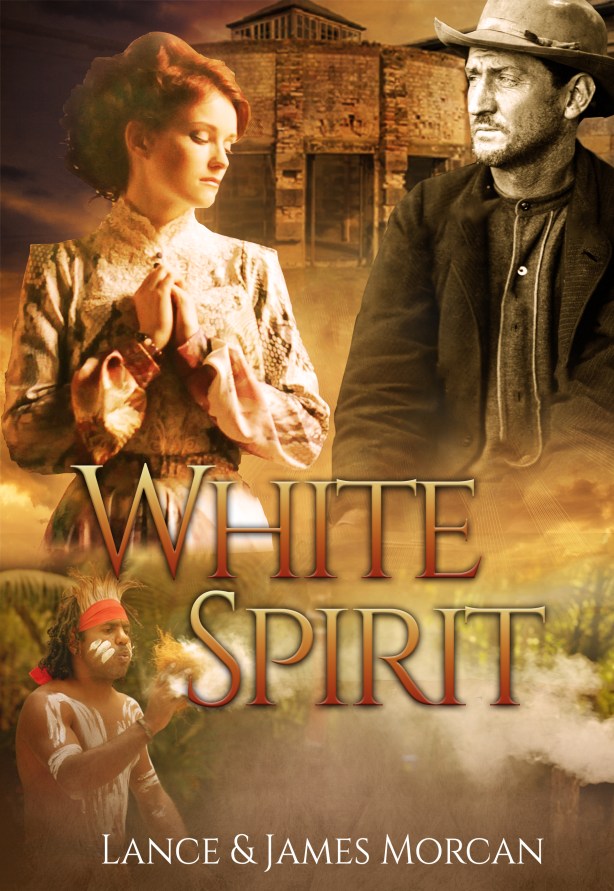
white-spirit-ebook-cover

White Spirit…the latest historical adventure novel from Lance & James Morcan.

WHITE SPIRIT (A novel based on a true story)  is exclusive to Amazon: https://www.amazon.com/White-Spirit-novel-based-story-ebook/dp/B01LWIRH9J/


************************************

Our new release book, WHITE SPIRIT (A novel based on a true story), was inspired by, arguably, the great Australian (true) story; it’s a sweeping tale that encapsulates all the nuances of the southern continent’s unique history, and it provides readers with detailed insights into the tribal life of First Australian (Aboriginal) peoples.

White Spirit (A novel based on a true story)

After escaping from the notorious Moreton Bay Penal Settlement, on Australia’s east coast, Irish convict John Graham finds refuge with the Kabi, a tribe of Aborigines who eventually accept him as one of their own.

Attempts to recapture Graham are orchestrated by a variety of contrasting characters working for the all-pervasive British Empire. They include Moreton Bay’s tyrannical, opium-addicted commandant Lord Cheetham, the dashing yet warlike Lieutenant Hogan, native tracker Barega and the penal settlement’s captain, Tom Marsden.

Marsden’s young daughter Helen, a progressive lady ahead of her time who is both an egalitarian and a feminist, boldly inserts herself into the clash between the Irish convict, her father and Moreton Bay’s other iron-fisted rulers. Helen complicates things further when she finds herself in a Pride and Prejudice-style love triangle with men on opposite sides of the conflict.

When Scottish woman Eliza Fraser is found shipwrecked and close to death in Kabi territory, Graham and his legion of pursuers, as well as the Irishman’s adopted Aboriginal family, are all forced to navigate a multi-faceted rescue mission. The precarious rendezvous is made all the more dangerous by Helen Marsden’s ethically-driven meddling that often outwits the men involved.

Image result for eliza fraser

Eliza Fraser…a name forever linked with convict John Graham.


WHITE SPIRIT (A novel based on a true story)  is exclusive to Amazon: https://www.amazon.com/White-Spirit-novel-based-story-ebook/dp/B01LWIRH9J/


************************************

Finding a worthy follow-up to our popular historical novel Into the Americas  was always going to be a challenge, but we believe we’ve achieved that with our new release historical adventure WHITE SPIRIT (A novel based on a true story).

  white-spirit-ebook-cover

Set in 19th Century Australia, White Spirit  is based on the adventures of Irish Convict John Graham who escaped the brutal Moreton Bay penal settlement in what was then New South Wales, and lived with a tribe of Aborigines who eventually came to accept him as one of their own.

This epic tale caters as much for lovers of romance novels as it does for action and adventure fans. A love triangle adds to the storyline’s tension.

It’s fair to say few have heard of John Graham. That’s surprising, to us at least, because John’s adventures in the wilds of an untamed Australia must surely rank with the most incredible true-life tales of survival. Not only Down Under, but anywhere in the world. Having both lived in Australia for many years, and having experienced first-hand the harshness of its climate and terrain, we, the authors, can only marvel at John’s bravery, endurance and fortitude.

Though White Spirit  is first and foremost a novel and therefore a work of fiction, many of the adventures described therein happened – exactly as related in some cases, and with some embellishments for drama’s sake in others.

In reality, John Graham’s story was so unbelievably remarkable it needn’t have been dramatized. However, as novelists, we couldn’t resist expanding upon and adding characters to certain true-life events. The great challenge, of course, was the need to always stay true to the broad historical realities while subtly infusing “fiction”.

We sincerely hope we have also done justice to the Indigenous Australians in our writing. We strived for accuracy and balance in our portrayals of these unique Aboriginal people; we show the cruelty the Aborigines were capable of, and we show their love for family, their community-mindedness, their incredible hunting and tracking skills, and their ability to survive in the most unforgiving of environments.


WHITE SPIRIT (A novel based on a true story)  is exclusive to Amazon: https://www.amazon.com/White-Spirit-novel-based-story-ebook/dp/B01LWIRH9J/


************************************

Following on from the success of Into the Americas  comes our latest historical adventure WHITE SPIRIT (A novel based on a true story), an epic work released today on Amazon.

White Spirit (A novel based on a true story)

A true-life tale of adventure.


Spanning 1,000 pages and based on the remarkable tale of an Irish convict, White Spirit  is an epic historical adventure set in 19th Century Australia. This novel is not only based on arguably the great Australian (true) story – a sweeping tale that encapsulates all the nuances of the southern continent’s unique history – it also provides readers with detailed insights into the tribal life of First Australian (Aboriginal) peoples.

 After escaping from the notorious Moreton Bay Penal Settlement, on Australia’s east coast, Irish convict John Graham finds refuge with the Kabi, a tribe of Aborigines who eventually accept him as one of their own.

Attempts to recapture Graham are orchestrated by a variety of contrasting characters working for the all-pervasive British Empire. They include Moreton Bay’s tyrannical, opium-addicted commandant Lord Cheetham, the dashing yet warlike Lieutenant Hogan, native tracker Barega and the penal settlement’s captain, Tom Marsden.

Marsden’s young daughter Helen, a progressive lady ahead of her time who is both an egalitarian and a feminist, boldly inserts herself into the clash between the Irish convict, her father and Moreton Bay’s other iron-fisted rulers. Helen complicates things further when she finds herself in a Pride and Prejudice-style love triangle with men on opposite sides of the conflict.

When Scottish woman Eliza Fraser is found shipwrecked and close to death in Kabi territory, Graham and his legion of pursuers, as well as the Irishman’s adopted Aboriginal family, are all forced to navigate a multi-faceted rescue mission. The precarious rendezvous is made all the more dangerous by Helen Marsden’s ethically-driven meddling that often outwits the men involved.


*


WHITE SPIRIT (A novel based on a true story)  is exclusive to Amazon: https://www.amazon.com/White-Spirit-novel-based-story-ebook/dp/B01LWIRH9J/


************************************

Our historical adventure Into the Americas (A novel based on a true story)  has just secured its 100th review and its 65th five-star review on Amazon.


Into the Americas (A novel based on a true story)

Novel resonates with reviewers.


Reviewer number 100, who headed their review “Housework Crusher,” says: “Yes, I said ‘housework crusher’. Instead of working on things I needed to have done, I wanted to sit and read the book. It has been some time since I have been so involved in a book. This was such an interesting book. At times I wondered what else could happen. Don’t forget to read the author’s note at the end. That was interesting as well.”

The review’s five-star rating gives the novel an average review rating of 4.5 stars, making it one of the more popular historical fiction novels on Amazon.

One of history’s greatest and yet least known true-life wilderness survival stories, Into the Americas  was inspired by the diary entries of young English blacksmith John Jewitt during his time aboard the brigantine The Boston  and also during his sojourn at Nootka Sound, on North America’s western seaboard, from 1802 to 1805. It will appeal to lovers of First Nations and Native American history.

To view all the reviews of this novel go to: http://www.amazon.com/Into-Americas-novel-based-story-ebook/dp/B00YJKM51E/

Available via Amazon as a paperback and Kindle ebook.


***************************************

A free copy of our new release paperback WORLD ODYSSEY (The World Duology, #1)  goes to the winner of a giveaway competition now running on the literary site Goodreads.com.


World Odyssey (The World Duology Book 1)

Be in to win…a free copy.


Set in the Nineteenth Century, World Odyssey  follows the fortunes of three young travelers as each embarks on an epic journey. Their dramatic adventures span sixteen years and see them engage with Native American Indians, Barbary Coast pirates, Aborigines, Maoris and Pacific Islanders as they travel around the world – from America to Africa, from England to the Canary Islands, to Australia, New Zealand and Samoa.

Ambitious American adventurer Nathan Johnson’s journey begins when he runs away to sea to escape a violent father. After surviving a shipwreck and enslavement by one of the indigenous tribes of America’s northwest, his stocks rise and he becomes a successful trader. When Nathan decides to visit Fiji to trade muskets to the natives, he doesn’t know it but his fortunes are about to change again.

Sheltered English missionary Susannah Drake’s journey begins after she agrees to accompany her clergyman father to Fiji to help him run a mission station there. They endure a nightmare voyage they’re lucky to survive. When Susannah finds herself sexually attracted to a young crewmember, she is forced to choose between her forbidden desires and the life her father has mapped out for her.

Irrepressible Cockney Jack Halliday’s journey begins when he steals hemp from an unscrupulous employer who owes him outstanding wages. For this he’s sentenced to seven years’ hard labor in the British penal colony of New South Wales. Jack escapes to Fiji only to be tracked down by a bounty hunter employed by the British Government to round up escaped convicts.

After traveling thousands of miles and experiencing the best and worst that life can offer, these three disparate individuals eventually end up in the remote archipelago of Fiji, in the South Pacific, where their lives intersect.

The intrepid trio’s adventures continue in Fiji: A Novel (The Word Duology, #2).


To win a copy of World Odyssey  paperback go to the Goodreads page at: https://www.goodreads.com/book/show/20300866-world-odyssey


*************************************