Posts Tagged ‘history’

In our true-life adventure novel Into the Americas, we relate how young Englishman John Jewitt and his fellow hostage Jonathan Thompson accompany their Mowachaht captors on a raid into the territory of the fierce Haachaht tribe of the Northwest Pacific.

Nootka Sound…Home to the proud Mowachaht tribe of Vancouver Island.

In the following excerpt from our novel, the Mowachaht raiders are ambushed by the Haachahts as they paddle up a river:

Callicum, the Haachaht chief, and three hundred of his warriors waited in ambush in the trees on the far bank. Most wore the distinctive and frightening wolf’s brow-mask, and all carried bows, spears, tomahawks and other traditional weapons. There wasn’t a musket in sight. However, what they lacked in fire-power they made up for in manpower and ingenuity.

On the near bank, directly opposite Callicum and his men, another hundred Haachahts waited. They, too, wore brow-masks and were similarly armed. Within their ranks, two strong, well-built bowmen stood some twenty yards apart. Each held a bow almost as long as himself. Their arrows resembled slim spears and were close to six foot long. A line trailed from each of their shafts. The lines were tied to the front edge of a huge, reinforced fishing net, which lay spread out on the ground between the two bowmen.

Both groups of Haachahts were visible to each other, but the dense undergrowth and foliage still hid them from the raiders even though their canoes were almost level with them.

At a signal from Callicum, the two bowmen opposite lay down on their backs, their knees bent and their moccasined feet raised skyward. After positioning their feet against the inside of their bows, they each loaded a long arrow and prepared to loose it toward the opposite bank. Even though they each used both hands to draw the mighty bows, the tremendous effort required caused their muscular arms to tremble. Their eyes were focused on a headman who stood midway between them and whose eyes, in turn, were focused on Callicum on the opposite bank.

The Haachaht chief now had his tomahawk raised high above his head. As the lead canoe drew level with his position, Callicum brought his tomahawk down.

At a nod from the headman opposite, the two bowmen gratefully released their long arrows in synch. Nearby, two more bowmen prepared to send a second net toward their enemies.

In the lead canoe, John and his fellow paddlers looked up as the huge net sailed above them, trailing behind the two spear-like arrows. The arrows buried themselves in the ground on the opposite bank and the net slowly floated down. It narrowly missed the lead canoe, settling over the one following and entangling its occupants.

Terrifying Haachaht war cries shattered the silence, and arrows and spears rained down on the Mowachahts. Most of those entangled in the net were quickly struck down as they struggled to disentangle themselves. Several scrambled overboard and tried to swim downstream, but they were quickly picked off by well-placed arrows. The canoe’s captain, Quasoot, was among the casualties.

The Mowachahts’ first thought was to use their muskets to fight off their enemies. They instinctively discarded their paddles and frantically began priming their muskets. As a result, the canoes bumped into each other and began drifting aimlessly in the current, their surprised occupants sitting targets.

Callicum had anticipated this and urged his bowmen to pick the disorganized Mowachahts off before they could wreak havoc with their muskets.

Maquina saw the danger immediately and exhorted his warriors to forget about their muskets for the moment and to paddle to the left bank where Callicum and his warriors happened to be. They responded straight away, retrieving their paddles and paddling furiously.

At the same time, another net sailed over the river and settled on a second canoe – this one captained by Toowin. Fortunately for Toowin and his fellow paddlers, one of the two arrows used had been misdirected, and so the net didn’t completely envelope the craft. Even so, the disruption it caused resulted in at least half the canoe’s occupants being killed or wounded. Toowin himself suffered a flesh wound when an arrow creased his chest.

As the remaining canoes closed with the far bank, they were met by a hailstorm of spears and arrows. Callicum’s warriors were trying to finish their enemies off before they could reach the shore. Mowachaht casualties mounted. Some of those who had been killed floated off downstream with arrows, and in one case a spear, protruding from them. Blood stained the water around them.

For one long moment, Maquina’s eyes locked with Callicum’s. The Mowachaht chief stood upright in the prow of his canoe. Ignoring the arrows that flew around him, he cursed his opposite. “Callicum, you treacherous dog!” he shouted. “I will personally cut out your heart!”

Callicum shouted something unintelligible back at his opposite.

Maquina was first to disembark. With no apparent concern for his own safety, he ran directly at Callicum, musket in one hand and club in the other. He used the latter weapon to effortlessly swat aside two Haachahts who made the mistake of not getting out of his way.

John and Thompson were among the next to disembark. As they scrambled up the bank, they fired their muskets at near point-blank range at the nearest Haachahts. Their hands were a blur as they primed their muskets and fired again. Identifying their enemy was made easy by the wolf brow-masks most of the Haachahts wore.

In anticipation of close-quarter fighting, Maquina had wisely ordered his fellow raiders to use shot, or pellets, as opposed to musket balls. John and Thompson were thankful for that as they loosed shot after shot at their enemies: each shot felled two or more Haachahts, so tightly were they congregated and so effective were the deadly pellets directed their way.

The whites were quickly joined by their fellow raiders who brought their own muskets into play. More Haachahts were struck down.

Chaos reigned. War cries, musket shots, curses, agonized screams, shouted orders and insults mingled in one deafening cacophony of sound; smoke from the constant discharge of muskets hung in the air, its acrid smell instantly recognizable; spears, arrows, tomahawks, axes and knives flew through the air as warriors grappled with their enemies in the woods, along the riverbank and even in the river; and all the while bodies piled up along the bank and in the shallows, and still more floated downriver.

You have been reading an excerpt from INTO THE AMERICAS (A novel based on a true story). The book is available on Amazon: http://www.amazon.com/Into-Americas-novel-based-story-ebook/dp/B00YJKM51E/

Into the Americas (A novel based on a true story)


*********************************

INTO THE AMERICAS (A novel based on a true story), the latest novel penned by New Zealand father-and-son writing team Lance and James Morcan, has entered Amazon’s bestseller lists, climbing into the top 10 Kindle ebooks in the crowded Action and Adventure category.

IntoTheAmericas ebook cover

Readers resonate with this top 10 book.

A gritty, real-life adventure based on one of history’s greatest survival stories, Into the Americas  was inspired by the diary entries of young English blacksmith John Jewitt during his time aboard the brigantine The Boston and also during his sojourn at Nootka Sound, on North America’s western seaboard, from 1802 to 1805.

It’s a tale of two vastly different cultures – Indigenous North American and European civilization – colliding head on. It is also a Romeo and Juliet story set in the wilderness.

To see what reviewers are saying about this top rating book go to: http://www.amazon.com/Into-Americas-novel-based-story-ebook/dp/B00YJKM51E/

****************************************** 

In the following excerpt from our new adventure novel Into the Americas, we describe trading between the Mowachaht tribe and unscrupulous white traders in Nootka Sound, on Vancouver Island, in the early 1800’s.
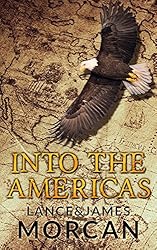
Into the Americas (A novel based on a true story)

In the skies above North America’s west coast, amongst the clouds, a bald eagle glided in lazy circles. With her magnificent white head and tail feathers, and her six-foot wingspan, she was the queen of her domain as she made use of the thermals that rose from the unseen terrain below.

The clouds parted to reveal a village – one of many populated by the indigenous people of the remote Northwest Pacific region. Nootka village was bordered by rugged, forest-covered hills which rose up out of the sea. Comprised of twenty or so large, wooden lodges, it was home to the Mowachaht tribe, one of the twenty-five Nuu-chah-nulth indigenous groups that occupied the region’s craggy coastline. A two-masted schooner lay at anchor offshore, safe for the moment in an inlet with the unlikely name of Friendly Cove.

Distance was no problem for the eagle whose sharp eyesight could distinguish any object from another, even if those objects were little bigger than a pinhead. Right now, her eyes were focused on a Chinook salmon swimming between the schooner and shore. The eagle flattened her wings and dove head first, extending her wings moments before she struck the water. Talons extended and now in a shallow dive, the eagle grasped the salmon and, with a few mighty beats of her wings, rose sluggishly skyward with her catch.

The eagle’s labored flight took her directly over the village. If any of the villagers had been waiting for her, with bow or musket primed, they’d have shot her down easily for she was as yet barely higher than the colorful totem poles that lined the shore. Fortunately for her, eagles were sacred to these people and so they ruled the skies with impunity.

A trade was going down with a dozen crewmen from the schooner. Unkempt and ill disciplined, the crewmen were typical of the freebooters who visited these shores in increasing numbers. They carried with them an assortment of weapons and were clearly no strangers to violence.

Armed Mowachaht warriors, ever-mindful of bad experiences they’d had with other European traders, kept a wary eye on the visitors. Most were armed with muskets, some carried blunderbusses and a few bore traditional weapons, including clubs, spears and tomahawks.

The traders had come to exchange muskets for sea-otter pelts. Much sought-after, the beautiful pelts fetched a princely sum in the civilized world – especially in London and in Macau, China. Consequently, Nootka village and the sound named after it was an increasingly popular port of call for traders intent on filling their ships’ holds with the bounty of the New World.

Most of Nootka’s fifteen hundred residents were present to observe the trade, which was being conducted on a sandy beach in front of the village. Trading, especially with visiting Europeans, was a highlight of their short, hard lives. More so after the long winter months – as was the case on this pleasant spring day.

Among the Mowachahts, the common or untitled people wore sealskin and coarse cedar bark clothing, which afforded protection from the constant rain in these parts. The chiefs and men and women of high ranking wore animal skins and colorful capes or, in rare cases, the pelt of the sea-otter.

Headmen invariably wore the striking black sea otter pelt. It extended to the knees and was fastened around the waist by a wide band of colorful, woven cedar bark. The warriors wore square-cut, yellow mantles with holes cut for the arms – similar to those worn by the commoners except theirs were dyed red and were more basic.

Absent from the trading activities were the Mowachahts’ slaves. Acquired in raids on neighboring tribes, the slaves were readily identifiable as such as they collected firewood and performed other menial tasks in and around the village. Though they spoke the same Wakashan language as their Mowachaht masters, their appearance was quite different: each bore the physical characteristics of his or her tribe. Some were lighter skinned, others darker; some were tall and slender, others short and stocky; some male slaves were bald or wore their hair short, others wore their hair in long ringlets; most wore raggedy sealskin clothing while some were near-naked. Their number included almost as many females as males – the former more often than not serving as sex slaves as well as manual workers.

Above the beach, the Mowachahts’ lodges extended to the tree line. They were a sprawling collection of wooden dwellings, the remnants of a Spanish trading outpost vacated some years earlier. Smoke from cooking fires curled up into the sky from strategically placed openings in the lodges’ roofs.

The totem poles – some even taller than the surrounding fir trees – towered over the lodges.

On the beach, there was an air of tension as the schooner’s master, Captain Alvin Walsh, an abrasive New Yorker with a well deserved reputation for dishonest trades, bargained with a group of headmen. Foremost among the latter was Maquina, chief of the Mowachahts. Tall, bronze and muscular, the middle-aged Maquina cut an impressive figure in his ceremonial cloak. Feathers protruded from his long, black hair, which he wore as a bun on top of his head. Like all the headmen, white down covered his head and shoulders, conveying the impression of falling snow.

Captain Walsh’s steely gaze was fixed on the bundles of pelts that lay at his feet while Maquina’s hawk-like eyes were fixed on a dozen new muskets stacked end-to-end in an open casket. The casket lay on top of five identical unopened caskets.

Hard-nosed bartering had begun soon after the traders had stepped ashore earlier in the day and, to both parties, it seemed a successful trade was no closer. Tempers were becoming frayed.

Maquina pointed at the caskets and, in broken English, said, “Maquina say…five pelts…one musket.”

Walsh shook his head. “One musket…ten pelts.” He appeared ready to depart, a shrewd strategy he’d fine-tuned years earlier when trading watered-down whisky to the East Coast tribes.

The chief quickly nodded to his opposite, indicating they had a deal. Walsh gestured to his men who immediately began scooping up bundles of pelts.

Maquina intervened. “Try musket first,” he said.

Walsh cursed under his breath as he motioned to his men to hold off for the moment. He then selected a musket from the open casket and handed it to Maquina. The shrewd chief ignored the offering and selected another musket. He expertly primed it and fired it into the air. The shot echoed throughout Nootka Sound. Still suspicious, Maquina broke open another casket. He tested a second musket with the same result. Satisfied, he made the faintest of hand gestures to his warriors who immediately uplifted the caskets and carried them away.

A relieved Walsh motioned to his men to resume gathering up the pelts. Under Maquina’s penetrating gaze, the captain appeared tense and he exhorted his men to hurry.

There was good reason for Maquina’s suspicion. The Mowachahts – like all members of the wider Nuu-chah-nulth community – had been short-changed, and worse, by European traders. As the number of visiting trading vessels increased, so too had the number of unsavory incidents. The indiscriminate shooting of villagers by drunk or disgruntled traders was becoming almost commonplace and the rape and mistreatment of women even more so.

And so it was with some malevolence that Maquina and his people observed these latest traders as they ferried their trade items back to the waiting ship.

You have been reading an excerpt from INTO THE AMERICAS (A novel based on a true story). To read more go to Amazon: http://www.amazon.com/Into-Americas-novel-based-story-ebook/dp/B00YJKM51E/

Into the Americas (A novel based on a true story)


******************************************

Membership of our lively ‘Underground Knowledge’ discussion group on Goodreads.com  has now topped 800, making it one of the fastest growing groups on the extraordinarily popular (Amazon-owned) literary site.

Goodreads: Book reviews, recommendations, and discussion

Our Underground Knowledge group is also one of the most active on Goodreads. Little wonder given many of the contentious topics under discussion…

A random sample of the group’s discussion threads follow. (Click on any links that appeal to view members’ comments):

Restructuring capitalism

The Queen’s position in modern Britain

Big Pharma & the Medical Mafia

Can we trust news media outlets?

The truth about international aid

November 22, 1963. Dallas, Texas.

Hurricane Katrina and African-American communities

The overpopulation myth (part 1)

Do 300 People Rule The World?

The multi-trillion dollar WW2 cover-up

(Profiting from) The War on Drugs

The Catcher mystery continues

Is the Islamic State (IS/ISIS) another invention of the West?

Finding (hiding) a cure for cancer

Earlier historical versions of Jesus Christ?

Are aliens visiting Earth or not????

Was 9/11 a false flag attack and ‘Inside Job’? 62% of you voted YES

Global Warming – is it real?

The US Military’s proposal to kill Americans

Banned books of the Bible

The political apathy of today’s youth

The Big Bang Theory – Debunked?

Obama, Murdoch & the Bush/Clinton clans

*

Our Underground Knowledge discussion group is aimed at those with an interest in the world we live in and a desire to learn or to uncover “underground knowledge” on important issues of our times.

Everyone’s welcome to join! All you need is an enquiring mind. Our members include scientists, social activists, teachers, historians, authors, military and intelligence agency personnel, bankers, housewives, whistleblowers, students, former police officers, one or two rednecks (we are trying to weed them out), doctors, a couple of busybodies (they’re okay), journalists, readers and many more.

Visit the group at: https://www.goodreads.com/group/show/142309-underground-knowledge—a-discussion-group


**********************************

We put it to the members of our ‘Underground Knowledge’ discussion group on Goodreads.com whether there’s evidence for the existence of scientifically advanced ancient civilizations in our past, and the feedback received shows that many of our members believe there’s evidence aplenty.

The Aroi Sun Kingdom of the Pacific- oldest ancient civilization in the world 

A random selection of members’ comments (names withheld) follows – the first four being from historians:

Perhaps if we dig deep for ancient civilizations other than those of which we are aware, we just might learn some things, some ways of life, that we seriously need to learn to evolve as better beings and less destructive beings.


Check out B E Dennis’ Crystal Skull Trilogy…a very interesting read. And a kind of related thought for those who are interested in past life regression: what might those uncover? If we are going to go exploring for truths we might consider every possible path to them. It would be interesting to see which of the “powers” individually and collectively, would object strenuously to such expeditions.


Wow, an interesting dialogue. As a college history major, I agree that there are agendas and mistakes. However, as you begin to move forward in a career in history, you have to be aware of the realities of the job. You can be brilliant, but if you are starving, you end up conforming.


For this discussion I would recommend Technology of the Gods: The Incredible Sciences of the Ancients. I am not familiar with this one but it might be of interest as well: The Anti-Gravity Handbook.


I think the best evidence for a scientifically advanced civilization is in Egypt. The precision machining of granite for sarcophagi, statues, etc. is perhaps better than we can do right now. Some people argue that we don’t have the technology to build the Giza pyramids or that it would at least take billions of dollars to achieve. I think there are some simpler explanations for many out-of-place artifacts, especially those found in rock that is apparently very old.


In several hindu scripts some surprising thing are found. the origin of universe as described in Rig veda is very much similar to the big bang theory! in epics like mahabharat we can find accounts about nuclear wars. I have heard that the ground in which the war was fought is absolutely barren and not a single grass grows there.


In Purana we can see that many vedic saints used to travel in flying machines. The question is why the ancient people have written about humans flying with gods? Moreover many priests used to worship god in one place at morning and in other place many kms away at evening. How they used to do that?


In 1513, a map was drawn by Piri Reis on Gazelle skin. The map shows the western coast of Africa, eastern coast of South America and northern coast of Antarctica. The most puzzling however is not so much how Piri Reis managed to draw an accurate map of Antarctic region 300years before it was discovered, but the map shows the coastline under ice. Latest day evidence confirms that Queen Maud land could have been in an ice free state is 4000BC. So the Piri Reis map shows the northern part of Antarctic before the ice did cover it. The question is was the map was drawn 6000 years ago? Then how did they do it as technology was not so good then.


In my opinion there are quite a few people in academia who have different ideas (in many subject areas), but are afraid to pursue them for fear of damaging their careers.


Look at how much resistance Robert Schoch got when he said the Sphinx had to be older because of the water weathering. Geologists who saw the evidence all agreed but Egyptologists had a hissy fit. Now we have Gobekli Tepe which shows that human civilizations were capable of complex projects at least 12,000 years ago. Also Gunung Padong and probably more sites will come to light.


Check out the various myths of the Lost Civlizations of the Ancients: https://www.goodreads.com/photo/group…


To read all the comments, or better still to have YOUR say, go to: https://www.goodreads.com/topic/show/2097990-evidence-for-scientifically-advanced-ancient-civilizations


Other Underground Knowledge discussion threads related to fringe science that may be worth checking out include:

Out-there science

10 (Rumored) Lost Or Suppressed Inventions

Pole Shift

The Big Bang Theory – Debunked?


***************************************

Membership of our lively ‘Underground Knowledge’ discussion group on the popular Goodreads.com literary site has now topped 700 — little wonder given the controversial nature of many of the topics being discussed!

Goodreads: Book reviews, recommendations, and discussion

Some of the more contentious discussion threads follow. (Click on any links that appeal to view members’ comments):

Is the Islamic State (IS/ISIS) another invention of the West?

Finding (hiding) a cure for cancer

Earlier historical versions of Jesus Christ?

Are aliens visiting Earth or not????

Was 9/11 a false flag attack and ‘Inside Job’? 62% of you voted YES

Global Warming – is it real?

The US Military’s proposal to kill Americans

Banned books of the Bible

The political apathy of today’s youth

The Big Bang Theory – Debunked?

Obama, Murdoch & the Bush/Clinton clans

Restructuring capitalism

The Queen’s position in modern Britain

Big Pharma & the Medical Mafia

Can we trust news media outlets?

The truth about international aid

November 22, 1963. Dallas, Texas.

Hurricane Katrina and African-American communities

The overpopulation myth (part 1)

Do 300 People Rule The World?

The multi-trillion dollar WW2 cover-up

(Profiting from) The War on Drugs

The Catcher mystery continues


*

Our ‘Underground Knowledge’ discussion group is aimed at those with an interest in the world we live in and a desire to learn or to uncover “underground knowledge” on important issues of our times.

Everyone’s welcome to join! All you need is an enquiring mind. Our members include scientists, teachers, historians, authors, military and intelligence agency personnel, bankers, housewives, whistleblowers, students, former police officers and many more.

Visit the group at: https://www.goodreads.com/group/show/142309-underground-knowledge—a-discussion-group


**********************************

In the Afterword for our book The Orphan Conspiracies, renowned historian and Professor of History at the University of Idaho, Dr. Richard Spence, puts a unique conspiracy theory spin on the story of Adam and Eve, suggesting they “got the boot because they dared to acquire forbidden knowledge and, if not stopped, might have achieved the ultimate prize of eternal life.”

Bible facts adam and eve 10 Interesting Bible Facts

Dr. Spence claims, “The (Garden of) Eden saga is also relevant because, if taken literally, it can be interpreted as the Ur-Conspiracy against the human race.”

Here’s the relevant excerpt from Dr. Spence’s Afterword:

“Seeing Adam and Eve driven from paradise, the agent of their ruin, the Serpent, aka the Devil, was moved to pity. He asked God if he might bestow upon these pitiful creatures a gift which would make their mortal suffering and that of their descendants a little easier to bear.

The Lord consented, and so the Serpent granted humankind the “blessing” of self-delusion: the inability to see themselves, the world or their state as they really were.

The trick, of course, is that neither would they be able to see God or the Devil for what they really were either.

The Eden saga is also relevant because, if taken literally, it can be interpreted as the Ur-Conspiracy against the human race. Basically, Adam and Eve got the boot because they dared to acquire forbidden knowledge and, if not stopped, might have achieved the ultimate prize of eternal life.

It was that which prompted God—or Gods since the divine conversation is always in terms of “we”—to nip things in the bud lest the upstart creations become “like us.”

It’s enough to make one wonder just whose side the Serpent was on. Or could it be that the Serpent was just God in disguise? Maybe we’ve been in the dark from the beginning.

Mythology, heresy or whatever, I’ve often thought the “Devil’s Gift” story explained the human condition pretty well. Whether the Serpent is to be blamed or thanked, the simple fact is that we do possess a tremendous capacity for deluding ourselves—and others.”


An author in his own right, Dr. Spence specializes in Russian, intelligence and military history, and his university course offerings include Modern Espionage, Anti-Semitism and the Holocaust, History of Secret Societies and the Occult in History.

Richard B Spence

Dr. Richard Spence.

Dr. Spence is also the author of numerous articles in Revolutionary Russia, Intelligence and National Security, International Journal of Intelligence and CounterIntelligence, The Historian, New Dawn and other publications.

He has served as a commentator/consultant for the History Channel and the International Spy Museum and was a key consultant-interviewee for the Russian Cultural Foundation’s 2007 documentary film, “Leon Trotsky: The Secret of World Revolution,” and its subsequent “Trap for the Tsar.”

Read more in The Orphan Conspiracies: 29 Conspiracy Theories from The Orphan Trilogy – available via Amazon at: http://www.amazon.com/The-Orphan-Conspiracies-Conspiracy-Theories-ebook/dp/B00J4MPFT6/

We have opened this and other controversial topics up for debate in ourUnderground Knowledge’ discussion group on Goodreads. More members welcome! Go to: https://www.goodreads.com/group/show/142309-underground-knowledge—a-discussion-group


Reader response to the Afterword in our book THE ORPHAN CONSPIRACIES: 29 Conspiracy Theories from The Orphan Trilogy has prompted us to run it here, in full, in the hope it will prompt further enlightened thought and debate. 

Penned by American author and Professor of History at the University of Idaho, Dr. Richard (Rick) Spence, the Afterword provides a thought-provoking conclusion to our book. 

Richard B Spence

Historian Dr. Richard Spence 

Dr. Spence is well qualified to comment on conspiracy theories. At the University of Idaho, where he has taught since 1986, he specializes in Russian, intelligence and military history, and his course offerings include Modern Espionage, Anti-Semitism and the Holocaust, History of Secret Societies and the Occult in History.

Here’s Dr. Spence’s Afterword (unabridged): 

Someone, I honestly can’t recall who, once told me an apocryphal anecdote which is a kind of epilogue to the biblical tale of the Garden of Eden and the Fall of Man. According to this, upon seeing Adam and Eve driven from paradise, the agent of their ruin, the Serpent, aka the Devil, was moved to pity. Or so he claimed. He asked God if he might bestow upon these pitiful creatures a gift which would make their mortal suffering and that of their descendants a little easier to bear. The Lord consented, and so the Serpent granted humankind the “blessing” of self-delusion: the inability to see themselves, the world or their state as they really were. The trick, of course, is that neither would they be able to see God or the Devil for what they really were either. 

The Eden saga is also relevant because, if taken literally, it can be interpreted as the Ur-Conspiracy against the human race. Basically, Adam and Eve got the boot because they dared to acquire forbidden knowledge and, if not stopped, might have achieved the ultimate prize of eternal life. It was that which prompted God—or Gods since the divine conversation is always in terms of “we”—to nip things in the bud lest the upstart creations become “like us.” It’s enough to make one wonder just whose side the Serpent was on. Or could it be that the Serpent was just God in disguise? Maybe we’ve been in the dark from the beginning. 

Mythology, heresy or whatever, I’ve often thought the “Devil’s Gift” story explained the human condition pretty well. Whether the Serpent is to be blamed or thanked, the simple fact is that we do possess a tremendous capacity for deluding ourselves—and others. A prime example is the multitude of “conspiracy theories” James and Lance Morcan have presented in this book, theories that range, arguably, from the patently absurd to the disturbingly plausible. Notice that I’m not making a distinction as to which are which or who is deluding who. That’s up to you. 

For some years now I’ve offered a course at my university titled “Conspiracies and Secret Societies in History.” Its basic goal, much like this book, is neither to advocate nor debunk, but to make people aware of what ideas and groups exist (or have existed) and what facts there may be to support or refute them. I’ve sometimes described it as a course in modern heresy or even in the nature of reality. A key theme is that human history, behavior and reality are governed not by what we know but by what we believe. Here’s a simple example: we all have fathers and most of us know who our fathers are. Or we believe we do. Ultimately both we and our fathers are taking our mother’s word for it, which doesn’t exclude the possibility that even she is mistaken. Ah, you say, but what about DNA tests? That supposes such tests actually prove what they claim which is yet another thing you must take on faith. I’m going to guess that you’ve not had a DNA test, nor do you see any reason why you should. That’s doubtless a sound belief, but nevertheless a belief that in a small number of cases is dead wrong. Paternity is almost always an assumption, not a fact. That’s an unsettling thing to consider, so maybe it is best ignored. Just like so many bigger, unsettling possibilities mentioned in The Orphan Conspiracies. 

The authors make frequent reference to the “Tinfoil Hat Network,” which is a convenient name for those folks who believe in things that presumably more rational minds find, well, nutty. However intrinsically loony an idea may be, when people believe it, and act on that belief, it attains a power that can shape reality around it. A simple case in point is Nazi anti-Semitism. The fringe and utterly bogus notion that Jews represented a kind of biological contamination that had to be eradicated root and branch became the operative philosophy of a political regime and as a result millions of people died. Maybe the most dangerous thing about the “Illuminati” isn’t that such a master cabal has ever existed, but that some people believe it should and wreak havoc under the delusion they run the world. Likewise, something discussed extensively in this book, Jim Jones and Jonestown, was, at the very least, a case of people believing so much in a crackpot messiah that they were willing to kill themselves, and often their children, on his command. And, remember, that’s the least of the horror stories that can be built around the Jonestown massacre. The alternatives are even more disturbing. 

So how can we determine what’s real and what’s not? We can’t. We can just pick and choose what we want to believe and rationalize it as best we can. Reality, after all, is basically a movie projected inside our heads. It’s based on the colors our senses permit us to see, the sounds they permit us to hear and whatever else our brains let slip through the gates. But outside our limited senses, surrounding us, there is, unquestionably, a much greater reality, a universe we live in but cannot see. Well, most of us, anyway. Out there, in the dark, All Things Are Possible.

An author in his own right, Dr. Spence’s published works include Boris Savinkov: Renegade on the Left (East European Monographs/Columbia Univ. Press, 1991), Trust No One: The Secret World of Sidney Reilly (Feral House, 2002) and Secret Agent 666: Aleister Crowley, British Intelligence and the Occult (Feral House, 2008).

Product DetailsProduct DetailsProduct Details

Some of the books by Dr. Richard Spence.

Dr. Spence is also the author of numerous articles in Revolutionary Russia, Intelligence and National Security, International Journal of Intelligence and CounterIntelligence, The Historian, New Dawn and other publications. He has served as a commentator/consultant for the History Channel and the International Spy Museum and was a key consultant-interviewee for the Russian Cultural Foundation’s 2007 documentary film, “Leon Trotsky: The Secret of World Revolution,” and its subsequent “Trap for the Tsar.”

Read more in The Orphan Conspiracies: 29 Conspiracy Theories from The Orphan Trilogy – available now via Amazon at: http://www.amazon.com/The-Orphan-Conspiracies-Conspiracy-Theories-ebook/dp/B00J4MPFT6/

Conspiracies

 Out there in the dark, all things are possible!


****************************************************

Outrunning the conscious mind

Brain-waves-2


In our conspiracy thriller series THE ORPHAN TRILOGY, in which 23 genetically-enhanced orphans are raised to become elite spies, we make an assumption that advanced learning techniques are not being taught in the mainstream education system. In fact, we go beyond that and question whether superior learning methods are being withheld from today’s students – or, more to the point, being reserved for select individuals.

Fantasy, you say?

Well, let’s examine that…

It has long been speculated that secret societies, mystery schools, intelligence agencies and other clandestine organizations have advanced learning methods superior to anything taught in even the most prestigious universities. Methods which are only ever taught to the chosen few – initiates who have all sworn an oath to keep the group’s syllabus in house and never reveal any of the teachings to outsiders.

In The Ninth Orphan, book one in our thriller series, our protagonist Nine (the ninth-born orphan) is a pure genius who exhibits a level of intelligence rarely if ever seen in any character in literature. He has a photographic memory, can read entire books in five minutes flat and speaks dozens of languages. Plus he learns new skills extremely fast and is highly adaptable – so much so that he’s nicknamed the human chameleon.

How Nine reached that level of intelligence, though, is merely implied or hinted at in this first book in the series.

In its prequel, The Orphan Factory, we had to design an education system that would reveal exactly how Nine grew up to become that smart. He and his fellow orphans are exposed to advanced learning techniques mainstream educators can only dream of.

Outrunning the conscious mind was one such technique. We explain it in our book THE ORPHAN CONSPIRACIES: 29 Conspiracy Theories from The Orphan Trilogy.

Here’s an excerpt from the book:

Developing a genius mindset essentially comes down to two things: operating at speed and using the subconscious mind more than the conscious. This intuitive or relaxed approach to study is the polar opposite of traditional and mainstream forms of education. Apart from some artistic subjects like music or dance, learning institutions generally require pupils to concentrate hard at all times. In other words, students have no choice but to always use their conscious minds, thereby suppressing the great reservoir of the subconscious.

How to increase brain power

When we are forced to think s-l-o-w-l-y like this our brain functions at well below optimum levels. That’s why school students often feel exhausted as studying in this fashion is incredibly draining. But how can we feel mentally drained when neuroscientists and brain researchers agree we each only use a tiny percentage of our brain?

Those who have read The Orphan Trilogy will recall our orphans often go into a daydream state whenever they need answers to life-and-death situations. This is because when you defocus you allow your intuitive self, or your subconscious mind, to deliver you the answers you need. It just happens, without reaching for it.

We’ve all experienced pondering a problem all day long only to find we receive the solution when forgetting about the problem and thinking of something else. When we stop concentrating so hard, we allow our subconscious to flourish, and those who do this more than others are often called geniuses.

As head of the Pedemont Orphanage, Tommy Kentbridge says to his students in The Orphan Factory, “The subconscious mind is where all higher intelligences exist. Every genius throughout history – Tesla, Einstein, Da Vinci – tapped into the infinite power of their subconscious minds.”

Studies have shown the subconscious mind can process around 11 million bits of information per second. The conscious mind, however, can only process about 15 to 16 bits of information per second. Quite a difference!

Brain power!

One of the best ways to bring the subconscious mind into the equation is to outrun the conscious mind by going so fast it literally can’t keep up. So, at Chicago’s Pedemont Orphanage, our orphans do everything at speed. They’re also taught how to learn things indirectly instead of directly. By skirting around the edges of complex subjects, the children never get information overload or lose their way.

As we wrote in The Ninth Orphan, “In the tradition of Leonardo da Vinci and history’s other great polymaths, the children were taught how to fully understand anything by using an advanced mental technique where they would simply life their minds into comprehension.”

To life your mind into comprehension is once again the polar opposite of modern education systems which imply there’s only one way to learn: consciously and with intense concentration.

While this indirect way of learning may sound flaky, it is actually backed up by hard science and is not remotely mystical. This approach is about brainwaves and understanding, or recognizing, the optimal state for learning. When you hit the right groove, it’s possible to learn quickly and in a satisfying, even enjoyable, fashion.

It is that singularity of mind top sportsmen and martial arts masters achieve. Psychologists sometimes refer to this ultimate mental state as the zone, but it’s really just about having the most effective brainwaves for learning.

Any time study feels laborious the student is most likely in the beta brainwave, which occurs when the conscious mind is governing. A beta-dominant mind is the perfect recipe for mediocrity and boredom.

The subconscious mind comes into play in other less common brainwaves such as alpha, gamma, theta and delta. These brainwaves have also been shown to be activated when test subjects are laughing, daydreaming, meditating, singing, dancing or spontaneously moving about. Now how many math or English teachers would tolerate those activities in their classrooms?

What if there really is a much quicker, less methodical way of learning that allows you to learn without learning?

Sounds paradoxical, doesn’t it?

Read more in The Orphan Conspiracies: 29 Conspiracy Theories from The Orphan Trilogy – available now via Amazon at: http://www.amazon.com/The-Orphan-Conspiracies-Conspiracy-Theories-ebook/dp/B00J4MPFT6/

A book that’s for the common people...the 99%

**********************************************************


In the Afterword for our new release book The Orphan Conspiracies, renowned historian and Professor of History at the University of Idaho, Dr. Richard Spence, points out that the multitude of “conspiracy theories” we present is “a prime example that we (humankind) do possess a tremendous capacity for deluding ourselves—and others.”

Richard B Spence

Dr. Richard Spence.

Dr. Spence asks, “So how can we determine what’s real and what’s not?”

His answer: “We can’t. We can just pick and choose what we want to believe and rationalize it as best we can. Reality, after all, is basically a movie projected inside our heads. It’s based on the colors our senses permit us to see, the sounds they permit us to hear and whatever else our brains let slip through the gates. But outside our limited senses, surrounding us, there is, unquestionably, a much greater reality, a universe we live in but cannot see. Well, most of us, anyway. Out there, in the dark, All Things Are Possible.”

Dr. Spence is well qualified to comment on such matters. At the University of Idaho, where he has taught since 1986, he specializes in Russian, intelligence and military history, and his course offerings include Modern Espionage, Anti-Semitism and the Holocaust, History of Secret Societies and the Occult in History.

An author in his own right, his published works include Boris Savinkov: Renegade on the Left (East European Monographs/Columbia Univ. Press, 1991), Trust No One: The Secret World of Sidney Reilly (Feral House, 2002) and Secret Agent 666: Aleister Crowley, British Intelligence and the Occult (Feral House, 2008).

Product DetailsProduct DetailsProduct Details

Some of the books by Dr. Richard Spence.

Dr. Spence is also the author of numerous articles in Revolutionary Russia, Intelligence and National Security, International Journal of Intelligence and CounterIntelligence, The Historian, New Dawn and other publications. He has served as a commentator/consultant for the History Channel and the International Spy Museum and was a key consultant-interviewee for the Russian Cultural Foundation’s 2007 documentary film, “Leon Trotsky: The Secret of World Revolution,” and its subsequent “Trap for the Tsar.”

Read more in The Orphan Conspiracies: 29 Conspiracy Theories from The Orphan Trilogy – available now via Amazon at: http://www.amazon.com/The-Orphan-Conspiracies-Conspiracy-Theories-ebook/dp/B00J4MPFT6/

Product Details


Not all is what it seems! –James & Lance


****************************************************