Hi
Welcome to Morcan Books & Films, the blog devoted to providing a unique perspective and intelligent commentary on books and films. It includes commentary on our own books and films – i.e. novels and screenplays co-written by the Morcans, and feature films produced by, or in development with, Morcan Motion Pictures.
Lance & James
ANNO 2020 the movie has echoes of SOUND OF FREEDOM in that it addresses a subject some would prefer remain hidden. Self-appointed censors tried to ban that film. Will they try to ban this one, too?
ANNO 2020 was directed by Kiwi director James Morcan who also adapted the screenplay from his published novel of the same name.
“All roads lead back to 2020”
As this trailer for my recently completed feature film Anno 2020 alludes to, I believe the year 2020 will go down one of the most important years in all of human history. So many of our freedoms were lost in the name of a virus to “keep us safe”…Freedoms that were taken from us by supposedly altruistic politicians who avoided any meaningful consultation with the public… This circumventing of democracy has set a dangerous precedent and spiralled into numerous other injustices occurring now… For many citizens, all the intricacies of 2020 are only now being understood in hindsight, for hindsight is always 20/20…
Anno 2020 has been a 3 year book-to-film passion project for me…It started with writing a novel during 2020 to try to personally make some sense of what was happening to the significantly altered world I was observing. Then over 2021 we shot that novel’s film adaptation in 17 cities, 5 countries and 4 continents (using creative techniques to film while the world remained mostly in strict lockdown). Lastly, over 2022 and some of 2023 was the massive editing process.
As we finally now present this one-of-a-kind, epic movie to the world, I’d like to thank my incredible team around the world who made it all possible. Many of their names are in the end credits of trailer, the rest are all listed on IMDb at https://www.imdb.com/title/tt13455748/
Distribution enquiries welcomed. -James Morcan, Director-Screenwriter
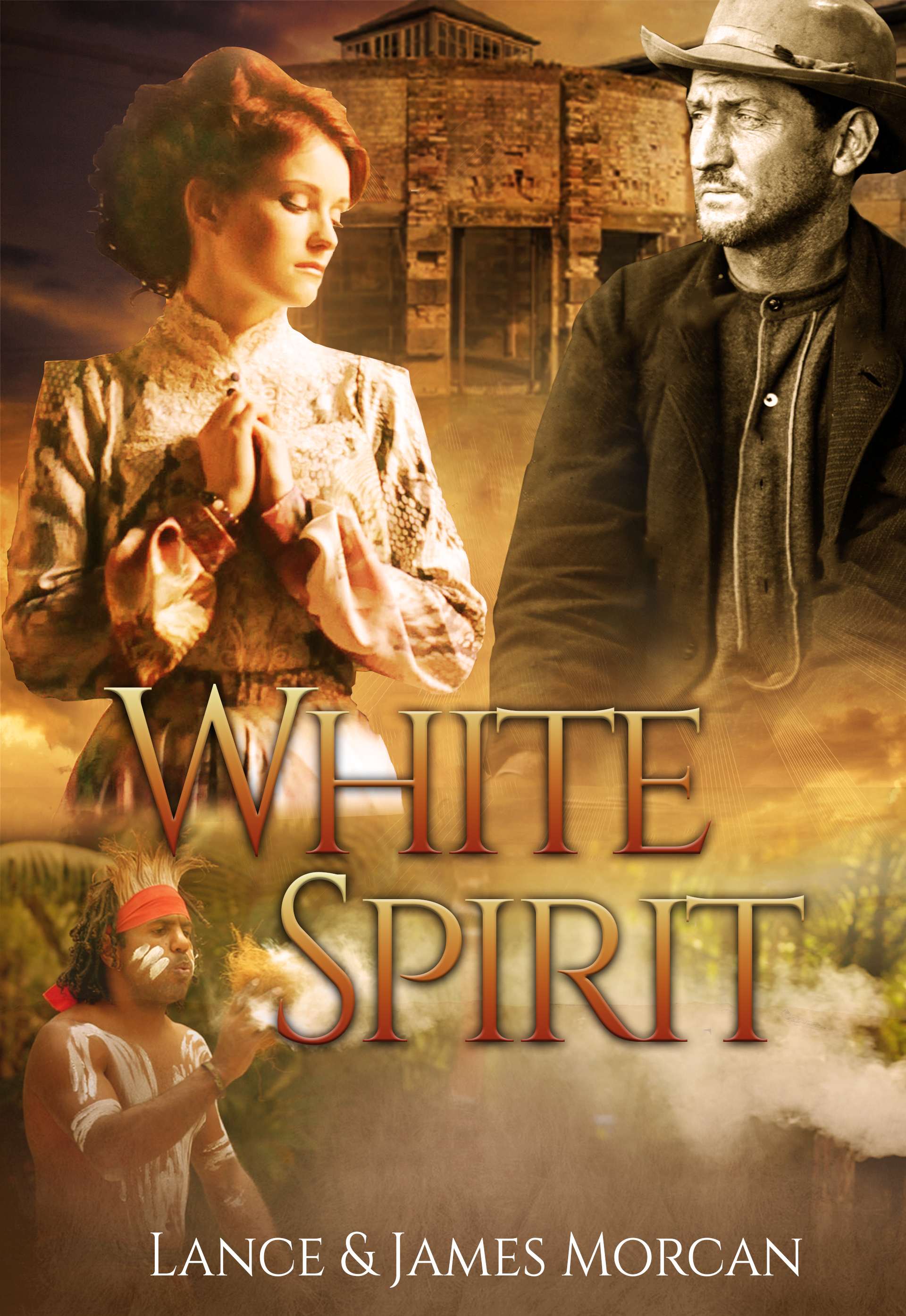
Under the heading “Penal colonies in Australia come to life in an outstanding work of Historical Fiction,” respected US book critic Howard Lipman, PA, has this to say about our adventure-romance novel WHITE SPIRIT (A novel based on a true story):
“The Morcan team, Lance and James, invite us to consider the convict colonies of Australia, a little-known story for this American reader. The harsh cruel and brutal treatment of the inmates amidst an unforgiving climate, and environment reminds us how monstrous one group of human beings can be to another, but there is so much more to be considered in this very fine novel. (Cont’d below)…
“I didn’t realize what the Aboriginals of that time were like, and the insights that the Morcans present show initially that they ran the gamut between peaceful Spiritual tribes like the Kobi, to warring tribes and single individuals like ‘Tracker’ who have made themselves indispensable to the British. The Opium-taking, philandering Lord Cheatham, the ‘Commandant’ of the penal colony is a piece of work and amongst others if his kind is an unforgettable villain. There are certain compelling, merciful individuals in all of the cultural groups presented, from the British Military, the Convicts, the Aboriginals and more.
“John Graham, one of the strongest-willed of the convicts, Captain Tom Marsden, Moilo and Mambo of the Kobi Tribe stand out for me. Indeed this is really the story of John Graham, a convict who escapes, eventually finding refuge within the Kobi Tribe that accept him as one of their own. It’s a story that doesn’t pull any punches when describing the wretched conditions of the men in the penal colonies, but hope and spirituality are also presented within John’s joining of the tribe and his other experiences.
“I’ve read the Morcans’ work before, but consider this book to be one of the finest pieces of historical Fiction that I’ve ever read. Though based on a true story, it makes for a wonderful Historical narrative. Five stars, and two thumbs up for this outstanding work of Historical Fiction.”
New Zealand: A Novel, by Lance Morcan, spans almost 500 years and covers the respective discoveries of New Zealand by Maori and European. It starts in the 1300’s with the departure of Pacific Islanders from Hawaiki in search of land far to the south; it ends in the 1700’s with Captain James Cook’s historic circumnavigation of that same land – a land he calls New Zealand – as seen through the eyes of young crewmember Nicholas Young aboard the bark Endeavour. From the outset the two stories are interposed. The adventures of the descendants of the earliest Maoris are followed down through the centuries, culminating in their often violent, sometimes romantic, always fascinating interactions with the white intruders they call pakehas.
New Zealand… the land that time forgot.
Shrouded in cloud at the bottom of the world, this was the land that time forgot: the last sizeable piece of undiscovered land on Earth. Two hundred million years after breaking away from the vast southern continent of Gondwana, Man had yet to leave his footprints on this prehistoric place.
Mythology would have it the land was fished up out of the ocean. In fact, earthquakes and volcanic activity forced it to literally erupt from the sea bed. This violent birth left it with a majestic ruggedness that would always reflect its former turbulence. The legacy of those fiery beginnings includes still-active volcanoes amidst the mountain chains that dissect the land.
Over time, its features softened. Scenes of beauty emerged out of the mists. There was a haunting stillness about the land. It was a place of mystery – of magical forests and sparkling lakes and rivers.
And the sea surrounded it – like some huge tidal moat.
Its isolation ensured it wouldn’t be until well into the First Millennium AD that Man would step foot on these shores. The brown-skinned people who settled here would call their new home Aotearoa – land of the long, white cloud. Not until its rediscovery centuries later by European explorers would the land receive the name by which it is known today…
New Zealand – aptly named by some as Aotearoa…Land of the long white cloud.
Author’s note:
Target audience for New Zealand: A Novel is adult readers; manuscript word count is 103,000 words. Genres include historical fiction, adventure, romance.
Given the increasing worldwide interest in New Zealand and the fascination over its indigenous people, I believe the timing couldn’t be better for this novel. While it has the lust and violence associated with those pre-European and Colonial times, New Zealand: A Novel has strong themes of love and romance, which will endear it to female readers as well as male.
–Lance Morcan
Excerpt:
The following excerpt from New Zealand: A Novel sees the surviving Hawaikan voyageurs reach their destination at the end of a gruelling six-week journey from their South Pacific homeland.
“I see land!” Rangi shouted triumphantly, leaping to his feet.
“Where?” Hotu demanded.
“There!” the excited navigator said, pointing directly southwest.
Kafoa was wide awake now. He pushed himself to his feet and squeezed between the two men, searching the horizon for a glimpse of land.
Hotu said, “Yes! I see it!”
Rangi adjusted the tiller until the canoe pointed slightly more to the west.
Others gathered around, aroused by the sudden commotion.
Kafoa strained his eyes, but could see only sky and ocean. “Where is it?” he implored. “I cannot see anything!”
Hotu smiled. “Look for the signs and you will see it.”
Kafoa scanned the horizon, looking for any one of the signs he had memorised by heart. He absentmindedly massaged the stub of the extra small finger on his left hand as he studied the sea and sky around him. Finally he saw what the men had seen. Low on the horizon, at the limit of his vision, was a large landmass resting beneath a long white cloud. Studying the distant landmass, he murmured, “Aotearoa.”
Hotu nodded. “Aotearoa,” he agreed, “land of the long white cloud.”
Kupe’s land now had a name.
#
The excitement aboard Ronui was unrestrained as the landmass now referred to by all as Aotearoa came into clear focus beneath the umbrella of cloud. Everyone who could stand was standing. The only voyagers not on their feet were those too weak to stand.
Hotu was now manning the tiller. His heart beat fast. Here at last was Kupe’s land! Tears filled his eyes and he murmured a prayer of thanks to the spirits of his Hawaikan ancestors. This land, their land, would be his people’s salvation. Of that he was sure.
From around twenty miles out, the land appeared dark and mysterious in the shadow of the cloudbank above it. Forbidding even. The sight had a sobering effect on the voyagers. All conversation ceased as they studied their new homeland.
Hotu glanced down at Kafoa who hadn’t left his side since the first sighting. Overcome with love for the boy, he reached down and ruffled his hair yet again. Kafoa looked up and smiled at the father he idolised.
As Ronui sailed onwards, floundering deeper than ever in the water, the land mass ahead slowly took shape. It was high – higher than the tropical islands of the Pacific – and it was covered in dense, lush, green bush.
Although still too far away to ascertain, the land appeared to be unoccupied, and some sixth-sense told Hotu it was. Which meant he and his fellow survivors would be the only people on these shores. He wondered what had become of Kupe’s fellow voyagers all those centuries ago.
Hotu’s mind returned to the present and he realised the bigger question was what had happened to Ra and the others aboard Tautira. He prayed they were safe.
#
By mid-afternoon, the clouds lifted and Aotearoa was bathed in brilliant sunshine.
The Hawaikans were close to shore now. They scrutinised every feature of their new land. Ahead of them breakers crashed against impressive white cliffs that rose straight out of the sea. The clifftops were fringed by trees whose distinctive flowers blazed scarlet under the summer sun. Kafoa thought it likely the branch that was recovered from the sea came from one of those very trees.
Hotu was anxious to find a suitable landing place before nightfall. It was the ever-vigilant Rangi who brought his attention to a bay slightly to the north of where they were heading.
“Over there!” the navigator said, pointing to a crescent-shaped bay.
“Uh,” Hotu confirmed, steering the canoe toward the bay. A prominent headland at the bay’s southern end guarded the entrance to it.
The rocky shoreline gave way to a white-sand surf beach. Calm water and only the faintest of breezes aided an uneventful beaching. After such a long and dramatic voyage, the landing seemed almost an anti-climax to the exhausted survivors.
Kafoa was first to disembark, jumping from the canoe into the shallows. In a few strides he was standing above the high tide mark on the beach, his hunger pangs and tiredness forgotten for the moment. One by one, the other survivors joined him.
The descendants of Kupe had come home.
Hotu prayed that Ra and the others aboard Tautira had also arrived safely. He had no way of knowing they would soon land on a similar beach several hundred miles to the north.
It would be two centuries before the descendants of these separated peoples would meet, and when they did, it would not be as friends but as mortal enemies.
The Hawaikans survived daunting odds to reach Aotearoa circa 1300 AD.
Captain Cook’s bark the Endeavour off New Zealand’s coast (above) and an adaptation of Cook’s map of New Zealand (below).
Our Underground Knowledge global discussion group’s membership has topped 16,000 on Goodreads, confirming its status as one of the fastest-growing, most popular groups on the Amazon-owned site for books, authors, readers and all things literary.
The group has been designed to encourage debates about important and underreported issues of our era. All you need is an enquiring mind and a desire to gain or share underground knowledge.
So what is underground knowledge? Our definition is: Underground knowledge covers details, concepts and little-known events not usually reported in mainstream media (MSM), or, if they are, they’re underreported for various reasons. Nor are they usually covered by mainstream academia.
Our Underground Knowledge group is open to everyone no matter your beliefs or nationality, and all viewpoints are welcome. Undergrounders (our members) come from many walks of life and include award-winning authors, everyday readers, teachers and students, historians, scientists, military and former intelligence personnel, conspiracy theorists and agitators, Christians and non-believers, Islamists and Buddhists, and a lot more.Y’all welcome!
My inspiration for this short story was the real-life abduction by Maori of a young white girl who happened to be one of two identical twins living in 19th Century New Zealand. The girl’s bereft father spent years unsuccessfully searching for his missing daughter.
That true story had a happy ending many years later after a chance sighting in Wellington saw the separated twins reunited. It turned out the abducted sister had been raised as a Maori by the tribe that had taken her; she’d had two loving husbands, both Maoris, and had children by them both; she spoke fluent Te Reo Māori and had no desire to return to her previous life.
In Once were Brothers, seven-year-old Daniel Thomas is abducted from the family farm in New Zealand’s Far North by Maoris opposed to the presence of white settlers. Daniel’s father devotes his remaining years to searching for his missing blue-eyed, blond-haired son. Until his death a decade later, he’s assisted in his search by Daniel’s identical twin brother Benjamin.
Twenty years later and now a family man himself with children of his own, Benjamin receives a tip-off that could confirm one way or another whether his brother is alive or dead.
Yamashita’s Gold, alleged stolen treasure squirreled away by the Japanese during their occupation of the Philippines in WW2, was named after General Tomoyuki Yamashita. We devote a chapter to this intriguing rumor in our book The Orphan Conspiracies.
Yamashita’s Gold… Fact or fiction?
The war loot, also known as Yamashita’s Treasure, is said to have been hidden in caves and underground complexes throughout the islands of the Philippines.
Existence of these treasures remain unconfirmed by the Japanese, Filipino and all other authorities in Asia and the West to this very day. However, most international investigators – Asian investigators included – believe Yamashita’s Gold exists, or existed, at least to some degree. Their belief is supported by a Hawaii Supreme Court finding in 1998 and a subsequent US Ninth Circuit Court of Appeal ruling, and we reveal those legal bombshells late in the chapter.
Between Japanese army records, international court hearings, eyewitness accounts and treasure finds throughout the Philippines over the decades following WW2, there seems to be more than enough substance to build a case for the existence of Yamashita’s Gold.
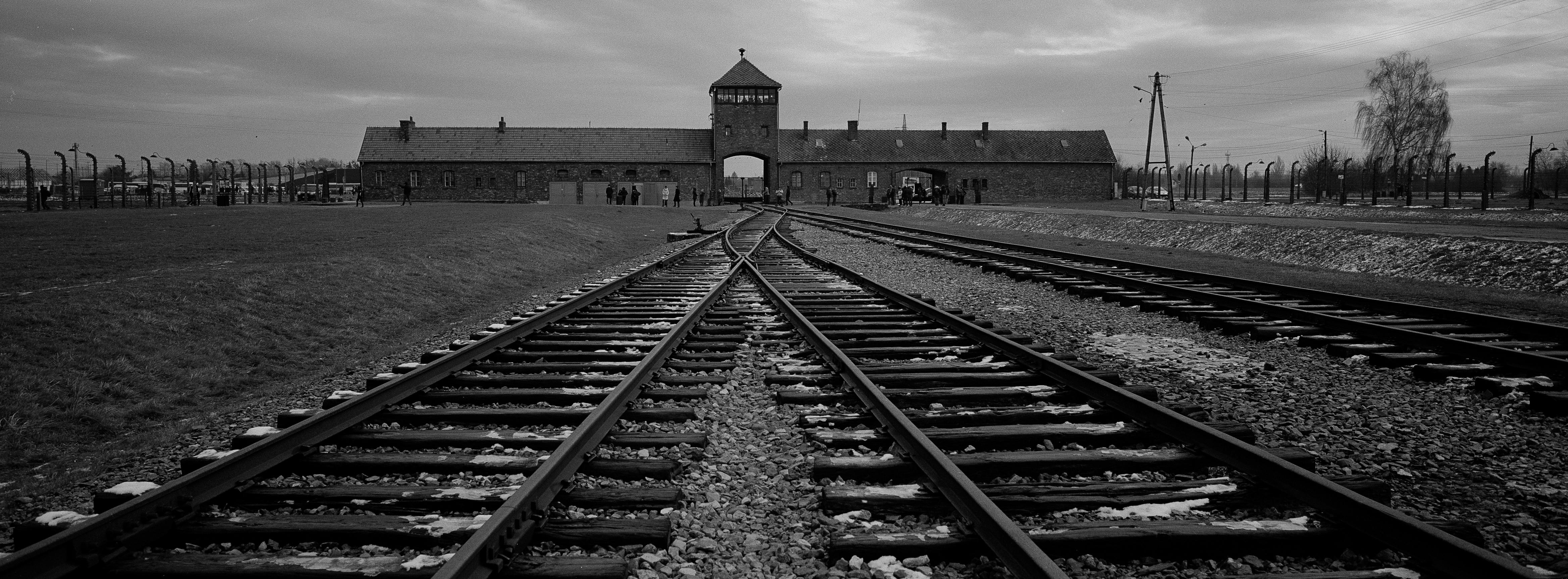
Although eugenics flourished in Nazi Germany, the ideal of a blond-haired, blue-eyed master race wasn’t Adolf Hitler’s. In researching one of our books, we discovered that American eugenics policies inspired eugenics programs in Nazi Germany. If that’s not disturbing enough, during the early days of the Third Reich, American eugenicists publicly praised Hitler’s plans to introduce and enforce sterilization of “unsuitable people” and other such eugenics policies!
Auschwitz a symbol of Hitler’s eugenics program.
In Mein Kampf, Hitler credited America with helping formulate his ideas on eugenics, and he admitted he’d studied the laws of US states to familiarize himself with selective reproduction and other eugenics issues.
Funding also flowed from the US to Nazi Germany for eugenics programs. For example, The Rockefeller Foundation financed numerous German eugenics experiments, including one that Josef Mengele worked on before he carried out his notorious human experimentations in Auschwitz.
In America, eugenics often targeted minority ethnicities. Early last century, 31 US states legalized sterilization of those deemed genetically inferior, especially psychiatric patients. And Nobel-prize winning electronics pioneer, eugenics advocate and notorious racist, Dr. William Shockley, proposed to pay black persons with IQ’s lower than 100 a cash incentive of $1000 to have themselves sterilized.
“These are stories that plead to be films!” That’s Amazon Hall of Fame Top 100 reviewer Grady Harp’s assessment of the four epic novels in our FOUR HISTORICAL ADVENTURES box set.
Box set includes White Spirit, Into the Americas, World Odyssey and Fiji: A Novel.
Totalling 2935 pages, the novels include:
White Spirit (A novel based on a true story)
Into the Americas (A novel based on a true story)
World Odyssey (The World Duology, Book 1)
Fiji: A Novel (The World Duology, Book 2)
The above novels are all critically acclaimed and all available via Amazon as paperbacks and Kindle ebooks.
FOUR HISTORICAL ADVENTURES (White Spirit, Into the Americas, World Odyssey, Fiji: A Novel) has a 4.5 star review rating on Amazon. You can check out the reviews at: https://www.amazon.com/gp/product/B07X49D17B/
Producer enquiries regarding any or all these potential period films are most welcome!
Underground knowledge (little-known events underreported or not usually reported by mainstream media) is the theme of our box set THE UNDERGROUND KNOWLEDGE SERIES I-V. It comprises the following five books:
GENIUS INTELLIGENCE: Secret Techniques and Technologies to Increase IQ
ANTIGRAVITY PROPULSION: Human or Alien Technologies?
MEDICAL INDUSTRIAL COMPLEX: The $ickness Industry, Big Pharma and Suppressed Cures
THE CATCHER IN THE RYE ENIGMA: J.D. Salinger’s Mind Control Triggering Device or a Coincidental Literary Obsession of Criminals?
INTERNATIONAL BANKSTER$: The Global Banking Elite Exposed and the Case for Restructuring Capitalism
Other books in the series include:
BANKRUPTING THE THIRD WORLD: How the Global Elite Drown Poor Nations in a Sea of Debt
UNDERGROUND BASES: Subterranean Military Facilities and the Cities Beneath Our Feet
VACCINE SCIENCE REVISITED: Are Childhood Immunizations As Safe As Claimed?
All books in the series are available via Amazon and paperbacks and Kindle ebooks.
THE UNDERGROUND KNOWLEDGE SERIES I-V is exclusive to Amazon: https://www.amazon.com/gp/product/B0175CSWGY/
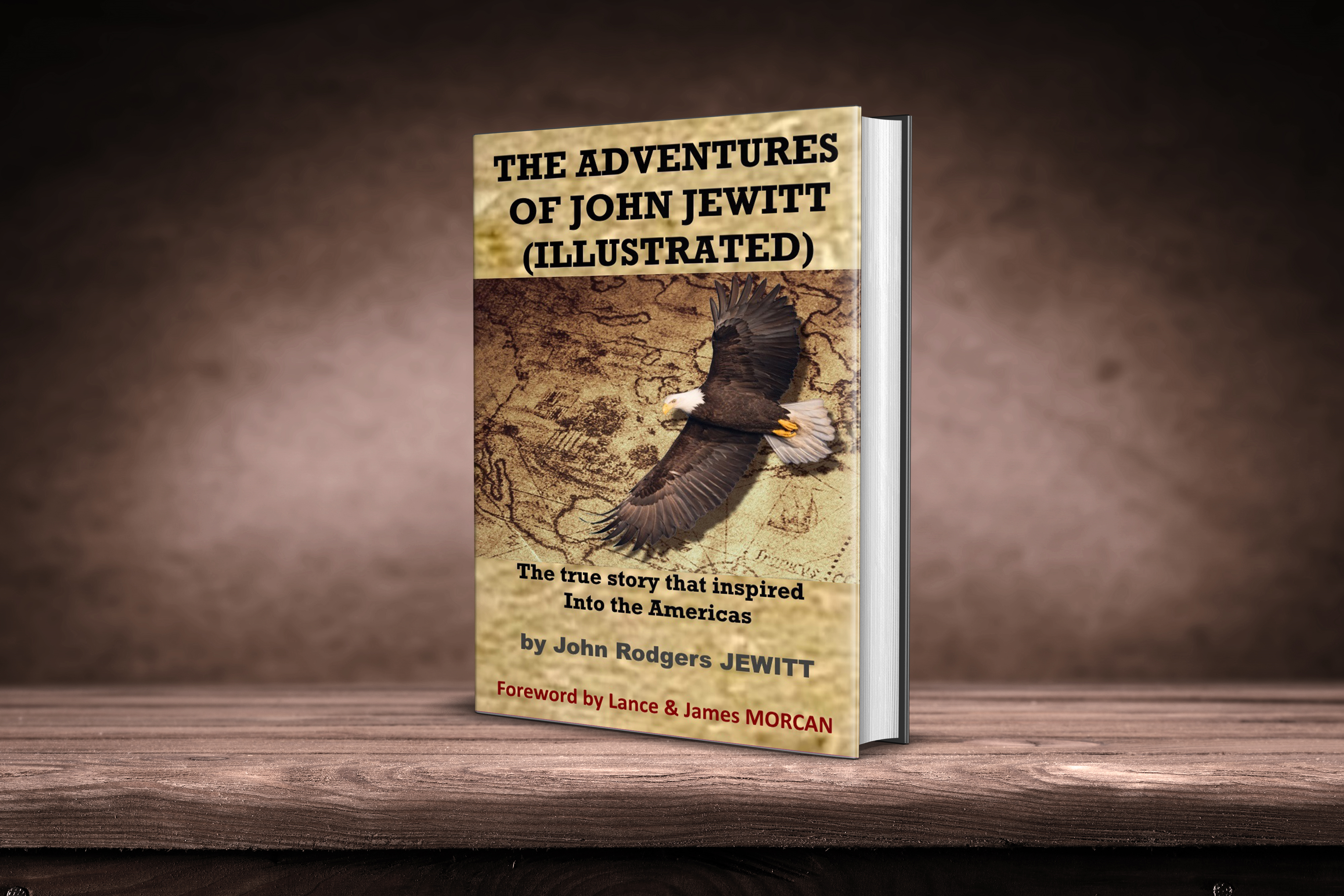
History lovers will appreciate the book THE ADVENTURES OF JOHN JEWITT, the illustrated true story that inspired our epic novel Into the Americas. The book contains the complete diary entries English seaman John Jewitt made during his time as a captive of the Mowachahts of Nootka Sound, Vancouver Island, in the early 1800s.
Jewitt was one of only two survivors when fierce warriors slaughtered twenty-five of his crewmates aboard the brig, the Boston, in Nootka Sound. More than two years of captivity followed.
Thanks to Jewitt’s fondness for the written word and his diligence in maintaining his diary entries throughout his captivity, we have been left with an intriguing insight into his life, and into the lives of First Nations people. His account is made all the more extraordinary by virtue of the fact that such interaction between whites and the tribes of the Pacific Northwest was virtually unheard of and certainly never before (and seldom since) written about in such detail.




![Once Were Brothers by [Morcan, Lance]](https://images-na.ssl-images-amazon.com/images/I/51jikg0GmPL.jpg)


![THE UNDERGROUND KNOWLEDGE SERIES I-V (Genius Intelligence / Antigravity Propulsion / Medical Industrial Complex / The Catcher in the Rye Enigma / International Banksters) by [James Morcan, Lance Morcan]](https://m.media-amazon.com/images/I/61SFbOE3ODL._SX260_.jpg)
 Morcan Books & Films