INTERNATIONAL BANKSTER$: The Global Banking Elite Exposed and the Case for Restructuring Capitalism (book five in our Underground Knowledge Series) is scheduled for a September/October release as a Kindle ebook on Amazon.

International Banksters cover

Book #5 in series.

The other books in The Underground Knowledge Series  (in order of release) are:

Product Details

Product Details

Product Details

Product Details

More books coming soon! Watch this space…

*****************************************

INTO THE AMERICAS (A novel based on a true story), the latest novel penned by New Zealand father-and-son writing team Lance and James Morcan, has entered Amazon’s bestseller lists, climbing into the top 10 Kindle ebooks in the crowded Action and Adventure category.

IntoTheAmericas ebook cover

Readers resonate with this top 10 book.

A gritty, real-life adventure based on one of history’s greatest survival stories, Into the Americas  was inspired by the diary entries of young English blacksmith John Jewitt during his time aboard the brigantine The Boston and also during his sojourn at Nootka Sound, on North America’s western seaboard, from 1802 to 1805.

It’s a tale of two vastly different cultures – Indigenous North American and European civilization – colliding head on. It is also a Romeo and Juliet story set in the wilderness.

To see what reviewers are saying about this top rating book go to: http://www.amazon.com/Into-Americas-novel-based-story-ebook/dp/B00YJKM51E/

****************************************** 

Have you ever accessed the Deep Web and looked at any of the “secret” content on the Internet that’s not indexed via Google or other regular search engines? That’s the question posed in the latest poll in our Underground Knowledge discussion group on Goodreads.com – and interim results show few have (accessed it).

As of August 26 (US time) only 12% of poll respondents claim to have accessed the Deep Web; the balance either haven’t or are unsure.

A random sample of poll respondents’ comments follows:

I haven’t visited the Deep Web and not sure what technology or software allows one to access it, but recently became interested in the subject as per this discussion thread: https://www.goodreads.com/topic/show/…

It seems like the Deep Web could potentially have a lot of positive benefits…Kind of like the last line of defence if governments turn fascist or otherwise totalitarian. For example, the documentary mentioned how the Deep Web is being used in nations like China and Iran where the regular internet is highly censored by those governments and most (innocent) citizens are spied on. But again, the Deep Web definitely seems like a place where networks of criminals can work undetected and orchestrate crimes such as human trafficking more effectively.

As it is with almost everything, what makes the Deep Web dangerous is not the Deep Web itself, but the intent of one when accessing it. For instance, I know that some people go there and download technical books – mostly needed for work/academical reasons – when they can’t find such books anywhere else. That can’t be bad, right? But then again, if you go there looking for bad stuff, you might end up finding it.

My (limited) understanding is the Deep Web is legal content and the Dark Web is illegal content. So I guess I’m primarily focused primarily on the (legal) Deep Web and whether it can eventually become some kind of “Little Brother” technology the masses use to fight back against all the advanced technology of Big Brother… 🙂

No, and it doesn’t have any appeal for me either!

The news media kept telling me only criminals use the Deep Web…But then I heard 96% of the internet is the Deep Web that’s invisible to most users and that accessing the Deep Web is perfectly legal. So the criminal side is just one side to it, by the sounds of it. So now I’m wondering if there may be some useful or even life-changing info in that 96%…But I don’t pretend to understand the Deep Web and the concept is hard to get my head around it.

As far as I know, there is nothing illegal about accessing the Deep Web. What is illegal is to access it with criminal intentions in mind. There are actually very “out there” softwares that allow you to access it with considerable safety.

Deep Web for Journalists – Comms, Counter-Surveillance, Search looks along the lines of what I’m wondering might happen in future i.e. The Deep Web could become a way for whistleblowers to protect themselves.

As the mainstream media has repeatedly reported, there is obviously some really dark and sickening stuff occurring on the Deep/Dark Web – including crimes against children and even the hiring of assassins online to kill other citizens.

To view all the comments go to: https://www.goodreads.com/poll/list/142309-underground-knowledge—a-discussion-group?type=group

Poll ends September 7, 2015.

*

The Underground Knowledge discussion group is open to everyone! All you need is an enquiring mind, an interest in the world we live in and a desire to learn or to uncover “underground knowledge” on important issues of our times. This group is also for like-minded people to discuss the controversial topics explored in The Underground Knowledge Series, which includes the non-fiction books Genius Intelligence, Antigravity Propulsion, Medical Industrial Complex and The Catcher in the Rye Enigma.

Our members include scientists, journalists, moms and dads, historians, doctors, whistleblowers, authors, bankers, teachers, intelligence personnel, housewives, students, Army vets, pacifists, conspiracy theorists, the odd redneck and the Average Joe. All viewpoints welcome!

To visit the group, or better still to join the group and have YOUR say, go to: https://www.goodreads.com/group/show/142309-underground-knowledge—a-discussion-group  

**************************************

Even more depressing than our ever-increasing reliance on drugs to combat high blood pressure is the overprescribing and over-use of antidepressants – especially where children are concerned.  We address this in our book MEDICAL INDUSTRIAL COMPLEX: The $ickness Industry, Big Pharma and Suppressed Cures, and we examine the role mainstream medicine plays in all of this.


An excerpt from Medical Industrial Complex  follows:

Statistically, there’s a very good chance you know someone who is taking Prozac or some other antidepressant right now. It may be a neighbor, or colleague, or a friend or family member, or, it may be you.

This no doubt has something to do with the readiness of people to talk about their depression or even their mental illness – conditions which, thankfully, are no longer burdened by stigma. It no doubt also has something to do with the widespread consumer acceptance of antidepressants as a solution for their depression.

According to some estimates, depression, that most common of mental illnesses, affects one quarter of all Americans.

A March 24, 2014 report in The Atlantic claims Americans are awash in pills. “The use of antidepressants has increased 400 percent between 1988 and 2008. They’re now one of the three most-prescribed categories of drugs, coming in right after painkillers and cholesterol medications”.

The situation, it seems, is little better elsewhere in the Western world. In the UK, for example, more than 50 million prescriptions for antidepressants are written every year if latest estimates are correct.

This figure is “staggeringly high,” according to an article in The Guardian dated April 13, 2014. It quotes Dr Matthijs Muijen, head of mental health at the World Health Organization Europe, as saying prescription levels have gone through the roof, claiming “There’s a degree of fashion about antidepressants”.

Dr Muijen admits his worry is “We are medicalising all forms of sadness in the belief that antidepressants are a safe drug that you just prescribe”.

In a report dated August 3, 2013, BBC News asks the question: “Is England a nation on anti-depressants?” It also asks why we are seeing “such huge and rising numbers of people” regularly taking anti-depressants when GPs are advised to prescribe them only for more seriously ill patients.

The report continues, “In some places the number of patients prescribed anti-depressants exceeds the number of people in that area estimated to suffer from depression and anxiety by the NHS England’s Psychiatric Morbidity Survey (PMS)”.

On June 21, 2013, Healthline News reported that a Mayo Clinic study found that nearly 70% of Americans are prescribed at least one medication, with antidepressants (along with antibiotics and opioids) topping the list.

The article quotes the National Alliance on Mental Illness as estimating one in four Americans experience a mental health disorder, such as depression or anxiety, in a given year. “Typical first-line treatments for mental health issues are medication and some type of psychotherapy…Critics who say antidepressant medications are overused often claim there is a chicken-and-egg phenomenon, saying that antidepressants are prescribed for normal human reactions to life events, leading to a lasting diagnosis of mental illness”.

The article concludes, “However, as the public mindset continues to change, there’s now less stigma attached to getting help for mental disorders, which may help explain the rise in antidepressant use”.

“Suicide rates have not slumped under the onslaught of antidepressants, mood-stabilizers, anxiolytic and anti-psychotic drugs; the jump in suicide rates suggests that the opposite is true. In some cases, suicide risk skyrockets once treatment begins (the patient may feel not only penalized for a justifiable reaction, but permanently stigmatized as malfunctioning). Studies show that self-loathing sharply decreases only in the course of cognitive-behavioral treatment.”Antonella Gambotto-Burke, The Eclipse: A Memoir of Suicide

Predictably, the Psychiatric Times, whose audience is American psychiatrists and mental health professionals, doesn’t agree that antidepressants are overprescribed in the US. In an article dated September 1, 2014, that publication’s editor-in-chief Ronald W. Pies, MD, reports that, “by and large”, he doesn’t agree with the allegation that America has become a kind of Prozac Nation – a none-too-subtle reference to the title of Elizabeth Wurtzel’s 1994 memoirs perhaps.

“In many respects, the claim that ‘too many Americans are taking antidepressants’ is a myth,” according to Dr. Pies. “…To be sure: in some primary care settings, antidepressants are prescribed too casually; after too little evaluation time; and for instances of normal stress or everyday sadness, rather than for MDD (major depressive disorder),” he says.

“And, in my experience, antidepressants are vastly over-prescribed for patients with bipolar disorder, where these drugs often do more harm than good: mood stabilizers, such as lithium, are safer and more effective in bipolar disorder. But these kernels of truth are concealed within a very large pile of chaff”.

Dr. Pies continues, “For example, the media often report that antidepressant use in the United States has ‘gone up by 400%’ in recent years—and that’s probably true…But the actual percentage of Americans 12 years or older taking antidepressants is about 11%—a large proportion of the population, for sure, but not exactly Prozac Nation”.

So, though Dr. Pies – and by default Psychiatric Times and no doubt the majority of psychiatric professionals in the US – disputes the allegation that America has become a kind of Prozac Nation, there seems to be a reluctant acknowledgement that antidepressants are vastly over-prescribed for patients suffering one type of mental illness at least, and that it’s probably true that antidepressant use has risen 400% in the US.

If that doesn’t constitute a Prozac Nation, not sure what does…

Washington D.C. writer Brendan L. Smith, reporting on the American Psychological Association’s website in June 2012, reports that research shows that all too often, Americans are taking medications that may not work or that may be inappropriate for their mental health problems.

Smith observes that writing a prescription to treat a mental health disorder is easy, but it may not always be the safest or most effective route for patients, according to some recent studies and a growing chorus of voices concerned about the rapid rise in the prescription of psychotropic drugs.

“Today, patients often receive psychotropic medications without being evaluated by a mental health professional, according to…the Centers for Disease Control and Prevention. Many Americans visit their primary-care physicians and may walk away with a prescription for an antidepressant or other drugs without being aware of other evidence-based treatments…that might work better for them without the risk of side effects”.

Smith quotes Steven Hollon, PhD, a psychology professor at Vanderbilt University, as saying at least half the folks who are being treated with antidepressants aren’t benefiting from the active pharmacological effects of the drugs themselves but from a placebo effect. “If people knew more,” Hollon says, “I think they would be a little less likely to go down the medication path than the psychosocial treatment path”.

Smith claims Prozac opened the floodgates. “Since the launch of Prozac, antidepressant use has quadrupled in the United States…Antidepressants are the second most commonly prescribed drug in the United States, just after cholesterol-lowering drugs”.

Smith also quotes Daniel Carlat, MD, associate clinical professor of psychiatry at Tufts University, as saying health insurance reimbursements are higher and easier to obtain for drug treatment than therapy, which has contributed to the increase in psychotropic drug sales.

“There is a huge financial incentive for psychiatrists to prescribe instead of doing psychotherapy,” Dr. Carlat says. “You can make two, three, four times as much money being a prescriber than a therapist”.

“As James Surowiecki noted in a New Yorker article, given a choice between developing antibiotics that people will take every day for two weeks and antidepressants that people will take every day forever, drug companies not surprisingly opt for the latter. Although a few antibiotics have been toughened up a bit, the pharmaceutical industry hasn’t given us an entirely new antibiotic since the 1970s.” -Bill Bryson, A Short History of Nearly Everything


You have been reading an excerpt from Medical Industrial Complex. Watch this space for our take on the prescribing of antidepressants to children. Meanwhile, you can find this book on Amazon:  http://www.amazon.com/MEDICAL-INDUSTRIAL-COMPLEX-Suppressed-Underground-ebook/dp/B00Y8Y3TUM/
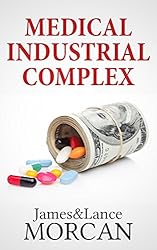
MEDICAL INDUSTRIAL COMPLEX: The $ickness Industry, Big Pharma and Suppressed Cures (The Underground Knowledge Series Book 3)

****************************************

Flight MH370, Princess Diana, Boston Bombings, 9/11, suppressed science, hidden cures, MK-Ultra, undeclared fortunes, drugs wars, media manipulation, banned books of Bible, global warming and more… No subject is off limits in our Underground Knowledge group on the popular literary site Goodreads.

James Morcan discusses Underground Knowledge on Boston's Philosophic Perspectives Radio Show

Membership of the group has just topped 1100, reinforcing our belief that members welcome our freedom of speech policy and our no rules ‘rule’.

The group is open to everyone! All you need is an enquiring mind, an interest in the world we live in and a desire to learn or to uncover “underground knowledge” on important issues of our times. Our members include scientists, journalists, moms and dads, historians, doctors, whistleblowers, authors, bankers, teachers, intelligence personnel, housewives, students, Army vets, pacifists, conspiracy theorists, the odd redneck and the Average Joe. Everyone’s welcome!

A small sample of some of the group’s most contentious or interesting discussion threads follows:

Alternative thinking books 

The 2016 U.S. Presidential Election  

Was 9/11 a false flag attack and ‘Inside Job’? 54% of you voted YES 

The Slap TV show, Child Trafficking and Corrupt Child Protection with Tammi Stefano

Finding (hiding) a cure for cancer 

New Zealand Now Recognizes ALL Animals As Sentient Beings

James Morcan discusses Underground Knowledge on Boston’s Philosophic Perspectives Radio Show

How to spot a sociopath

What really happened to AA Flight 587?

25 Signs That The Global Elite’s Ship Is About To Sink

Is the Islamic State (IS/ISIS) another invention of the West? 

Global Warming – is it real?

The US Military’s proposal to kill American civilians (Operation Northwoods declassified)

Mozart & shattering the inborn genius myth

Are aliens visiting Earth or not????  

How much is Queen Elizabeth II worth??

To visit the Underground Knowledge group, or better still to join and have YOUR say, go to: https://www.goodreads.com/group/show/142309-underground-knowledge—a-discussion-group


*********************************

James Morcan

Check out the video for the recent radio interview I did on Boston’s Philosophic Perspectives Radio Show with Arthur D. Schwartz.

The controversial subjects I discuss in this interview include false flag terrorism sponsored by Western governments, the Americanized Nazis involved in the CIA’s Operation Paperclip, suppressed technologies, and the world’s hidden system of finance involving undeclared fortunes.

Thanks guys n gals! James Morcan

Is it our imagination or are the goalposts for high blood pressure ever changing?

We address this issue in book three of our Underground Knowledge Series — MEDICAL INDUSTRIAL COMPLEX: The $ickness Industry, Big Pharma and Suppressed Cures. An excerpt from the book follows:

It doesn’t seem that long ago the “safe” systolic blood pressure (SBP) reading was your age + 100. So, for a 60-year-old, your SBP could be 160 over, say, 90 DBP (diastolic blood pressure) without your doctor suddenly becoming flustered and informing you a heart attack or stroke is imminent and immediately prescribing a lifetime course of BP medication.

Then the BP safety guideline dropped to 140 over 90. Imagine how many additional patients that little adjustment resulted in for doctors and medical centers. And perhaps more to the point, imagine how much in additional profits that yielded for the corner pharmacies and the big pharmaceutical companies.

Now all of a sudden – or since 2014 at least – the American Medical Association recommends drugs should be used to treat anyone aged 60 or over whose BP is 150/90 or higher.

That tidbit was gleaned from a February 5, 2014 article in JAMA, the Journal of the AMA. In that article, JAMA states the BP recommendation “is based on evidence statements…in which there is moderate- to high-quality evidence…that in the general population aged 60 years or older, treating high BP to a goal of lower than 150/90 mm Hg reduces stroke, heart failure, and coronary heart disease”.

Okay, so that’s a reversal of the downward trend we referred to, but it certainly fits the ‘moving goalposts’ analogy.

That said, we note the American Heart Association (AHA) recommends that BP for an adult aged 20 years or over “should normally be less than 120/80” and if your reading is 140/90 or higher “your doctor will likely want you to begin a treatment program”. That’s according to AHA’s heart.org website.

By its reckoning, about one in three American adults has high blood pressure. Little wonder given its BP parameters.

Here in New Zealand, our homeland, the Heart Foundation’s BP guideline for healthy adults, according to its website at heartfoundation.org.nz, should be below 140/85.

Back to the American Medical Association’s take on blood pressure – commenting on AMA’s new guidelines, WebMD, which promotes itself as “America’s healthy living magazine,” confirms on its website the AMA guideline sets a higher bar for treatment than the current guideline of 140/90.

WebMD quotes guidelines author Dr. Paul James as saying the recommendations are based on clinical evidence showing that stricter guidelines provided no additional benefit to patients. “We really couldn’t see additional health benefits by driving blood pressure lower than 150 in people over 60 (years of age)…It was very clear that 150 was the best number”.

We wonder how that went down with the drug companies? Not too well, we suspect. The 10-point upward adjustment of the SBP reading is no doubt costing them millions. Or should that read billions?

Certainly, the revised BP guidelines didn’t go down too well, according to WebMD, which reports the AHA expressed reservations. It quotes AHA president-elect Dr. Elliott Antman as saying the AHA is concerned that relaxing the recommendations may expose more persons to the problem of inadequately controlled BP.

Apparently, the AHA’s concerns aren’t shared by American local government and social issues reporter Aaron Kase who is highly critical of what he describes as the over-prescription of blood pressure meds.

Kase came to our attention courtesy of the American law site Lawyers.com, which ran an article first posted in Medical Malpractice on August 27, 2012. In that article, Kase (the author) states that, according to a new study, tens of millions of people taking BP medication prescribed by their doctors may be consuming the drugs for no reason.

“The report, which was conducted independently from any drug company money or influence, found the vast majority of people who take meds for hypertension (high blood pressure) see no benefit from them, and do not show reduced levels of heart attack or stroke”.

The article continues, “According to the Center for Disease Control, some 1 in 3 adults in America, or 68 million people, have high blood pressure. However, for most of them the condition is considered mild. Historically, even those mild cases are prescribed medication; but the study says the drugs do no good for mild hypertension and could cause harm to patients through side effects”.

Kase reports there are dozens of different medications prescribed for high BP, spread across a number of categories – each with its own side effects, ranging from constipation, excessive hair growth, erection problems, rashes and fever to heart palpitations and other adverse reactions.

“A tall price to pay, if the drugs aren’t actually helping people live longer,” he says.

The writer concludes that, unfortunately, big drugs are big business, and wherever money is involved, motivations can come into question when medications are prescribed to people who might not need them.

Such claims aren’t new of course. On January 8, 2012, the UK’s The Observer reported the BP bar was set at 140/90 whereas 15 years earlier the threshold was 160/100.

And way back in June 2005, The Seattle Times reported that, in recent years, expert panels from prestigious medical-research organizations such as the World Health Organization (WHO) and the federal National Institutes of Health (NIH) have called for lower thresholds for blood pressure – and, the report points out, “Behind each of those panels were the giant pharmaceutical companies that manufacture the new and expensive hypertension drugs”.

That report concludes, “The drug industry welcomed the new treatment guidelines and marketed them vigorously. Not surprisingly, as doctors followed the new guidelines and treated hypertension at lower readings, sales of the newer drugs increased”.

High BP is unquestionably a bigger problem in the West, and many experts attribute that to our higher consumption of salt.

This is touched on in The Observer article referred to earlier. It reports that Brazil’s Yanomami tribe, whose members eat a diet low in salt and saturated fat and high in fruit, have the lowest mean blood pressure of any population on earth – 95/61.

Nor, apparently, does their blood pressure increase with age. “By contrast, in the west, where people eat an average of 10-12 grams of salt per day, blood pressure rises with age by an average of 0.5mm Hg a year. That may not sound a lot, but over the average lifespan that is a difference of between 35 and 44mm Hg systolic”.

The article concludes that the most recent meta-analysis of trials involving more than 6000 people from around the world, found that a reduction in salt intake of just 2 grams a day reduced the risk of cardiovascular events by 20%.

That may well be the case although we suspect that applies to everyday table salt and not to pure, unadulterated, unrefined sea salt or Himalayan salt.

Even more depressing than our ever-increasing reliance on drugs to combat high blood pressure is the overprescribing and over-use of antidepressants – especially where children are concerned.

MEDICAL INDUSTRIAL COMPLEX: The $ickness Industry, Big Pharma and Suppressed Cures (The Underground Knowledge Series Book 3)

To read more about overprescribing blood pressure pills — and antidepressants too — you can find Medical Industrial Complex  on Amazon. Go to: http://www.amazon.com/MEDICAL-INDUSTRIAL-COMPLEX-Suppressed-Underground-ebook/dp/B00Y8Y3TUM/

************************************************ 


In our top rating thriller novel THE ORPHAN UPRISING (The Orphan Trilogy, #3)  our central character, the ninth-born orphan known as Nine, is forced out of retirement when his former masters at the Omega Agency abduct Francis, his young son. 

The Orphan Uprising (The Orphan Trilogy Book 3)

An excerpt from the novel follows. It describes the moment the former operative realises Francis is being abducted. The action takes place in the Marquesas Islands, in remote French Polynesia, where Nine and his wife Isabelle have been hiding out since dropping off the grid five years earlier. Nine is jogging high in the hills overlooking a picturesque bay in the tropical island he now calls home. These days, he exercises for the sake of his health as he has a relatively common heart condition called stenosis.

The excerpt follows: 

Nine was following a well worn path that took him high into the steep hills overlooking Taiohae Bay. He could just make out his wife and son down near the waterfront. Francis was playing an impromptu game of soccer with his newfound friends while Isabelle and the other mothers sat in the shade, looking on.

The sweat was pouring off him as he ran up a steep incline. Sudden shortness of breath prompted him to slow to a walk. He thought nothing of it, putting it down to the heat. You’re getting old, Sebastian.

Still looking down at Taiohae Bay, he noticed an inflatable craft approaching the distant waterfront at speed. It was manned by two men and appeared to have come from a floatplane Nine had seen touch down on the water a short time earlier out in the bay. He watched as the inflatable nosed up onto the beach and two men jumped out. They began walking purposefully toward where Francis and the other children played.

Something about the pair bothered Nine. He couldn’t put his finger on it, but it didn’t seem right. Even from a distance, he could see the two weren’t your average tourists. Besides the dark sunglasses they wore, there wasn’t a camera, sun hat or beach towel in sight. They looked more like business executives in their white shirts and long, dark trousers. One even wore a tie.

Nine found himself growing apprehensive as he continued to watch the pair closely.

The former operative didn’t know it, but he wasn’t the only one observing the two men. His spiritual master, Luang, had noticed them around the same time Nine had. The elderly monk was watching from the entrance of the temple Nine and Francis had visited a short time earlier. Like Nine, he thought the two strangers seemed out of place.

Luang’s suspicions grew when the men purposefully marched up to one of the boys. He recognized the boy as Nine’s son. “Francis!” he shouted.

The boy, who was now playing quite close to the temple, looked at the monk and innocently waved.

Luang motioned to him with his hand. “Francis, come!” He motioned to him again.

Francis suddenly noticed the two strangers approaching. They were only a few yards away. Sensing they meant him harm, he sprinted toward the kindly monk and the sanctuary of the temple. The men began running after him.

Only now did Isabelle and the other mothers notice anything untoward from where they sat some distance away. Immediately concerned, they hurried to investigate. The island women began shouting at the strangers. Isabelle screamed when she realized it was Francis the men were chasing.

Fear drove Francis’ legs. The terrified boy ran as if his life depended on it. He reached Luang just before the strangers could catch him. The monk took Francis in his strong, wiry arms and threw him inside the temple. “Hide!” he ordered.

Francis ran to the rear of the temple and hid behind the statue of Buddha while Luang drew a long ceremonial sword from its scabbard that hung just inside the temple’s entrance. An exponent of the Muay Thai martial art, Luang was no slouch with a sword either – as the two strangers were about to find out.

The first man to enter the temple was the younger of the two. Confident the monk would offer no resistance, he hadn’t bothered to draw the pistol he carried on him as he stepped inside. He didn’t even see the steel blade that slashed his arm open to the bone. Screaming in pain, the wounded man threw himself to one side just in time to avoid a second slash that would have taken his head off.

Luang turned to face the second man too late to avoid the gunshot that ended his life. The monk was dead before he hit the temple’s concrete floor.

The sound of the gunshot galvanized Isabelle and the other women into action. Shouting to attract the attention of menfolk in the vicinity, they started running toward the temple. In her pregnant state, Isabelle was left far behind.

The women were still some distance from the temple when the older of the two men emerged with a struggling Francis under his arm. He was followed by the younger man whose wounded arm hung limply at his side. His once white shirt was blood-soaked. The older man pointed his pistol at the advancing women who by now were swearing obscenities at the pair. The sight of a pistol had no effect on the women, so he fired a warning shot above their heads, stopping them in their tracks.

Only Isabelle wasn’t deterred. “Francis!” she screamed as she ran toward the men whom she now knew were intent on abducting her son.

With a squirming Francis still under his arm, the older man ran off toward the beached inflatable craft, closely followed by his wounded partner.

“Mama!” Francis screamed.

Isabelle tripped and fell heavily. By the time she struggled to her feet, the men were already pushing their inflatable into the water. She was powerless to resist as they fired its engine into life and sped off toward the waiting floatplane.

“Mama!” Francis’ plaintiff cries reached his mother, but she was powerless to help.

High in the hills above the bay, Nine had started running as soon as the men began chasing after Francis. By the time they’d bundled the boy and their inflatable into the floatplane, Nine was already down at sea level and sprinting toward the waterfront. His lungs were burning and his legs felt like lead, but he ignored that. All he could think of was Francis.

The previous few minutes had seemed like a nightmare to Nine. There was no obvious explanation for what he’d just witnessed. Falling back on his training, his mind worked at a thousand clicks per second as he tried to figure out what was happening and who was behind it. It could only be Omega! He figured the Omega Agency must have discovered his whereabouts. But how? And why Francis? Why not me? There were so many questions and no answers.

Nine drove himself to run faster.

#

As he neared the waterfront, he felt a searing pain in his chest. Nine knew immediately what was happening. He was having the heart attack his specialist had warned he’d have if he overdid things.

Despite his condition, he had the presence of mind to note the description of the plane that was now taxiing out into deep water in preparation for take-off: it was a de Havilland Canada DHC-3 Otter floatplane of the type favored by the Air Command of the Canadian Forces because of its excellent search and rescue capabilities.

The floatplane was the last thing Nine saw before everything went black.

Product Details

To read more about The Orphan Uprising  go to Amazon: http://amazon.com/dp/B00BFC66DM/

********************************************************

“Many paddles, one canoe” –First Nations saying

In the following excerpt from our top rating new release adventure novel Into the Americas, we describe a bloody clash between two warring First Nations tribes of the Pacific Northwest during a hunting expedition in the territories of the fearsome Mowachahts. 

IntoTheAmericas ebook cover

Maquina led a six-strong hunting party into the hills behind Nootka village. His five companions included Peshwar, a forbidding headman whose reputation as a fearsome warrior rivalled that of the chief and extended far beyond the borders of the Mowachahts’ territory. All six hunters carried shiny, new muskets acquired in the previous day’s trade, and they were keen to put them to good use.

Ahead of them, in dense forest, an elk grazed. Something spooked him. He wasn’t sure what – a scent or a sound perhaps – and he took off.

Soon after, Maquina spotted the elk’s tracks and knelt down to study them. He then led his fellow hunters deeper into the trees at a fast trot.

Elsewhere in the forest, the same elk burst into a clearing, disturbing a twelve-strong war party of Haachaht warriors, traditional enemies of the Mowachahts. They carried bows, tomahawks and other traditional weapons, and wore the grotesque wolf’s brow mask associated with their tribe.

The Haachahts’ chief, Callicum, a stocky man who wore a large nose-ring, stared into the surrounding trees. He flashed a hand signal at his warriors and they quickly dispersed. Now hidden from sight, they could hear the Mowachaht hunters moving through the undergrowth in pursuit of the elk.

Reaching the forest clearing, the Mowachahts stopped to study their quarry’s tracks. Maquina’s eyes were drawn to an eagle circling high above. He stared at the bird for a few seconds before returning his gaze to the trees. Sensing danger, he primed his musket. His fellow hunters followed suite.

A Haachaht bowman stepped out from behind a tree and aimed an arrow directly at Maquina. The bowman held his bow horizontal, in the manner of the indigenous people of the west coast. Maquina dropped to one knee and swung his musket up just as the bowman loosed his arrow. The arrow lodged in the throat of a tall Mowachaht standing directly behind Maquina. Mortally wounded, the warrior collapsed, choking on his own blood. Maquina killed the bowman with one well placed shot.

Haachaht war cries rang out as Callicum led his warriors out from the trees. Another arrow found its mark, killing a young Mowachaht. Reduced to four, the remaining Mowachahts fought like men possessed.

Two Haachahts closed in on Peshwar. He aimed his musket at the nearest of the two. A hollow click signalled it had malfunctioned. Cursing, Peshwar threw his musket aside and drew his tomahawk. “Peshak!” he swore as he grappled with his enemies. With two mighty swings of his tomahawk, the two Haachahts lay dead at his feet, their heads almost severed from their bodies.

As the fight escalated, a short Mowachaht aimed his musket at a burly Haachaht who rushed him, club in hand. His musket also misfired and he was clubbed to the ground. The Haachaht finished him off before he was felled by a musket shot.

Nearby, Maquina found himself fighting alongside Peshwar. “The muskets are faulty!” Maquina shouted.

Peshwar nodded. “The White-Faces have deceived us!”

The chief found himself face-to-face with Callicum who charged him with a tomahawk in each hand. Maquina raised his musket and pulled the trigger. This time his weapon misfired. Before he could reload, the Haachaht chief was onto him. Maquina was forced to back-peddle and use his musket to block his attacker’s blows. Peshwar came to his aid, wounding Callicum with his own tomahawk.

Seeing their chief in trouble, the other Haachahts seemed unsure what to do next.

Maquina and Peshwar took advantage of their enemies’ indecision and fled, dragging with them the other surviving hunter.

As they made good their escape, Maquina was consumed by the anger he felt toward the European traders. Yet again his people had fallen foul of the traders’ unscrupulous ways. On this occasion, faulty muskets had contributed to the deaths of three of his finest warriors.

You have been reading an excerpt from INTO THE AMERICAS (A novel based on a true story). To read more go to Amazon: http://www.amazon.com/Into-Americas-novel-based-story-ebook/dp/B00YJKM51E/

Into the Americas (A novel based on a true story)

 ★★★★★ “Highly recommended.” –Amazon reviewer Cheryl Long

******************************************