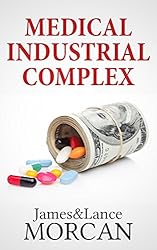
We are openly critical of the big pharmaceutical companies in our new release book MEDICAL INDUSTRIAL COMPLEX: The $ickness Industry, Big Pharma and Suppressed Cures. Our criticism is tempered by the fact that – as we acknowledge more than once in our book – products developed, manufactured and marketed by Big Pharma save lives. (Some would argue they cost lives, too, but that’s another story).

MEDICAL INDUSTRIAL COMPLEX: The $ickness Industry, Big Pharma and Suppressed Cures (The Underground Knowledge Series Book 3)

However, we keep coming back to the questions that crop up whenever the pharmaceutical companies and their modus operandi are analyzed. Questions like: Why is so little money ploughed back into research? Why the continuing emphasis on treatments ahead of cures? And, regarding revenues and profits, how much is too much?

BBC News addresses this very issue in a report aired on November 6, 2014 under the title ‘Pharmaceutical industry gets high on fat profits.’ The report asks people to imagine an industry that generates higher profit margins than any other and is no stranger to multi-billion dollar fines for malpractice.

“Throw in widespread accusations of collusion and over-charging, and banking no doubt springs to mind. In fact, the industry described above is responsible for the development of medicines to save lives and alleviate suffering, not the generation of profit for its own sake”.

The BBC News report reminds us that pharmaceutical companies have, by far, developed  most medicines known to Man, but have profited big-time in the process – “and not always by legitimate means”.

It continues, “Last year, US giant Pfizer, the world’s largest drug company by pharmaceutical revenue, made an eye-watering 42% profit margin… five pharmaceutical companies made a profit margin of 20% or more…With some drugs costing upwards of $100,000 for a full course, and with the cost of manufacturing just a tiny fraction of this, it’s not hard to see why…

“Drug companies justify the high prices they charge by arguing that their research and development (R&D) costs are huge. On average, only three in 10 drugs launched are profitable, with one of those going on to be a blockbuster with $1bn-plus revenues a year…

“But … drug companies spend far more on marketing drugs – in some cases twice as much – than on developing them. And besides, profit margins take into account R&D costs”.

The report concludes that the industry also argues that the wider value of the drug needs to be considered. However, it (BBC News) rightly points out that just because you can charge a high price for something does not necessarily mean you should. Especially when you factor in the lives at stake in the healthcare field.

The problem with that is – as we see it – the pharmaceutical companies and the shareholders they answer to would quickly dismiss such a rationale. They’re solely focused on the bottom line: profit.

Profit is not necessarily a dirty word when it comes to healthcare. We happen to believe capitalism, if managed properly, can actually work well in medicine. Profit incentives can spark imaginations in pharmacists and healthcare entrepreneurs and doctors as there’s the reward aspect in capitalism which motivates people to find medical cures.

Otherwise, as evidenced in the past in places like Eastern Europe, when things go to the other extreme and there’s too much government interference it can be just as crippling and corrupting for essential services such as healthcare. With little to no financial rewards on offer under communism, or even under some forms of socialism, most workers are less motivated – medical and healthcare workers included.

Somehow there needs to be a balance between governments and non-profit review committees to ensure mainstream medicine has a social conscience whilst still allowing the free market to work its magic.

…In the pharmaceutical industry’s haste to get drugs to market, critics say safety usually comes a distance second to profits. Little wonder then that mistakes occur and the line between legitimate and spurious business practices is oftentimes blurred.

We explore this untenable situation in the next chapter.

You have been reading an excerpt from Medical Industrial Complex.

The book is available via Amazon: http://www.amazon.com/MEDICAL-INDUSTRIAL-COMPLEX-Suppressed-Underground-ebook/dp/B00Y8Y3TUM/

***************************************************************

The new release book THE CATCHER IN THE RYE ENIGMA  examines author J.D. Salinger’s life before he wrote his 1951 classic novel. Some of the findings make for interesting reading — his close association with U.S. military intelligence in particular.

Product Details

J.D. Salinger was by all accounts a recluse and, of all the 20th Century’s masters of literature, he’s probably the one least is known about. This is due in part to his extreme desire for privacy. A good example of this was the reported act of painting his forest cabin in camouflage colors so nobody could find him!

JD Salinger.jpg

The reclusive J.D. Salinger.

Despite living until 2010, some 59 years after The Catcher in the Rye  was first published and became a phenomenal worldwide bestseller, he never published another novel.

Salinger’s last published work, the short story collection Hapworth 16, 1924, came out in 1965. From that point on he continued to write, but his writing remained for his eyes only. Calls from his millions of fans eager to read more of his works apparently fell on deaf ears.

___________________________________________

“Anyway, I’m sort of glad they’ve got the atomic bomb invented. If there’s ever another war, I’m going to sit right the hell on top of it. I’ll volunteer for it, I swear to God I will.” –J.D. Salinger, The Catcher in the Rye

___________________________________________

Besides being reclusive, many have labeled him eccentric and even mean-spirited. There are numerous colorful stories about him. These include him regularly drinking his own urine, becoming enraged whenever his infant children cried, being a hypochondriac, telling one of his wives never to disturb him “unless the house is burning down”, exploring Dianetics (later renamed Scientology) and meeting its founder L. Ron Hubbard, and having his photo removed from all his books’ jackets.

However, what many conspiracy theorists believe holds the key in the whole mystery surrounding Catcher is Salinger’s life before he wrote the book. During and immediately after WW2 to be precise.

And like many other instances of mind control operations conducted in the United States over the years, the controversies linked to Salinger’s masterpiece appear to lead directly back to the Nazis.

What few of Salinger’s fans ever fully comprehend is the man’s extensive military and intelligence employment history. Employment that included working for the OSS – the forerunner to the CIA – on highly classified projects in Europe post-WW2.

According to the 1988 unauthorized biography In Search of J.D. Salinger, by Ian Hamilton, Salinger worked for the Defense Intelligence during WW2 and served with the Counter Intelligence Corps. His main duties, Hamilton wrote, involved interrogating captured Nazis.

And on September 3, 2013, The Telegraph ran an article headlined JD Salinger’s five unpublished titles revealed, and how Second World War shaped his thinking. According to the article, one of Salinger’s unpublished books is “about his time interrogating prisoners of war when he served working in the counter-intelligence division”. That book, incidentally, has the revealing title, A Counterintelligence Agent’s Diary.

Equally intriguing is another unpublished Salinger book titled A World War II Love Story, which the same article claims is “based on his brief marriage to Sylvia, a Nazi collaborator, just after the war”.

You have been reading an excerpt from our new release book The Catcher in the Rye Enigma: J.D. Salinger’s Mind Control Triggering Device or a Coincidental Literary Obsession of Criminals? – Available now via Amazon: http://www.amazon.com/Catcher-Rye-Enigma-Coincidental-Underground-ebook/dp/B00YVROKZ4/

**************************************************************
No-one can object to the pharmaceutical companies making profits. Surely that’s the aim of all companies – to make profits. But how much is too much? We ask that very question in our new release book MEDICAL INDUSTRIAL COMPLEX: The $ickness Industry, Big Pharma and Suppressed Cures.

MEDICAL INDUSTRIAL COMPLEX: The $ickness Industry, Big Pharma and Suppressed Cures (The Underground Knowledge Series Book 3)

Excerpts from Medical Industrial Complex  follow:

Many people are alive today because of prescription drugs, and many more are enjoying a better quality of life because of prescription drugs. Let us be clear and unequivocal about that. And unsubstantiated criticism of the pharmaceutical industry, or any industry for that matter, does no-one any good.

We kept all that front of mind when conducting our research for this book.

Unfortunately, the inescapable fact is that much of the good Big Pharma does is undone by mistakes, dubious business practices, (reported/confirmed cases of) fraud and, quite simply, by greed.

Much has been written about Big Pharma in recent years. One of the most informative books on the industry is The Truth About Drug Companies, by Marcia Angell, M.D., former editor of the prestigious New England Journal of Medicine.

The book’s blurb reads (abridged):

“Currently Americans spend a staggering $200 billion each year on prescription drugs. As Dr. Angell powerfully demonstrates, claims that high drug prices are necessary to fund research and development are unfounded: The truth is that drug companies funnel the bulk of their resources into the marketing of products of dubious benefit. Meanwhile, as profits soar, the companies brazenly use their wealth and power to push their agenda through Congress, the FDA, and academic medical centers.

“Zeroing in on hugely successful drugs like AZT (the first drug to treat HIV/AIDS), Taxol (the best-selling cancer drug in history), and the blockbuster allergy drug Claritin, Dr. Angell demonstrates exactly how new products are brought to market. Drug companies, she shows, routinely rely on publicly funded institutions for their basic research; they rig clinical trials to make their products look better than they are; and they use their legions of lawyers to stretch out government-granted exclusive marketing rights for years. They also flood the market with copycat drugs that cost a lot more than the drugs they mimic but are no more effective.

The Truth About the Drug Companies is a searing indictment of an industry that has spun out of control”.

Product Details

Within the book itself, Dr. Angell describes the unethical and at times inhumane pharmaceutical industry she witnessed in her 21 years spent as the first female editor-in-chief of The New England Journal of Medicine. She also gives numerous examples to prove beyond dispute that the world’s biggest drug companies have grown so powerful they are now able to pull the strings and call many of the shots in medical academia, health research and even the way doctors and nurses go about their work. Meanwhile, the public, including more and more of the poor, invalid and elderly, are unable to meet the cost of rapidly increasing prescription drug prices.

For an insight into the profitability of the major pharmaceutical companies, take a gander at the top performers on the latest Fortune 500 list. (Fortune 500 being Fortune Magazine’s annual list of the top 500 US companies – publicly and privately listed – according to their gross revenues).

Fortune 500

At the time of writing, the 2014 Fortune 500 list was the latest available. One of the best summaries of the pharmaceutical companies (drug wholesalers, chain pharmacies, pharmacy benefit managers (PBMs), and pharmaceutical manufacturers) we could find is on the very professional DrugChannels.net site. Compiled by Dr. Adam J. Fein, CEO of Drug Channels Institute, it’s an eye-opener for the uninformed.

As Dr. Fein informs the public, his data “will help you ‘follow the dollar’ and understand how drug channel intermediaries make money.”

The good doctor compares the fortunes of the eight listed drug channels companies (AmerisourceBergen, Cardinal Health, CVS Caremark, Express Scripts, McKesson, Omnicare, Rite Aid, and Walgreens) with Fortune 500’s 12 pharmaceutical manufacturers and a separate survey of independent pharmacies.

Dr. Fein reports “The 2013, median revenues for the eight drug channel companies were $95.1 billion, up 1.4% vs. 2012. Median revenues for the manufacturer group were $17.5 billion… The revenues of the 12 largest pharmaceutical manufacturers on the Fortune 500 list range from $67.2 billion (Pfizer) to $5.5 billion (Celgene)”.

In the report he quotes 2012 data supplied by the National Community Pharmacists Association’s 2013 NCPA Digest, which shows that independent pharmacies had higher profitability than the eight largest drug channels companies, including PBMs.

Dr. Fein also observes that, “In 2013…investment returns reflected last year’s strong stock market performance”.

The median Total Return to Investors in 2013 as reported from Fortune’s list is detailed as follows: 8 Drug Channels companies: +65.8% (range: +30.1% to +272.1%); 12 Drug Manufacturers: +34.8% (range: +7.3% to +115.3%).

Starting to get the picture? Big Pharma is mighty profitable and becoming more so each and every year.

You have been reading an excerpt from Medical Industrial Complex.

The book is available via Amazon: http://www.amazon.com/MEDICAL-INDUSTRIAL-COMPLEX-Suppressed-Underground-ebook/dp/B00Y8Y3TUM/

Product Details

***************************************************************
Do you believe the human evolution theory which states that humans and chimpanzees share the same common ancestor and therefore humans descend solely from the animal kingdom and are an animal species? That’s the question we put to our Underground Knowledge group members in our latest poll on Goodreads.com — and interim results show respondents’ beliefs are evenly divided.

Interim poll results show that 45% believe humans and chimpanzees share the same common ancestor, 44% take the opposite viewpoint and 11% are undecided.

Sample abridged comments of poll respondents follow:

We have only barely begun to scratch our history in all areas, let alone our origin as a species. All we absolutely know is that we are capable of so much good, so much evil; an emotional being, often in conflict with ourselves. We have such a long way to go to understand ourselves; to explore space for answers; to explore the evolution and adaptation of so many planetary species; indeed, of the planet herself.

Even for those, fundamentalist Christians and Mohammedans and others, still doubting the essential tenents of Darwin, surely there is agreement that Homo sapiens is an animal. Not being plant or animal, what else is there for a life form to be?

The more I read or hear comments from people’s beliefs on our origin, the less surprised I become of how the insanity of teaching genesis in place of evolution in some schools is.

I think it’s possible we’re a mixture of ape & genetic manipulation by aliens.

Besides a few scientists in this group, there are other scientists who believe in the ancient alien theory – which I haven’t studied that much but can’t say is instantly dismissible. Here’s one such article I found: ET Genetic Code May Be Found In Human DNA, According To Kazakhstan Scientists’ Biological SETI Theory – http://www.huffingtonpost.com/2013/04…

As for the creator question, that is not an answerable question. I do find it almost impossible to believe we are the only intelligent life in the universe ever. However, time does erode all things. If you look at the AA theory, let’s say some entity flew by around 6 million years ago. Current thought is that the Australopithecus hominids began to diversify during that time frame.

Aside from the obvious, the biggest difference between humans and animals is the capacity to interact, contemplate and to know the spiritual world, which is to say, we have the capacity to know God. Animals don’t. For this reason alone, it is impossible for the human race to have evolved from any form of ‘primitive animal’ or have a common ancestor with chimpanzees. Further, if in fact God created us in his own image, I think it’s pretty safe to say that God is not a chimpanzee!

I think DNA is not essential for human evolution. Like a computer system, human being is consisted of hardware (human body) and operating system (OS) and program. Maybe human OS is invisble from our eyes, but it is essential for functioning human body and for the human evolution. Our Universe is constructed from many invisible worlds, which are called higher dimensions.

Books such as “River out of Eden” helped me get an idea on this subject. It is impossible to reject alien DNA theory. Whatever shape or form it consists of, it is very likely that some have made it to the earth’s surface. The notion that it became integrated with our DNA, I find highly unlikely.

Imo, Homo sapiens sapiens is a hybrid of countless human subspecies, known, recently discovered, and unknown, all evolving from less human origins.

This poll is gonna go down to the wire by the looks… Who will win? Darwin’s chimps and co? The ancient ETs? The Fundamentalist God? The fence sitters?


This poll ends July 8 PST. To view all comments, or better still to have YOUR say, go to: https://www.goodreads.com/poll/list/142309-underground-knowledge—a-discussion-group?type=group

*

Our Underground Knowledge discussion group is aimed at those with an interest in the world we live in and a desire to learn or to uncover “underground knowledge” on important issues of our times.

Everyone’s welcome to join! All you need is an enquiring mind. Our members include scientists, social activists, teachers, historians, authors, military and intelligence agency personnel, bankers, housewives, whistleblowers, students, former police officers, journalists, readers and many more.

Visit the group at: https://www.goodreads.com/group/show/142309-underground-knowledge—a-discussion-group

*******************************************************

If that classic novel The Catcher in the Rye is a triggering device for criminals – as suggested in the sub-title of our new release book THE CATCHER IN THE RYE ENIGMA: J.D. Salinger’s Mind Control Triggering Device or a Coincidental Literary Obsession of Criminals? – it would likely set off mind-controlled subjects by having carefully phrased words in strategic parts of the book. Nobody outside of the sleeper assassins and their intelligence agency handlers would be able to recognize such phrases as being abnormal, especially if crafted by such a skillful writer as Salinger.


Catcher novel a trigger?


Richard Condon’s 1959 classic novel The Manchurian Candidate uses only one card, the Queen of Hearts, out of an entire deck of cards as a triggering device for activating the mind control programs in the story’s main characters. If the mind controlled subjects are shown a deck of cards, card by card, they’re hypnotized simply because the Queen of Hearts happens to be in the deck. Keep in mind there are 52 cards in a deck, so about 98% of cards in the deck aren’t related to the mind control program at all.

Similarly, 98% of Salinger’s book would simply be literature and probably have nothing to do with nefarious intelligence agency programs like MK-Ultra, that insidious (acknowledged and on-the-record) mind control program of the CIA. It wouldn’t have upset the flow of the novel if Salinger, or perhaps his publishing house editor, had inserted a few brief triggering devices, or phrases, at the behest of the CIA or FBI or other such agency.

___________________________________

“It’s funny. All you have to do is say something nobody understands and they’ll do practically anything you want them to.” –J.D. Salinger, The Catcher in the Rye

___________________________________

If the novel contains mind control triggers there are two obvious possibilities regarding exactly who inserted them.

One is that Salinger didn’t deliberately insert such triggers in Catcher and had no knowledge his novel would be used for mind control. Instead, the book was simply used by intelligence agencies, without his permission, as a triggering device to prompt chosen subjects to kill. This would likely have been achieved during the brainwashing process of subjects by repeating certain sentences from the book over and over. It may also be true that the likes of the CIA simply selected the novel as the perfect story to brainwash lone gunmen given its themes of alienation and angst.

_____________________________________

“Don’t ever tell anybody anything. If you do, you start missing everybody.” –J.D. Salinger, The Catcher in the Rye

_____________________________________

The second possibility is that Salinger knowingly inserted mind control phrases into the novel and worked in collusion with high ranking officials in the US intelligence community. Following this theme Salinger along with his advisors, or controllers perhaps, planted excerpts of neurolinguistic writing designed to speak to an assassin’s brain.

How could any ordinary writer achieve that? Such a question assumes Salinger was an ordinary writer…


You have been reading an excerpt from our new release book The Catcher in the Rye Enigma: J.D. Salinger’s Mind Control Triggering Device or a Coincidental Literary Obsession of Criminals? – Available now via Amazon: http://www.amazon.com/Catcher-Rye-Enigma-Coincidental-Underground-ebook/dp/B00YVROKZ4/


The Catcher in the Rye Enigma: J.D. Salinger's Mind Control Triggering Device or a Coincidental Literary Obsession of Criminals? (The Underground Knowledge Series Book 4)


*****************************

The role politics and politicians play in a country’s health is worthy of scrutiny and is one that has possibly been overlooked by many other independent critiques and critics of the medical establishment. We raise this point in our new release book MEDICAL INDUSTRIAL COMPLEX: The $ickness Industry, Big Pharma and Suppressed Cures.

MEDICAL INDUSTRIAL COMPLEX: The $ickness Industry, Big Pharma and Suppressed Cures (The Underground Knowledge Series Book 3)

We devote one entire chapter to the issue of politics and health in Medical Industrial Complex. An excerpt follows:

Serious questions need to be asked about a health ‘system’ in which politicians are often reluctant to invest money in long-term, preventative measures that can take years to show a return on investment.

A politician’s future is very much at the whim of voters who are notoriously fickle. Little wonder then that many tend to focus on short-term policies and initiatives instead of long-term ones. Those who don’t are very quickly brought into line by their party – be it on the Left or Right of the political spectrum – whose modus operandi, invariably and almost without exception, is to do whatever’s needed to win the next election and to stay in power.

That’s politics, folks.

In the process…short-term tangible things like spending more money to reduce waiting surgical waiting lists (to win votes) instead of dealing with the long term underlying causes are given priority.

If the wellbeing of constituents, as well as minors and other non-voters – aka human beings – wasn’t at stake, we’d say this is rather naughty of our elected representatives. As people’s health and, indeed, their very lives are at stake, we’d say this practice or policy, call it what you will, is downright deplorable.

When politics is thrown into the medical melting pot and stirred up with those other essential ingredients – namely Big Pharma, hospitals, the medical academic establishment, hospital supply and equipment companies, and other key players in the Medical Industrial Complex – the practice can only be described as seriously corrupt.

_________________________________________

“The medical profession is unconsciously irritated by lay knowledge.” –John Steinbeck, East of Eden

_________________________________________

Making short-term medical policies, in the case of vote-hungry, power-mad politicians, and pandering to those same policies, in the case of greedy elements within the medical establishment, when lives and health are on the line is unforgivable.

How refreshing it would be if the government of the day announced it was replacing its “ambulance at the bottom of the cliff” health policy with a 10 or 15-year, or, better still, a 20-year vision for the country’s health. A vision that requires investment in long-term preventative measures and that encourages a holistic approach.

Alas, the nature of politics and politicians is that no such change will likely occur. Equally, the current system – a system in which cures for diseases and other ailments come a distant second to just treating symptoms – suits the big pharmaceutical companies and their kind just fine. So no change can be expected any time soon from that quarter either.

At the end of the day, we, the common people, have two choices: we can force the politicians to listen or, better still, we can take responsibility for our own health. The obvious advantage in the latter choice is that it’s actionable immediately and doesn’t rely on a change of government and/or a new type of political leader to emerge.

Be warned, taking responsibility for your own health is not without its challenges. It requires research and no small amount of courage. And…Some health professionals do not take too kindly to patients who want to be involved in decisions about their treatment.

So, be prepared for some battles with your doctor. We know from personal experience they don’t always welcome questions about the (inevitable) side-effects of prescription drugs or suggestions that natural medicine or a health supplement may be a better alternative than a ‘quick-fix’ pill for certain ailments.


Medical Industrial Complex is available via Amazon: http://www.amazon.com/MEDICAL-INDUSTRIAL-COMPLEX-Suppressed-Underground-ebook/dp/B00Y8Y3TUM/


Product Details

*****************************************

Do you believe the world as a whole is overpopulated and therefore at or close to the absolute limit of what it can support? That’s the question we put to our Underground Knowledge group members in our latest poll on Goodreads.com.

120821

Interim poll results show that 57% of respondents believe planet Earth is not overpopulated, some 37% insist it is, and the balance (6%) are unsure.

Poll respondents’ comments make for interesting reading. Sample abridged comments (names withheld) follow:

I do not believe the world is overpopulated and believe the problem is actually a lack of fair distribution of resources, lack of priority given toward environmentalism and various other issues I’ve outlined in these two discussion threads:  https://www.goodreads.com/topic/show/…  and https://www.goodreads.com/topic/show/…


If you enjoy living in a world with no wild animals, no wild spaces, not open frontiers but enjoy snuggling up in cramped conditions with billions of people like you eating mass produced food and if you do not care that we are facing a massive decline in variety of specis of flora and fauna, the big species extinction wave, then with all those “if”s accepted, the world is not overpopulated for you.


The world is not overpopulated, the problem is such a wretched distribution of food, of wealth, of the basic necessities of life. Much too much is concentrated in the hands of the few, of the horridly corrupt. What if we stopped these insane endless wars and used that money to put in a well, a roof over the heads of families, food on their tables, medical care? Would we not all sleep better?


The world is not Close to the Limit, it has past it.


If the world had past its limit to support life you and every other human being on the planet would already be dead…  


The population of the planet has more than doubled in my lifetime. Clearly this is not sustainable. Already there are many signs of strain, in species extinctions, widespread homelessness and hunger, pollution, climate change, wars over resources, etc. There are other factors involved but overpopulation fuels them all. By any standard the planet is grossly overpopulated now. It is not just a matter of space.


There’s loads of space. That’s not a problem. We could build islands, extend coastlines, utilize currently uninhabitable spaces…We’re not overpopulated but we sure as hell need to sort out our distribution and use of resources.  


To view all the comments, or better still to have YOUR say, go to: https://www.goodreads.com/poll/list/142309-underground-knowledge—a-discussion-group?type=group

Poll ends June 30 PST.

*

Our Underground Knowledge discussion group is aimed at those with an interest in the world we live in and a desire to learn or to uncover “underground knowledge” on important issues of our times.

Everyone’s welcome to join! All you need is an enquiring mind. Our members include scientists, social activists, teachers, historians, authors, military and intelligence agency personnel, bankers, housewives, whistleblowers, students, former police officers, journalists, readers and many more.

Visit the group at: https://www.goodreads.com/group/show/142309-underground-knowledge—a-discussion-group


**********************************

SIX EPIC ADVENTURE NOVELS (Into the Americas / The Orphan Trilogy / The World Duology), by father-and-son writing team Lance and James Morcan, has been launched as a box set on Amazon.

SixEpicAdventureNovels ebook cover

Boxed set includes historical adventures and contemporary thrillers.

***************************************************
“A fabulous collection of exciting and captivating reads.”

-Amazon Reviewer Pat O’Meara 

**************************************************
The six novels, which span over 2000 pages, are:

Into the Americas (A novel based on a true story)
The Ninth Orphan (The Orphan Trilogy, #1)
The Orphan Factory (The Orphan Trilogy, #2)
The Orphan Uprising (The Orphan Trilogy, #3)
World Odyssey (The World Duology, #1)
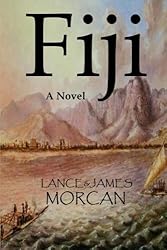
Fiji: A Novel (The World Duology, #2)

Six Epic Adventure Novels  is available via Amazon at: http://www.amazon.com/Adventure-Novels-Americas-Trilogy-Duology-ebook/dp/B00ZZ4LRIK/


Product Details


**********************************
Most people old enough remember exactly where they were when they heard the news that John Lennon was shot dead in New York City on December 8, 1980. The murderer was Mark David Chapman – yet another lone gunman who stood glassy-eyed at the crime scene waiting for the police to arrive. A witness to the shooting asked him if he was aware what he’d just done. “I just shot John Lennon,” Chapman calmly replied.

The scene of Lennon’s assassination.

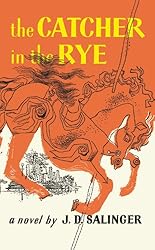
To add yet another curiosity to the mix, while Chapman patiently waited for the police to arrive and arrest him, he stood at the scene of the crime reading a copy of The Catcher in the Rye.

The Catcher in the Rye

Many conspiracy theorists believe that finding this particular book in the hands of an assassin is no mere coincidence. Regardless, it must have been a macabre sight to see Lennon lying dead on the ground with his murderer standing over him happily reading J.D. Salinger’s classic novel.

File:JohnLennonpeace.jpg

Lennon in rehearsal.

Chapman’s assassination of John Lennon was probably the mother of all Catcher incidents. Not long before the murder, Chapman had wanted to change his name to the novel’s narrator and anti-hero Holden Caulfield – so enamored was he with this fictitious character; inside the very copy of the book Chapman had purchased on the day of the murder, police found he’d written, “To Holden Caulfield, From Holden Caulfield, This is my statement”; and during the court case that followed, Chapman read a passage from the novel when addressing the judge and jury during his sentencing.


You have been reading an excerpt from our new release book The Catcher in the Rye Enigma: J.D. Salinger’s Mind Control Triggering Device or a Coincidental Literary Obsession of Criminals? – Available now via Amazon: http://www.amazon.com/Catcher-Rye-Enigma-Coincidental-Underground-ebook/dp/B00YVROKZ4/


The Catcher in the Rye Enigma: J.D. Salinger's Mind Control Triggering Device or a Coincidental Literary Obsession of Criminals? (The Underground Knowledge Series Book 4)


*****************************

Do you believe capitalism should be restructured, replaced by another economic system or left exactly as is? That’s the question we put to our Underground Knowledge group members in our latest poll on Goodreads.com; we also address that question in our upcoming INTERNATIONAL BANKSTER$: The Global Banking Elite Exposed and the Case for Restructuring Capitalism (book five in our Underground Knowledge Series).

INTERNATIONAL BANKSTER$: The Global Banking Elite Exposed and the Case for Restructuring Capitalism (The Underground Knowledge Series, #5)

Interim poll results show that 53% of respondents believe capitalism should be restructured or reformed; 27% say it should be replaced by another system; 10% insist it should be left exactly as is; and the balance are unsure.

Poll respondents’ comments make for interesting reading. Sample abridged comments (names withheld) follow: 

I’m essentially a Capitalist as I believe (however flawed) Capitalism is the only economic system ever devised that rewards entrepreneurial and/or hard-working individuals. So I’d never vote for Socialism or communism. However, I also think unregulated Capitalism has become one of the biggest problems facing society right now. It is allowing big business (including multinational monopoly-style companies) too much power and the average 9-5 worker is getting screwed.

Communism need not be the only alternative to Capitalism. A system should be devised which incorporates the good from both.

There is such abuse of capitalism… When money is the only objective at any cost you have a problem. The proposed TPP trade agreement is inherently wrong, again giving more power to the corporations. If you look at the 1888 introduction to Edward Bellamy’s Looking Backward you will see the workers still in the same position today. There must be social, economic, governmental and political change. Accountability must be instituted for corporations, none of which, including banks are too big to fail. War profiteering must end. Endless war must end. No one needs excessive billions of dollars at the expense of everyone else. Economic morality must be sadly legislated.

Capitalism should be reformed, so freedom can be secure for all, and finally the ones who were once left behind can be reached.

I think what critics are currently calling Capitalism and the free market are really corporatocracy and cronyism or “unregulated Capitalism” which is a different thing from what was originally in place in the US and much of the Western world. But whatever the case, I do think the wide scale economic or financial corruption by the elites is leading to increasing numbers becoming homeless, losing their homes, going bankrupt, not being able to pay their medical bills, etc, etc.

The greatest flaw of capitalism is the ability of corporate leaders to manipulate the political system to their benefit and to the detriment of everyone else. Making behavior like this a criminal offence, and enforcing the law, would go a long way toward reforming capitalism. To paraphrase Churchill, capitalism is the worst economic system there is, except for all the others.

Capitalism’s turned us into competitive human beings (which I don’t believe is good)and means we live in a system that benefits the rich and f…. the poor. Whether it’s modified or replaced, I don’t much care, as long as we can find a system that helps provide the necessities of life for everyone first. Then you can buy your Gucci dresses and blood diamonds.

Society must find a wise way to give food, shelter, education and health care to everyone. The change from capitalism to another system, needs first a big change in the way the majority thinks.

Poverty could be solved instantly if we wanted it to be- which would reduce crime, benefit the economy and be better for all concerned (oh, other than that current 1% at the top, but they’ve had their turn). I think it’s important we look beyond such things in the way that if someone says they’re anti-capitalist it must mean they’re a socialist, for instance. We base our understanding on the past and not with common sense in the present. . Feed, house, give water and energy to everyone and the world would soon change for the better. THEN you can start trying to attain whatever else your heart desires. Capitalism, in its current form, certainly doesn’t aid any of that.

Surely the genius and greatest evil of capitalism is that we all become both product and customer, consumer and consumed?

The problem cannot be blamed on shareholders, nor marketers. We must take self-responsibility.


To view all the comments, or better still to have YOUR say, go to: https://www.goodreads.com/poll/list/142309-underground-knowledge—a-discussion-group?type=group

Poll ends June 18 PST.

*

Our Underground Knowledge discussion group is aimed at those with an interest in the world we live in and a desire to learn or to uncover “underground knowledge” on important issues of our times.

Everyone’s welcome to join! All you need is an enquiring mind. Our members include scientists, social activists, teachers, historians, authors, military and intelligence agency personnel, bankers, housewives, whistleblowers, students, former police officers, journalists, readers and many more.

Visit the group at: https://www.goodreads.com/group/show/142309-underground-knowledge—a-discussion-group


**********************************