Archive for the ‘Books in general’ Category

Edward Norton, John Cusack, Philip Seymour Hoffman and Martin Sheen are among a star-studded line up of A-Listers who headline a soon-to-be-released documentary on J.D. Salinger, the reclusive author of The Catcher in the Rye.

JD Salinger reading Catcher in the Rye in 1952

J.D. Salinger in 1952

September 5, 2013 is the scheduled release date of the Weinstein Company-distributed doco, which the publicists say “provides an unprecedented look inside the private world of J.D. Salinger”.

Listed as one of the best novels of the 20th Century, The Catcher in the Rye was also the most censored book and the second most taught book in US public schools at one point. Its vulgarity, sexual references and alleged undermining of family values have seen it earn the dubious distinction of being one of the most frequently challenged books since the early 1990’s.

Total sales 65 million and rising.

The Catcher in the Rye has been associated with several high profile shootings including and John Hinckley Jr’s assassination attempt on Ronal Reagan and Mark David Chapman’s shooting of John Lennon. Chapman was arrested with his own worn copy of the book on his person.

The Catcher in the Rye features prominently in our conspiracy thriller series The Orphan Trilogy – most notably in book one, The Ninth Orphan. Our references to Salinger’s book are made in the context of the CIA-sanctioned MK-Ultra mind control activities, which made international headlines at the time. Google “MK-Ultra” some time… It makes for sobering reading!

This book acknowledges Catcher’s hold on people.

Meanwhile, Associated Press reports the authors of a new J.D. Salinger biography claim they have cracked one of publishing’s greatest mysteries: what the author of The Catcher in the Rye was working on during the last half century of his life.

AP reports a series of posthumous Salinger releases are planned after 2015, according to David Shields and Shane Salerno, whose book Salinger will be published on 3 September… Providing by far the most detailed report of previously unreleased material, the book’s authors cite “two independent and separate sources” who they say have “documented and verified” the information.

The Salinger books would revisit Catcher protagonist Holden Caulfield and draw on Salinger’s World War II years and his immersion in eastern religion. The material also would feature new stories about the Glass family of Franny and Zooey and other Salinger works…

Over the past 50 years, there has been endless and conflicting speculation over what Salinger was doing during his self-imposed retirement. That Salinger continued to write is well documented. The author himself told the New York Times in 1974 that he wrote daily, although only for himself.

But there is no consensus on what he was writing and no physical evidence of what Salinger had reportedly stashed in a safe in his home in Cornish, New Hampshire. The Salinger estate…has remained silent on the subject since the author’s death in January 2010. –AP.


And so the intrigue over The Catcher in the Rye and its mysterious author continues!


*****************************************

If you are seeking stimulation in the literary, arts and humanitarian fields, or just in life generally, allow me to introduce you to ‘Remy Benoit writing on all things’ – a new blog site guaranteed to stimulate.

Miz’ Remy, as she likes to be called, is an historian, author and long time veteran advocate from the USA’s deep south.

Here’s a smattering (excerpts only) of topics covered on Mis’ Remy’s blog. To view them in their entirety go to: http://remybenoit.wordpress.com/

remybenoit

writing on all things

Attention: Children and grandchildren of Viet Nam Veterans

Please look into this, file this form, post comments and make the powers to be understand the legacy you have been left with. Responsible action must be taken.

Visit with Agent Orange Legacy, now, please!

http://agentorangelegacy.blogspot.com/2013/05/important-message-to-children-of.html

This time stand with the Nez Perce

When I used to teach about the fight between the cavalry and the Nez Perce, the young people would be outraged at such senseless destruction over a 1500 mile range of pursuit and fighting. Chief Joseph made a speech that went to the heart of the matter amidst the cold snow, ice, and slaughter:

Tell General Howard I know his heart. What he told me before, I have it in my heart. I am tired of fighting. Our Chiefs are killed; Looking Glass is dead, Ta Hool Hool Shute is dead. The old men are all dead. It is the young men who say yes or no. He who led on the young men is dead. It is cold, and we have no blankets; the little children are freezing to death. My people, some of them, have run away to the hills, and have no blankets, no food. No one knows where they are – perhaps freezing to death. I want to have time to look for my children, and see how many of them I can find. Maybe I shall find them among the dead. Hear me, my Chiefs! I am tired; my heart is sick and sad. From where the sun now stands I will fight no more forever.

Image

Chief Joseph

An Interview with Robert Foley: The Consequences of Playing God

Mr. Foley has written a seminal work on the state of education in our country. It is a book everyone who cares about our children and their education should read. As I turned page after page of his exquisite writing, my mind kept going back to two decades as a teacher and remembering people and situations so close to the tale he is telling and you should be reading. You will find his book and my review here. Do put it on your must read list! Consequences of Playing God.

Now, to the interview with his publisher at XLibris.

Robert Joseph Foley is a retired teacher. He spent 34 years teaching in an urban school district and for most of those years was an active representative of the Yonkers Federation of Teachers. He has previously published a poetry collection – “These Little Poems of Death and after Life” – and is currently working on securing production for two as yet unpublished plays. He currently works as a free lance writer and proofreader for several independent publications.

Do you have any particular literary influences that help you develop writing in your genre, subject, and style?

I cannot pinpoint any particular writer who has influenced me; actually, I have developed what I think is a unique style that is probably the sum of all my reading experiences. Favorite writers range from Joyce Carol Oates back to Dostoevsky and Charles Dickens.

Who is Miz’ Remy?

Hello,

Like all of you, I am many things.

A mother.

A writer, editor, publisher. http://www.niquahanam.com/writing

Editor for the West Point Class of 1968. Two volumes: Both Sides of the Wall Reflections of the West Point Class of 1968

An historian.

A long time veteran advocate. http://www.welcomehomesolider.com

A book reviewer.

A gardener.

An activist who treasures life on this planet for which we are caretakers.

Do yourself a favour and visit ‘Remy Benoit writing on all things’ blog at http://remybenoit.wordpress.com/   –Lance

**********************************************

English has become a peculiarly capitalist language, according to The Guardian columnist Owen Hatherley, author of Militant Modernism.

In a recent article in The Guardian, Hatherley says researchers at the University of California Los Angeles proved there has been an ever-increasing use of particularly acquisitive words in the English language.

Picture of Owen Hatherley

Owen Hatherley

Here’s some excerpts from Hatherley’s article:

They (the researchers) used the somewhat blunt instrument of feeding 1.5m English-language books into Ngram Viewer, a tool that catalogues phrase usage, in order to count the frequency that words were used. The results proved that over the last 200 years there has been an ever-increasing use of particularly acquisitive words: “get”, “unique”, “individual”, “self”, “choose”; while over the same period “give” and “obliged” decreased.

The pattern was only broken briefly in the relatively egalitarian years between the 40s and 70s. For the researchers, this shows the results of the English-speaking countries moving from “a predominantly rural, low-tech society to a predominantly urban, hi-tech society…

…What has happened over those 200 years was the rise to dominance of capitalism, which obviously changed, and changes, our language and thinking. The researchers discovered a more algorithmic and superficial version of something that the Welsh socialist writer Raymond Williams had already tried to uncover – the way that English had become a class language, where loaded words (and, as he often pointed out, pronunciations) were accepted as “standard”.

books

In Culture and Society (1958) Williams forced the reader to think about certain keywords whose meaning was usually assumed: “class”, “democracy”, “art” and “industry” were old terms which had acquired almost entirely new meanings. Over the same 200 years studied by the LA researchers, “artist”, for instance, had gone from meaning “a skilled person” to signifying “a special kind of person”, working in the “imaginative” or “creative” arts.

In The Long Revolution (1961), Williams left literature behind to find the roots of class discourse in the English language itself, where French and Anglo-Saxon words were always weighted differently: “we can trace the minor relics of class prejudice in the lasting equation of moral qualities with class names: base, villain, boor and churl for the poor” – mostly terms suggesting “low” birth – while “gentle”, “proud” and “rich” were aristocratic terms of French origin (from gentil, prud and riche)…

…Even a word as central to the current debate as “austerity” comes with its own bias: originally from the Old French austerite meaning “harshness or cruelty”, it carries in Britain also a positive meaning, being associated with the self-restraint at the expense of the public good which was required by the wartime economy, when nowadays it is used to justify policies that effect the exact opposite. But to reveal the pernicious assumptions behind these professedly innocuous words will take more than a sophisticated search engine.


For the full article go to: http://www.theguardian.com/commentisfree/2013/aug/11/capitalism-language-raymond-williams


**********************************************


All three books in our conspiracy thriller series, The Orphan Trilogy (The Ninth Orphan / The Orphan Factory / The Orphan Uprising), figure prominently – alongside  the works of such greats as Dan Brown, Stieg Larsson, Robert Ludlum and John Le Carre – in readers’ popularity lists on the huge Amazon-owned literary site Goodreads.com

Our historical adventure-romance Fiji: A Novel also comes in at #3 in the Best Action-Adventure Novels category. (The Orphan Uprising is #1 in that category).

Here’s the top performers (as at 6 August, 2013) in Goodreads “Intrigue Book Lists”. Hope you agree there sure are some great books in this list…

The Da Vinci Code by Dan BrownThe Girl with the Dragon Tattoo by Stieg LarssonAngels & Demons by Dan BrownThe Girl Who Played with Fire by Stieg LarssonThe Silence of the Lambs by Thomas Harris

Thrillers    1,187 books    —    1,677 voters

The Bourne Identity by Robert LudlumThe Hunt for Red October by Tom ClancyTinker, Tailor, Soldier, Spy by John le CarréThe Spy Who Came In from the Cold by John le CarréNonofficial Asset by William Sewell

Best Spy Novels    489 books    —    513 voters

The Da Vinci Code by Dan BrownAngels & Demons by Dan BrownThe Ninth Orphan by James MorcanThe Orphan Trilogy by James MorcanThe Orphan Factory by James Morcan

Conspiracy Fiction   667 books    —    286 voters

The Hunger Games by Suzanne CollinsCatching Fire by Suzanne CollinsCity of Bones by Cassandra ClareHarry Potter Boxset by J.K. RowlingWater for Elephants by Sara Gruen

Best Gripping Books   354 books    —    281 voters

Jurassic Park by Michael CrichtonThe Ninth Orphan by James MorcanThe Andromeda Strain by Michael CrichtonThe Hunt for Red October by Tom ClancySphere by Michael Crichton

Best Technothrillers Ever   344 books    —    251 voters

The Orphan Uprising by James MorcanAgainst The Tide by John F. HanleyFiji by Lance MorcanIce Station by Matthew ReillyPatriot Games by Tom Clancy

Best Action-Adventure Novels   254 books    —    231 voters

For Nothing by Nicholas DenmonRemembrance by Michelle MadowEntwined by Heather DixonSilence by Becca FitzpatrickThe Peach Keeper by Sarah Addison Allen

Intriguing book covers   322 books

Wild Hearted by Lea BronsenThe Orphan Uprising by James MorcanBurden of Sisyphus by Jon MessengerStorm Front by Jim ButcherMonster Hunter International by Larry Correia

Best violent action novels   63 books    —    120 voters

The Name of the Wind by Patrick RothfussThe Wise Man's Fear by Patrick RothfussA Game of Thrones by George R.R. MartinThe Lord of the Rings by J.R.R. TolkienHarry Potter Boxset by J.K. Rowling

my Favorite Fantasy books   161 books    —    114 voters

The Name of the Rose by Umberto EcoThe Pillars of the Earth by Ken FollettWolf Hall by Hilary MantelPope Joan by Donna Woolfolk CrossWhen Christ and His Saints Slept by Sharon Kay Penman

Medieval and Renaissance historical fiction   42 books    —    54 voters

Front Page Fatality by LynDee WalkerLowcountry Boil by Susan M. BoyerBrides of the Storm by Amanda Albright StillEchoes of the Storm by Amanda Albright StillTo Kill a Mockingbird by Harper Lee

Best Southern Mysteries   26 books    —    33 voters

The Ninth Orphan by James MorcanTinker, Tailor, Soldier, Spy by John le CarréThe Boys from Brazil by Ira LevinFalse Impressions by Sandra NikolaiThe Zombie Room by R.D. Ronald

Tight Plot Novels   22 books    —    25 voters

The Man She Married by Dani SinclairA Woman of Mystery by Charlotte DouglasUnforgettable by Cassie MilesLover, Stranger by Amanda StevensOne Night Standoff by Delores Fossen

A Memory Away… – Harlequin Intrigue

For the full list go to: http://www.goodreads.com/list/tag/intrigue

Happy reading!Lance & James

************************************************

Activist-writer Shereen El Feki’s first book, Sex and the Citadel: Intimate Life in a Changing Arab World, provides an intriguing insight into the customs, laws, attitudes, history and sex lives of the citizens of six Arab countries.

TED reports: Ms El Feki has spent years traveling throughout the Arab region to listen to people’s stories about sex. Stemming from her own work as an HIV/AIDS researcher and activist, the project has been a way for her to reconnect with her own background. Half Egyptian, she grew up in Canada, and she wanted to better understand her own origins. As she adds, “if you really want to know a people you start by looking inside their bedrooms.”

Author Shereen El Feki

In Truthdig.com this week, book reviewer Tracy Quan says, “Family flashbacks are the most surprising (and delicious) revelations in El Feki’s book.”

Excerpts from her review follow:

When Shereen El Feki’s father was a 9-year-old boy in Cairo, he would sneak onto a tram that ran through the city’s official brothel quarter. Clinging to the side to catch “a boy’s-eye view of the action on Clot Bey Street,” he saw change overtake a historic red-light district. The closing of those licensed bordellos as he came of age would be part of a much longer story about hypocrisy and political power in Egypt…

…Raised in Canada by a Welsh mom and Egyptian dad, she’s a cosmopolitan enigma, dividing her time between Cairo and the Kensington district of London (“conveniently close to Heathrow”). When I caught up with her on Skype, during a hectic book tour, she spoke about the soft power associated with her father’s birthplace.

“If we could get a more open discussion around sexuality in Egyptian media, and get some of these themes into a few Ramadan soap operas, that would have huge impact,” she said. “Get something to work in Egypt, and you have a better chance transferring this to countries in the Gulf, like Qatar and UAE. Or even Jordan.”

Chapters on “summer marriage” (an Islam-approved way to profit from sex without breaking the law), modern hymen repair (a steady gig for doctors) and gender bending might make you feel like an armchair Orientalist. Hetero girls dressed as boys, with painted lips, drawing moustaches on their faces in ninth century Baghdad? These early Islamic hipsters, known as ghulamiyyat during the Abbasid caliphate, would confound the uptight Kuwaitis who six years ago passed a law against “imitating the opposite sex in any way.”

For the full review go to: http://www.truthdig.com/arts_culture/item/sex_and_the_citadel_20130801//


******************************************

The Killing Room is a feature film that is inspired by the secret history of mind control in the United States and elsewhere.

The Killing Room (2009) 

Directed by Jonathan Liebesman

Starring: Nick Cannon, Chloë Sevigny and Timothy Hutton

You can watch the entire film for free on YouTube: http://www.youtube.com/watch?v=MxSzZtubb7g

Here’s the film’s logline: Four individuals sign up for a psychological research study only to discover that they are now subjects of a brutal, classified government program.

The program they refer to is MK-Ultra.

We have researched MK-Ultra and the secret history of mind control in our conspiracy thriller series The Orphan Trilogy, and this is what we uncovered:

MK-Ultra, the CIA’s far-reaching mind control program, was an umbrella project spawned from the US Government’s super-secret Project Paperclip, a sinister venture that involved bringing dozens of Nazi scientists to America immediately after World War Two. Some believe MK-Ultra’s beginnings actually go back to the horrendous psychiatric experiments the Nazis conducted during the Holocaust.

Researching declassified CIA documents, we also became aware of the often-disastrous impact MK-Ultra had had on the lives of CIA operatives and unwitting US citizens over the years.

Some of America’s highest profile assassins (including the likes of John Lennon’s killer Mark David Chapman and Robert Kennedy’s assassin Sirhan Sirhan) claimed they were CIA-programmed killers hypnotized by MK-Ultra…The media portrayed them as crazed lone gunmen, so naturally the public paid little attention to their claims.

Sirhan Sirhan and David Chapman…Manchurian Candidates?

We believe it’s possible some of these men were mind-controlled soldiers, or Manchurian Candidates, carrying out assassination orders their conscious minds were not even aware of.

For more about the murky and disturbing history behind MK-Ultra go to: http://www.youtube.com/watch?v=fml1Z5saLH0

Here’s a list of novels that have mind control as a major theme in their plots – courtesy of Goodreads.com –

http://www.goodreads.com/list/show/11984.Mind_Control_Fiction#13250061

Our conspiracy thriller series The Orphan Trilogy (The Ninth Orphan / The Orphan Factory / The Orphan Uprising) features prominently on this list.

***********************************************************

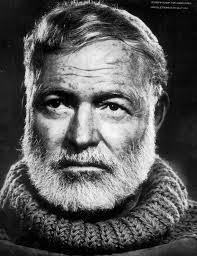
Hemingway

The great Ernest Hemingway (born July 21, 1899) would be 114 years old were he still alive today.

In the Arts & Culture section of the award-winning political website truthdig.com (recommended!) columnist Allen Barra pays tribute, of sorts, to the American author and journalist whose economical and understated style had a major influence on 20th Century fiction.

Judging by the critical comments of many truthdig.com subscribers, not everyone agrees with Barra’s summation of the life and times, nor the legacy, of Hemingway. Not sure I do either.

Nevertheless, ‘tis a worthwhile read…if only to remind us what it was that set Hemingway apart from the rest of us ‘would-be’ writers.

Here’s the opening stanzas of Barra’s article:

Pauline Kael, reviewing the film “Islands in the Stream” (1977), wrote, “There may be a time for a Hemingway revival, but this isn’t it. His themes don’t link with our preoccupations, and … the movie version of his posthumous novel, seems to belong to another age.”

Thirty-six years later, as we approach what would be Hemingway’s 114th birthday Sunday, his image is more vibrant now than in the last years of his life. The same could be said for his friend and drinking partner, F. Scott Fitzgerald.

This year belongs to Fitzgerald, with Baz Luhrmann’s glittery and successful film version of “The Great Gatsby” catapulting the novel onto best-seller lists.

The previous couple of years, however, were an unofficial Hemingway celebration, with books about him continuing to be a light industry. “The Letters of Ernest Hemingway, 1907-1922” was published by Cambridge University Press; soon we will have a complete set of volumes containing his entire correspondence. (Hemingway would never have seen the point in this. As he told a biographer of Fitzgerald’s, “I write letters because it is fun to get letters back, not for posterity. What the hell is posterity anyway?”)
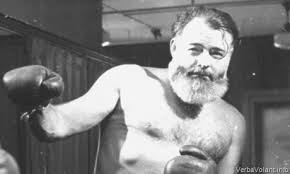
“Hemingway’s Laboratory—The Paris in Our Time” by Milton Cohen, a study of the writer’s early prose experiments, was published in May 2012 by the University of Alabama Press. That summer marked the paperback release of Paul Hendrickson’s critically acclaimed “Hemingway’s Boat: Everything He Loved in Life and Lost.”

And, who’d have thought it, Hemingway in the 21st century has re-emerged as a pop (Papa?) icon. Just about everything Hemingway wrote, from his novels to eight collections of short stories to several memoirs and works of journalism, is still in print. That’s more than 25 volumes. Can that be said about any other serious American author?

Character actor Corey Stoll did a terrific turn as the mid-1920s Hemingway in Woody Allen’s “Midnight in Paris” in 2011, with English actor Tom Hiddelston contributing a letter-perfect Scott Fitzgerald. Allen, who won an Oscar for the screenplay, did his homework. Every line out of Stoll’s mouth sounds like the distilled Hemingway of our collective memory:

“It was a good book because it was an honest book, and that’s what war does to men. And there’s nothing fine and noble about dying in the mud unless you die gracefully. And then it’s not only noble but brave,” he says.

And, “No subject is terrible if the story is true, if the prose is clean and honest, and if it affirms courage and grace under pressure.”

Last summer, HBO’s “Hemingway & Gellhorn,” directed by Philip Kaufman, received 15 Emmy nominations. The most in-depth film portrait of the writer featured ferocious performances by Clive Owen as Hemingway and Nicole Kidman as his third wife, the great war correspondent Martha Gellhorn.

All the books about Hemingway have told us everything except why we continue to care so much.

With the exception of his first novel, “The Sun Also Rises,” which still reads with the freshness of an open wound, I can no longer read the big books on which Hemingway’s reputation has so long rested. “A Farewell to Arms” and “For Whom the Bell Tolls” seem stilted, stagey and Hollywood-cornball melodramatic. (I applauded the scene in “Silver Linings Playbook” when Bradley Cooper throws a copy of “A Farewell to Arms” out the window because “She dies. I mean, the world’s hard enough as it is, guys. Can’t someone say, hey let’s be positive? Let’s have a good ending to the story?”)

Like most people I know, I find all of Hemingway’s later novels unreadable. And not just the later works. “To Have and Have Not,” published in 1937, didn’t survive a rereading. According to film director Howard Hawks, Hemingway confessed that he wrote it only “because I needed the money.” Hawks supposedly told Hemingway, “I can take the worst piece of crap you ever wrote and make a good movie out of it.” Hemingway’s worst piece of crap, Hawks decided, was “To Have and Have Not.”

I agree. The novel is dishonest hackwork; Hawks’ film with Bogart and Bacall was first-rate hackwork. 


How it must have galled Hemingway over the last 17 years of his life that when the title “To Have and Have Not” was mentioned, it was not his words people remembered but those written for Lauren Bacall by Jules Furthman and, of all people, William Faulkner—particularly “Anyone got a match?” and “You know how to whistle don’t you? You put your lips together and blow.” (Hemingway might have taken some solace in 1948 when John Huston pilfered the ending of “To Have and Have Not” for “Key Largo.”)

The reputation of “The Old Man and the Sea” (1952) hasn’t fared much better than the marlin the old man drags back to shore. Dwight Macdonald scored easy points when he said it was “written in that fake, biblical prose which Pearl Buck used in ‘The Good Earth,’ a style which seems to have a maligned fascination for the middlebrows—Miss Buck also got a Nobel Prize out of it.” Macdonald knew very well that at his worst, Hemingway was in a higher class than Buck and that “The Old Man and the Sea” isn’t Hemingway at his worst.

“Across the River and Into the Trees” (1950) and “Islands in the Stream” (published posthumously in 1970) are worthy of comparison with Buck, and I’m not sure Hemingway comes out ahead. His later fiction is pretty much summed up by a remark he made about John O’Hara, recorded in A.E. Hotchner’s “Papa Hemingway” (1955). When Hemingway first read O’Hara, “It looked like he could hit. … Then, instead of swinging away, for no reason he started beating out bunts.”

For the full article, go to: http://www.truthdig.com/arts_culture/item/happy_birthday_hemingway_20130718/

And while you’re there, check out archived articles on whistleblower Edward Snowden, Detroit’s bankruptcy, Trayvon’s shooting and more. They’re definitely worth a read.

Footnote: Hemingway (July 21, 1899 – July 2, 1961) “…his life of adventure and his public image influenced later generations. Hemingway produced most of his work between the mid-1920s and the mid-1950s, and won the Nobel Prize in Literature in 1954. He published seven novels, six short story collections, and two non-fiction works. Three novels, four collections of short stories, and three non-fiction works were published posthumously. Many of these are considered classics of American literature.” -Wikipedia


Happy reading! Lance


*******************************************

Fans of The Da Vinci Code bestselling author Dan Brown don’t have long to wait until the release of his latest novel, Inferno. May 14th is D-Day for the book’s release in North America by Doubleday and in the UK by Transworld Publishers, a division of The Random House Group.  The book will have a first printing of four million copies. 

Inferno, featuring the return of renowned Harvard symbologist Robert Langdon, is set in Italy and centers on one of history’s most enduring and mysterious literary masterpieces, Dante’s Inferno.

On his own website, Dan Brown says:

Although I studied Dante’s Inferno as a student, it wasn’t until recently, while researching in Florence, that I came to appreciate the enduring influence of Dante’s work on the modern world. With this new novel, I am excited to take readers on a journey deep into this mysterious realm…a landscape of codes, symbols, and more than a few secret passageways.

Check out Dan Brown’s website at: http://www.danbrown.com

As per below, the Dan Brown novels Angels & Demons and The Da Vinci Code are currently #1 and #2 respectively on Goodreads’ Conspiracy Fiction list. Our thriller series The Orphan Trilogy (The Ninth Orphan / The Orphan Factory / The Orphan Uprising) is #3 on that list…

Angels & Demons by Dan BrownThe Da Vinci Code by Dan BrownThe Orphan Trilogy by James MorcanThe Name of the Rose by Umberto EcoCatch-22 by Joseph Heller

For the Top 100 books on this list go to: http://www.goodreads.com/list/show/2407.Conspiracy_Fiction#17377036

Happy Reading! -Lance

**************************************************

Kim Jong Un, This One’s For You!

The 2013 Pulitzer Winner for Fiction.

In an insightful review of Adam Johnson’s Pulitzer prize-winning The Orphan Master’s Son, Truthdig book reviewer Cherilyn Parsons wonders if North Korean leader Kim Jong Un will read this novel.

Ms Parson’s review is appropriately headed ‘Kim Jong Un, This One’s For You’!

Here’s an excerpt from the review:

Citizens, gather ’round your loudspeakers! It is time for the final installment of this year’s Best North Korean Story, though it might as well be titled the Greatest North Korean Story of All Time!—from ‘The Orphan Master’s Son’.

I wonder if Kim Jong Un, North Korea’s new, poker-faced leader, will read this novel. If he does, he may be baffled unless his Switzerland schooling gave him a real understanding of Kafka, Nabokov, Pynchon, Swift and Borges. ‘The Orphan Master’s Son’ by Adam Johnson—an American—is a rich, careening, dystopian tale that stretches the form of a novel to give us a visceral hit of life inside North Korea.

So Kim Jong Un, this review’s for you. This audacious and (to despots like you) dangerous novel set in your country is definitely the Greatest North Korean Story of All Time, no matter what you might decree.

‘The Orphan Master’s Son’ is about a lot of things—freedom and captivity, love and loss, truth and lies—but at its deepest level it’s about identity and story. It’s about who holds the power to say, “This is who I am.”

For the full review go to: In-Depth Review and Analysis of the 2013 Pulitzer Winner for Fiction

For PBS video interview with author Adam Johnson go to: http://video.pbs.org/video/2191584507/

For sample chapters of The Orphan Master’s Son go to: http://www.amazon.com/The-Orphan-Masters-Son-ebook/dp/B006UIUJ2A/

And for the latest on arts and culture, we recommend Truthdig. Check it out at: http://www.truthdig.com/arts_culture

Happy reading! -Lance

************************************************************

Pinned Image

Our international thriller novel The Ninth Orphan (The Orphan Trilogy, #1) was seven years in the making. We started writing the manuscript in mid-2004 with literally dozens of rewrites to follow…Those rewrites were driven by doing indepth story analysis after each new draft and most importantly being honest with ourselves. We also sought feedback from other novelists plus experienced figures in the publishing industry. The Ninth Orphan has a complex, layered plot set in various locations all over the world, so we refused to rush it. We knew the story needed a lot of research and thought to completely nail it. After seven years of blood, sweat and tears we were 100% sure we had the perfect spy thriller novel on our hands.

In mid-2011, The Ninth Orphan was finally published (by Sterling Gate Books). It came out in both trade paperback and kindle ebook editions. By December of that year the kindle edition became The #1 Best-Selling Spy Novel on both Amazon.com and Amazon UK. It remained in the spy bestseller list until early 2012 and has been a regular visitor to Amazon’s bestseller lists ever since.

Pinned Image

Since then we have written and published the remainder of The Orphan Trilogy, which includes a prequel and a sequel to book one. We have also written a screenplay adaptation of The Ninth Orphan and are now actively developing that feature film under our production company Morcan Motion Pictures. The movie will be filmed in various locations around the world including Paris, London, Chicago and the Philippines.

Plot summary: An orphan grows up to become an assassin for a highly secretive organization. When he tries to break free and live a normal life, he is hunted by his mentor and father figure, and by a female orphan he spent his childhood with. On the run, the mysterious man’s life becomes entwined with his beautiful French-African hostage and a shocking past riddled with the darkest of conspiracies is revealed.

Thanks for all your support!

James & Lance Morcan