Archive for the ‘New Zealand: A Novel’ Category

The early days in the new land were difficult days for those Hawaikans who survived the epic sea voyage from their homeland. In the first year more deaths further reduced their number although those were partly offset by the births of several babies. And so far the land of the long white cloud was living up to its name: it was cloudy. With the clouds came rain and cooler temperatures, and the new arrivals shivered as they adapted to life in this foreign place.

Food, or lack of it, was the most crucial issue facing them. The abundant food sources of the islands of the South Pacific were sadly lacking. There was no sign of the pigs, turtles, bananas, coconuts, kumaras or yams they were familiar with. Wild berries from the hīnau, karaka and other native trees were the only fruits available. Though there was a profusion of fish and bird life, new fishing and hunting techniques had to be mastered before those creatures could be added to the recently arrivals’ diet in any quantity.

More than a few of the Ronui survivors wondered if they’d made the right decision in coming here.

Hotu remained staunch. The rangatira knew there’d be hardships to overcome before his people would be at one with the land. He was sure Kupe’s followers had faced the same problems all those centuries ago. Whether they had survived was another story. The same unanswered question applied to Ra and the others aboard Tautira as well as to those who had planned to follow Ra and himself to the new land as soon as their craft were seaworthy.

So far not one sign of another human being had been found. Not even a solitary footprint.

The first hunting expedition into the unexplored interior provided a much-needed boost for flagging spirits. Concerned they’d seen no pigs, or any animals for that matter, along the coast, Hotu led a dozen hunters inland. Their number included Kafoa who made up for his tender age and inexperience with enthusiasm. The hunters never found pigs, but what they did find soon proved to be as good.

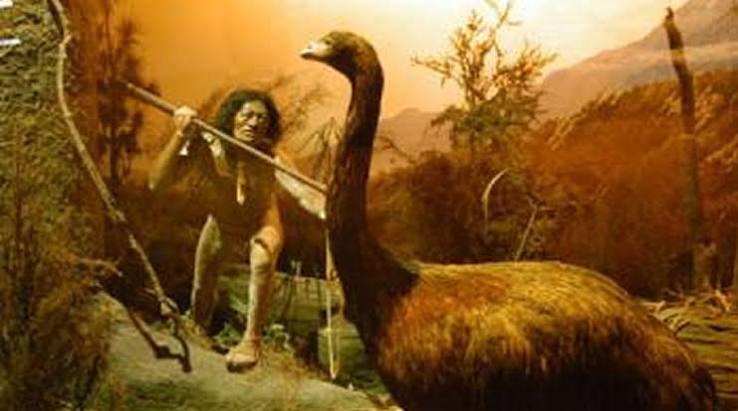
On the flatlands and rolling hills between the coast and the mountains, they discovered mobs of giant birds. The biggest of these emu-like creatures stood taller than the tallest man, and, Hotu observed, they had plenty of meat on their bones. Better still, like some other birds in this land, they were flightless. With no natural predators, until now, they had no need of wings. The moa, as they came to be called, were timid and easily killed. Moas quickly became a staple part of their hunters’ diet and would remain so until their extinction less than two centuries later.

In a land curiously devoid of land animals – apart from the dogs and rats the new arrivals brought with them – the moa’s meat provided a valuable source of much-needed protein. And their plumage, like that of their smaller relative, the kiwi, was put to good use making warm and decorative feather cloaks and blankets.

As the months passed and the summer of 1302 faded into autumn, Hotu’s people learned new hunting and fishing techniques, and other foods were added to their diet. These included numerous species of birds, fish, eels, shellfish, berries and root crops. The latter included the shoots and root of the commonplace fern.

As familiarity with the land’s natural resources grew, so did mastery of new building techniques grow. Small, single-entrance, windowless whares [huts], designed to keep their occupants snug and warm, were constructed while native flax was used as the basis for clothes and matting in place of the paper mulberry tree of the islands.

Life slowly became more bearable for the new settlers. Hawaiki and those loved-ones who had been left behind were always in their thoughts, but every one of them accepted their future was here, in Aotearoa. Here, they were safe. They had no enemies. Not yet at least.

By the end of their second summer, they were already becoming tangata whenua – people of the land.

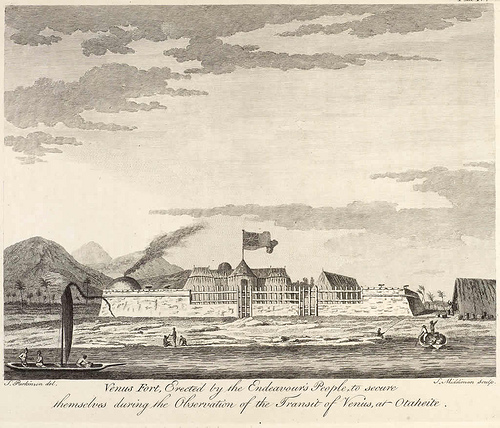
The morning after the Endeavour’s arrival at Matavai Bay dawned bright and sunny, a welcome change from the recent foul weather.

Even before the crew had finished breakfasting in the mess, a cry went up that a canoe was approaching. Nicholas and several other crewmen hurried topside and saw two paddlers propelling the canoe toward them across the calm waters of the lagoon. Behind the paddlers sat an impressive-looking Tahitian resplendent in a fine black cloak. His handsome head was adorned by a head-dress of colourful feathers. It was obvious…

This novel is available via Amazon as a hardcover, paperback, audiobook and Kindle ebook… https://www.amazon.com/New-Zealand-Novel-Lance-Morcan/dp/0473728524/

“Riveting. I could not put the book down. Historical facts were woven with some well-crafted narratives into a story of how the nation of New Zealand came to be. The knowledge of the author about native beliefs, customs, and the way of life in the tribal communities of the South Pacific coupled with Captain Cook, the explorer of legend, made this a compelling and exciting story to read.” –Stephen Heartland, Author, USA

CHAPTER 7

Plymouth, August 25, 1768

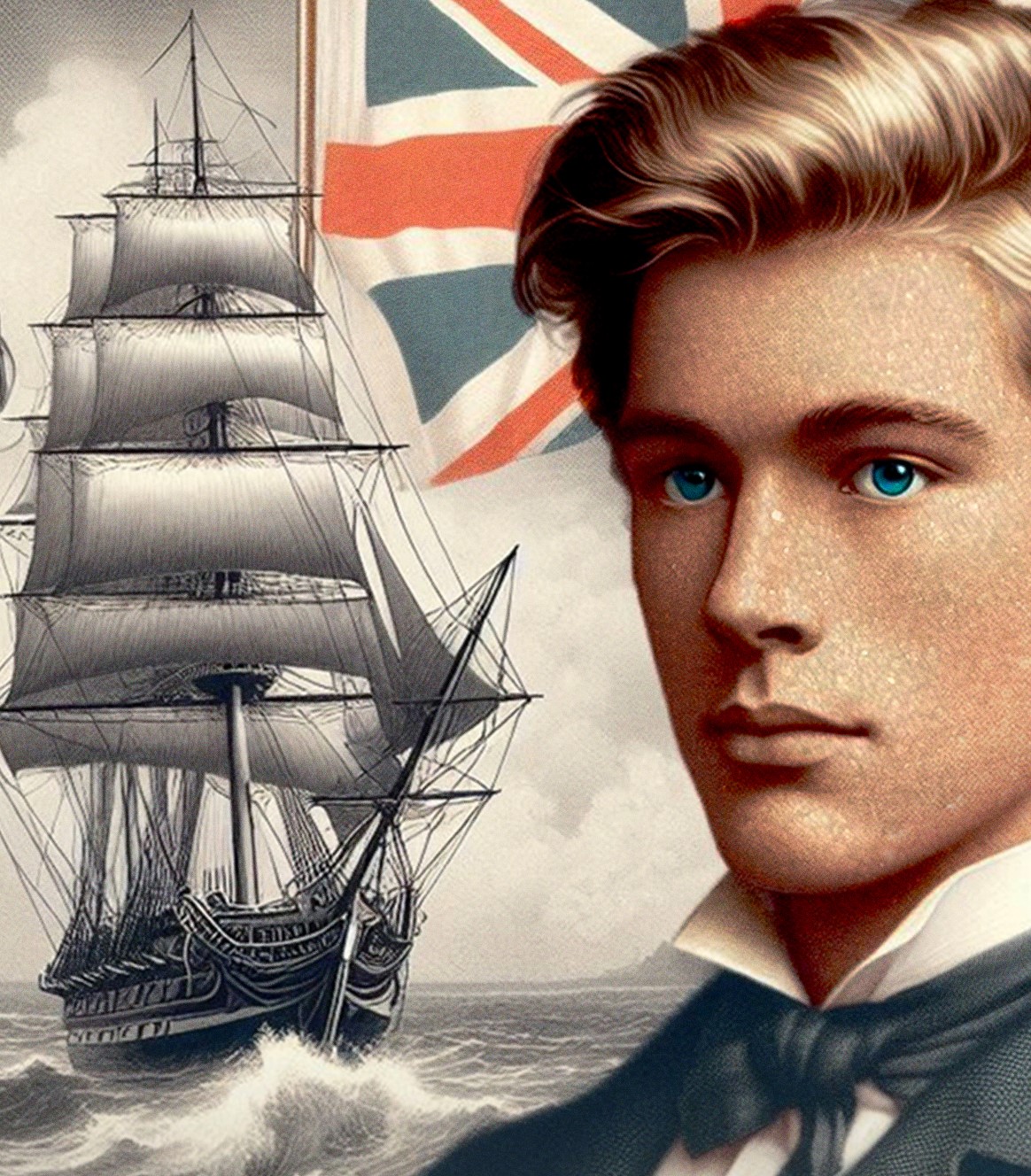
The storm Nicholas Young and his fellow crewmembers had feared arrived with a vengeance, delaying the Endeavour’s departure from Plymouth by three days. She finally put to sea at two o’clock on a windy August afternoon. The foul weather that had delayed her departure continued for several more days and many of the bark’s company were violently ill. Not Nicholas, though. He’d quickly discovered he was equally at home aboard the Endeavour in fair weather or foul.

Standing alone at the bow and delighting in the feel of the rain, wind and spray on his face, his spirits soared as the English coast disappeared over the horizon behind him. Romantic images of far-away places filled his mind. Ahead of him lay Tahiti and beyond that new lands waiting to be discovered.

Early in the voyage, Cook opened the second part of his orders and revealed to his crew what Nicholas already suspected: after observing the transit of Venus in Tahiti, they were to search for Terra Australis Incognita.

How Mister Wilkie had known what the secret orders were even before the captain did, Nicholas never did find out. Suffice to say this was the age of exploration and everyone was talking about the race to discover new lands. There’d been much talk of late about a mysterious continent to the south, and who better than Cook to discover that land and plant England’s flag on its shores.

What Nicholas and the others didn’t know was that Cook alone suspected Terra Australis Incognita was a myth and that an earlier sighting of the so-called Great Southern Continent was in fact no more than the western shoreline of a distant island, or group of islands, discovered one hundred and twenty-six years earlier by Dutch explorer Abel Tasman. A place cartographers subsequently called Nieuw Zeeland after the Dutch province of Zeeland. A place that would one day soon be known to the world as New Zealand.

#

Before retiring for the night, and in keeping with his evening routine, Cook sipped a glass of port in his cabin while preparing to write an entry in his logbook or journal. On this occasion it was his journal.

The captain was distracted. His beloved and long suffering wife Elizabeth was pregnant with their fourth child, and, for all he knew, may already have given birth. She was, after all, in the late stages of pregnancy when he’d departed Plymouth. Leaving her and their three children in the knowledge it would be years before he saw them again, if ever, hadn’t been easy, but it was a cross he’d learned to bear as a career seaman. Elizabeth, on the other hand, had never accepted her husband’s long absences, and this rankled with him though he never voiced his annoyance.

Dipping his quill into an open bottle of ink, the captain was about to start writing when a sharp wind gust caused the bark to lurch to starboard, spilling the port and almost sending the ink bottle flying. Unphased, he patiently waited until the bark righted herself then tried again.

In his finest italics handwriting, he wrote:

September 1st, 1768: Very hard gales with some heavy showers of rain the most part of these 24 hours which brought us under our two courses and broke one of our main topmast puttock plates. They also washed overboard a small boat belonging to the boatswain and worst of all drowned between 3 and 4 dozen of our poultry.

The bark lurched again as she was assailed by more wind gusts, prompting Cook to discontinue writing. The wind was clearly strengthening. It was, he thought, a good excuse to take botanist Joseph Banks up on an earlier invitation to join him in his nearby quarters for a nightcap. He’d discovered early in the voyage that he and Banks had much in common, the man was an engaging conversationalist and he enjoyed his company.

#

Almost three weeks after departing England, the Endeavour lay at anchor in the safe harbour of Porto Santo, in the Portuguese archipelago of Madeira. After what for the most part had been a stormy passage, the warmer temperatures came as a welcome relief for the bark’s company.

However, it was with a heavy heart that Cook retired to his cabin after dinner that evening for the expedition had just that day suffered its first death. Chief mate Alex Weir, in the view of many one of the finest seamen aboard, had drowned after one of his legs became entangled in a buoy rope, which pulled him overboard.

In the privacy of his quarters, Cook took up his quill and proceeded to record the incident in his logbook. He sighed as he paused in his deliberations and rubbed his eyes. Weir had been one of the best, and he’d be sorely missed.

The captain poured his usual, a glass of port, for himself. His eyes strayed to a portrait of his wife, which hung on the facing wall. He had been thinking of Elizabeth more than usual lately because he knew, God willing, she’d have given birth by now. He wondered if she’d given him another son.

Cook wasn’t to know Elizabeth had given birth to a boy, Joseph, six days earlier. Nor could he know the boy would die within the month.

#

Alex Weir’s death aside, Cook and his men spent an enjoyable five days at Madeira before departing for Tahiti. Many crewmembers and one or two officers had fond memories of time well spent ashore with some of the local senhoritas. To Nicholas’s great chagrin, he wasn’t one of them. He had hoped to lose his virginity in Madeira. 

#

“Land ahoy!”

The cry from the crow’s nest announced the arrival of His Majesty’s bark the Endeavour at Tahiti – some eight months after departing England. Word quickly spread above and below deck.

 In the sickbay, Nicholas restrained himself from dropping what he was doing to rush topside. It was just as well for he was assisting Surgeon Monkhouse in the middle of a rather bloody operation.

“Steady, lad,” Monkhouse cautioned. The surgeon knew only too well how much his assistant was looking forward to his first glimpse of Tahiti, but right now they had a patient to attend to.

Nicholas re-focused on the job at hand. As the surgeon worked his magic, his assistant held a metal clamp to the man’s femoral artery. Rigger Ben Johnson had fallen from the rigging during a squall earlier that morning. He’d landed on a grappling hook, badly gashing his leg and losing a lot of blood in the process.

“Nearly finished,” Monkhouse muttered as he proceeded to tie the artery.

The bleeding ceased and Nicholas was able to remove the clamp as his superior began sewing up the open wound. “Have we saved the leg?” he asked anxiously.

The still-conscious Johnson looked around at the surgeon even more anxiously as he awaited the reply. Half a bottle of rum had dulled his pain, but it hadn’t affected his hearing.

“Aye and I dare say he’ll live,” Monkhouse announced matter-of-factly.

Johnson heaved a sigh of relief before lapsing into unconsciousness. Nicholas wasn’t sure whether the patient’s present state could be attributed to aftershock or inebriation. As the alcohol fumes from the patient assailed his nostrils, he decided it must be the latter.

“Ye can wash up now,” Monkhouse told his assistant. “I’ll finish up here.”

Nicholas washed the blood from his hands in a nearby bucket of freshwater kept for that very purpose then hurried topside for his first glimpse of Tahiti.

Monkhouse smiled at his assistant’s youthful vigour. Although he tried not to show it, he’d become fond of the lad. Indeed, Nicholas’s unbridled enthusiasm and engaging personality had endeared him to all the ship’s company, and the obvious skills he demonstrated after so short a period in his new role indicated his appointment as surgeon’s boy was an inspired one. The surgeon made a mental note to shout the bark’s recruiting officer, Mister Wilkie, an extra round of drinks when he returned to England.

Nicholas wasn’t the only excited person on board. Since rounding Cape Horn, everyone was looking forward to resting up in Tahiti. Although a fairly recent addition to the maps of the world, its reputation as a South Sea paradise was spreading fast and the men were keen to discover whether that reputation was warranted.

The journey out, via such exotic places as Madeira, Brazil, Patagonia, Tierra del Fuego and finally the Horn itself, had proven something of a baptism of fire for Nicholas. When he’d set sail from England the previous year, his head had been filled with fanciful dreams of romance and swashbuckling adventure on the high seas. The reality was somewhat different.

At sea, the Endeavour’s surgery was one of the busiest facilities aboard ship. As surgeon’s boy, his shifts involved twelve-hour days every day as well as being on call to assist in the event of an emergency. He soon discovered emergencies aboard sailing ships of the day were the rule rather than the exception.

Terrifying mid-Atlantic storms had resulted in a rash of injuries, some serious, and two more lives had been lost before they’d even reached the sanctuary of Rio de Janeiro. Both unfortunates had been swept overboard in mountainous seas. Since then another had died after falling from the rigging.

Many of the mishaps could be attributed to drunkenness. So liberal were the Royal Navy’s rum rations, which were often supplemented illegally through theft and bribery, that many crew members and some officers were constantly drunk. It was a problem in no way unique to the Endeavour or even to the ships of the Royal Navy, although Surgeon Monkhouse had commented more than once he thought the problem was particularly bad in the navy.

Nicholas had quickly discovered that alcohol and sailing were not a good mix. He was constantly helping to patch up injured seamen who had over-indulged. Other injuries resulted from fighting, which was all too often another side-effect of excessive drinking.

Brawling, drunkenness and illicit procurement of liquor were punishable by flogging. More than a dozen floggings had been administered so far on the voyage, but not even the cat-of-nine-tails was enough to deter the worst offenders. These were rough men who worked hard and played hard, and Nicholas soon learned he’d entered a world where he had to stand up for himself or risk being bullied.

He learned that homosexuality was another fact of life at sea where men were literally thrown together in the cramped quarters below deck. As the distance separating them from wives and loved-ones lengthened, bunk or hammock-sharing became quite common, and not only below deck. This problem – for that’s how the navy viewed homosexuality – was different to other problems encountered on board in that the top brass scarcely acknowledged it existed. Officially, the hierarchy took a dim view of buggery, as they called it. The offence was punishable by death – and not just in the navy: it was a capital crime in civilian life, too. Unofficially, the navy’s top brass turned a blind eye provided offenders were discreet.

Nicholas often marvelled at how easily happily-married family men could turn to other men for sexual relief then just as easily return to their wives’ loving arms on returning to their home port.

Several crew members had made unwanted advances to Nicholas early on in the voyage. He’d quickly discouraged them. On the last occasion – to signal loud and clear what his preferences were – he made an example of the drunken oaf who tried to grope him in front of others in the mess. Evading the man’s clumsy advances, he promptly kicked him in the testicles. While his victim lay temporarily paralyzed on the floor, Nicholas proceeded to force-feed him pickled cabbage and other legumes from the man’s plate until his open mouth could accommodate no more of his unfinished dinner. All this to the wild cheering of some thirty admiring onlookers. He never had any problems after that.

Nicholas was now eighteen. With each day at sea, his body had grown harder and he’d developed a mental toughness to match. Already, he had shared experiences and suffered hardships many Englishmen would never experience in their lifetime. In addition to his medical duties, he assisted with mending sails, and, because of his keen eyesight, occasionally acted as lookout in the crow’s nest. These duties left little time for any activity other than eating and sleeping, and provided further proof – if proof was needed – that there was no room for idle hands on any ship in Captain Cook’s command.

How Nicholas had envied the young folk he saw enjoying themselves in the port towns the Endeavour stopped at along the way. So it was with great excitement he was looking forward to disembarking at Tahiti where he and his crewmates would enjoy their first real break since leaving England’s shores. The transit of Venus across the sun was more than seven weeks away, and every man aboard was determined to make the most of that time and sample the delights Tahiti had to offer.

#

Nicholas’s first impression of Tahiti was disappointing. Since rounding the Horn, the weather had brought nothing but wind and rain. Today was no different. Yet another southerly squall swept over the Endeavour as he joined the men lining the portside rail. Peering through the rain, they could just make out the mountainous outline of Tahiti to the northwest. Further to the west they caught occasional glimpses of a smaller island.

The first sign of tropical life came as the squall passed. A profusion of red-billed tropicbirds, white-faced storm petrels and other colourful birds materialised as if from nowhere. They circled the bark, screeching and squawking in a joyous display of welcome while boobies and gannets dived for fish in the warm waters of a nearby lagoon.

#

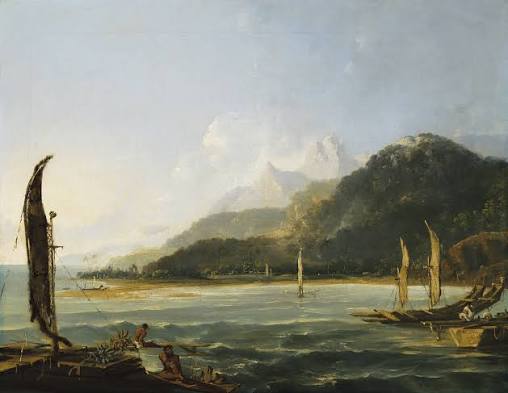
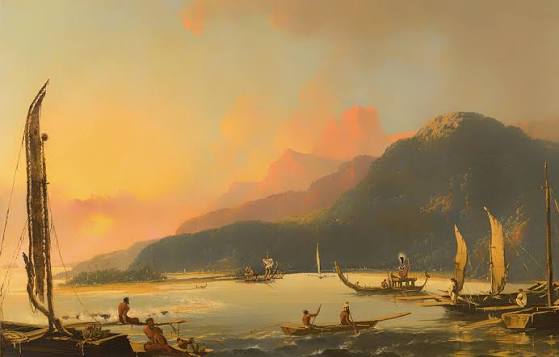
It was two days before the prevailing southerly dropped sufficiently to allow Cook to nurse the Endeavour through the gap in the reef that surrounded the main island. As if by divine providence the sun broke from behind the clouds as soon as the bark reached the safety of the sheltered bay inside the reef, and the entire island was bathed in brilliant sunshine. The blue waters of the bay lapped at the shore’s black volcanic sand while all along the shoreline distinctive swaying palm trees added to the romantic vista. Between the beach and the steep mountaintops behind were rising forests of tropical trees.

On the bark’s seaward side, rollers broke on the reef that ringed the island like white foam. The crashing surf assailed the eardrums relentlessly, reminiscent of booming cannon-fire.

Cook knew from his charts this was Matavai Bay – easily identified by the towering volcanic peaks that stood like sentinels at the northern end of the island. Between the peaks and shore lay the ruins of some long-forgotten village.

The bay was far from deserted, however. Less than a mile east of the old ruins were signs of a well-populated settlement. Although the thatched, bure-style dwellings were concealed from the Endeavour, numerous villagers could be seen congregating on the shore, observing the newcomers while smoke from cooking fires drifted skywards above the treetops behind them.

To those watching aboard ship, the villagers appeared peaceful enough.

Between ship and shore, Nicholas counted at least twenty single-hulled canoes – most of them manned by fishermen who speared fish and cast nets from their flimsy craft. Like the other villagers, they appeared interested but unperturbed by the sight of foreign visitors. Above the high tide mark on the beach behind them at least two hundred canoes rested side by side, half of them double voyaging canoes and many of those clearly vessels of war for they contained stockpiles of spears, clubs and other weapons.

The arrival of a sailing ship no longer created panic as another English vessel had anchored in this very bay two years earlier, and, unbeknown to the English, two French vessels had called in since that historic visit. Even so, the Endeavour’s arrival was something of a novelty and it wasn’t long before a small fleet of canoes was heading out toward the bark.

A murmur of excitement went around the bark’s crew as they identified a number of dusky maidens among the occupants of the fast-approaching canoes. “Wenches ahoy!” one exuberant sailor shouted.

Nicholas couldn’t take his eyes off a bevy of beautiful wahines in the leading canoe. They truly are divine, he thought. His crewmates obviously shared that opinion and they directed wolf whistles at those who caught their eye.

Cook interrupted his men’s revelry. “Man your stations!” he shouted from the parapet above the quarterdeck. Then, turning to his bosun, he said, “Ye know what to do, Mister Molyneaux.”

“Aye, Captain,” the bosun answered. A seasoned veteran of the high seas, Robert Molyneaux knew exactly what his duties were. In his broad Lancashire accent he issued a string of orders to the crew, every third or fourth word a profanity of the foulest kind.

The Endeavour’s decks, masts and rigging became a hive of activity as marines and crewmen scurried to man the guns, ready the sails for sudden flight if needed and generally prepare for visitors whose intentions could not yet be safely fathomed.

“All ready, Captain!” Molyneaux reported a few minutes later.

Cook nodded his acknowledgment. The captain had seen too many ugly incidents in too many different ports to risk his vessel’s safety or his men’s lives through ignoring standard procedures. He turned to his second lieutenant, Zachary Hicks, a twenty nine-year-old Londoner and an agreeable fellow who was never far from Cook’s side when there was any hint of trouble. “Prepare arms, Mister Hicks.”

“Aye, Captain,” Hicks said, saluting his superior. Looking around at Sergeant John Edgecumbe, who also made it his business to remain close by at such times, he said, “Give the order, Sergeant.”

“Aye, sir,” Edgecumbe said. Turning to address the complement of marines who had already taken up their positions along the starboard rail, he shouted, “Prepare arms!”

The marines loaded standard-issue shot into their muskets. The small lead pellets could inflict a nasty wound and were useful in deterring folk with bad intentions.

Behind Edgecumbe, Third Lieutenant John Gore, an American, stood to attention, his broad back ramrod straight. At his feet was an ammunition canister containing explosives and musket balls. These would be issued smartly if the Tahitians became aggressive and musket shot failed to deter them.

Although he’d witnessed similar preparations on board before, Nicholas never failed to be impressed by Cook’s professionalism or by that of the captain’s men.

The canoes quickly closed with the ship, their smiling occupants waving and shouting words of welcome. They were obviously looking to trade as they displayed woven mats and baskets along with fresh food offerings. The latter included bananas, berries, breadfruit, coconuts, pork, shellfish and all manner of tropical fish.

To the delight of the Endeavour’s crew, the wahines were scantily-clad, most of them wearing only traditional grass skirts. Some discarded their garments and dived naked into the sea, laughing uninhibitedly at the leering seamen lining the bark’s railings above.

For Nicholas, who remained fairly innocent in the ways of the opposite sex, it was an eye-opener – as it was for all those who had never before had contact with Tahitians. The lad was struck by the free spirit and uninhibited actions of the wahines. He quickly became caught up in the gaiety of the occasion, and, laughing, joined the throng of men shouting their encouragement to the nymphs who frolicked like mermaids below. Even the captain could not suppress a smile as the laughter became contagious.

Cook ordered that the rope ladders be thrown over the side, and within minutes the decks were crowded with smiling Tahitians.

Nicholas was immediately struck by their appearance. Their lithe bodies and golden brown skin contrasted noticeably with the Europeans on deck. Some, he thought, seemed quite refined. Among the natives, unsmiling and more reserved than the others, was a huge man who Nicholas guessed was a chief. Because of his size, he was immediately christened Hercules by the crewmen and would be referred to as such for the duration of the bark’s stay at Matavai Bay.

The normally well-ordered proceedings on board degenerated into chaos as trading became frenzied and some of the Tahitians took license to roam over every inch of the bark. At the same time, most of the wahines gave themselves freely to interested crewmembers. A few held out for cloth or beads in exchange for their favours, and scuffles broke out as sailors jostled for their attention.

Cook quickly identified a potential problem developing and ordered Second Lieutenant Hicks to ensure his marines remained vigilant at their posts. Hicks passed the order on to his men, at the same time pointing out that some of the natives had brought knives and clubs on board.

As it turned out, the precautions weren’t necessary as the man-mountain dubbed Hercules took matters into his own hands. A roar erupted from the giant and he quickly brought his rowdy subjects under control. As a semblance of decorum was restored, the wahines shyly retreated down the ladders to wait in the canoes while their menfolk completed trading before leaving the bark well contented.

Last to leave was one of the more agile wahines who, unnoticed by anyone else, had been entertaining an inebriated John Thompson, the one-armed cook, high above deck in the crow’s nest. How the intoxicated Thompson had been able to scale the mast one-handed, his crewmates couldn’t imagine. To their amusement, he was too drunk and fatigued to even attempt to obey Molyneaux’s order to descend the mast, and so the bosun announced that Cookie, as Thompson was known, should remain in the crow’s nest until he sobered up. Some of the men immediately began placing bets on whether he would survive the descent. Those who bet against him would rue their judgement.

It wasn’t until after the crew had finished bidding farewell to the visitors that Warrant Officer Francis Wilkinson noticed his ceremonial sword, complete with its jewel-encrusted scabbard, had been stolen from his cabin. Later that day, the Endeavour’s chief carpenter, John Satterley, reported some tools were also missing, including a set of saws which had much sentimental as well as practical value. A furious Captain Cook vowed that the thieves would be found and flogged. No-one, not even Cook, expected the culprits would ever be found let alone flogged.

This was the first experience for most of the bark’s company of the Tahitians’ predisposition to stealing. It was an experience that would be repeated with infuriating regularity throughout the islands of the South Pacific over the remainder of the voyage.  

CHAPTER 8

Aotearoa, Summer, 1302 AD

The early days in the new land were difficult days for those Hawaikans who survived the epic sea voyage from their homeland. In the first year more deaths further reduced their number although those were partly offset by the births of several babies. And so far the land of the long white cloud was living up to its name: it was cloudy. With the clouds came rain and cooler temperatures, and the new arrivals shivered as they…

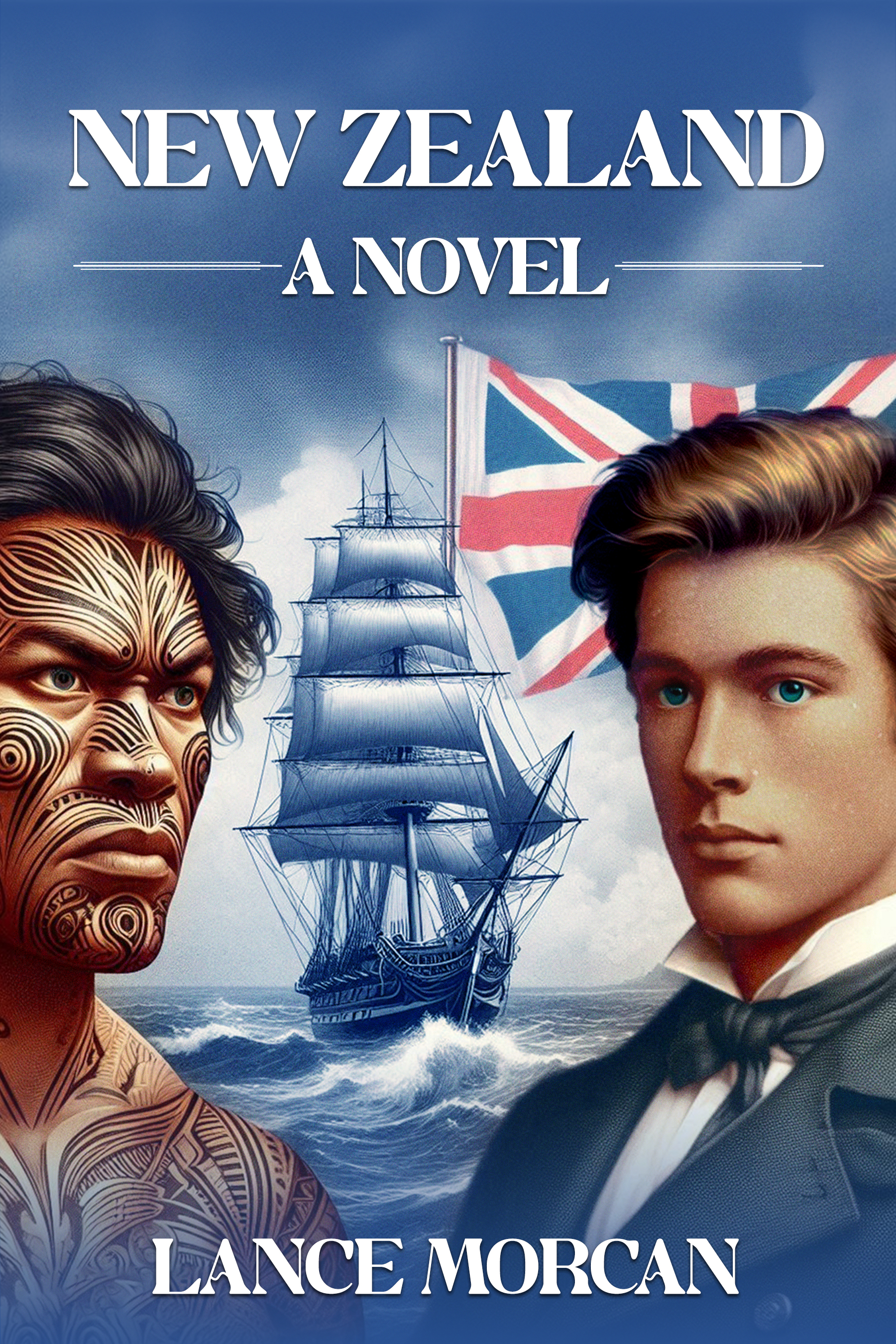
Spanning five centuries, New Zealand: A Novel is a sweeping tale of discovery, destiny, and forbidden love in which the old and new worlds collide. While this novel may not always convey exactly what happened during the discovery and settlement of New Zealand, first by Pacific Islanders and later by Europeans, I believe it captures the spirit of those sometimes romantic, always fascinating and often bloody times. –Lance Morcan (Author)

CHAPTER 6

South Pacific, Summer, 1301 AD

Aboard Ronui, only Hotu remained fully alert as yet another day dawned. He sat at the stern, manning the tiller and scanning the horizon in search of land. Kafoa slept fitfully close by, his head resting on his father’s lap. Their fellow voyagers, who now numbered less than sixty, lay sprawled before them, occupying much of the free space on the craft’s deck. Many were near death and most had resigned themselves to ending up in a watery grave.

As for Ronui, the craft bore no resemblance to the proud voyaging canoe that had left Hawaiki many weeks ago. Partially submerged, it appeared to be in imminent danger of sinking, and the experienced sailors on board knew it wouldn’t survive another storm.

Hotu was thankful his wives and all but one of his children had survived the journey so far. His youngest daughter had succumbed to the cold only the previous day. Other families had suffered even greater loss, some losing all their children and in some cases spouses. In the two days since Ronui’s separation from Tautira, the last of the precious food provisions had been eaten and most of the voyagers had all but lost the will to live. Physically, the survivors resembled skeletons, and the crewmen were becoming too weak to handle the relentless demands of blue water sailing.

The rangatira remained determined to find Kupe’s land. Trance-like, he sat at the tiller, single-mindedly pointing the canoe south as the morning sun broached the horizon, lighting up the Pacific and announcing the dawn of a rare fine day. Ronui’s remaining triangular sail, fluttered in defiant shreds in the steady breeze.

Hotu clung to the fact that as the distance between Ronui and Hawaiki lengthened, the gap between the voyagers and Kupe’s land narrowed accordingly. He just hoped they would reach their destination before any more died.

Kafoa stirred. Hotu glanced down and saw the boy was waking after a night of broken sleep and bad dreams. His heart went out to him. In his oldest son he saw his future, and his people’s future, too. Pushing the hair from the boy’s eyes, he murmured, “Good morning, son.”

“Good morning, papa.” Kafoa sat up and rubbed the sleep from his eyes.

Hotu handed his son a bowl of rainwater and the boy gulped it down greedily.

Kafoa suddenly froze, the bowl still raised to his mouth. “Papa!” he said. “Are those land birds?” Squinting, he pointed east toward the rising sun.

Hotu followed his son’s gaze. Despite the sun’s glare, he could just make out two large grey-and-white-feathered birds. They were a hundred yards away, lazily gliding in the breeze. “Yes!” he roared “They are seagulls!”

The commotion roused the others on board. Some of them staggered or crawled back to join Hotu and Kafoa. Rangi, the navigator, was first to reach the pair.

“Gulls!” Rangi confirmed. He returned his gaze to the southern horizon. “Can you see land?”

“No, but it must be near!” Hotu declared.

By now everyone who could was standing or sitting upright and scanning the horizon. Gradually, as long minutes dragged by, their spirits sank. There was no land to be seen, only an endless expanse of sky and ocean.

“The ocean gods are tormenting us before we die!” one of the women wailed. Others – men and women – voiced their despair. Some crawled back to where they’d been lying, seemingly resigned to death.

Hotu, Rangi and the other experienced sailors, however, remained alert. Kafoa noticed there was an air of excitement around them. It seemed to him that they could sense land even if they couldn’t see it.

“Look at the swells,” Rangi pointed out. “They are flattening.”

Kafoa looked at them. They did seem flatter even to his inexperienced eye.

“Look!” another man shouted. “Up ahead!” He pointed to the branch of a tree floating several hundred yards ahead of the canoe. It was almost totally submerged and if it hadn’t been for its bright red flowers, it might not have been noticed. The men weren’t to know it was a branch from the pohutukawa, an iconic tree that flowered early summer – a tree that was unique to Kupe’s land.

Still at the tiller, Hotu steered toward the branch. As the canoe closed with it, one of the men reached over and pulled it aboard. The branch had large green leaves; its distinctive flowers were actually brush blossoms, consisting of a mass of bright red stamens, but no-one could identify the tree it came from. That was of no consequence, however. It was another sign that land was near.

As one, they all stared at the horizon as if willing land to appear.

Time passed excruciatingly slowly and the sun rose ever higher. Still there was no sighting of land, and Kafoa could feel the excitement of those around him beginning to wane. He asked himself if they’d misread the signs.

#

Kafoa dozed intermittently. He welcomed sleep. It provided relief from the hunger pangs that gripped him. Through the mists of sleep he could hear his father and Rangi talking nearby.

“Land is close,” Hotu said. “I can smell it.”

Kafoa tried to open his eyes, but the blinding sun was directly above him now and so he kept them closed for the moment. Lulled by the motion of the canoe in the gentle swell, he drifted back to sleep, dreaming of succulent roast pork and barbecued turtle meat. 

The boy had no sooner fallen asleep than he was woken by the navigator’s shouts.

“I see land!” Rangi shouted triumphantly, leaping to his feet.

“Where?” Hotu demanded.

“There!” the excited navigator said, pointing directly southwest.

Kafoa was wide awake now. He pushed himself to his feet and squeezed between the two men, searching the horizon for a glimpse of land.

Hotu said, “Yes! I see it!”

Rangi adjusted the tiller until the canoe pointed slightly more to the west.

Others gathered around, aroused by the sudden commotion. 

Kafoa strained his eyes, but could see only sky and ocean. “Where is it?” he implored. “I cannot see anything!”

Hotu smiled. “Look for the signs and you will see it.”

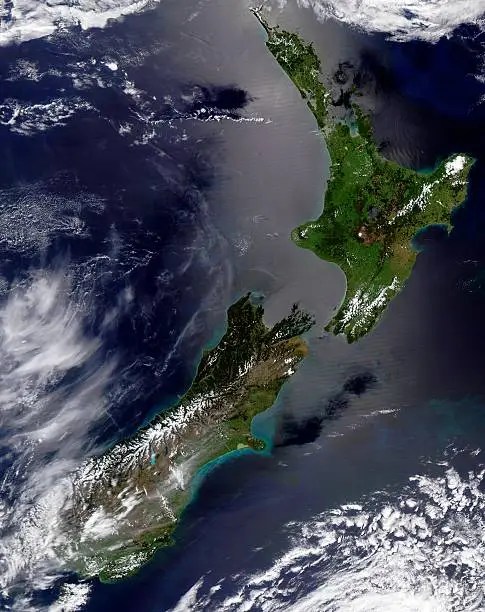
Kafoa scanned the horizon, looking for any one of the signs he had memorised by heart. He absentmindedly massaged the stub of the extra small finger on his left hand as he studied the sea and sky around him. Finally he saw what the men had seen. Low on the horizon, at the limit of his vision, was a large landmass resting beneath a long white cloud. Studying the distant landmass, he murmured, “Aotearoa.”

Hotu nodded. “Aotearoa,” he agreed, “land of the long white cloud.”

Kupe’s land now had a name.

#

The excitement aboard Ronui was unrestrained as the landmass now referred to by all as Aotearoa came into clear focus beneath the umbrella of cloud. Everyone who could stand was standing. The only voyagers not on their feet were those too weak to stand.

Hotu was now manning the tiller. His heart beat fast. Here at last was Kupe’s land! Tears filled his eyes and he murmured a prayer of thanks to the spirits of his Hawaikan ancestors. This land, their land, would be his people’s salvation. Of that he was sure.

From around twenty miles out, the land appeared dark and mysterious in the shadow of the cloudbank above it. Forbidding even. The sight had a sobering effect on the voyagers. All conversation ceased as they studied their new homeland.

Hotu glanced down at Kafoa who hadn’t left his side since the first sighting. Overcome with love for the boy, he reached down and ruffled his hair yet again. Kafoa looked up and smiled at the father he idolised.

As Ronui sailed onwards, floundering deeper than ever in the water, the land mass ahead slowly took shape. It was high – higher than the tropical islands of the Pacific – and it was covered in dense, lush, green bush.

Although still too far away to ascertain, the land appeared to be unoccupied, and some sixth-sense told Hotu it was. Which meant he and his fellow survivors would be the only people on these shores. He wondered what had become of Kupe’s fellow voyagers all those centuries ago.

Hotu’s mind returned to the present and he realised the bigger question was what had happened to Ra and the others aboard Tautira. He prayed they were safe.

#

By mid-afternoon, the clouds lifted and Aotearoa was bathed in brilliant sunshine.

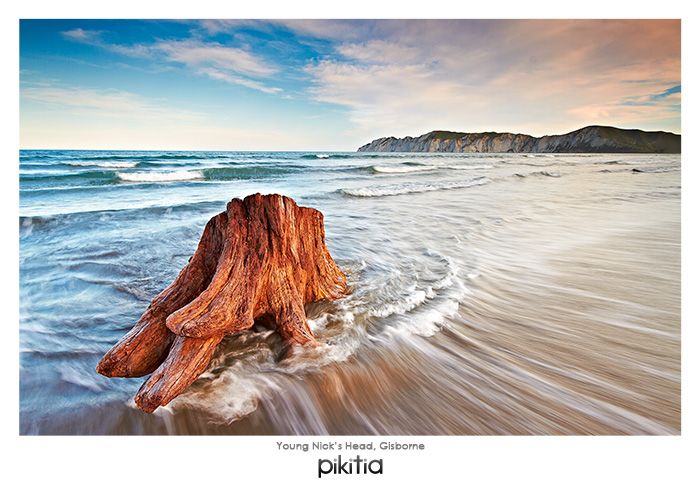
The Hawaikans were close to shore now. They scrutinised every feature of their new land. Ahead of them breakers crashed against impressive white cliffs that rose straight out of the sea. The clifftops were fringed by trees whose distinctive flowers blazed scarlet under the summer sun. Kafoa thought it likely the branch that was recovered from the sea came from one of those very trees.

Hotu was anxious to find a suitable landing place before nightfall. It was the ever-vigilant Rangi who brought his attention to a bay slightly to the north of where they were heading.

“Over there!” the navigator said, pointing to a crescent-shaped bay.

“Uh,” Hotu confirmed, steering the canoe toward the bay. A prominent headland at the bay’s southern end guarded the entrance to it.

The rocky shoreline gave way to a white-sand surf beach. Calm water and only the faintest of breezes aided an uneventful beaching. After such a long and dramatic voyage, the landing seemed almost an anti-climax to the exhausted survivors.

Kafoa was first to disembark, jumping from the canoe into the shallows. In a few strides he was standing above the high tide mark on the beach, his hunger pangs and tiredness forgotten for the moment. One by one, the other survivors joined him.

The descendants of Kupe had come home.

Hotu prayed that Ra and the others aboard Tautira had also arrived safely. He had no way of knowing they would soon land on a similar beach several hundred miles to the north.

It would be two centuries before the descendants of these separated peoples would meet, and when they did, it would not be as friends but as mortal enemies.

CHAPTER 7

Plymouth, August 25, 1768

The storm Nicholas Young and his fellow crewmembers had feared arrived with a vengeance, delaying the Endeavour’s departure from Plymouth by three days. She finally put to sea at two o’clock on a windy August afternoon. The foul weather that had delayed her departure continued for several more days and many of the bark’s company were violently ill. Not Nicholas, though. He’d quickly discovered he was…

To see what Amazon critics are saying about this novel go to:

Spanning five centuries, New Zealand: A Novel is a sweeping tale of discovery, destiny, and forbidden love in which the old and new worlds collide. While this novel may not always convey exactly what happened during the discovery and settlement of New Zealand, first by Pacific Islanders and later by Europeans, I believe it captures the spirit of those sometimes romantic, always fascinating and often bloody times. Lance Morcan (Author)

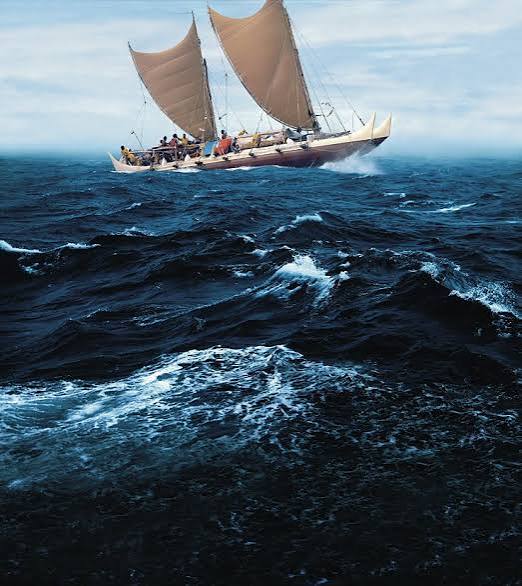
The morning after the big feast in Hotu’s village, Ronui led Tautira toward the narrow gap in the reef that separated them from the open sea. Around eighty people – passengers and crew – occupied almost every bit of available space on the decks of each canoe.

First places aboard the craft had been allocated to the rangatiras and their extended families. These included Hotu’s wives and their young children aboard Ronui, and Ra’s wives and even younger children aboard Tautira. Some of the children were only babies.

The rangatiras’ extended families accounted for about twenty people on each vessel. Other places had gone to a cross-section of villagers with special skills. High on the list were navigators, sailors, fishermen and boat-builders. Most were fighting men as well. Last but not least were their womenfolk. In some cases children had had to stay behind. They’d be looked after by grandparents and other close relatives.

Hotu hadn’t even considered taking his own ageing parents, so frail were they. Besides, they considered themselves too much a permanent part of Hawaiki to consider leaving. Saying goodbye to them proved an unbearable sadness for the rangatira.

Many of those departing wailed mournfully as they sailed away from their beautiful island. Men chanted to their island gods while their wahines cried out despairingly. Oblivious to their sadness, naked children scampered over the decks. Behind them, Hawaiki’s palm trees swayed in the balmy breeze and the jungle-covered peaks were framed by a tropical blue sky.

On the black sand beach, villagers looked on forlornly as their loved-ones sailed away even though many of them were hoping to depart soon aboard the other seven canoes. Those vessels were now within ten days of completion.

Crewmembers aboard the departing craft were too busy to look back. They worked frantically adjusting the triangular sails in readiness for the open sea beyond the reef. The cries of those ashore faded amidst the constant boom of waves crashing on the reef. Ronui led Tautira through the small gap. In the space of a few heartbeats they were into the open sea.

Aboard Ronui, a thousand different emotions racked Hotu as he eyed the southern horizon. Lost in thought, he rubbed the stub of the extra finger on his right hand. Alongside him, Kafoa emulated his father, rubbing the stub of the extra finger on his left hand, a habit the boy had acquired without even realising it. Behind them, Ra followed aboard Tautira, never more than a stone’s throw astern.

In the weeks ahead, the crews of the two craft would strive to maintain this formation through torrential rain and high winds and every other challenge the sea could throw at them.

#

Spring gave way to summer and the voyagers found themselves at the point of no return – the point reached in every ocean voyage where to continue and not find land meant certain death. Hotu and Ra instinctively knew they had reached that point.

It had been four weeks since they’d set sail for Kupe’s land aboard Ronui and Tautira. In that time, the giant craft had been battered by almost everything except a tidal wave or full-blown cyclone. Still they’d never been more than fifty yards apart, secured to each other by a length of platted twine fashioned from strong jungle vines. Without it they would have been separated very early on in the voyage.

The canoes were barely recognisable as the proud craft they’d once been, such was the terrible hammering they’d received from the elements. Their crews and passengers looked even more pathetic. They were in the early stages of starvation; the signs of malnutrition could already be seen in the children. All on board were cold, wet and tired, and many had developed hacking coughs. The coughing sickness they called it.

The first storm had struck only a week into the voyage, and in that early test of the travellers’ fortitude, two of Tautira’s passengers had been lost, swept overboard. Successive storms claimed another two lives – one from each canoe – and the loss of vital provisions as well. Those provisions included all the pigs and half the dogs. To make matters worse, both craft had been dismasted and the replacement makeshift masts were precariously insecure.

The previous day they had been hit by the tail-end of a cyclone. Fortunately, they missed the worst of it. No Polynesian craft had ever survived the full might of a cyclone at sea. As it was, those aboard Ronui and Tautira barely escaped with their lives. Only quick-thinking by the canoe captains prevented total disaster. As soon as the winds hit, the crews collapsed the masts and semi-collapsed the canoes themselves – a desperate manoeuvre but a life-saving one in those conditions. In their semi-submerged state, the craft became almost impossible to capsize and therefore less likely to sink. When the storm passed they were reassembled so they could once more function as canoes, no mean feat given the task had to be entirely carried out at sea.

This latest catastrophe had seen much of the remaining food being lost overboard, but at least no more lives had been lost. Most of the rats on board appeared to have survived, too. These previously unwelcome stowaways were already being used to supplement the meagre rations.

Still the Hawaikans sailed on – ever southward.

The challenges of recent weeks had not been totally unexpected. Hotu knew, like Kupe before him, they were going against Polynesian seafaring tradition by sailing south. To find Kupe’s land meant sailing across the wind, and, worse, downwind. Thousands of years of Pacific exploration had involved sailing upwind, against the prevailing easterly tradewinds. While sailing upwind was slower, the return journey was always faster. This was a critical factor if sailors were out of food and at the limit of their endurance. Downwind voyages were far more dangerous. Sailors had to be able to judge when to turn back before it was too late.

Hotu realised they may have made a serious error of judgement regarding the weather. Although they’d avoided the worst of the cyclone season, they had not anticipated the cold temperatures they were now experiencing. As they continued south, each day seemed cooler than the last. Their bark cloth breechclouts, mat lava-lavas and ponchos of overlapping ti leaves were not warm enough. Even the dog-skin or feathered cloaks worn by the rangatiras and navigators failed to keep the cold at bay. No-one was to blame for this oversight for this was the first time any Polynesian had willingly ventured this far south since Kupe’s day. Any reports from back then had been long forgotten.

At Hotu’s command, the line connecting the two canoes was shortened to around thirty yards. Their survival could well depend on the flimsy vessels staying together.

#

Aboard Ronui, Hotu and Ra sat staring at each other in silence, each weighed down by the gravity of the decision they had to make. They always met at first light each day to discuss their progress. On this occasion, Ra had crossed over to Hotu’s canoe.

More than a week had elapsed since the storm that caused the near capsize of the two vessels. More deaths – four aboard Tautira and three aboard Ronui – had occurred since then, the meagre food supplies had all but been exhausted and the remaining passengers and crew were starving. Worse, the condition of the canoes, which somehow miraculously remained tethered together, was deteriorating by the day. They wouldn’t survive many more storms.

The rangatiras were only thankful their wives and children were still alive. Even so, the uncertainty each man felt was mirrored in the other’s eyes.

It was Ra who spoke first. “I say we turn back.”

Hotu remained silent.

“We have angered the ocean gods,” Ra continued. “They have been voicing their displeasure since the day we left Hawaiki. If they had wanted us to find land, we would have seen the signs by now… Land birds or driftwood… or something.”

Still Hotu didn’t speak. The big rangatira could hear his friend, but he was listening for another voice. Kupe’s voice. Sometimes, when he needed advice, he imagined he could hear his great ancestor’s spirit talking to him. He desperately wanted to receive a message from Kupe’s spirit today. Unfortunately, all he could hear was the wind in the rigging. Always the wind. Disappointed, he turned his attention back to Ra, resigned to receiving no help from the spirit world. “We must continue to Kupe’s land,” he said at length.

Ra was about to remonstrate, but restrained himself when he saw the determination in his opposite’s eyes.

Hotu continued, “If we had sufficient food and provisions, and if our craft were still seaworthy, I would consider turning back. Look at the state of your canoe,” he said, pointing at Tautira, which trailed close behind Ronui’s stern like a permanent shadow.

Ra looked back at the other vessel. It bobbed along in the moderate seas, perilously low in the water, its foremast barely holding together since the last repair job, and its occupants lolling about listlessly on deck, cold and hungry, clinging to life in the hope they would reach their elusive destination. To supplement their food rations they caught what fish they could, but the quantities were never enough to satisfy their hunger.

“You are right,” Ra said resignedly. “We would not survive the return journey.”

Hotu nodded gravely. “It would take six weeks or more, sailing into the wind, to reach Hawaiki. Our remaining food rations will last a few days at most…”

There was no need to speak further. Both men knew what had to be done. Kupe’s land was still somewhere ahead of them. They had to find it quickly before it was too late.

A feeling of calm descended on Hotu. He felt the pull of the southern land stronger than ever. The feeling gave him renewed confidence. Maybe Kupe’s spirit had communicated with him after all.

#

Ronui and Tautira maintained steady progress as the prevailing winds carried them ever southward. Several days had elapsed since Hotu and Ra made the sobering decision to continue their journey to what could well be the end of the world. In that time temperatures had further dropped, adding to the challenges the surviving voyagers faced – starvation not the least of them. Everyone on board prayed they’d find Kupe’s land before they died of hunger or drowned, or before they reached Earth’s edge.

Storms continued to batter the two canoes every two or three days. Still the craft shadowed each other, never more than thirty yards apart thanks to the makeshift lifeline that had somehow held fast.

At the stern of Ronui, Kafoa sat alongside Hotu who was steering the canoe in order to give the craft’s navigator Rangi some well-deserved sleep. The boy was never far from his father’s side. Despite the risks and hardships facing them all, Kafoa remained in his element, happy to be following in the wake of his great ancestor Kupe. Even in the face of disaster, he could not contain his excitement.

Hotu observed his son with pride as he adjusted the tiller to compensate for a big ocean swell. The rangatira had seen the boy grow in courage and maturity in recent weeks. It saddened him to think he would perish, along with everyone else, if they didn’t find land soon. Apart from half a dozen scrawny dogs and the last of an uninvited colony of rats, the food reserves were almost gone. Survival could now be measured in days.

“Papa,” Kafoa said, interrupting Hotu’s thoughts, “where did our people come from?”

Hotu smiled to himself. His son’s thirst for knowledge constantly amazed him. “Our distant ancestors ventured out of vast lands to the west and –” 

“What were these lands called?”

Hotu shrugged. His people had long forgotten their Asian roots.

“Well, what did the people look like?”

“Some say they had yellow skin and slit eyes.”

 Kafoa looked incredulous. “Truly, papa?”

Hotu nodded. “Some say it was because they angered the gods who punished them by changing their appearance. As our ancestors travelled eastwards, from island nation to island nation, they pleased the gods who then changed them back to how they used to look.”

“Like we look today?”

Hotu nodded.

“Ah.” Now Kafoa understood.

Hotu explained how their ancestors had become great seafarers, first sailing as far as Samoa and later Hawaiki and then on to Tahiti. “They followed the signs to find new lands.” He looked keenly at his son. “Now it is your turn… Tell me about the signs our great Hawaikan navigators follow at sea.”

Eager to reveal all that he’d learned, Kafoa said, “The stars guide them by night and the sun by day.”

“What if the day is cloudy and the sun is hidden?”

“The sun and stars are not the only signs. There are many others.”

“Tell me about them.”

Kafoa described other signs like the sighting of land birds, the direction of the wind, waves and currents, and how the equatorial current swept west past most Pacific islands – something early voyagers had used to their advantage.

Hotu struggled to conceal how impressed he was by his son’s knowledge. “You did not mention how ocean swells signal the presence of land.” He spoke so gruffly it almost sounded like a rebuke.

Kafoa frowned. “What do the ocean swells show?”

“Within a day’s sailing from land, the swells die down.”

Kafoa considered this for a moment. The seafaring and navigational skills of his people never ceased to amaze him. He would be even more impressed when he learned about the formation of clouds over high islands and how the opalescent colour of lagoons was reflected in those same clouds, which could be seen from far out at sea; and how bright lights flashed backwards and forwards in deep water, pointing to land – a ghostly phenomenon that could be seen up to a day’s sailing from shore, especially on dark, wet nights. But that would be revealed in another discussion on another day. After a short silence, he asked, “Papa, are we going to find Kupe’s land?”

Hotu hesitated for a moment. “Yes, son,” he said with more confidence than he felt.

The boy looked relieved for he believed his father without question. “When?” he persisted.

“Maybe tomorrow,” a grim-faced Hotu murmured as he scanned the southern horizon. “Maybe the next day.”

Satisfied, Kafoa scampered off toward the bow, leaving his father deep in thought.

Now alone at the tiller, Hotu pondered his son’s last question. He was aware that all he could be certain of was if they did not find land soon, they would die.

#

Every day now the Hawaikan voyagers were burying someone at sea. Usually it was the children who succumbed first. Now, as hunger and cold took their toll, more adults were being condemned to a watery grave as well. Already Ronui’s eighty passengers and crew had been reduced to seventy, and Tautira’s human cargo had fared almost as badly.

In the two days since Hotu explained to his son where Hawaikans originally came from, the weather had worsened. The big storm the rangatira had feared hit soon after nightfall and almost without warning. In barely the blink of an eye, the easterly squall which had dogged the voyagers became a howling gale. Again, the capsizing of the canoes was only avoided through the quick actions of their respective crews who expertly dismantled and semi-submerged their craft. Even so, it had been a close-run thing.

Throughout the night, the frightened voyagers had clung to each other as the storm raged about them. Several were swept into the boiling sea and all but one of those were lost.

It was almost inevitable that Ronui and Tautira became separated. Once, when a brilliant flash of lightning lit up the sky, Hotu thought he saw the other canoe on the horizon, but he later realised he might have imagined it. He and his fellow voyagers aboard Ronui would never see the others again.

Dawn and the storm’s passing occurred simultaneously.

In the early morning light, the only sign that Tautira had ever existed was a length of frayed twine trailing in the water behind Ronui.

Aboard Ronui, only Hotu remained fully alert as yet another day dawned. He sat at the stern, manning the tiller and scanning the horizon in search of land. Kafoa slept fitfully close by, his head resting on his father’s lap. Their fellow voyagers, who now numbered less than sixty, lay sprawled before them, occupying much of the free space on the craft’s deck. Many were near death and…

NEW ZEALAND: A NOVEL continues next week…

Spanning five centuries, New Zealand: A Novel is a sweeping tale of discovery, destiny, and forbidden love in which the old and new worlds collide. While this novel may not always convey exactly what happened during the discovery and settlement of New Zealand, first by Pacific Islanders and later by Europeans, I believe it captures the spirit of those sometimes romantic, always fascinating and often bloody times. Lance Morcan (Author)

Spanning five centuries, New Zealand: A Novel is a sweeping tale of discovery, destiny, and forbidden love in which the old and new worlds collide. While this novel may not always convey exactly what happened during the discovery and settlement of New Zealand, first by Pacific Islanders and later by Europeans, I believe it captures the spirit of those sometimes romantic, always fascinating and often bloody times. Lance Morcan (Author)

The pull of the southern land was strong now. Stronger than ever. Almost as strong as the offshore currents that swept past Hawaiki, the South Pacific island nation hidden away in one of the world’s most isolated regions. Hotu had experienced this pull before, but never like today.

Ever since boyhood, he had dreamed of the mysterious place his ancestors had discovered far to the south centuries earlier. A direct descendant of the great Polynesian explorer Kupe, Hotu shared many of his famous forefather’s traits. Like Kupe and, indeed, like most Hawaikans, he was a born sailor. He had that uncanny ability to safely cross huge tracts of ocean, using only the sun and stars as his compass. But he was something else too: he was a rangatira, or chief, and as such he was the one his people looked to in times of trouble.

This was one of those times.

Nuku Hiva, the largest of Hawaiki’s islands, had been attacked yet again by its traditional enemies from an island nation far to the west. The Hawaikans referred to them as Dogfaces because of their penchant for wearing the pelts and sometimes the heads of the fierce hunting dogs they bred. Every few years for as long as Hotu could remember these tattooed marauders had appeared over the horizon aboard their huge double voyaging canoes. Sometimes they sailed on by if unfavourable tides or currents wouldn’t permit their craft through the dangerous tropical reef that ringed Hawaiki, protecting it from the open sea. Not on this occasion, however.

At dawn, the Dogfaces had successfully negotiated the tricky passage through the reef and had attacked in great numbers. Hotu had counted nine craft, each manned by at least fifty warriors. His people’s resistance had been ferocious, but short-lived. They’d been overwhelmed by the invaders’ superior numbers. Only a disciplined fighting retreat from the beach to the sanctuary of caves in the nearby jungle-covered hills had saved them from total annihilation.

The attack had taken a terrible toll – worse even than the oldest villager could remember. Three-quarters of Hotu’s fighting force had been destroyed, scores of wahines [women] and children slaughtered and the entire village laid to waste. The element of surprise had been complete: the enemy war canoes had arrived while the villagers still slept, and they’d speared through the narrow opening in the reef like the barracootas that abound in these tropical waters. 

Nuku Hiva village had been totally ransacked, its bures [huts] and meeting house burned to the ground. Flames still flickered in places and smoke curled into the cloudless sky, casting shadows along the entire length of the black-sand beach.

Hotu had been the first to return to the village after the Dogfaces departed. The scene awaiting him was one of total death and destruction. All around him the bodies of his kinsmen lay broken and bleeding like slaughtered pigs at some island feast. Some lay piled on top of each other in and around the smouldering remains of the bures. Others floated face-down in the nearby lagoon, their mutilated bodies already attracting the attention of blacktip reef sharks drawn by the smell of blood while the mortally wounded could only pray to their island gods that death would come quickly.

As was the custom of the day, the eyes of the dead and dying had been gouged out by the invaders. Victorious warriors prevented their enemies from making the final journey to their spiritual homeland by gouging out the victims’ eyes so their spirits couldn’t find their way home. This ensured they would never rest in peace. Some of the victims’ limbs and internal organs were missing also. Like most Islanders, the invaders resorted to cannibalism to supplement their rations on lengthy ocean voyages. Even uncooked, a human kidney or liver, or the flesh from a man’s shoulder or a wahine’s thigh was a delicacy for those who hadn’t eaten for a while.

More disturbing to Hotu was the number of wahines who were missing. A head count would later reveal that thirteen, every one young and healthy, had been taken. Relatives would mourn them as if they were dead for they knew their loved-ones faced a life of sexual slavery. That was if they survived the abuse they’d be subjected to. If their captors tired of them during the homeward voyage, they’d be killed and eaten or fed to the sharks.  

The rangatira had more reason than some to bereave the loss of those who had been taken. His first-born, Obadia, had been abducted by raiders seven years earlier, and not a day went by that he and his oldest wife, Obadia’s mother, didn’t think about her.

So bereft was Hotu as he surveyed the desolate scene before him, he was oblivious to wounds he’d suffered. Blood flowed from a nasty head wound and he had to blink constantly to clear his vision. Like many of his fellow Hawaikans he was a big man, and, as befitting a rangatira, a fearsome warrior. However, for all his size and fighting ability, he had been powerless to resist the invaders.

The rangatira counted over two hundred bodies before grief and exhaustion overtook him and he collapsed face-down on the black sand. He wasn’t sure how long he’d been lying there when he regained his senses. As he looked around, he gradually became aware other survivors were returning. They stumbled about blindly, dazed and barely able to comprehend what had happened. The quiet was interrupted by tormented wailing as family members identified slaughtered kin.

Hotu was hopeful his wives and children hadn’t been harmed. He had helped them escape to the safety of the jungle before the invaders could reach them. His elderly parents were safe, too, as they were staying with relatives at another village. Even so, the grief was no less real for him than it was for the kinfolk of the dead. Tribal life was like an extended family: every villager felt like one of his own. When misfortune struck any, it affected him. That was the Hawaikan way.

Hotu’s grief was so intense he was only vaguely aware of the stinging in his eyes as blood poured from his wound. Still dazed, he limped to the water’s edge, knelt down and splashed saltwater over his face and over the deep gash. He shook his head to clear his senses and forced himself to focus his thoughts. His people needed a leader at this time. Their enemies would return. Maybe not this year or next, but return they always did. Next time his people might not survive.

A flock of long-tailed cuckoos flying out to sea caught his attention. He watched the distinctive birds until they disappeared over the southern horizon. They departed Hawaiki every spring, and logic told him their destination was some distant land mass for they were essentially land birds. Their annual migration served as a further reminder of the land that awaited them to the south.

“Papa!”

A small voice interrupted his thoughts.

Hotu turned and smiled. It was his oldest son. A roar of emotion erupted from his chest. “Kafoa!” He scooped the five-year-old up in his arms, clasping him to his bare chest in a vice-like grip. It meant everything to him that Kafoa had survived. In his son, he saw his people’s future.

“Papa, I cannot breathe!”

Hotu relaxed his grip. “My son, thank the spirits you are safe.” Looking around, he asked, “Where is your mother…and the others?”

Looking at the steep, jungle-clad hills behind the village, Kafoa said, “They are still hiding in the caves, papa.”

Hotu was thankful for that. The rangatira didn’t want his other children, or any of his kin for that matter, to see the wretched state of the village. Not before the dead had been collected and the wounded cared for. He lowered his son onto the sand and together they walked hand in hand along the beach. As they proceeded, the groans of the dying and the cries of bereaved villagers carried to them on the faint breeze.

“Papa, why do the Dogfaces keep coming?” Kafoa asked at length.

Hotu looked down at the boy. “Because the spirits have ordained that it be so.”

“Why?”

“Many seasons ago, Tua, a Hawaikan rangatira, angered the spirits, so they placed a curse on our island.”        

“What kind of curse, papa?”

“They decreed that warriors would attack us from the west every second or third migration of the long-tailed cuckoo.”  Hotu explained how the cuckoos flew south every spring.

“How can we end this curse, papa?”

Hotu didn’t answer.

“Papa?” Kafoa tugged his father’s hand. Still there was no response.

Hotu removed his hand from Kafoa’s and rubbed the stub of an extra middle finger he’d been born with. The inch-long stub, on his right hand, was a trait randomly passed down to males in his family tree – random because it sometimes missed whole generations. In Hotu’s lifetime, only two others had inherited the same trait: his paternal grandfather and his oldest son. In Kafoa’s case, the stub had materialised as an extra small finger, as yet only half an inch long, on his left hand. The unusual disfigurements bothered neither of them.

Still rubbing the stub, Hotu’s eyes searched the southern horizon. Again he felt drawn by the pull of the land Kupe had discovered.

There had long been debate among his people as to whether Kupe’s discovery was true. Some argued it was true only in the spirit world, but Hotu knew differently. His grandfather had told him the great Kupe had not only found the southern land but had returned to Hawaiki to tell his people of it.

“Papa!” Kafoa tugged his hand again.

Hotu remained lost in thought. He scanned the horizon as if trying to see beyond it – to see a land he knew existed.

Suddenly the answer to his son’s question about the curse became clear. Kupe’s discovery provided the solution: the southern land was where they had to go to escape the curse of the spirits.